
Энэтхэгийн засгийн газар 2026 оны зун Эверестийн хойд талд амиа алдсан уулчны цогцсыг эх оронд нь авчрах эрсдэлтэй ажиллагааг төлөвлөж байна.
Эверестийн оргил өөд өгсөх Норт-Ийст Ридж маршрутын “Үхлийн бүс” хэмээн нэрлэгддэг 28,000 фит өндөрт гурван арван жилийн турш хөлдсөн байдалтай байсан уулчныг “Ногоон гутал” хэмээн олон жил нэрлэж ирсэн. Энэтхэгийн засгийн газар уг цогцсыг 1996 оны тавдугаар сарын 10-нд сураггүй болсон Энэтхэгийн хилийн цэргийн алба хаагч Дорже Моруп болохыг тогтоосон байна. Одоо Энэтхэгийн Хилийн цагдаагийн газар (ITBP) туршлагатай шерпа нараас бүрдсэн багийг хөлсөлж, цогцсыг эх оронд нь буцаах бэлтгэл ажлыг хангаж байна.
Эверестэд амиа алдсан уулчдын цогцсыг буулгах нь санхүүгийн болон логистикийн хувьд маш өндөр зардалтай, эрсдэлтэй ажил юм. Уулын авиралтын мэргэжилтнүүдийн мэдээлснээр, нэг цогцсыг буулгахад ойролцоогоор 75,000-80,000 ам.долларын зардал гардаг бөгөөд “Үхлийн бүс”-ийн хүнд нөхцөлд цогцсыг мөснөөс салгаж, эгц, техникийн хүнд маршрутаар тээвэрлэх нь авирахаас ч илүү хүнд сорилт болдог аж.
Тус ажиллагааг 2026 оны зургаадугаар сараас есдүгээр сарын хооронд буюу Эверестийн бүсэд цаг агаарын нөхцөл байдал хамгийн тогтворгүй, шуургатай байдаг монсурын улиралд хэрэгжүүлэхээр төлөвлөжээ. Хэрэв ажиллагаа амжилттай болбол Эверестийн оргилд олон жил “тэмдэг” болсон цогцсыг буулгаж, ар гэрийнхэнд нь хүлээлгэн өгөх боломж бүрдэх юм. Гэрээний дагуу аврагчид цогцсыг 2026 оны аравдугаар сараас өмнө Дели хотод хүргэсэн байх ёстой.
Дэлгэрэнгүйг эх сурвалжаас харах
↓Эх сурвалжийг нээх ↓
The Indian government is planning a high-risk extraction mission to the Tibetan side of Mount Everest in summer 2026 to finally bring home the remains of a world-famous dead body known simply as “Green Boots.” The plan involves an elite team of Sherpas to hack his body from a block of ice at 28,000 feet in an area known as the Death Zone—and then carry him home.
For nearly 30 years, climbers ascending the Northeast Ridge on Mount Everest shared a universal, chilling landmark. Deep within the hypoxic vacuum of the Death Zone, an area where oxygen is too low to sustain human life, there’s a route that passes a rock alcove. Curled up as if taking a brief nap lies the frozen body of a climber wearing bright green mountaineering boots. Over the years, this body has become the most famous of the 200-some corpses on Everest.
The body of Green Boots and others that fell to a similar fate are left on the side of the mountain because it’s both too dangerous and expensive to recover them, experts say.
“The reality of body recovery is that it’s all about money,” Everest guide Willie Benegas told Outside. The Argentinian-American mountaineerhas summited the mountain 14 times, first in 1999 and most recently in 2025, and has also participated in rescues and body recovery operations.
“It costs a lot of money to bring someone down, and if the family doesn’t have the money, no one’s going to do it,” Benegas added.
For years, no one knew exactly who Green Boots was, and no one could foot the bill for a recovery operation. So, his body stayed on the mountain. Until recently, experts believed he was either Tsewang Paljor or Dorje Morup, two Indian soldiers and members of the country’s Indo-Tibetan Border Police (ITBP) who disappeared trying to climb the peak on May 10, 1996.
Earlier this year, the Indian governmentidentified the body as Morup, and now government documents show that the ITBP is hiring an expedition team to bring his body home.
Why Is It So Difficult, Dangerous, and Expensive to Recover a Body on Everest?
For most climbers, the financial burden of climbing Mount Everest is the more dauntingobstacle than the thin air, freezing temperatures, and steep climb. In 2025, it cost an average of $58,000 to attempt the world’s highest peak. Coming from the north in China is more expensive than entering from southern Nepal, and climbing with an international guiding company is more expensive than hiring a local guide. Luxury expedition packages can cost even more—routinely upwards of $200,000—and even as high as $1 million.
Paying to recover a climber’s dead body can also be more expensive than climbing the mountain in the first place. In 2024, Outside spoke with local guides and rescuers about the arduous task of body recovery on Everest. Nepali Army Major Aditya Karki, who led an expedition that year to recover five bodies from the peak, estimated the cost for each body to be around $75,000 to $80,000 at the time.
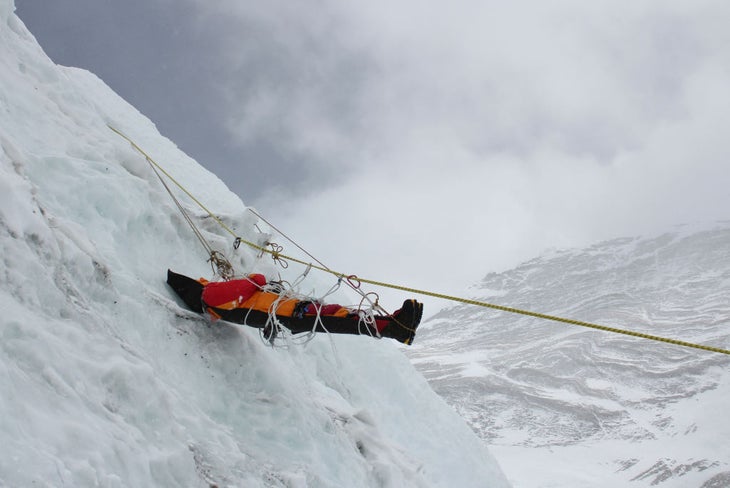
Recovering a body is far more difficult and dangerous than simply reaching the summit, Karki said. Even carrying a ten-pound oxygen canister to the top of Everest is exhausting. Hacking a frozen, 180-pound body out of the snow and ice, then lugging it down steep, technical terrain, sometimes under high winds or freezing temperatures, is another story.
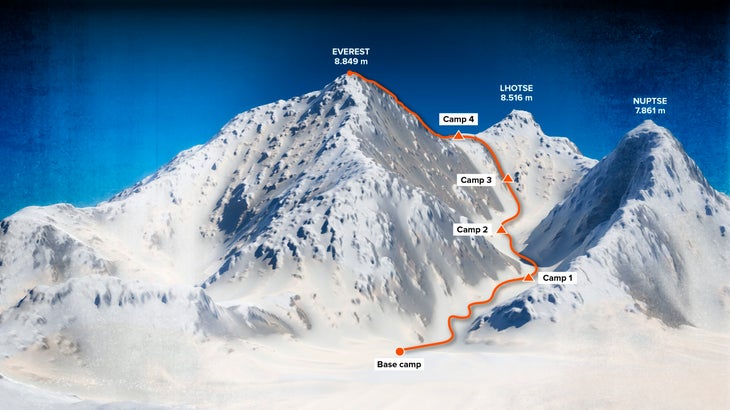
Body recoveries are particularly difficult on the Chinese side of Everest, where Green Boots is located. This route is harder than the standard South Col route from Nepal, and the Chinese permitting process is stricter and more complex. In 2026, for example, the Chinese government inexplicably closed the entire mountain to all international expeditions.
“On the north side, it’s logistically harder to get a body down,” Benegas said. “Historically, the bodies have stayed up there, especially if they’re above Camp IV, like Green Boots. It’s really technical on the ridge up there. You can’t just drag a body; they have to be carried.”
Body recovery isn’t just a physically demanding task, but a psychologically demanding one, too.
“We can’t think about it as just handling a dead body,” Tshiring Jangbu, one of Karki’s team members, told Outside in 2024. “We have to be respectful and safe.”
What’s Next for Dorje Morup?
As part of its recovery mission, the ITBP is seeking a highly specialized private agency with a proven track record in high-altitude logistics. A publicly issued government contract requires that the operational team consist of at least six elite Sherpas who have successfully summited Everest multiple times. Their mandate: extract the remains from the death zone, navigate the complex geopolitical bureaucracy of the Chinese side of Everest, and then deliver the body to Delhi, India’s capital, no later than October 2026.
The mission will be a dangerous one. By scheduling the extraction window between June and September 2026, the recovery team will work during Everest’s monsoon season. This is a time when virtually all commercial expeditions have long since abandoned the mountain due to volatile, blinding storms that can dump feet of destabilizing snowfall onto the upper ridges within hours.
It won’t be easy, but if the ITBP team succeeds this summer, it will strip away the most macabre landmark in Himalayan climbing and finally bring a fallen climber home.
The post The Daring Gamble to Bring Everest’s Most Famous Body Home appeared first on Outside Online.



