
БНХАУ Номхон далайд цөмийн цэнэгт хошуу тээх боломжтой алсын тусгалын баллистик пуужин туршсаны дараа АНУ болон бүс нутгийн улс орнууд эсэргүүцлээ илэрхийлж, тус улсын цөмийн зэвсгийн хөтөлбөрийн ил тод бус байдалд санаа зовниж буйгаа мэдэгдлээ.
БНХАУ даваа гарагт цөмийн хөдөлгүүрт шумбагч онгоцноос баллистик пуужин харвасан байна. Бээжингийн зүгээс энэхүү туршилтыг жилийн цэргийн сургуулилтын хуваарийн дагуу явагдсан, олон улсын хууль тогтоомжид нийцсэн үйл ажиллагаа хэмээн тайлбарлаж, холбогдох улсуудад урьдчилан мэдэгдсэн гэв. Гэвч Япон, Австрали, Шинэ Зеланд зэрэг улс мэдээллийг хэт оройтож авснаа мэдэгдэж, туршилтыг бүс нутгийн тогтвортой байдлыг алдагдуулсан, өдөөн хатгасан үйлдэл гэж үзэж байгаагаа илэрхийлжээ.
АНУ-ын Төрийн департаментын төлөөлөгч Томми Пиготт БНХАУ-ын цөмийн зэвсгийн хурдацтай бөгөөд ил тод бус өргөжилт нь дэлхий нийтийн түгшүүрийг төрүүлж байгааг онцлов. АНУ-ын зүгээс Хятадыг зэвсэглэлд хяналт тавих яриа хэлэлцээнд идэвхтэй оролцохыг уриалж байна. Филиппиний Засгийн газар уг туршилтыг цэргийн хүчээ харуулсан болчимгүй үйлдэл гэж шүүмжилсэн бол Соломоны арлуудын Ерөнхий сайд тус улс бүс нутагт цөмийн туршилт хийхгүй байхыг хатуу анхааруулжээ.
Шинэ Зеландын Засгийн газар пуужин “Раротонга”-гийн гэрээгээр тогтоосон Номхон далайн цөмийн зэвсэггүй бүсэд унасныг онцолсон бол ОХУ-ын зүгээс Хятадыг өөрийн бүрэн эрхийн хүрээнд цэргийн сургуулилт хийх эрхтэй хэмээн өмгөөлөв. БНХАУ-ын тэнгисийн цэргийн хүчин JL-2 болон JL-3 загварын шумбагч онгоцноос харвах баллистик пуужингуудыг ашигладаг бөгөөд эдгээр нь АНУ-ын нутаг дэвсгэрт хүрэх чадалтай юм. Хятад улс цөмийн зэвсгийг түрүүлж хэрэглэхгүй гэх бодлого баримталдаг ч цэргийн хүчээ орчин үеийн шаардлагад нийцүүлэн шинэчлэх үйл явцыг тасралтгүй үргэлжлүүлж байна.
Дэлгэрэнгүйг эх сурвалжаас харах
↓Эх сурвалжийг нээх ↓
The US said it was concerned over China’s growing nuclear programme after Beijing test-fired a dummy warhead into the Pacific Ocean.
China on Monday afternoon test-fired a long-range ballistic missile from a nuclear-powered submarine, carrying a dummy warhead, which landed in the Pacific and immediately drew condemnation from the regional leaders.
China argued that the test launch was a “routine part of China’s annual military training schedule,” and that “relevant nations” had been informed in advance. It claimed that the operation was “in accordance” with international law and targeted no specific country.
Criticising the test, the US State Department in a statement said: “At a time when the United States is working harder than ever to prevent nuclear proliferation, China is doing the opposite.”
Spokesperson Tommy Pigott told AFP that Beijing’s “rapid and opaque nuclear weapons buildup is of great concern to the region and the world”. He urged China to engage in meaningful arms control talks and establish regular notification arrangements for intercontinental-range ballistic missile and space launches.
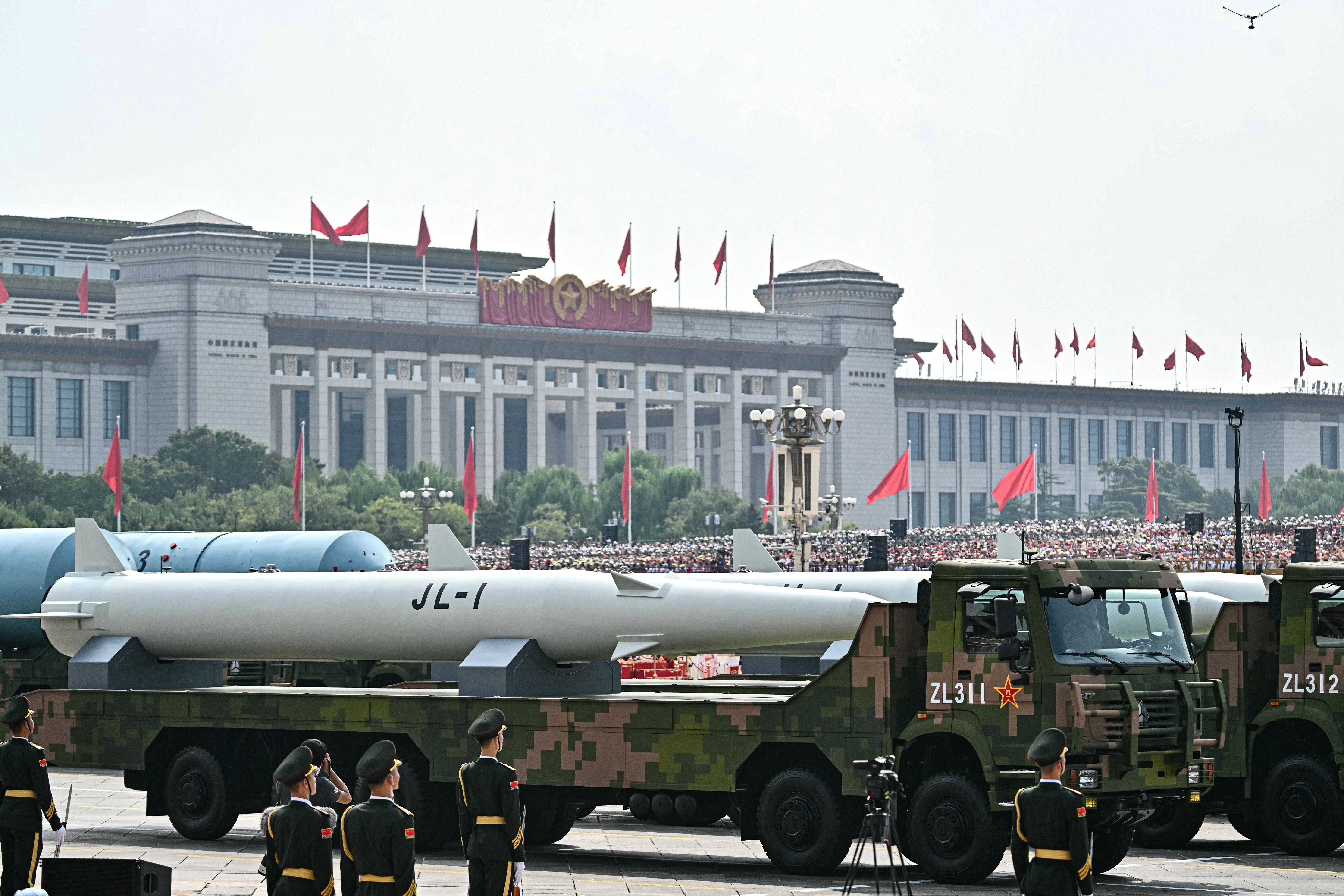
The missile test was China’s first such in the Pacific Ocean in two years. Even though Australia, New Zealand and Japan were informed before the launch, Wellington said the test took place two hours after China informed Pacific nations.
Tokyo complained that the test was conducted within 90 minutes of the notice arriving. It was unclear if China gave notice to the US.
Australian prime minister described the ballistic missile test as “provocative” and “destabilising to the region”.
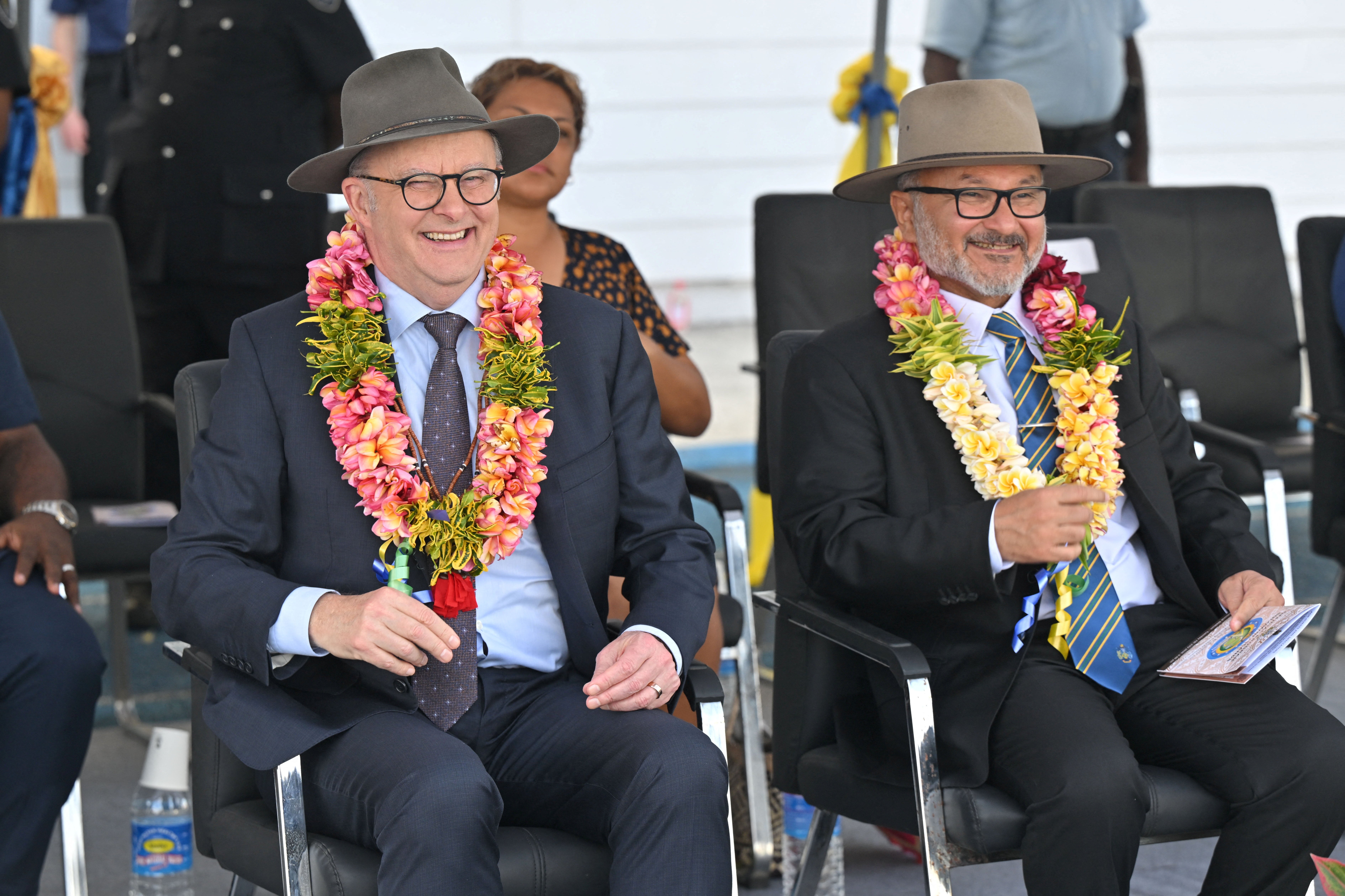
We have made clear our concerns to China in both Beijing and Canberra, and I am making clear our concerns here as well in Honiara,” he said, speaking alongside Solomon Islands prime minister, Matthew Wale.
“We don’t want to see any action that is destabilising, or which undermines the peace, security and stability of the Pacific and the region,” he added.
Mr Albanese noted that a test of this magnitude would come with 48 hours’ notice, which he said was not provided by China.
The Solomon Islands leader criticised “good friend” China for the test and urged Beijing not to “threaten us”. “This is not good in our region,” he said.
“And as chair of the Pacific Islands Forum, I registered my strong protest yesterday with the ambassador. Solomon Islands also lodged a protest note.
“We don’t want to see any more countries — China, America, anybody — testing [intercontinental ballistic missiles] in the Pacific Islands region, that’s the bottom line. Be our friend, but don’t threaten us.”
The Philippines called it a “reckless display of military power” and said the missile launch served “no peaceful purpose”, instead was “a calculated act of taunting and provocation” against nations resisting China’s territorial expansion.
Papua New Guinea’s prime minister James Marape urged all global military powers to respect the wishes of those who live in the Pacific.
“Our region has lived through war, nuclear testing and military activities imposed upon us by larger powers. We do not want history repeated,” he said.
“We want our waters to be free from nuclear testing and from the testing of harmful weapons and military arsenals of every kind, whether launched from the air, from the sea or from the land.”
Taiwan’s National Security Council secretary-general Joseph Wu said the JL-2 missile flew over the Philippines before landing in the ocean roughly 1,000km north-east of the Solomon Islands. “China just proved itself again to be a bully on the block,” Mr Wu said.
The Japanese government said it “strongly urged” China to reconsider the move. “We expressed our grave concern over the Chinese military’s increased activity,” it said.
New Zealand’s government said the missile landed within the South Pacific Nuclear Free Zone established by the 1986 Treaty of Rarotonga. The treaty prohibits nuclear weapons in the region. China ratified the protocols in 1987, pledging not to test nuclear weapons within the zone, or threaten to use them against the signatories of the treaty with territory in the region.
Russia defended Beijing, arguing that the missile tests were China’s “sovereign right” and insisting that “China is not threatening anyone in the world”.
The Chinese navy operates two types of submarine-launched ballistic missiles. The JL-2 is estimated to range 7,000-8,000 km and the JL-3 more than 10,000km, allowing China to target much of the continental US from waters closer to home.
China maintains a “no first use” of nuclear weapons policy, but is actively pursuing nuclear technology and weaponry as part of its long-term strategy to modernise the military.
China boasts a fleet of six ballistic-missile submarines and 59 nuclear-powered attack submarines, according to the Nuclear Threat Initiative, a Washington-based think tank.

