
АНУ-ын Аргонн үндэсний лабораторийн эрдэмтэд Өмнөд туйлын дуран авай ашиглан 7,000 гаруй галактикийн бөөгнөрлийг багтаасан шинэ каталогийг танилцууллаа.
Эрдэмтдийн баг Өмнөд туйлын станцад байрлах, 2017 онд шинэчилсэн 16,000 илрүүлэгч бүхий камертай дуран авайг ашиглан таван жилийн турш ажиглалт хийжээ. Тэд галактикуудыг шууд гэрэл зургаар авахын оронд Их тэсрэлтийн үлдэгдэл болох сансрын бичил долгионы дэвсгэр цацрагт үүссэн бүдэг гажуудлыг судалсан байна. Сюняев-Зельдовичийн эффект хэмээн нэрлэгддэг энэ үзэгдлийн тусламжтайгаар галактикийн бөөгнөрлүүд эртний гэрэл дээр сүүдэр мэт тусгагддаг ажээ.
Судалгаагаар тэнгэрийн дөрвөн хувийг хамарсан бүсээс 8,892 нэр дэвшигч бөөгнөрлийг илрүүлснээс 7,190-ийг нь Dark Energy Survey-ийн оптик болон хэт улаан туяаны өгөгдлөөр баталгаажуулжээ. Эдгээр системийн гуравны хоёр нь анх удаа илэрсэн бөгөөд зарим нь 7.8 тэрбум гаруй жилийн настай тул орчлон ертөнцийн бүтцийн хөгжлийг судлахад чухал ач холбогдолтой юм. Судалгааг удирдсан физикч Линдси Блим энэхүү каталогийг орчлон ертөнцийг судлах шинэ цонх нээж, цаашдын олон судалгааны үндэс суурь болох ач холбогдолтой гэж тодорхойлсон байна.
Мөн уг каталогийн ачаар эртний галактикийн бөөгнөрлүүдэд тоосны ялгаруулалт өндөр байгааг илрүүлсэн нь од үүсэх үйл явц цаг хугацааны явцад хэрхэн өөрчлөгдсөнийг харуулж байна. Чили дэх Вера Рубин ажиглалтын төв болон ESA-ийн Euclid сансрын дуран авайны ирээдүйн судалгаанууд энэхүү мэдээллийг улам баяжуулна гэж эрдэмтэд үзэж байна.
https://www.universetoday.com/article_images/1280px-Cosmic_Microwave_Background_CMB_20260708_233830.jpeg
https://www.universetoday.com/article_images/1280px-New_Hubble_view_of_galaxy_cluster_Abell_1689_20260708_234120.jpg
Дэлгэрэнгүйг эх сурвалжаас харах
Эх сурвалжийг нээх ↓
How do you weigh something you cannot see, hiding in light that is nearly as old as the universe itself? A team led by physicists at Argonne National Laboratory has just published an answer, in the form of a catalogue containing more than seven thousand galaxy clusters, built from five years of observations by the South Pole Telescope.
Galaxy clusters are the largest structures in the universe held together by gravity, containing hundreds or even thousands of galaxies bound up with hot gas and enormous quantities of dark matter. Because they sit at the very top of the size scale, they act as sensitive probes for testing our ideas about dark matter, dark energy and the way structure in the universe grew over billions of years.
Temperature map of the cosmic microwave background measured by the Planck spacecraft (Credit : ESA and the Planck Collaboration)
The new catalogue comes from the SPT 3G experiment, using a camera upgraded in 2017 with sixteen thousand detectors built at Argonne, mounted on the South Pole Telescope at the Amundsen Scott South Pole Station in Antarctica. Rather than photographing galaxies directly, the team hunted for a subtle distortion in the cosmic microwave background, the faint afterglow left over from the Big Bang. As that ancient light passes through a galaxy cluster, high energy particles inside the cluster leave their fingerprint on it, an effect named after physicists Sunyaev and Zeldovich. The result is that each cluster appears as a kind of shadow cast onto the oldest light in the universe.
Sweeping across around four percent of the sky, the survey flagged 8,892 candidate clusters, of which 7,190 were confirmed using optical and infrared data from the Dark Energy Survey. Roughly a fifth of these had never appeared in any previous catalogue, and for two thirds of the full sample, this marks the very first time their hot gas has ever been detected at all. Some of these systems date back more than 7.8 billion years, offering a view of cosmic structure when the universe was still relatively young.
Lindsey Bleem, the Argonne physicist who led the study, described the results as opening a genuinely new window onto the ancient universe, and called the catalogue a milestone for the whole field of cluster cosmology, one likely to underpin many further studies in the years ahead. Just as valuable is the quiet, unglamorous work behind the numbers. Careful validation, much of it carried out by University of Chicago graduate student Kayla Kornoelje, gives other researchers confidence that these detections are real and robust rather than statistical noise.
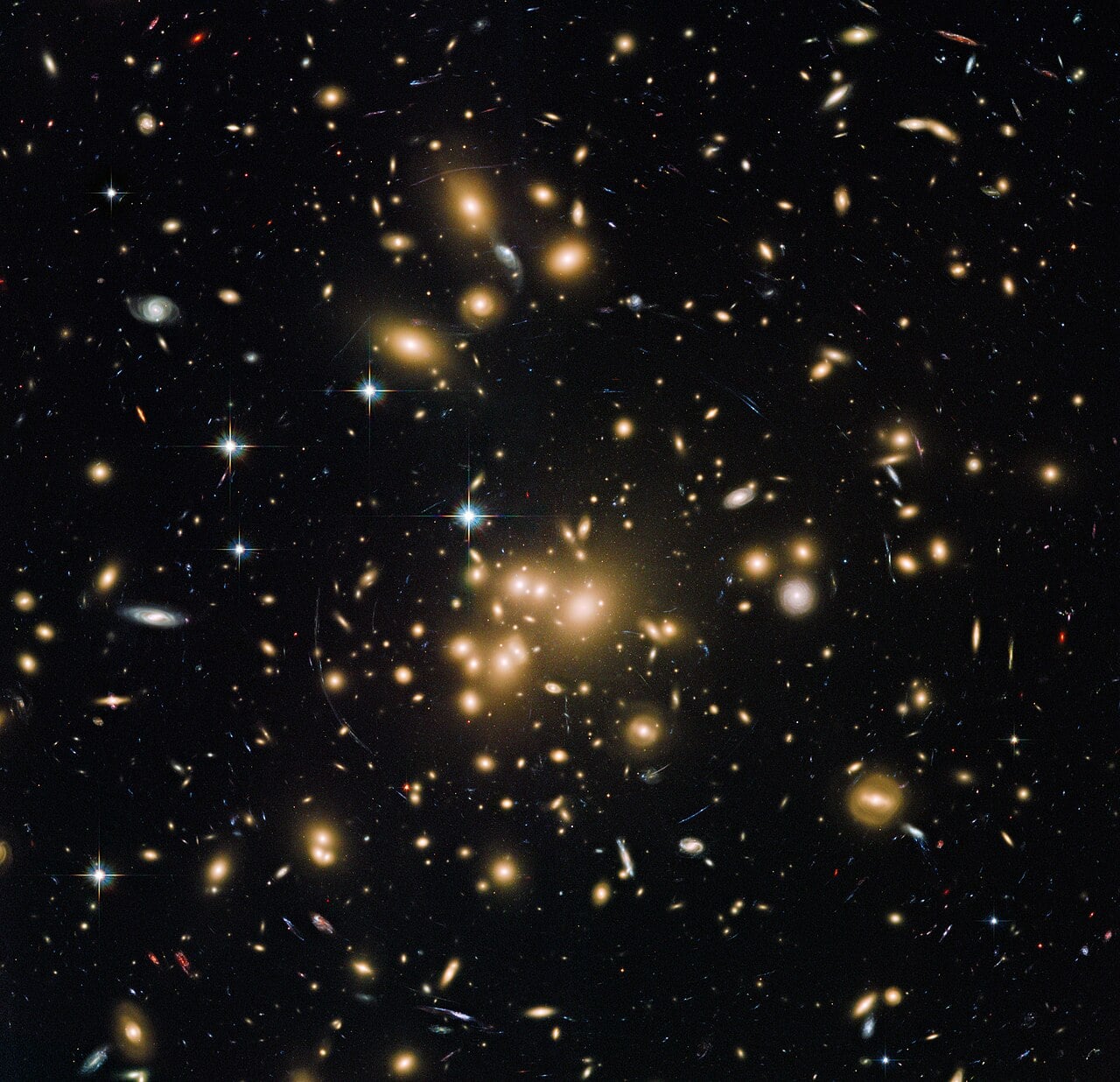
This new Hubble image shows galaxy cluster Abell 1689. It combines both visible and infrared data from Hubble’s Advanced Camera for Surveys (ACS) with a combined exposure time of over 34 hours (image on left over 13 hours, image on right over 20 hours) to reveal this patch of sky in greater and striking detail than in previous observations (Credit : ESA/Hubble)
The catalogue also revealed something unexpected about the clusters themselves, a marked increase in dust related emission further back in time, hinting at how star formation activity around these giant systems has changed as the universe aged.
With upcoming surveys from the Vera Rubin Observatory in Chile and the European Space Agency’s Euclid mission poised to add further confirmations, this catalogue looks less like an ending than an opening chapter, one that promises to sharpen our picture of how the universe grew into the vast, clustered structure we observe today.
Source : South Pole Telescope Analysis Yields Catalog of More than 7,000 Galaxy Clusters


