
Тохокү их сургууль болон JAXA-ийн судлаачид сарны хөрсөн дэх азотын дутагдлыг арилгах, ургамал ургуулах боломжтой технологи бүтээжээ.
Сарны гадаргууг бүрхсэн реголит хөрс нь ургамал ургахад шаардлагатай азотын нэгдэл болон органик бодис агуулдаггүй. Энэхүү асуудлыг шийдвэрлэхийн тулд судлаачид сарны амьдрах орчны агаараас азотыг ялган авч, 100 ваттаас бага цахилгаан ашиглан динитроген пентоксид хий болгон хувиргадаг плазмын төхөөрөмж бүтээжээ. Энэхүү хийг усанд уусгаснаар ургамлын өсөлтөд нэн чухал нитрат бордоо үүсэх бөгөөд уг процесс нь бараг 100 хувийн үр ашигтай ажилладаг байна.
Тус багийнхан бэлтгэсэн нитраттай усаа сарны хөрсний дуурайлган хийсэн дээжид ашиглан будааны үрсэлгээ ургуулжээ. Уг уусмал нь сарны шүлтлэг хөрсний pH-ийг 9.09-өөс 6.76 болгон бууруулснаар кальци, магни, кали зэрэг шим тэжээлийг ургамалд хүртээмжтэй болгож, үндэс гэмтээдэг хөнгөн цагааны ионыг саармагжуулсан байна. Ингэж ургуулсан будаа гурван сарын дараа илүү хүчтэй өсөлт үзүүлж, дөрвөн сар гэхэд үр боловсруулах үе шатандаа хүрсэн байна.
Судалгааны багийн ахлагч Тоширо Канекогийн тайлбарласнаар, уг хийг ургамлын навчинд шууд шүрших нь өвчин эсэргүүцэх чадварыг нэмэгдүүлж, бага таталцлын нөхцөлд ургамал хэт сунахаас сэргийлэн ишний бат бөх байдлыг хангадаг байна. Энэхүү цахилгаанаар ажилладаг технологи нь сар төдийгүй Дэлхий дээрх хөдөө аж ахуйн салбарт аммиак үйлдвэрлэлийн нүүрстөрөгчийн ул мөрийг бууруулах байгальд ээлтэй, тогтвортой шийдэл болох боломжтой юм.
https://www.tohoku.ac.jp/en/press/rice_grown_on_the_moon.html
Дэлгэрэнгүйг эх сурвалжаас харах
Эх сурвалжийг нээх ↓
If humans are ever going to live on the Moon rather than just visit, they will need to grow their own food there, and that means solving a problem lunar soil was never built to handle. Regolith, the grey dust that covers the lunar surface, contains no organic matter and almost none of the nitrogen compounds that plants depend on to grow. Complicating things further, the Moon has no real atmosphere to speak of, so any air a lunar farmer might use would have to come from inside a sealed, pressurised habitat, its nitrogen most likely carried up from Earth or manufactured on site. A team from Tohoku University and the Japan Aerospace Exploration Agency believes they have found a genuinely elegant way to make the most of that precious, enclosed air supply, using nothing more than a bit of electricity.
Orange dirt found in the lunar regolith on Apollo 17, the result of volcanic glass beads (Credit : NASA)
The researchers built a compact plasma device that pulls nitrogen from air, of the kind that would fill a lunar habitat’s living and growing spaces, and converts it into a gas called dinitrogen pentoxide, using less than 100 watts of power to do it. Once that gas is dissolved in water, it forms nitrate, the very nutrient plants need to thrive, and it does so with a conversion efficiency close to one hundred percent. Rather than shipping fertiliser across a quarter of a million miles of space, future lunar farmers could, in principle, recycle the nitrogen already circulating around them into exactly the fertiliser their crops require.
To test whether this actually works in practice, the team applied their nitrate rich water to a simulant of lunar regolith and used it to grow rice seedlings. The results went well beyond simply feeding the plants. Lunar soil is naturally quite alkaline, and the treated water brought its pH down from 9.09 to a far more hospitable 6.76. That single change unlocked a cascade of benefits, releasing calcium, magnesium and potassium that had been chemically trapped in the regolith, while at the same time suppressing aluminium ions that would otherwise damage developing roots. Three months after sowing, rice grown in the treated soil showed markedly stronger growth than rice given only plain water, and by the fourth month the plants had reached the heading stage, the point where rice begins forming grain.
There was a further surprise that spraying the gas directly onto the leaves of the plants activated hormone pathways linked to disease resistance and general plant immunity. It also kept the stems shorter and sturdier, dampening the excessive stretching that plants tend to show in low gravity conditions, a trait that could otherwise leave lunar crops top heavy and fragile.
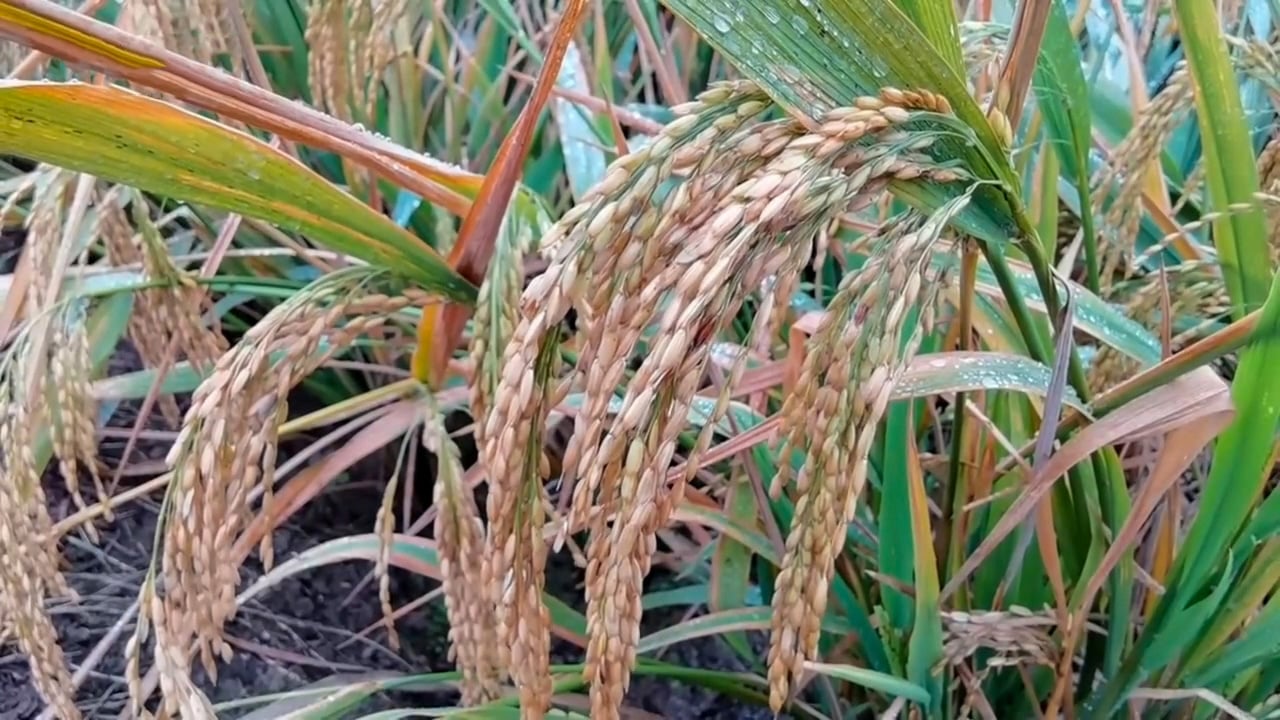
*Rice plant (Oryza sativa) with branched panicles containing many grains on each stem*
Toshiro Kaneko, who led the research, is quick to point out that the benefits are not confined to the Moon. Because the entire process runs on electricity rather than fossil fuels, the same technology could offer a cleaner, more sustainable route to producing nitrogen fertiliser here on Earth, sidestepping the heavy carbon footprint of conventional ammonia production.
It is a reminder that solving the practical puzzles of living off world so often ends up teaching us something useful about living on it. A device designed to coax a harvest from grey lunar dust, using air that future settlers will have carried with them every step of the way, may yet find itself quietly at work in fields much closer to home, long before the first bowl of Moon grown rice is ever served.
Source : Rice grown on the Moon?


