
Туркт болсон НАТО-гийн дээд хэмжээний уулзалтын үеэр АНУ-ын Ерөнхийлөгч Дональд Трамп Украйны Ерөнхийлөгч Володимир Зеленскийтэй харилцаа сайтай байгаагаа илэрхийлсэн ч Украины иргэдийн дунд явуулсан санал асуулгаар түүнийг улс орныхоо найз гэж үзэх хүн цөөн байна.
Киевийн Олон улсын социологийн хүрээлэнгээс 2026 оны зургаадугаар сарын 9-нөөс 26-ны хооронд явуулсан санал асуулгад оролцогчдын 17 хувь нь л Дональд Трампыг Украйны найз гэж үзсэн бол хоёр дахин их буюу илүү олон хүн түүнийг дайсан гэж тодорхойлжээ. Мөн судалгаанд оролцогчдын дийлэнх нь АНУ-ын төлөөлөгчид болох Жаред Кушнер, Стив Виткофф нарын зуучлах үйл ажиллагаанд итгэлгүй байгаагаа илэрхийлсэн байна.
Украинчууд АНУ-ын удирдлагын бодлогод шүүмжлэлтэй хандаж байгаа гол шалтгаан нь цэргийн тусламжийн саатал болон ОХУ-ын эсрэг баримталж буй тодорхойгүй байр суурьтай холбоотой юм. Тухайлбал, ОХУ-ын эсрэг ашиглах зориулалттай 400 сая ам.долларын цэргийн тусламжийн багц одоог хүртэл олгогдоогүй бөгөөд АНУ-ын Patriot зенит пуужингийн системийн нэг хэсгийг Ойрх Дорнод руу шилжүүлснээр Украйны агаарын хамгаалалт суларч, энгийн иргэдийн амь нас хохирох явдал нэмэгдсэнийг тус улсын удирдлагууд онцолжээ.
Гэсэн хэдий ч Украйны иргэд АНУ-ын удирдлага болон Америкийн ард түмнийг ялгаатай байдлаар хүлээн авдаг хэвээр байна. Судалгаанд оролцогчдын 73 хувь нь Америкийн ард түмнийг Украйны найз гэж үздэгээ илэрхийлсэн нь АНУ-ын одоогийн засаг захиргааны бодлого болон ард түмний хандлага хоёрын хооронд ялгаа зааг байдгийг харуулж байна.
Дэлгэрэнгүйг эх сурвалжаас харах
↓Эх сурвалжийг нээх ↓
<![CDATA[{"className":"sc-1ge0fwe-0","newsletterData":{"pianoFieldName":"receiveInsideWashingtonNews","regTitle":"Inside Washington","subscriptionGroup":"inside_washington","subscriptionGroupId":"af764e04-87eb-45e6-a84b-a7455ba70a1e","type":"inside_washington","pathPrefix":"/news/world/americas/us-politics","associatedAuthors":["Eric Garcia","John Bowden"],"title":"Sign up for the daily Inside Washington email for exclusive US coverage and analysis sent to your inbox","mobileTitle":"Get our free Inside Washington email","imageSrc":"https://static.independent.co.uk/static-assets/images/newsletters/insideWashington1_1.png","label":"I would like to receive morning headlines Monday – Friday plus breaking news alerts by email“,”newsletterKey”:”receiveInsideWashington”,”regSourceSection”:”US politics”,”regSourceNewsletter”:”NSC”},”isClimate”:false}]]>
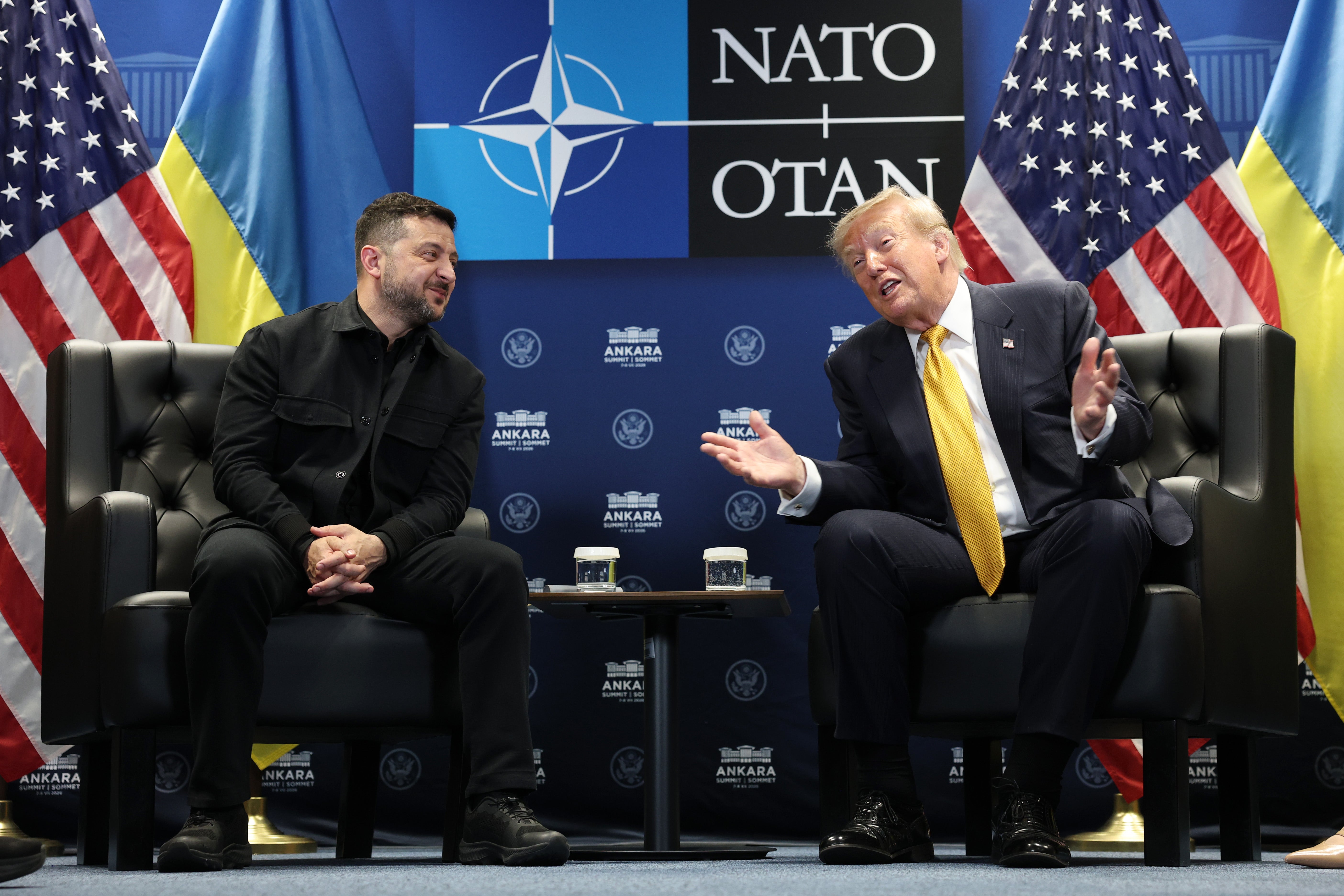
U.S. President Donald Trump lauded the “very good relationship” he has developed with his Ukrainian counterpart, Volodymyr Zelenskyy, at the NATO summit in Turkey on July 8, 2026.
In a meeting of the pair that lacked the acrimony of earlier encounters, Trump added that Ukraine has “such great people,” too. He has expressed different views privately in the past.
But what do everyday Ukrainians think of Trump?
For more than a decade, we have organized and conducted public opinion polls in Ukraine. While polling has become more difficult since Russia’s full-scale invasion in 2022, our surveys have provided a window into Ukrainian public opinion in the territories not occupied by Russia.
cookie.trim() === ‘__DEBUG__=true’)) { console.log(‘Ad logs: “mpu1”, injectedAtParagraph: 3’); }]]>
In our latest survey, we drilled down on how Ukrainians felt toward Trump and his administration’s diplomatic efforts, and toward Americans more generally.
Fielded by the Kyiv International Institute of Sociology, we arranged for a computer-aided telephone survey of 1,801 Ukrainians across government-controlled Ukraine from June 9-26, 2026.
Here’s what we learned:
Trump is seen as more enemy than friend
Trump has openly expressed his admiration of Russian President Vladimir Putin on many occasions. When he returned to office, Trump initiated a sharp break from the policies of his predecessor Joe Biden. The U.S. now sends less military aid to Ukraine, although U.S.-made arms continue to flow to the country thanks to European funding. A promised US$400 million military aid package has not yet been released.
cookie.trim() === ‘__DEBUG__=true’)) { console.log(‘Ad logs: “taboola-carousel-thumbnails”, injectedAtParagraph: 6’); }]]>
Trump famously chastised Zelenskyy in a 2025 Oval Office meeting and has pressured the Ukrainian president to give up land to satisfy Putin’s territorial desire for all of the Donbas region of eastern Ukraine.
Yet Washington continues to provide Ukraine with intelligence, which is used by Kyiv for targeting its middle- and long-range drone strikes inside Russia. Washington also still enforces significant sanctions against Russia, including Moscow’s oil exports, although it has granted specific waivers of late.
cookie.trim() === ‘__DEBUG__=true’)) { console.log(‘Ad logs: “mpu2”, injectedAtParagraph: 8’); }]]>
To understand what Ukrainians make of all this, we asked them a direct question about Trump: Is he a friend or an enemy of their country, or a bit of both?
The results showed that only 17% of Ukrainians surveyed consider Trump a friend. More than double that consider him an enemy of Ukraine. Almost a quarter say he’s a bit of both, with a similar percentage responding “don’t know.”
Few have confidence in US negotiators
In April 2026, Zelenskyy invited Trump’s envoys – his son-in-law Jared Kushner and a real estate friend Steve Witkoff – to come to Ukraine “to see, to understand and to explain to President Trump” what the country needs.
cookie.trim() === ‘__DEBUG__=true’)) { console.log(‘Ad logs: “mpu3”, injectedAtParagraph: 11’); }]]>
It was, Zelenskyy added, “disrespectful” to confine their visits to Moscow but not Kyiv. So far, however, Kushner and Witkoff have declined to visit Kyiv. A U.S. administration official recently told The New York Times that Kushner and Witkoff were prepared to travel to Russia and Ukraine if there was something new to discuss, but that they would not travel “for a photo op.”
When asked about their “confidence in the U.S. team that negotiates with Putin to end the war,” just a third of Ukrainians expressed some confidence. A clear majority (57%) said they had no confidence in Kushner and Witkoff, and a paltry 2% had high confidence in U.S.-led negotiations.
Mixed feelings about US global role
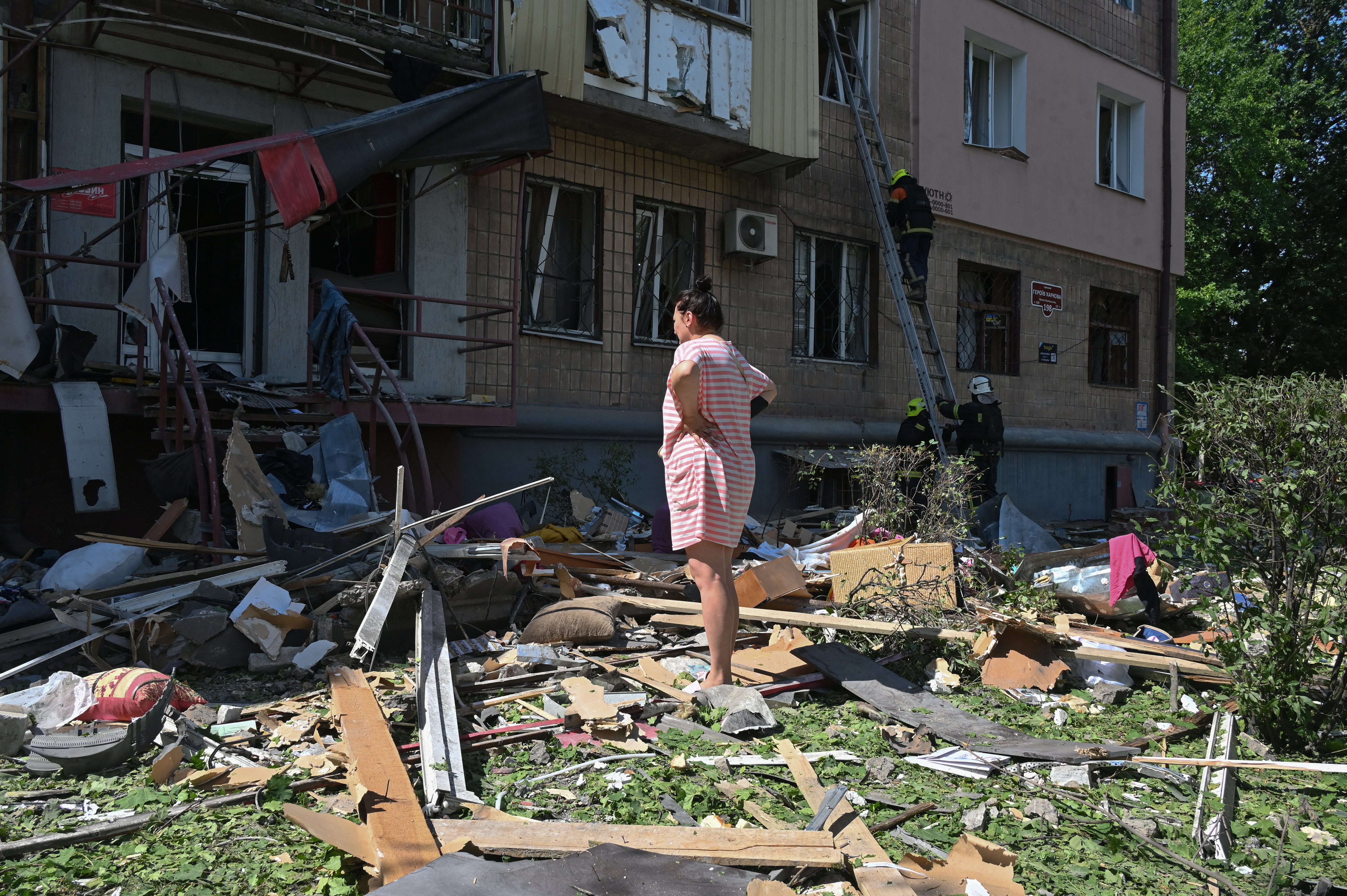
The conflict in Ukraine has been overshadowed of late by the Iran war. Many of the U.S. Patriot missiles that Ukraine says it needs to protect itself from Russian attacks were abruptly diverted to the Middle East after the U.S.-Israeli attacks of Feb. 28, 2026. As a consequence, Ukrainian stocks have run out and more Russian missiles are getting through and killing Ukrainians; June saw the highest number of civilian deaths in three years.
Ukraine and its allies had hoped the U.S.-Iran ceasefire would see the European war return to the top of Washington’s foreign policy agenda. But the ceasefire remains fragile, with the U.S. stuck in a condition between war and peace. Zelenskyy recently complained: “Unfortunately, we are in the queue of wars.”
Gerard Toal is a Professor of Government and International Affairs at Virginia Tech.
John O’Loughlin is a Professor of Geography at University of Colorado Boulder.
Sarah Wilson Sokhey is an Associate Professor of Political Science, University of Colorado Boulder.
This article is republished from The Conversation under a Creative Commons license. Read the original article.
We wanted to know how the U.S. administration’s actions in the Middle East – as well as other interventions elsewhere – had influenced Ukrainians. Asked how they feel about the U.S. role in world affairs today, just 7% of respondents to our survey said they felt positively toward Washington. A quarter (26%) felt negatively, with the clear majority (62%) saying they had mixed feelings.
Warmer views of Americans, generally
Many foreign policy experts in the U.S. and Europe have decried the long-term damage the Trump administration is doing to the image of Americans in world affairs. To test the latter proposition, we also asked Ukrainians if they now viewed Americans as friends or enemies of their country.
The results decisively show that Ukrainians still consider Americans in general to be a friend, with a solid majority of 73% judging them as such. Only 4% consider them as enemy, with 11% indicating it is a bit of both.
We believe this is a stark display of confidence in the American people that contrasts with Ukrainians’ negative view of Trump. It also suggests that ordinary Ukrainians are capable of distinguishing between the policies of the current U.S. president and his advisers, and the country’s people as a whole.
Russia’s invasion in Ukraine has developed into a protracted war of endurance with no clear end in sight. Amid continued fighting and mounting deaths, Ukrainians appear pessimistic about current U.S. efforts to mediate between the two warring countries.
Washington needs the trust of Ukrainians if it is to succeed in mediating peace in Europe. That an overwhelming majority of people there view Americans as friends presents an opportunity for U.S. leaders to regain their confidence – even if Ukrainian’s opinion of current U.S. leadership is low.


