Эрдэмтэд зөгийний хүр хорхойн бүтцийг дуурайлган, байгалийн задралд ордог, бат бөх шинэ төрлийн материалыг лабораторийн нөхцөлд гарган авчээ.
Хуванцрын бохирдлыг бууруулах зорилгоор судлаачид байгалийн гаралтай, бат бөх, задралд ордог материалыг идэвхтэй эрэлхийлж байна. Ютагийн их сургуулийн молекул биологич Оран Вассерман болон түүний багийнхан олон төрлийн шавж, тэр дундаа зөгий торгомсог утас ялгаруулдаг болохыг судалж, үүнийг үйлдвэрлэлийн аргаар гарган авах шинэ аргыг боловсруулжээ. Зөгий нь үр төлөө хамгаалах, гадны нөлөөнөөс тусгаарлах зорилгоор ийнхүү торгомсог хүр хорхойг нэхдэг байна.
Судлаачид цэнхэр жимсний зөгий (Osmia lignaria) хэмээх шавжийн ялгаруулсан торгон утасны бүтцийг судалж, түүнийг лабораторийн аргаар синтезлэх боломжтойг баталжээ. Уг арга нь зөгийний авгалдайг 3D хэвлэмэл үүрэнд өсгөж, торго ялгаруулж эхлэх үед нь утас бүрийг гэмтээхгүйгээр цуглуулах нарийн процесс юм. Үүний үр дүнд гарган авсан уургийн нэгдлүүдийг (фиброин) ашиглан нэвт гэрэлтдэг, уян хатан, бичил биетний эсрэг үйлчилгээтэй нимгэн хальс бүтээсэн нь дэлхийд анхны тохиолдол болж байна.
Зөгийний торго нь цооролтод тэсвэртэй, амьсгалдаг шинж чанартай тул анагаах ухааны оёдол, эд эсийн инженерчлэл болон техникийн нэхмэл эдлэлд ашиглах өндөр ирээдүйтэй юм. Одоогоор Вассерманы баг зөгийний торгоны бүтцийг гүний далайн хаг загасны салс (hagfish slime)-тай хослуулан илүү бат бөх нийлмэл материал гарган авахаар туршиж байна. Энэхүү судалгаа нь байгалийн олон янз байдлыг ашиглан орчин үеийн материалын салбарт хувьсгал хийх боломжийг нээж өгч байна.
Дэлгэрэнгүйг эх сурвалжаас харах
↓Эх сурвалжийг нээх ↓
While the world drowns in plastic, researchers are on the hunt for practical materials that are lightweight, tough, and biodegradable.
In recent years, scientists have increasingly turned to the natural world for inspiration – with a whole lot of research focusing on the impressive features of spider silk.
But there’s another promising alternative hiding in plain sight: bee silk.
If you’re scratching your head right now, you’re not alone. Most people have never heard of bee silk.
“Silk production is far more widespread in nature than most people realize,” Oran Wasserman, a molecular biologist who completed his doctorate at Utah State University in Justin Jones’ Spider Silk Lab, told ScienceAlert.
“Silk has evolved independently many times, with at least 23 separate origins in insects alone,” Wasserman explained, including ants, bees, and wasps.
Earlier this year, Wasserman and his team became the first to create a film of a specific type of bee silk –an important first step in harnessing the power of the incredible material.
In the insect world, silk can be used for anything and everything from web-building to nest construction to cocoon-spinning.
For bees specifically, the purpose is protection.
“Social bees, such as honey bees and bumble bees, produce silk to line the brood cells of their colonies,” said Wasserman.
“Solitary bees, which make up about 75 percent of all bee species, spin silk to construct cocoons that provide protection from environmental stressors.”
That’s right, around three quarters of all bee species spin silk.
“Silk production is far more widespread in nature than most people realize,” – molecular biologist Oran Wasserman
Researchers have actually been looking into the properties of different bee silks for the past 20 years, but Wasserman and the Jones lab have taken things a step further by creating a non-invasive approach to synthesizing the silk.
This is important, because even though everyone knows how impressive spider silk is – five times stronger than steel by weight! – it has proven incredibly hard to reproduce in the lab.
Wasserman’s research focused on the blue orchard bee (Osmia lignaria), a solitary bee and important orchard pollinator with small, brownish, elongated cocoons that have a distinctive nipple-shaped cap at one end.
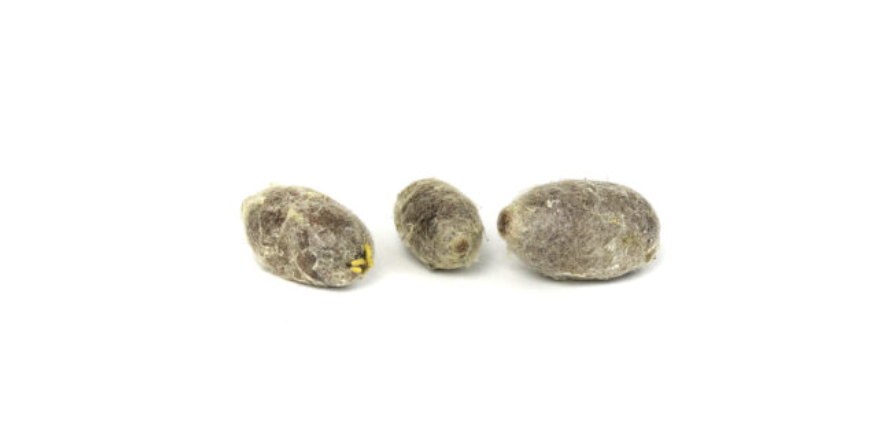
These cocoons are tougher than they look.
Despite both using silk to make cocoons, silkworms and blue orchard bees produce their silk very differently. A silkworm spins its cocoon from a single continuous thread.
A bee larva takes a more architectural approach, explained Wasserman. It anchors silk to the nest cell wall, pulls the strand across using its head movements, and fastens it at a new spot, repeating the process until fully enclosed.
The resulting cocoon has only a few structural layers, but they work together to balance gas exchange, mechanical protection, moisture retention, and parasite resistance.
That last point matters more than it sounds.
Solitary bee cocoons face a very real threat: parasitoid wasps. These are wasps that locate bee cocoons using chemical signals, then attempt to punch through with a needle-like appendage to lay eggs inside the developing bee (ew, we know).
The bee silk cocoon is essentially the larva’s only line of defense.
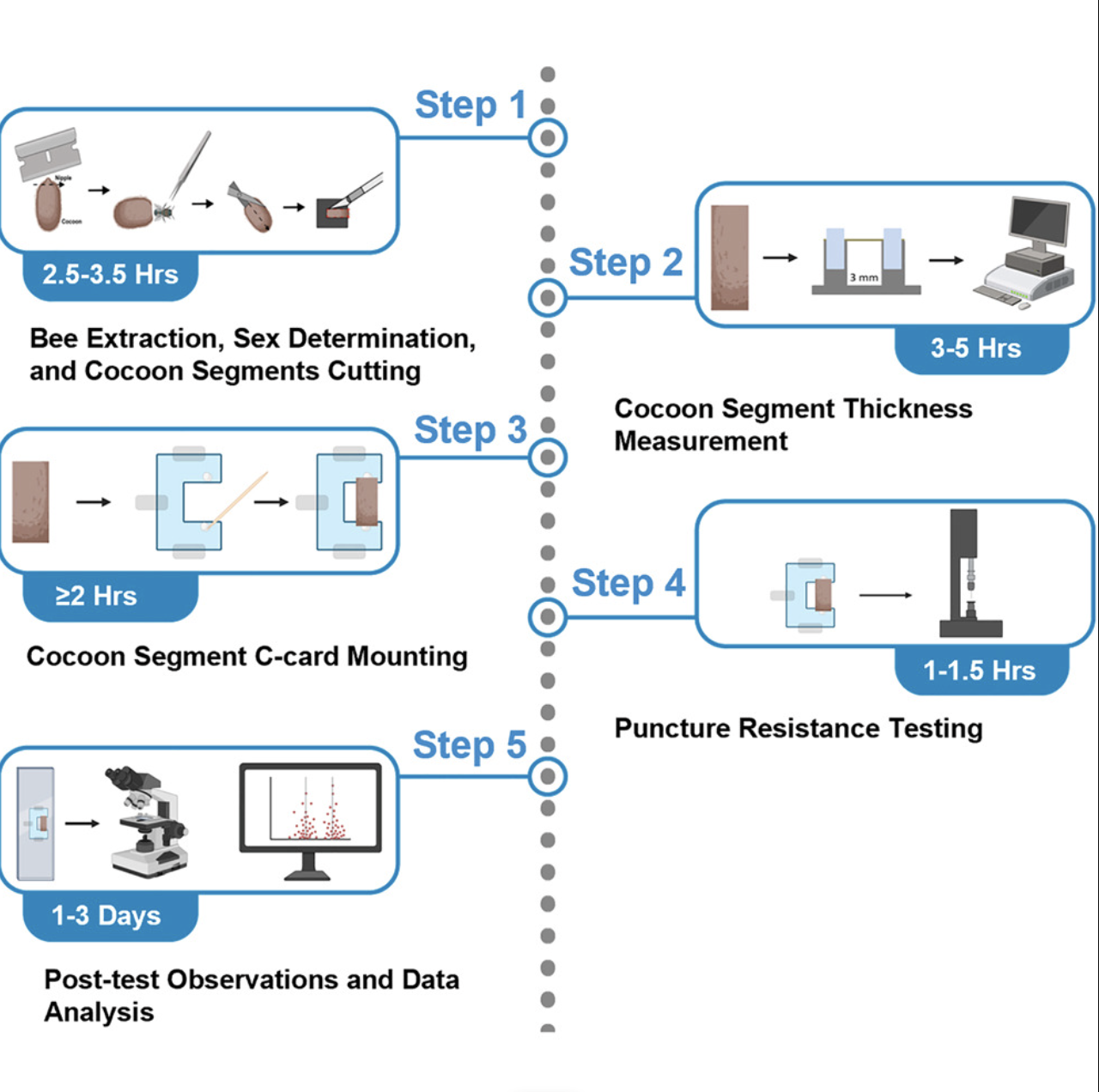
And as well as being incredibly puncture-proof (a property the Jones Lab is actively studying further with a new protocol), the material is also flexible, antimicrobial, and breathable.
Exactly the combination you’d want in next-generation biomedical materials like surgical sutures, tissue-engineering scaffolds, and technical textiles.
The challenge with harnessing these properties, however, was recreating the silk outside of the bee larva.
Wasserman’s initial attempts involved isolating single silk fibers from completed cocoons, but the process was laborious and resulted in a lot of broken strands. So the team went back to the source.
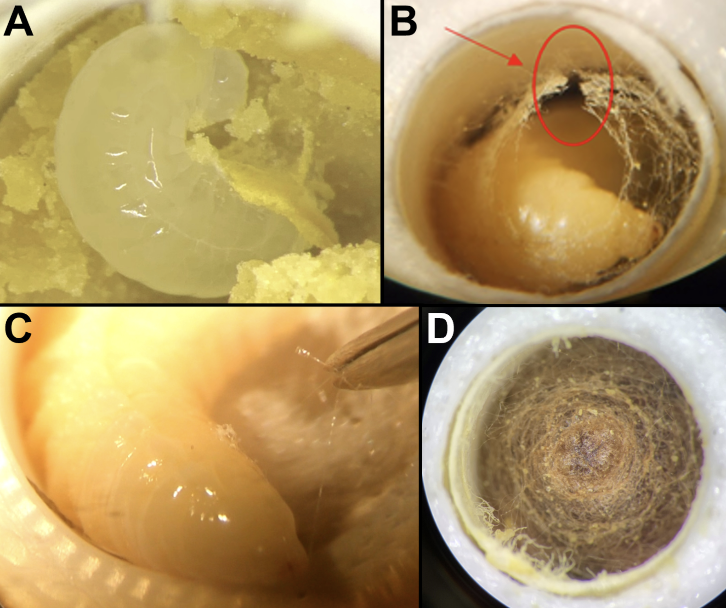
“The protocol we developed isolates the silk fibers directly from the larva’s mouth,” Wasserman explains.
To do this, they use a 3D-printed rearing system that mimics the bees’ natural nest cavity and then they actually raise bee larvae inside.
The team monitors each larva daily and steps in at the exact moment it begins spinning – when the first threads are still loose and within reach.
The fibers are then isolated and mounted for mechanical testing.
“One of the most promising aspects of the protocol is that the larvae continue to form their cocoons, indicating that the method is minimally invasive,” explained Wasserman.
With those strands isolated, the team has now been able to produce the silk from scratch, using molecular biology techniques to insert the target genes into an engineered microorganism that pumped them out in the lab.

They then purified the resulting proteins (called fibroins) and cast them into transparent, freestanding films.
This is the first time a solitary bee silk protein has ever been produced this way and turned into a material.
While it’s not directly usable for any applications just yet, the technique opens the door for more study of bee silk across different species.
For example, it’s known that honeybee silk is stretchier than orchard bee silk, and this same technique could potentially be used to recreate that silk, or even mix it with other materials.
That’s what Wasserman and his team are doing now with their bee silk – combining it with something even stranger: hagfish slime.
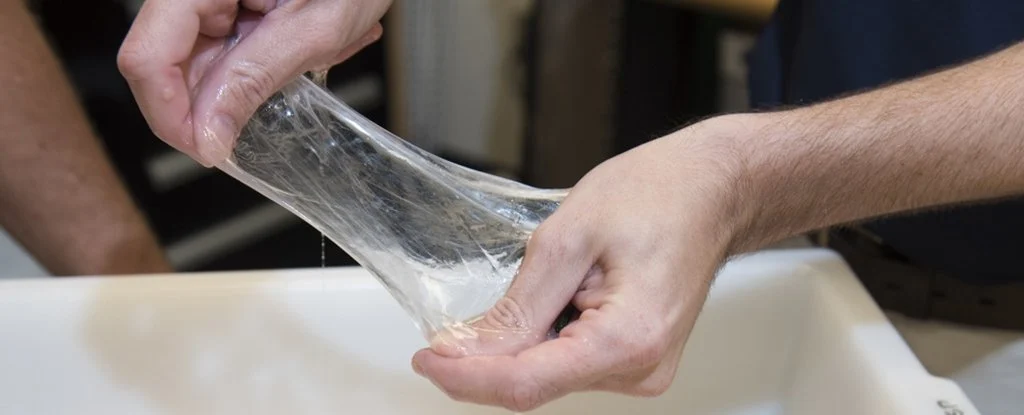
Hagfish are ancient, jawless deep-sea fish that release a viscous secretion when threatened. This secretion rapidly expands in seawater, clogging the gills of whatever is attacking them.
That slime is a mix of mucus and fine protein threads, and when those threads are stretched and dried, their mechanical properties approach those of spider silk.
Wasserman’s lab uses the same molecular workflow for both hagfish proteins and bee silk, and both materials share a similar underlying protein structure. This means they could potentially be blended together into materials that combine the best properties of each.
Related: The US Navy Is Engineering Hagfish Slime to Stop Missiles And Sharks
“Silk has been used for various purposes for millennia,” said Wasserman. “Even so, most of that attention has gone to a handful of species, mainly the silkworm and spiders.
“Across insects more broadly, silk is strikingly diverse, spun by many species that vary in its composition and mechanical properties … But surprisingly many aspects, such as their silk and cocoons, remain understudied.
“As the field continues to progress, I expect many of those open questions will start to get answered.”
The research has been published in PLOS One and SynBio.
This article was fact-checked by Rachel Garner and edited by Peter Dockrill. While we pride ourselves on our process, we are only human. If you spot a mistake, please let us know.