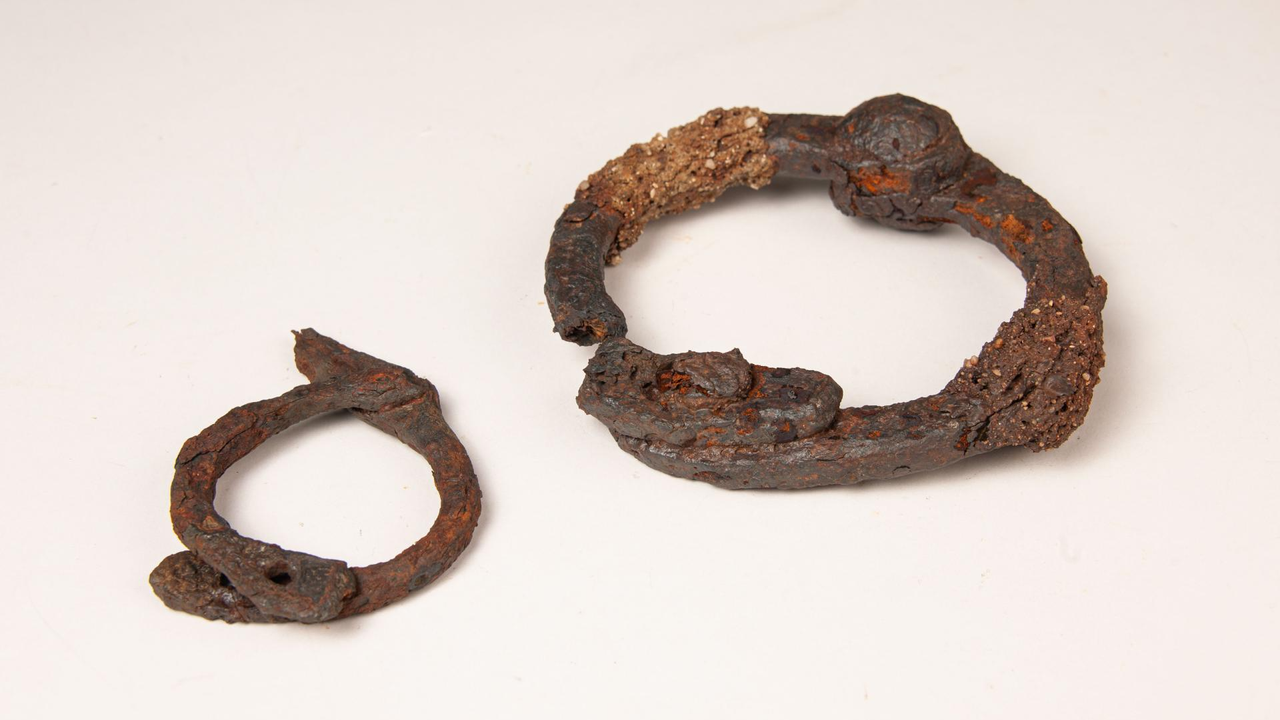
Археологичид Францын Аллон хотын 2300 жилийн настай Кельтийн суурингаас төмөр дөнгөний таван хос олсон нь тухайн бүс нутагт боол худалдаачид үйл ажиллагаа явуулдаг байсныг баталж байна.
Францын Урьдчилан сэргийлэх археологийн судалгааны үндэсний хүрээлэнгийн (INRAP) мэдээлснээр, 2019 онд эхэлсэн малтлагаар олдсон эдгээр төмөр эдлэлүүд нь тухайн үеийн түүхэнд нэн ховор тохиолддог олдвор юм. Судлаачид бугуй болон шагайнд зүүх зориулалттай төмөр дөнгөнүүдийг илрүүлсэн бөгөөд эдгээр нь нийгмийн доод давхаргын хүмүүс буюу боолуудыг хорьж байсан болохыг илтгэж байна. Кельтийн металл урлалын мэргэжилтэн Тьерри Лежарсын үзэж буйгаар, зэвсэг болон дөнгөний олдвор нь тухайн нийгэмд эрх мэдэлтэй бүлэг болон боолчлогдсон бүлгүүдийн хоорондох шаталсан зохион байгуулалт байсныг харуулж байна.
Аллон хотын суурин нь МЭӨ III зуунд шашны цогцолборын хамт байгуулагдсан бөгөөд тэнд дархан, зэс болон хүрэл урлаачид ажилладаг байжээ. Малтлагаар сэлэм, жадны үзүүр, түлхүүр зэрэг өндөр чанарын металл эдлэлүүд олдсон нь тус суурин нь эдийн засгийн чухал төв байсныг гэрчилнэ. Мөн археологичид шашны зан үйлийн зориулалтаар зориуд эвдэж муутгасан хувцас, гоёл чимэглэл болон олон зууны туршид хамаарах зоосны цуглуулгыг илрүүлсэн байна.
Кельтүүд дайны олзлогдогчид, ялтан болон өртэй хүмүүсийг боолчилдог байсан ч энэ талаарх түүхэн баримт хомс байдаг. Тиймээс Аллон хотоос олдсон төмөр дөнгөнүүд нь Ромын эзэнт гүрэнд нэгдэхээс өмнөх үеийн Галл нутагт боолчлол ямар байсныг судлахад чухал ач холбогдолтой юм. Судалгааны багийнхны таамаглаж буйгаар, бугуйн дөнгөний хэмжээ нь тэдгээрийг эмэгтэйчүүд эсвэл хүүхдүүдэд хэрэглэж байсныг илэрхийлж байна.
Дэлгэрэнгүйг эх сурвалжаас харах
↓Эх сурвалжийг нээх ↓
Archaeologists have found five pairs of iron shackles at a 2,300-year-old Celtic site in France — a discovery that suggests the small settlement was frequented by metalsmiths and slave traders.
The “extremely rare” shackles were discovered in the town of Allonnes in France’s Loire Valley in 2019, but the finds from the two-year-long excavation were announced to the public on July 9 in a translated statement from the French National Institute for Preventive Archaeological Research (INRAP).
The settlement at Allonnes was established along with a religious complex in the third century B.C., according to the statement. Specialist artisans — including blacksmiths, coppersmiths, bronze workers and sheet-metal workers — plied their trade from small workshops, archaeologists found at Allonnes.
During the excavation, the team discovered a large number of high-quality metal objects — such as swords, spearheads, keys and horse harness fittings — but the iron shackles were a surprise because they are extremely rare for the time period. Excavators found a double-wrist restraint, an ankle restraint and three other portions of metal restraints.
The presence of shackles suggests that Allonnes may have been a hub for slave trading in the Late Iron Age (450 to 50 B.C.), according to the statement.
“The identification of restraints and weapons suggests a hierarchical social organization composed of dominant and subordinate groups — prisoners or slaves,” Thierry Lejars, a specialist in Celtic metalwork, said in a translated interview with INRAP.
The Gauls, a loose association of Celtic tribes, were known to enslave prisoners of war, convicts and debtors, according to the statement, and they were often forced to work in the fields. These men, women and children then lost their rights and could be bought and sold by their owners. Because the Celts did not leave many historical records of their own, however, not much is known about the practice of slavery in pre-Roman Gaul. The shackles from Allonnes provide new insight into the lives of people who were typically invisible in historical accounts.
The small diameter of the wrist restraint — 2.4 inches (6 centimeters) — suggests it may have been used on a woman or a child, according to the statement. And the ankle restraint was over 2.2 pounds (1 kilogram), revealing the weight that enslaved people had to carry around.
Archaeologists also uncovered a religious sanctuary at Allonnes, along with offerings that included clothing and jewelry such as rings and amulets. Many of the offerings had been deliberately deformed or mutilated, likely to transform a mundane possession into a gift for the gods, the statement reported.
Hundreds of coins were also recovered at the site, and their mint dates spanned more than five centuries, Isabelle Bollard-Raineau, an ancient-coin expert with the French ministry of culture, said in the translated INRAP interview. About a third of the coins found at Allonnes had been filed, sheared or etched with a chisel.
“These mutilations reveal a ritual intention: the removal of the coin’s commercial function in order to dedicate the object to the sacred, thereby ensuring the permanence of the offering,” Bollard-Raineau said.
Allonnes was a significant Celtic site at the intersection of several major roads in ancient times, and the analysis of the metal finds has revealed important new information about some of the most powerless members of Gallic society.
See how much you know about the Celts with our Celtic quiz!

