АНУ-ын Ерөнхийлөгч Дональд Трамп Юта муж дахь “Bears Ears” болон “Grand Staircase-Escalante” үндэсний дурсгалт газруудын талбайн хэмжээг багасгах шийдвэр гаргаснаа даваа гарагт мэдэгдлээ.
Тэрээр өөрийн бүрэн эрхийн эхний хугацаанд гаргаж байсан боловч дараагийн засаг захиргаа нь цуцалсан энэхүү шийдвэрээ дахин хэрэгжүүлэхээр зэхэж байна. Энэхүү алхам нь 1906 оны “Эртний эд өлгийн тухай хууль”-ийн дагуу соёл, түүх, шинжлэх ухааны ач холбогдолтой газруудыг хамгаалах ерөнхийлөгчийн эрх мэдлийг ашиглаж, өмнөх засаг захиргааны шийдвэрүүдийг сорьж буй хэрэг юм.
Юта мужийн албаны хүмүүс газрын менежментийг орон нутгийн түвшинд шийдвэрлэх нь зүйтэй гэж үзэн уг шийдвэрийг дэмжиж байна. Харин байгаль хамгаалагчид болон нутгийн уугуул иргэдийн төлөөлөл энэ нь ашигт малтмалын олборлолтыг нэмэгдүүлж, соёлын өвийг үл хүндэтгэсэн үйлдэл хэмээн болгоомжилж байгаа юм.
АНУ-ын түүхэнд Ерөнхийлөгч нар “Эртний эд өлгийн тухай хууль”-ийг ашиглан дурсгалт газруудыг байгуулах болон тэдгээрийн хэмжээг өөрчлөх үйл ажиллагааг удаа дараа явуулж ирсэн. Тухайлбал, Вудроу Вилсон, Харри Трумэн, Дуайт Эйзенхауэр нар өмнөх ерөнхийлөгчдийн тогтоосон хамгаалалтын бүсийг багасгаж байсан удаатай.
Одоогийн байдлаар АНУ-д 100 гаруй үндэсний дурсгалт газар байдаг бөгөөд тэдгээрийг ихэвчлэн ерөнхийлөгчийн зарлигаар байгуулдаг. Эдгээр газар нь Үндэсний цэцэрлэгт хүрээлэнгийн алба (National Park Service) болон Газрын менежментийн товчоо зэрэг байгууллагуудын хяналтад байдаг бөгөөд уул уурхай, бүтээн байгуулалтын үйл ажиллагаанд хатуу хязгаарлалт тавьдаг байна.
Дэлгэрэнгүйг эх сурвалжаас харах
↓Эх сурвалжийг нээх ↓
President Donald Trump announced Monday his intention to scale back the Bears Ears and Grand Staircase-Escalante national monuments in Utah, revisiting actions from his first term that were later reversed.
This move directly challenges proclamations by his predecessors, who deemed these sites worthy of preservation under the 1906 Antiquities Act, a law granting presidents power to protect areas of cultural, historic, or scientific interest.
The back-and-forth over these protected areas underscores how national monuments have become a significant flashpoint in the management of public lands.
While Trump made similar reductions during his first term, which were subsequently undone by his successor, he is not the first president to reduce the size of such monuments.
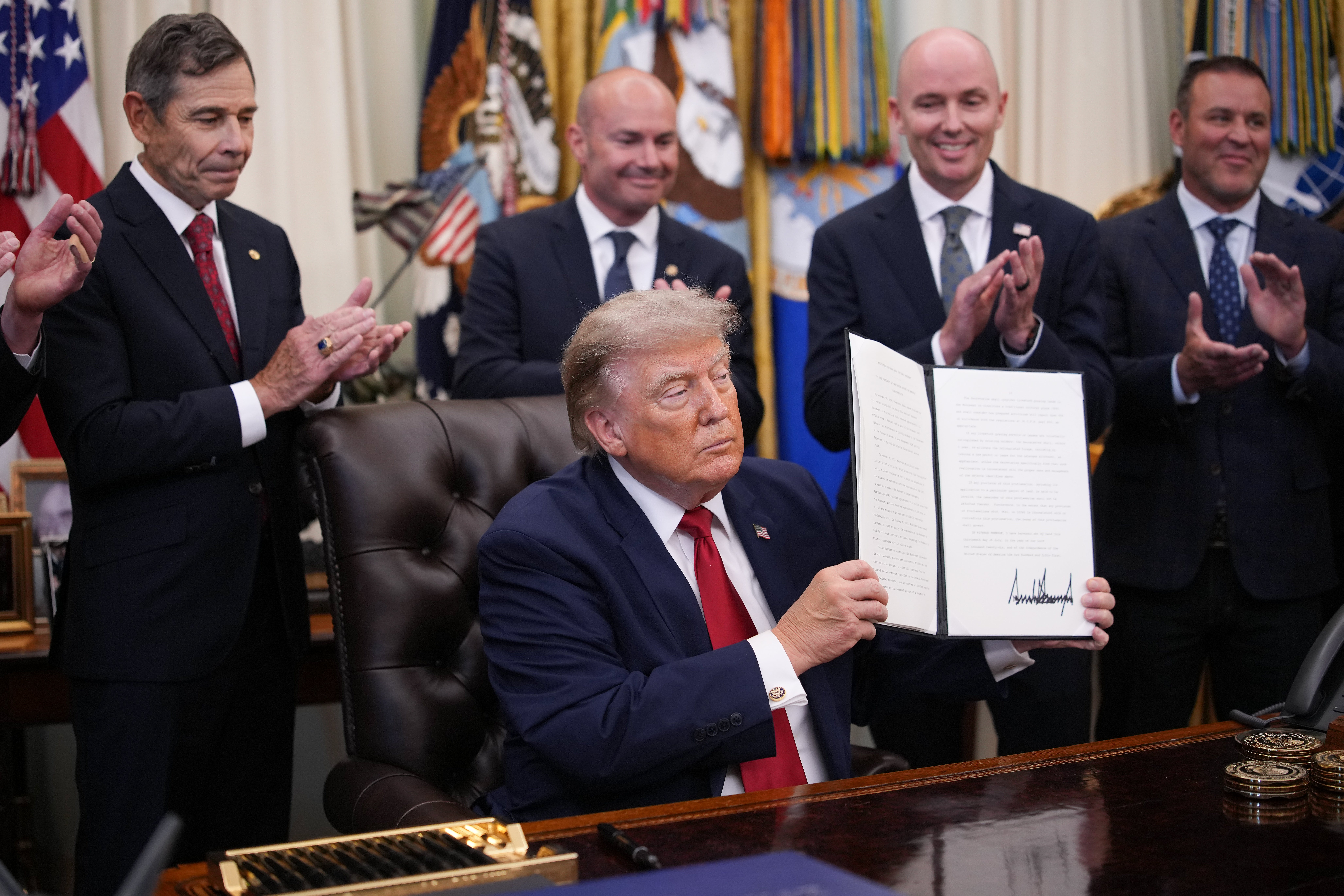
Here’s a look at U.S. national monuments and presidents who have created or reshaped them:
How many national monuments have Biden and Trump acted on?
Trump made only a handful of Antiquities Act proclamations during his first term, including two that reduced the size of Bears Ears and Grand Staircase-Escalante monuments. The sprawling Utah monuments include stunning natural features and sites sacred to some Native American tribes. Grand Staircase-Escalante also holds large coal reserves, while the Bears Ears area has uranium.
Trump also dedicated the 340-acre (138-hectare) Camp Nelson National Monument in Kentucky — a Union Army hospital and recruiting center for African American troops during the Civil War.
Biden’s first use of the act was to restore the size of Bears Ears and Grand Staircase Escalante. He cited their spiritual, cultural and prehistoric legacy.
Biden established 10 new monuments, among them the site of a 1908 race riot in Springfield, Illinois, and a monument honoring Mamie Till-Mobley and her son, Emmett, a Black teenager from Chicago who was tortured and killed in 1955 after he was accused of whistling at a white woman in Mississippi. He also established monuments in the mountains of California and on a sacred Native American site near the Grand Canyon.
State officials, conservationists and tribes react
Proponents of the reductions say the protective boundaries stretch too far and hinder mining for essential minerals. Trump framed the move as giving back land to the people during a signing event at the White House on Monday.
The order was applauded by Utah officials, who have long argued that the state should be in charge of managing its own lands.
“The question has never been whether to protect them, but how to protect them best,” said Gov. Spencer Cox, a Republican. His office assured the lands left out of the modified boundaries “remain protected under existing federal and state law.”
But some conservationists and citizens of local tribal nations warned the order opens the door to mining interests while disrespecting tribal co-stewardship. Bears Ears is jointly managed by an agreement between tribal nations and federal agencies.
“Our connection to this place cannot be erased by the stroke of a pen,” said Davina Smith-Idjesa, a citizen of the Navajo Nation and co-chair of the Bears Ears Inter-Tribal Coalition.
Is it legal to shrink or eliminate monuments?
Environmental groups have argued the Antiquities Act is a one-way road that allows presidents to create but not undo monuments. But there’s a history of presidents taking actions similar to Trump’s.
Since 1912, presidents have issued more than a dozen proclamations that diminished monuments, according to a National Park Service database.
In Washington state, Woodrow Wilson reduced the acreage of Mount Olympus National Park — now Olympic National Park — by roughly half. Harry Truman did the same for Santa Rosa Island National Monument.
Dwight Eisenhower was most active in undoing proclamations of his predecessors as he diminished six monuments, including Arches in Utah, Great Sand Dunes in Colorado and Glacier Bay in Alaska, which have all since become national parks.
How is a national monument different from a national park or forest?
Unlike national parks, which are established by Congress, most of the more than 100 national monuments were created by presidents.
They’re governed by one or more agencies such as the National Park Service, Bureau of Land Management or National Oceanic and Atmospheric Administration.
A designation provides sweeping protections not just for significant geological features or artifacts but also for the surrounding landscape, banning drilling, mining and new construction. Backers downsizing the Utah monuments said the protective boundaries stretched too far and hindered mining for critical minerals.
The U.S. Forest Service was established in 1905 and has jurisdiction over some 300,000 square miles (775,000 square kilometers) of land, including 154 national forests and 20 national grasslands in 43 states.
Under federal law, the forest lands are managed for renewable resources — including timber, clean water, wildlife habitat, forage for livestock and recreation. But many forests overlay valuable minerals and parcels can be leased by private companies for the extraction of nonrenewable resources such as oil, gas and coal.
Some forests contain specially designated wilderness areas where human activities are curtailed. Even bicycles and hang gliders aren’t allowed because they are mechanical.
National parks have some of the most stringent rules against development under a 1916 law known as the Organic Act. The law says the fundamental purpose of the parks is to conserve their scenery, nature, history and wildlife.
How long have presidents been creating monuments?
President Theodore Roosevelt signed the Antiquities Act after a generation of lobbying by educators and scientists who wanted to protect sites from commercial artifact looting and haphazard collecting by individuals. It was the first law in the U.S. to establish legal protections for cultural and natural resources of historic or scientific interest on federal lands.
On Sept. 24, 1906, Roosevelt used it to designate a national monument at Devils Tower — a giant rock butte in eastern Wyoming that later gained fame as the focus of the movie “Close Encounters of the Third Kind.”
For Roosevelt and others, science was behind safeguarding Devils Tower. Scientists have long theorized about how once-molten lava cooled and formed the massive columns that make up the geologic wonder. Narratives among Native American tribes, who still conduct ceremonies there, detail its formation.
All but three presidents have used the act to protect unique landscapes and cultural resources.