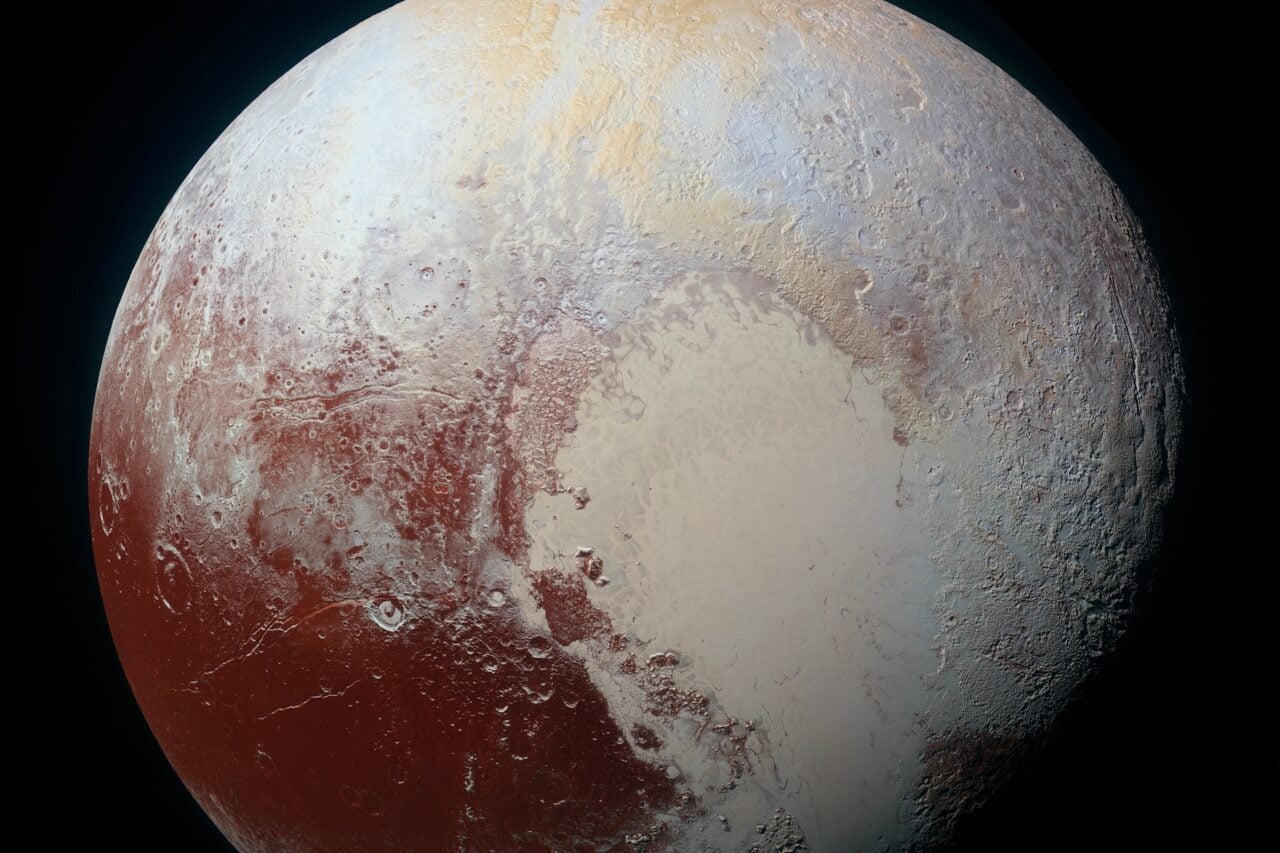
Эрдэмтэд NASA-гийн “New Horizons” сансрын хөлгийн цуглуулсан зурагт дүн шинжилгээ хийснээр Плутон гараг дээрх хөрсний томоохон гулсалтын анхны баримтыг олж илрүүлжээ.
2015 оны долдугаар сард “New Horizons” хөлгийн авсан өндөр нарийвчлалтай зураг болон топографийн газрын зурагт үндэслэн судлаачид Плутоны нөлөөллийн тогоонуудад нийт зургаан хөрсний гулсалтыг илрүүлсэн байна. Эдгээр гулсалтын хамгийн том нь 130 хавтгай дөрвөлжин км талбайг хамарч байгаа бол бусад нь 1200-аас 1500 метрийн өндөртэй байна. Эдгээр үйл явц нь тогооны доторх хана дагуу хавирган сар хэлбэртэй үүсэж, ёроолд нь мөсөн блок болон хог хаягдлын хуримтлал үлдээжээ.
https://www.sciencedirect.com/science/article/pii/S0019103526002769?via%3Dihub
https://science.nasa.gov/photojournal/landslides-on-charon/
Хөрсний гулсалт нь Дэлхий болон Ангараг, Церера, Веста зэрэг сансрын бусад биет дээр элбэг тохиолддог үзэгдэл юм. Судлаачдын үзэж байгаагаар Плутон дээрх энэхүү нээлт нь таталцлын хүчний нөлөөлөл нь мөсөн гаригуудын гадаргууг хэрхэн хэлбэржүүлдэг болохыг ойлгоход чухал ач холбогдолтой юм. Плутоны дагуул Харон дээр ч мөн ижил төстэй гулсалтын шинж тэмдэг ажиглагдаж байсан байна.
Эрдэмтдийн баг “Icarus” сэтгүүлд нийтэлсэн судалгаандаа, одоогийн зураг дээр харагдаагүй олон гулсалт Плутон дээр байх магадлалтай гэж үзжээ. Цаашид хэрэгжүүлэх сансрын судалгааны даалгаврууд илүү тодорхой зураг болон топографийн мэдээллийг цуглуулснаар Плутоны нууцлаг гадаргуугийн өөрчлөлтийг илүү тодорхой болгох боломжтой юм.
Дэлгэрэнгүйг эх сурвалжаас харах
Эх сурвалжийг нээх ↓
In July 2015, NASA’s New Horizons spacecraft gave us our first look at Pluto’s surface in spectacular detail. The rare encounter revealed a distant world with giant ice sheets, mountains, valleys, and terrains unlike any other seen in the solar system. By reexamining those iconic images, scientists believe they have found the first evidence of landslides occurring on the dwarf planet.
In a new study published in the journal Icarus, a team of scientists report the detection of six massive landslides located within three impact craters on Pluto. This mass movement of material is common on Earth and has occasionally been found elsewhere in the solar system, but the recent discovery marks a first for Pluto and could help scientists learn more about what shapes icy worlds like it.
Slip and slide
Landslides happen when large amounts of rock, debris, or soil move down a slope, relocating material to a new place. They typically occur on Earth due to heavy rain, snowmelt, volcanic activity, and earthquakes. Landslides also take place elsewhere in the solar system, most commonly on the rocky world of Mars, as well as the dwarf planet Ceres and the asteroid Vesta.
Scientists have long theorized that Pluto’s icy terrain and steep craters could host massive landslides, helping sculpt its landscape over time. Even Pluto’s largest moon, Charon, has shown signs of long-run-out landslides on its surface. Pluto, on the other hand, has kept its mass-wasting events under wraps.
The scientists behind the new study scoured through old data collected by New Horizon’s Long-Range Reconnaissance Imager (LORRI), which captured high-resolution images of Pluto’s surface. They combined the images with topographic maps collected during the spacecraft’s flyby.
In the images, six features on Pluto’s surface fit the profile of massive landslides. The largest of which stretches across 50 square miles (130 square kilometers), while the rest range in height from 3,937 to 4,921 feet (1,200 to 1,500 meters).
Each landslide is located along the inner rim of an impact crater on Pluto. They appear as crescent-shaped features at the height of the crater’s walls with deposits of giant blocks of ice and debris found at the bottom of the crater floors.
Plunging ice
The recent discovery highlights one way through which the surface of Pluto may have been shaped and how similar icy objects could have evolved over time.
“These observations provide direct evidence that gravitational slope processes contribute to shaping Pluto’s surface, and expand our understanding of the geomorphological activity on icy bodies in the Solar System,” the researchers wrote in the paper.
The scientists behind the study believe that Pluto may have more landslides on its surface, which do not appear in the available images from New Horizon’s flyby. Future missions to the icy world, however, could capture higher-resolution images and more detailed topographic data to reveal Pluto’s hidden landslides.