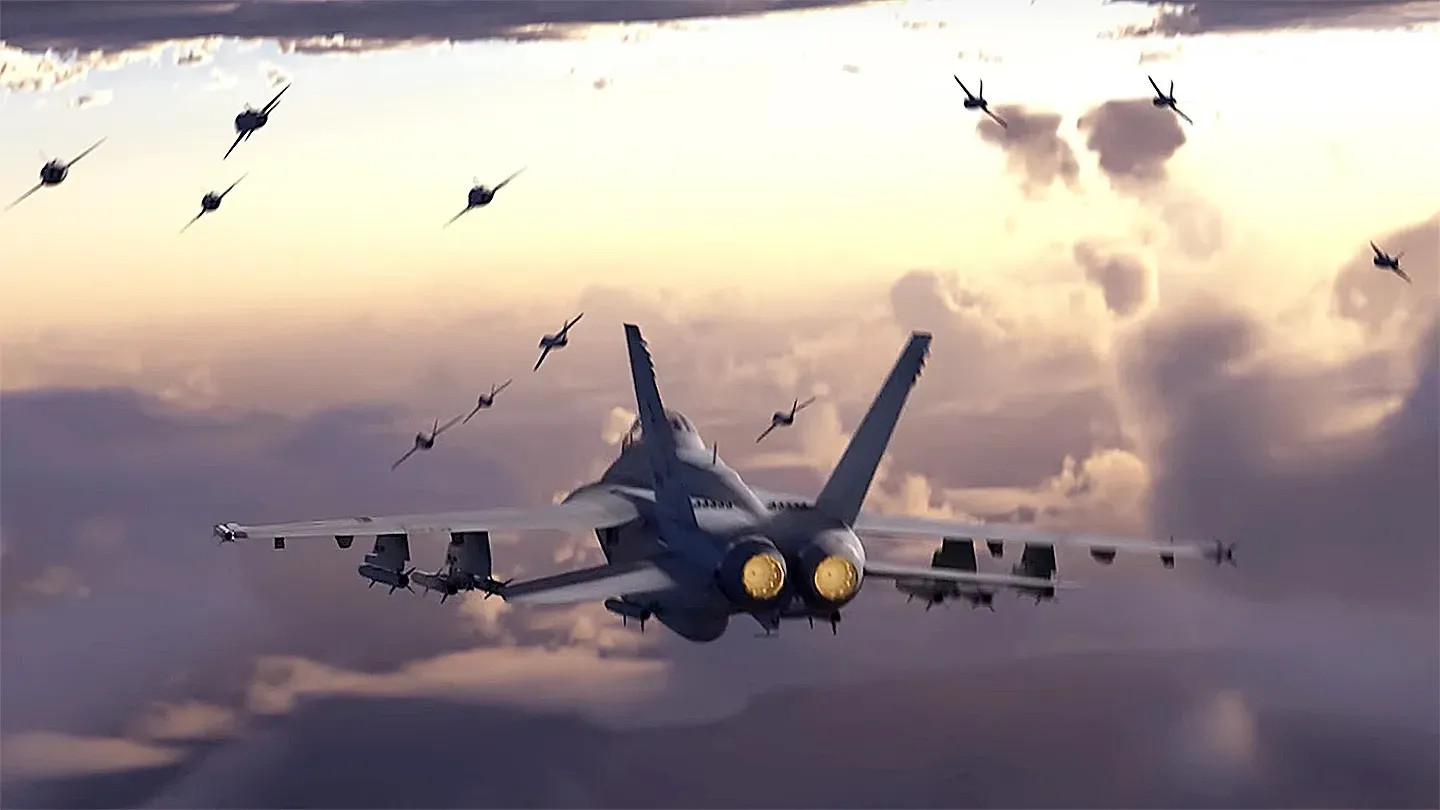
АНУ-ын Тэнгисийн цэргийн нисэхийн систем (NAVAIR) нисэх онгоц тээгч хөлөг онгоцноос 1,000 далайн миль (ойролцоогоор 1,900 км) алсад цохилт өгөх чадвартай, нисгэгчгүй онгоцнуудыг ирээдүйн агаарын хүчний бүрэлдэхүүндээ нэвтрүүлэхээр төлөвлөж байна.
АНУ-ын Тэнгисийн цэргийн хүчин “Ирээдүйн агаарын хүч” (AWOTF) хөтөлбөрийн хүрээнд шинэ нисгэгчгүй онгоцнуудад тавигдах шаардлага бүхий мэдээлэл авах хүсэлтийг энэ долоо хоногт зарлажээ. Эдгээр онгоц нь агаараас цэнэглэх шаардлагагүйгээр 1,000 далайн милийн зайд байлдааны үүрэг гүйцэтгэх, нисэх онгоц тээгч хөлөг онгоцны хөөрч буух системд бүрэн нийцэх, мөн хөлөг онгоцны тавцан дээр бага зай эзлэх ёстой юм. Уг хөтөлбөр нь тагнуул, агаараас хамгаалах, шумбагч онгоцны эсрэг, цахим дайн болон логистикийн гэх мэт найман төрлийн үүргийг гүйцэтгэх чадамжтай байхыг зорьж байна.
Албаныхны мэдээлснээр, ирээдүйн агаарын хүчний бүрэлдэхүүнд одоо ашиглагдаж буй MQ-25A Stingray түлш цэнэглэгч болон ирээдүйн хамтын ажиллагааны байлдааны онгоцнууд (CCA) багтах юм. Тэнгисийн цэргийн хүчин нь 4-р үеийн сөнөөгч онгоцнуудаас 5 болон 6-р үеийн нисгэгч-нисгэгчгүй хосолсон хүчин рүү шилжих үйл явцыг эрчимжүүлэх бодлого баримталж байна.
Өрсөлдөгч талуудын агаараас хамгаалах болон бүс нутагт нэвтрэхийг хязгаарлах (A2/AD) чадавхи нэмэгдэж байгаатай холбогдуулан нисэх онгоц тээгч хөлөг онгоцнуудыг байлдааны бүсээс илүү алсад байршуулах шаардлага тулгарч байна. Иймд алсын тусгалтай, өндөр бүтээмжтэй нисгэгчгүй системүүд нь ирээдүйн тэнгисийн цэргийн ажиллагааны гол хүчин зүйл болох юм.
Одоогоор АНУ-ын Тэнгисийн цэргийн хүчин нисгэгчгүй онгоцны шаардлагаа нарийвчлан тодорхойлж байгаа бөгөөд Boeing, General Atomics, Northrop Grumman, Anduril зэрэг компаниудтай үзэл баримтлалын загвар боловсруулах гэрээ байгуулаад байна. Хэдийгээр Агаарын цэргийн хүчин болон Тэнгисийн явган цэргийнхэнтэй харьцуулахад энэ чиглэлээр удаашралтай байгаа ч MQ-25A Stingray онгоцыг анхдагч загвар болгон ашиглаж, цаашид нисгэгчгүй онгоцны эзлэх хувийг 60 ба түүнээс дээш хувьд хүргэх зорилт тавин ажиллаж байна.
Дэлгэрэнгүйг эх сурвалжаас харах
↓Эх сурвалжийг нээх ↓
The U.S. Navy is envisioning a future force of carrier-based uncrewed aircraft capable of attacking enemy forces at least 1,000 nautical miles away from the ship. They would also have to be able to do this without needing to refuel in mid-air, though tankers could further extend their reach. This, along with other details, offers the first real sense of the combat drone capabilities the Navy wants to add to its future carrier air wings.
The range target was included in a very broad request for information (RFI) contracting notice regarding a future Air Wing of the Future (AWOTF) “family of systems,” which Naval Air Systems Command (NAVAIR) put out this week. NAVAIR is looking for prospective drone designs that could perform any combination of eight distinct missions. These are surface warfare; strike warfare; anti-submarine warfare; air warfare; electronic warfare; intelligence, surveillance, reconnaissance, and targeting (ISR&T); mobility; and logistics. A breakdown of how these missions are defined, in general terms, in the RFI is provided below.
It should be noted here that the Navy says the family of AWOTF platforms already includes the MQ-25A Stingray tanker drone, which will have a secondary surveillance and reconnaissance role, as well as future Collaborative Combat Aircraft (CCA). The Navy is still very early on in the process of defining what it wants its CCA drones to be able to do, even just initially. As TWZ has noted in the past, the MQ-25’s core design and baseline performance, specifically its extreme endurance and low-signature design, also leave open the possibility that it could be adapted to strike, advanced ISR, and other missions in the future.
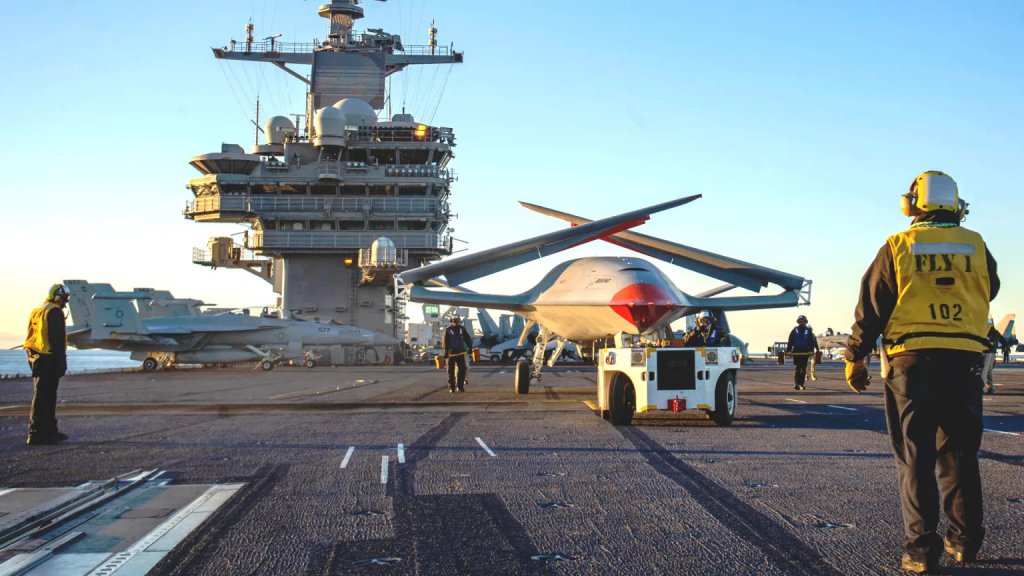
“For missions involving attacking the enemy, the system must be capable of delivering effects a minimum of 1,000 NM [nautical miles; approximately 1,151 miles statute miles or 1,900 kilometers] from the CVN without refueling,” the RFI NAVAIR issued yesterday says.
The drones must be “fully compatible with both Nimitz class and Ford class CVN launch and recovery systems,” per the RFI. “The system must demonstrate increased combat effectiveness over current 4th generation platforms at a given spot factor.”
Spot factor here is the amount of physical space the platform occupies, which is a very important consideration for carrier-based aircraft, where room on the flight deck and below is at a premium. Though the focus is on prospective carrier-based designs, the RFI also highlights the Navy’s interest in vertical takeoff and landing capable drones that could operate from destroyers or other vessels. This is something the service has openly discussed in the past and that we will come back to later on.
The Navy also wants any potential designs to be “capable of integration into existing U.S. Navy Unmanned Carrier Aviation (UCA) control systems.” Furthermore, the service is asking prospective vendors to explain how their concepts “address flight autonomy (e.g., carrier pattern, taxiing) and mission autonomy (e.g., dynamic tasking / retasking, threat evasion, automated aerial refueling) maturity,” and whether “their solution is single-role, multi-role, or a modular/variant-based approach.”
The video below from Collins Aerospace offers a notional look at what crewed-uncrewed teaming involving carrier and land-based CCA-type drones might look like in the future.

Collaborative Mission Autonomy
The range requirement is particularly interesting. As adversary anti-access/area denial (A2/AD) bubbles continue to expand in scale and scope, carriers and their air wings will be pushed further and further away from target areas. Having aircraft, crewed and uncrewed, that can cover those extended distances will be vital. Having CCA-type drones, in particular, with ranges similar to or greater than that of the crewed fighters they are expected to be paired with, is also key to enabling that particular concept of operations.
Not necessarily needing tanker support to complete those missions will also be a boon. Aerial refueling capacity is always in high demand during sustained conflicts, as underscored by the recent fighting with Iran, and that need will be further magnified in a future high-end fight against a near-peer opponent like China. Those same tankers would, by extension, also be top targets for enemy forces.
The new uncrewed carrier-based aircraft RFI from NAVAIR outlines exactly this reality:
“Aligned with the 2025 National Security Strategy (NSS), the 2026 National Defense Strategy (NDS) issued by the Department of War, and the Chief of Naval Operations’ (CNO) Fighting Instructions, the Navy is seeking capability improvements to expedite transition from a 4th-generation-centric Carrier Air Wing (CVW) to a 5th/6th-generation manned-unmanned AWoTF. This transition supports the Golden Fleet initiative and the Navy Warfighting Concept, which is a proactive approach leveraging global maritime maneuver to gain sea control, impose sea denial, and project power independently. Unmanned systems are critical to increasing Carrier Strike Group (CSG) strike capacity, extending CVW operational reach, and introducing advanced methods for executing Naval Aviation missions in a Highly Contested Environment (HCE). The objective is to evaluate the feasibility of fielding platforms with extended range and payload capacity, while minimizing deck footprint and integrating with established CVN infrastructure.”
Currently, the tactical core of the Navy’s carrier air wings remains the fourth-generation F/A-18E/F Super Hornet fighter, along with its EA-18G Growler electronic warfare cousin. Fifth-generation F-35C Joint Strike Fighters are starting to be increasingly in the rotation. The service is also still planning to acquire a new sixth-generation combat jet, currently referred to as F/A-XX, and is hoping to settle on a design in the coming months.
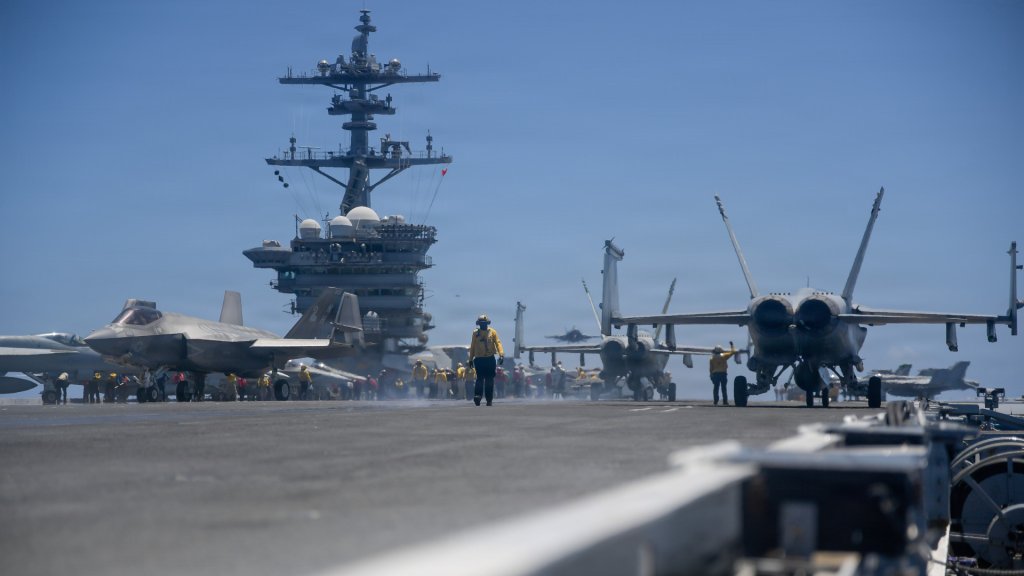
A 1,000 nautical mile range target is in line, at least in broad strokes, with what the Navy is looking for in terms of combat radius for F/A-XX. The service has said in the past that the sixth-generation jets will offer a 25 percent increase in range over the existing tactical combat jets. This would be roughly 837.5 nautical miles (just over 1,551 kilometers) based on the stated combat radius of the F-35C (670 nautical miles, or close to 1,241 kilometers). The F-35C has the longest reach, with a relevant payload, of any tactical jet in the Navy’s current inventory. The service has also previously expressed interest in finding new ways to extend the unrefueled range of its F/A-18E/Fs and EA-18Gs.
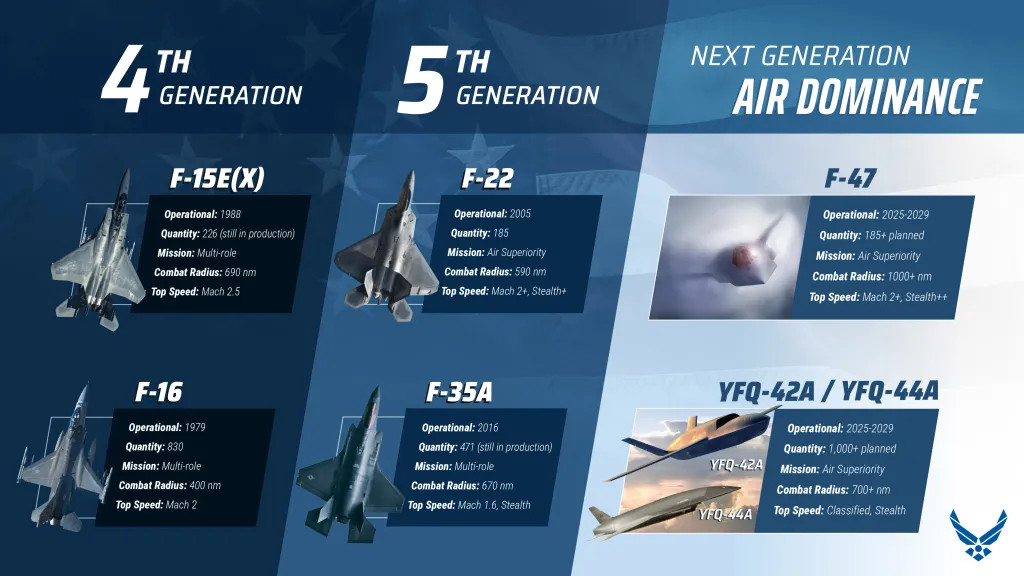
In addition, the U.S. Air Force has previously said the combat radius of its new sixth-generation F-47 fighter and its initial fleet of CCA drones will be “1,000+” and “700+” nautical miles, respectively. As TWZ has noted in the past, the estimated combat radii of both the F-47 and F/A-XX are significant, but also notably not as drastic an increase as many had been expecting or may think is necessary given the aforementioned evolution of the threat ecosystem.
As an aside, it is interesting to remember that the Navy’s abortive Unmanned Carrier-Launched Airborne Surveillance and Strike (UCLASS) program had been aiming for a platform with a combat radius of up to 2,000 nautical miles when operating in the strike role. There was also a requirement to be able to fly surveillance and reconnaissance orbits in areas 1,200 nautical miles from the deck of a carrier.
UCLASS showed much promise and achieved many firsts for carrier-based drones during testing involving a pair offlying X-47B stealthy demonstrator drones. Despite this, UCLASS was transformed into the radically different Carrier-Based Aerial-Refueling System (CBARS) program in the mid-2010s, which then led to the MQ-25. This was a shift that seemed abrupt to many and was done for reasons that are still not entirely clear, as TWZ has previously explored in detail in a seminal feature readers can find here.
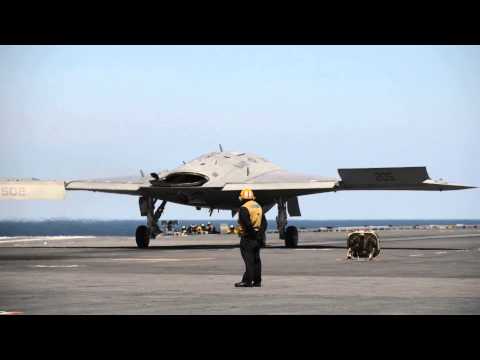
Northrop Grumman’s X47-B Completes 1st Carrier Catapult Launch

Northrop Grumman X-47B | First to Complete Autonomous Aerial Refueling
As mentioned, the Navy is still refining the requirements for its planned carrier-based CCA drones. Anduril, Boeing, General Atomics, and Northrop Grumman are all on contract now to develop conceptual designs. So far, what we have seen are designs intended to operate from carriers in a broadly traditional manner using existing catapults and/or arresting gear. General Atomics has publicly put forward a carrier-based member of its highly modular Gambit family of drones, which are based around the common chassis concept that you can read more about here. Boeing has also previously shown a rendering of a carrier-based version of its MQ-28 Ghost Bat, a drone developed by the company’s Australian subsidiary. The Navy has also expressed specific interest in Ghost Bat.
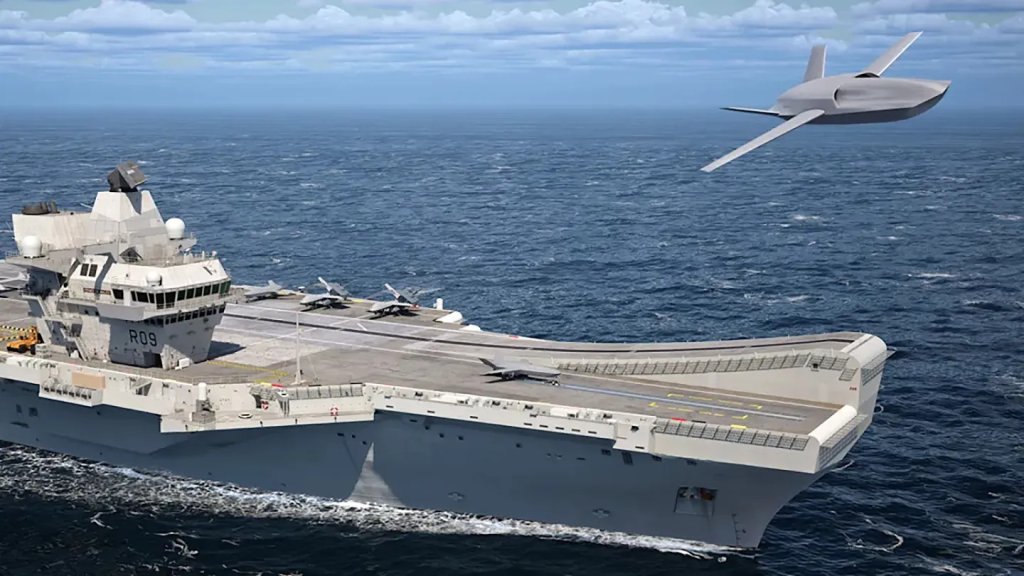
It is also worth pointing out that the NAVAIR RFI uses the term “combat radius” but also frames the requirement around “delivering effects” out to the desired range without the need for refueling. This might leave the door open to concepts that use stand-off munitions and/or other capabilities to extend the functional reach of the drone, even if its actual combat radius is under 1,000 nautical miles.
As mentioned earlier, the RFI also discusses VTOL drone operations for vessels other than carriers. Concepts of operations that involve launches from carriers (or other ships) and recovery at tertiary points at sea (or on land) could also have impacts on the range equation. Depending on their design and performance, drones could be launched from forward locations and then recover aboard carriers further to the rear, too.
Shield AI has notably talked about exactly this kind of flexibility as being a key benefit of its still-in-development X-BAT stealthy jet-powered combat drone. X-BAT is designed to take off and land vertically using nothing more than a trailer-based launch and recovery system. Shield AI is aiming for a maximumrange of 2,000 nautical miles for the drone, which you can learn about in far more detail here

X-BAT: Earth Is Our Runway
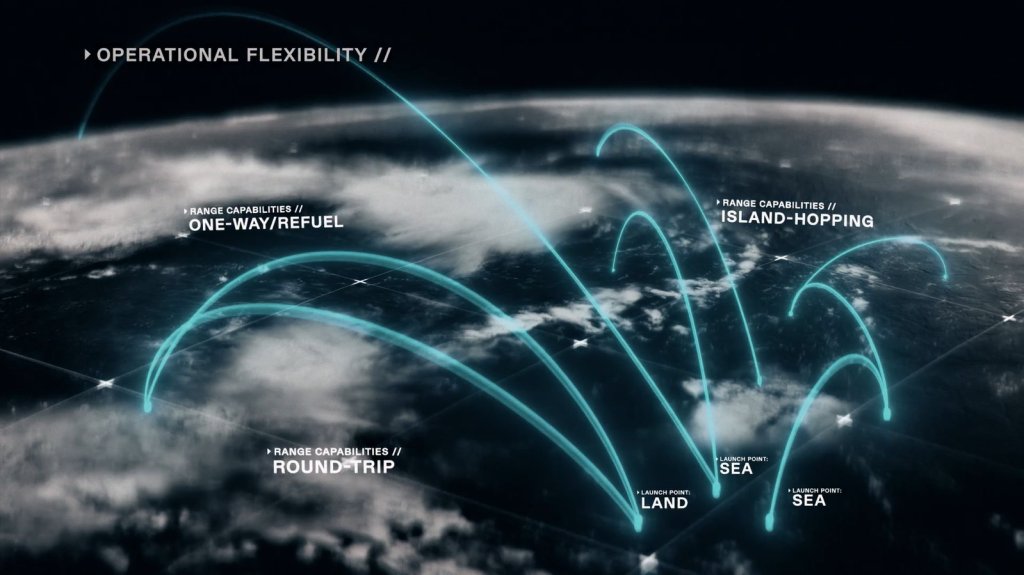
The Navy, in cooperation with the Defense Advanced Research Projects Agency (DARPA), has explored other relevant ship-based uncrewed VTOL concepts in the past, as well.

AdvaNced airCraft Infrastructure-Less Launch And RecoverY (ANCILLARY)
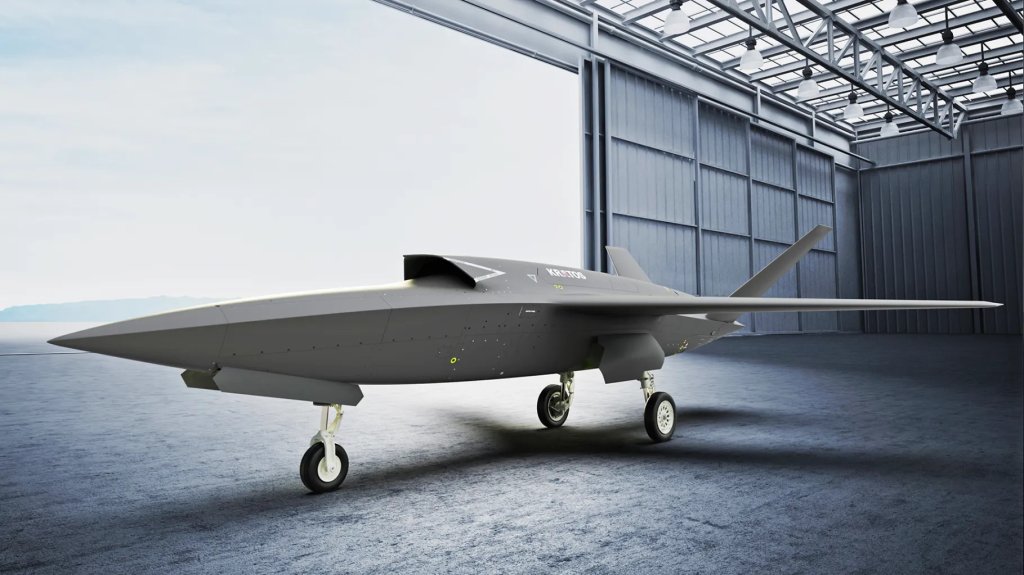
There are also drone designs that can be launched and/or recovered in very different ways. The U.S. Marine Corps’ first CCA-type drone will be a version of the Kratos XQ-58 Valkyrie that can operate from traditional runways, as well as make rocket-assisted takeoffs using static launchers. Earlier Valkyrie variants can also be launched using the latter method, and are recovered via parachute. The new MQ-58s for the Marines will still need to touch down on a runway at the end of a sortie, but this mix of capabilities still offers significant additional operational flexibility.
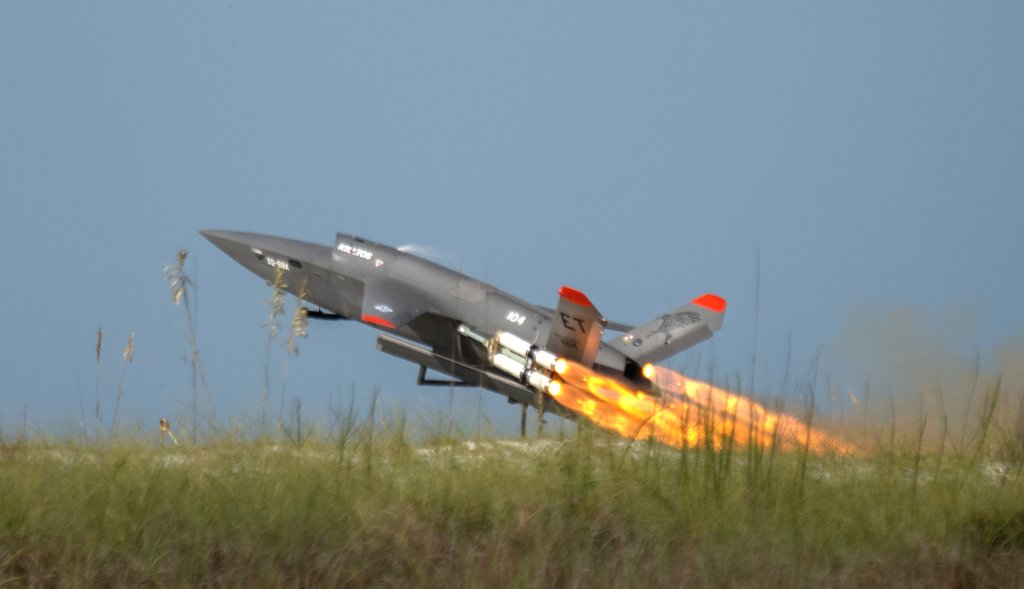
Beyond exploring specific design concepts and capability mixes, NAVAIR’s RFI makes clear that the Navy is very much still refining its overall vision for what the uncrewed complement of future carrier air wings will look like. Senior service officials have said in the past that the goal is for the total makeup of carrier air wings to eventually be 60 percent or more uncrewed.
At the same time, the Navy has acknowledged that it has been moving more slowly than the Air Force and Marines with its plans to develop and field a carrier-based CCA fleet. The NAVAIR RFI also points to efforts now to expand that work, but it remains unclear when operational CCAs, or any other future uncrewed members of the AWOTF, will appear on the decks of U.S. carriers. The Navy has consistently said that it is focused first on fielding the much-delayed MQ-25, which will then help serve as a ‘pathfinder’ for other drones. The service is now targeting next year to finally reach initial operational capability with the Stingray, something that was originally scheduled to happen in 2024.
What we do know now is that the Navy also sees a combat radius of at least 1,000 nautical miles as a key threshold requirement for uncrewed tactical elements of its future carrier air wings.
Contact the author: joe@twz.com

