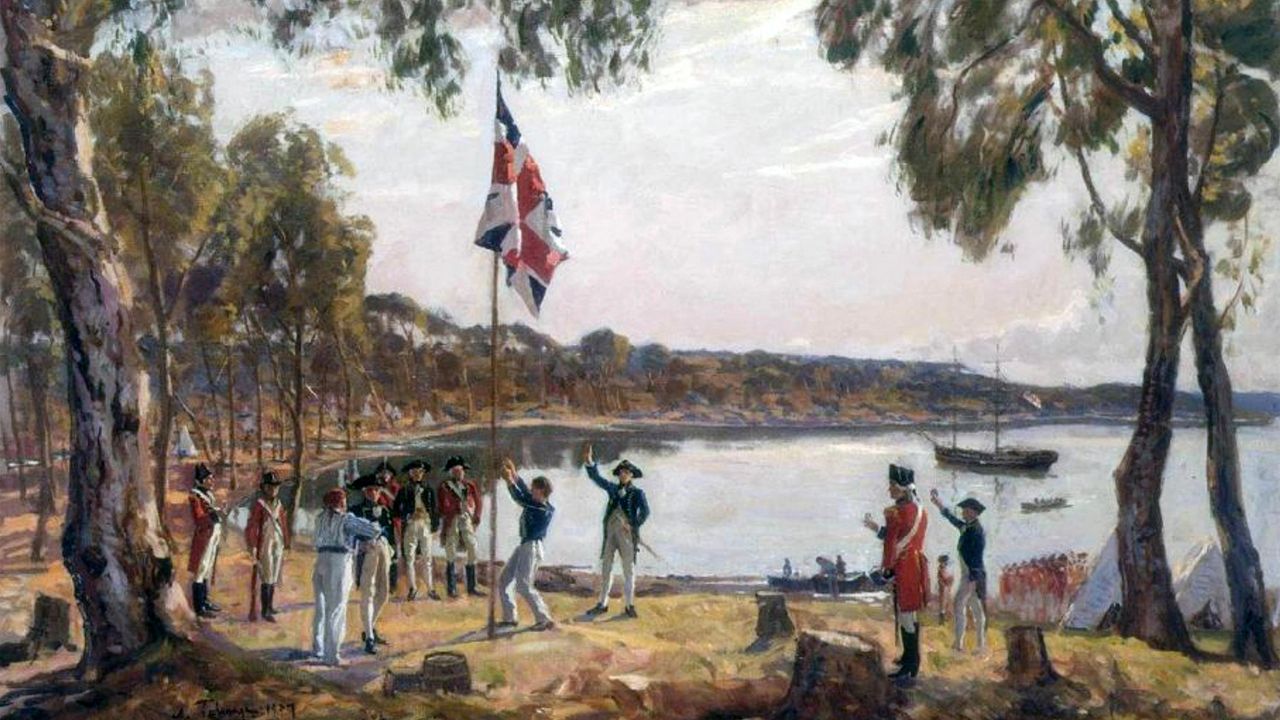
Шинэ тоон загварчлалын судалгаагаар 1789 онд Австралид дэгдсэн салхин цэцэг өвчнийг Британийн анхны суурьшигчдын хөлөг онгоцны цуваа авчирсан болохыг баталлаа.
“Nature Human Behaviour” сэтгүүлд нийтлэгдсэн уг судалгааг археологич Алан Уильямс болон түүний багийнхан гүйцэтгэжээ. Судлаачид өмнө нь таамаглаж байсанчлан өвчин Индонезийн загасчдаар дамжин Австралийн хойд хэсгээс тархсан гэх онолыг үгүйсгэж, Британийн хөлөг онгоцны цуваагаар ирсэн байх магадлал маш өндөр байгааг тогтоосон байна. Тухайн үед Британийн эмч нар вакцинжуулалтад ашигладаг байсан салхин цэцгийн хатсан тав бүхий шилнүүдийг авч явсан нь өвчин тархах шалтгаан болсон байж болзошгүй аж.
Компьютер загварчлалын үр дүн нь өвчин Австралийн хойд хэсгээс зүүн өмнөд хэсэг хүртэл мянга мянган километрийн цөлийг туулан тархах боломжгүйг харуулсан байна. Эсрэгээрээ, Сиднейн ойролцоох Порт Жексон орчмын уугуул иргэдийн дунд өвчин анх дэгдсэн нь Британийн хөлөг онгоцны цуваатай шууд холбоотойг нотолжээ. Судлаач Мэтью Коди Ничкегийн дүгнэснээр, тухайн үед өвчин судлалын онол хөгжөөгүй байсан тул уг халдвар санамсаргүй байдлаар тархсан байх магадлалтай юм.
Энэхүү халдварын улмаас ойролцоогоор 220,000 уугуул иргэн нас барж, тэдний соёл иргэншил маш хурдацтай мөхөхөд хүрсэн байна. Мөн уг судалгааны багийн бэлтгэж буй дараагийн тайлангаар 1788 онд Британичуудыг ирэх үед Австрали тивд 300,000 биш, харин 3 сая орчим уугуул иргэн амьдарч байсан байх магадлалтайг археологийн шинжилгээнд үндэслэн таамаглажээ. Түүхч Хенри Рейнолдс болон Энн Макграт нар энэхүү салбар дундын судалгаа нь уугуул иргэдийн хүн амын тоог илүү бодитоор тогтоож, өвчний гарал үүслийн талаарх хуучин таамаглалыг няцааж буйг онцолсон байна.
Дэлгэрэнгүйг эх сурвалжаас харах
↓Эх сурвалжийг нээх ↓
It’s long been debated what started the 1789 smallpox outbreak that devastated the Indigenous population in Australia. Now, a new modeling study has the likely answer: It was brought in 1788 by the “First Fleet” of British ships to settle Australia.
The finding is based on mathematical modeling of the disease’s impact on Indigenous Australians and rejects a contrary idea that the outbreak originated through contact with Indonesian islanders fishing in the far North of the country.
Alan Williams — an archaeologist at the private firm EMM Consulting and co-author of the study, published July 9 in the journal Nature Human Behaviour — told Live Science that the likely source of the outbreak were vials of dried smallpox scabs that British medics kept for inoculations (a precursor of smallpox vaccines, which weren’t invented by Edward Jenner until the 1790s).
Some historians had argued that the live smallpox virus could not have survived the eight-month ship journey from Portsmouth, England, to Botany Bay, south of what is now the modern city of Sydney, where the British ships first landed.
But the investigation showed that the vials of smallpox scabs may have been replenished during the voyage when the fleet stopped at either Cape Town, South Africa, or Rio de Janeiro, Brazil, only a few months earlier, Williams said.
The smallpox outbreak devastated Indigenous communities and contributed to the rapid demise of Indigenous Australian culture, he said. The study estimates approximately 220,000 people died from the disease, and that early-20th-century Australian authorities did not comprehend the true extent of the Indigenous population when they attempted to document historical accounts.
Mystery outbreak
Within a few decades of the British Royal Navy officer James Cook charting Australia, the British sent ships to settle the continent. The British “First Fleet” to Australia consisted of 11 ships: two naval vessels, six convict transports and three ships for provisions. The British claimed that Australia legally belonged to nobody. They soon left Botany Bay because the land and water there were poor, and they moved to Sydney Cove in Port Jackson, which is now part of modern Sydney. There, they raised the British flag, claiming the whole continent.
There were no signs of a smallpox outbreak among nearby Indigenous communities when the First Fleet arrived, but the disease took a devastating toll in the decades that followed. Because there were no recorded cases of smallpox on the fleet, it was argued that the disease must have arrived in Australia on the tropical north coast of the continent through contact with islanders from the Makassar region of Sulawesi, which is now part of Indonesia.
But the new computer modeling of the proposed north coast outbreak showed the disease could not have spread from there to Australia’s Southeast. Among other issues, the two regions were separated by thousands of miles of uninhabited desert, Williams said. Meanwhile, modeling of the smallpox outbreak in Indigenous communities near Port Jackson indicated that the outbreak had originated there, the researchers found.
Co-author Matthew Cody Nitschke, an expert in computer modeling at Flinders University in Adelaide, told Live Science that it is now clear that the outbreak was very unlikely to have originated in the North; by contrast, “there is very strong evidence that it was the First Fleet.”
At the time, disease theory was not known, so the spread of smallpox may have happened by accident, Williams said.
Revising earlier ideas
The new study in Nature Human Behaviour refers to a second study by the same researchers that is now being prepared for publication by the same journal. It proposes that there were up to 3 million Indigenous Australians at the time the First Fleet arrived — many more than the 300,000 or so proposed in some earlier studies.
That second study, based in part on archaeological investigations of early Indigenous Australian communities, suggests that the theoretical population capacity of Australia before the British arrival was up to 5 million people, especially in the resource-rich areas of the North and Southeast.
The former estimate of roughly 300,000 Indigenous Australians seems to have come from a study in the 1930s based only on their depleted numbers. “By the time people actually sat down and said how many people were here, we had 100 years of disease, frontier violence, and everything else going on,” Williams said.
University of Tasmania historian Henry Reynolds, who was not involved in the studies, told Live Science that the research debunks the old idea that the smallpox outbreak started on the north coast. “The idea that it came from the North and arrived at exactly the time [as the First Fleet] was always improbable,” he said.
Ann McGrath, a historian at the Australian National University in Canberra who was not involved in the work, agreed. “The strong interdisciplinary approach of this latest research convincingly refutes this, and it also provides a much expanded estimate of the Indigenous population prior to 1788,” she said in an email.

