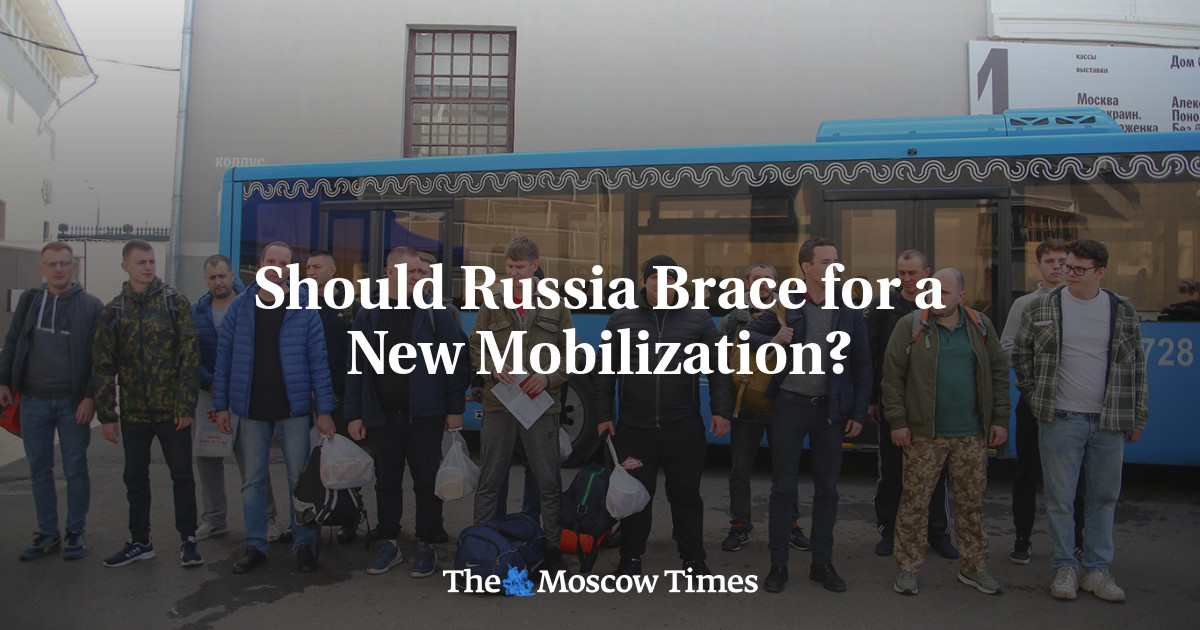
Украины дайны фронтод цэргийн хүрэлцээ багасч буй энэ үед ОХУ-ын эрх баригчид дайчилгааны шинэ арга хэмжээ авч магадгүй гэсэн таамаг улс төрийн хүрээнд өрнөж байна.
Оросын эрх баригчид дайчилгаа явуулах төлөвлөгөөгүй гэж мэдэгдэж байгаа ч цэргийн албанд татагдах вий гэсэн болгоомжлол иргэдийн дунд өндөр хэвээр байна. Дайны фронтод тулгарч буй хүн хүчний хомсдолыг нөхөхийн тулд цэргийн гэрээт алба хаагчдад олгох урамшуулал, цалинг эрс нэмэгдүүлж, их сургуулийн оюутнууд болон бусад нийгмийн бүлгүүдийг гэрээ байгуулахад шахалт үзүүлэх явдал газар авчээ. Тухайлбал, 2026 оны эхний улиралд гэрээт цэргийн алба хаагчдын тоо буурсны улмаас зарим бүс нутагт хүчээр гэрээ байгуулах тохиолдлууд бүртгэгдсэн байна.
https://t.me/milinfolive/176107
https://www.interfax.ru/russia/1080917
https://www.interfax.ru/russia/863188
https://www.kommersant.ru/doc/5594533
https://www.themoscowtimes.com/2026/06/04/has-the-tide-turned-against-russia-in-the-ukraine-war-a92933
https://www.rbc.ru/politics/18/09/2025/68cc11f79a7947c948430350
https://contract.mos.ru/
https://www.rbc.ru/politics/27/03/2026/69c66b5e9a794732ac036943
https://www.themoscowtimes.com/2026/03/23/are-you-all-cowards-russian-universities-pressure-students-to-fight-in-ukraine-a92307
https://www.themoscowtimes.com/2026/07/21/what-we-know-about-the-aftermath-of-ukraines-wildberries-drone-strikes
https://www.themoscowtimes.com/2026/06/19/penza-authorities-forcibly-mobilizing-men-into-military-reports-a93055
35 российских регионов подняли выплаты за отправку на войну с начала года
https://istories.media/news/2026/06/09/v-pervom-kvartale-2026-goda-kontrakt-s-minoboroni-podpisali-712-tis-chelovek/
https://t.me/akovalenko1989/10991
https://t.me/kolezev/17736
https://ru.themoscowtimes.com/2025/12/04/putin-zayavil-chto-v-lyubom-sluchae-zahvatit-donbass-a181905
https://www.rbc.ru/politics/10/03/2026/69b00dbd9a7947625799fe33
https://voennikru.ru/elektronnie-povestki
https://www.themoscowtimes.com/2026/07/21/could-russias-wartime-debt-boom-trigger-a-banking-crisis
https://janiskluge.substack.com/p/federal-budget-data-shows-71216-new
https://www.themoscowtimes.com/2026/07/21/even-if-ukraine-doesnt-recapture-crimea-kyiv-has-damaged-russias-credibility
https://storage.googleapis.com/istories/stories/2026/06/24/vigrebli-vse-derevni-vokrug-v-rossii-trudnosti-s-naborom-kontraktnikov/index.html
https://www.themoscowtimes.com/2026/07/21/my-sweet-child-filmmaker-reconstructs-the-life-of-the-mother-he-lost-in-the-mh17-disaster
Шинжээчдийн үзэж буйгаар, ОХУ-ын хууль эрх зүйн тогтолцоо болон цахим бүртгэлийн систем нь дайчилгааны шинэ үйл явцыг хэзээ ч эхлүүлэх боломжтой болсон байна. Хэдийгээр цэргийн алба хаагчдын хомсдол тодорхой хэмжээгээр ажиглагдаж байгаа ч одоогийн байдлаар гэрээт цэргүүд фронтын хэрэгцээг хангаж байгаа гэж шинжээчид дүгнэжээ. Гэсэн хэдий ч есдүгээр сард болох парламентын сонгуулийн өмнө улс төрийн эрсдэлтэй алхам хийх эсэх нь Оросын удирдлагын шийдвэрээс бүрэн хамаарах юм.
Дэлгэрэнгүйг эх сурвалжаас харах
↓Эх сурвалжийг нээх ↓
“Why wait for a draft notice when you can take control of the situation? Sign a military contract voluntarily.”
As rumors of an impending new wave of mobilization swirl inside Russia, one pro-war Telegram channel claimed to offer a solution: instead of waiting to be mobilized, sign a military contract now, while you can still “choose your own terms.”
As Russia’s full-scale invasion of Ukraine has stalled in its fifth year, questions are once again mounting over whether the Kremlin could resort to a politically costly mobilization to boost its manpower.
The Kremlin has denied any plans for a new draft campaign. President Vladimir Putin last called up 300,000 reservists in September 2022, marking Russia’s first mobilization since World War II, triggering rare public protests and prompting tens of thousands of Russians to flee the country.
Since then, Moscow has relied on generous signing bonuses and salaries to recruit contract soldiers rather than announcing another nationwide draft.
But fears of another mobilization remain widespread. Men who were drafted in 2022 are still fighting on the front line with no clear path home, and few are willing to risk sharing their fate.
Mobilization in 2022.
Kirill Zykov / Moskva News Agency
Recruitment
The renewed speculation comes as Russia’s offensive has slowed to one of its lowest rates of advance and the country faces growing challenges in replenishing its forces.
Russia has sought to offset battlefield losses among the roughly 700,000 troops deployed along the front by offering high salaries and signing bonuses to new contract soldiers, with payments reaching up to 5.5 million rubles ($70,266) for a year of service.
Authorities said that more than 80,000 contract soldiers had joined the army in the first three months of 2026 and that troop recruitment was proceeding “at a fairly good pace.”
Independent media reports and analysts suggest that Russia is finding it increasingly difficult to attract new contract soldiers, as fewer men are willing to risk being sent to the front and potentially killed.
Many are also discouraged by the fact that military contracts cannot easily be broken by law, even though recruitment ads often promise only one year of service.
One sign that Russia is struggling to recruit contract soldiers was the intensified campaign to pressure university students that began this year. Students have been encouraged to sign up with the country’s drone forces, while some who failed their winter exams were offered military contracts as an “alternative to expulsion.”
The Defense Ministry also appears to have set recruitment quotas for universities in an effort to attract as many students as possible into military service.
Migrants, people in financial hardship and homeless people have also been targeted in similar campaigns, Sergei Krivenko, head of the human rights group Citizen. Army. Law., told The Moscow Times.
In the Penza region last month, security forces and military enlistment officers detained local men and pressured them to sign military contracts following coordinated street raids.
The number of similar cases remains difficult to measure nationwide, Krivenko said, but they indicate that recruitment efforts have become more aggressive.
Regional authorities have also repeatedly increased one-time payments for signing military contracts, in addition to salaries and federal bonuses —a sign that Russia is having to offer increasingly generous financial incentives to attract recruits.
Despite these efforts, recruitment in Moscow and across Russia has fallen by one-third so far this year compared to 2025, the exiled outlets Vyorstka and IStories reported.
These developments have fueled speculation that Russia could eventually announce a new mobilization, especially with Kyiv claiming that Moscow was planning to mobilize at least 500,000 reservists this fall.
Mobilization in 2022. Sergei Vedyashkin / Moskva News Agency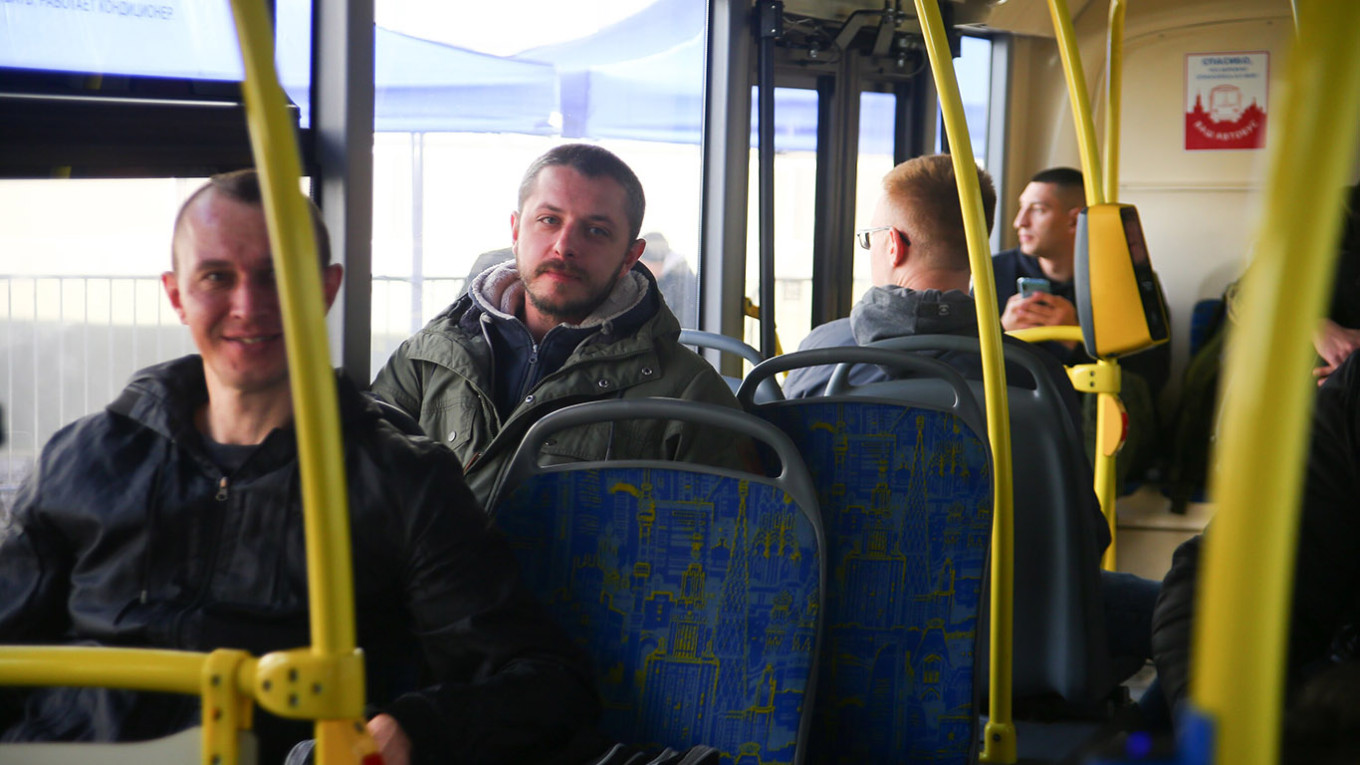
An anonymous Russian general who fought in the full-scale invasion of Ukraine told journalists that he believes “mobilization to capture Donbas is entirely possible, either through a covert process or through an officially announced and public mobilization.”
Putin has repeatedly said that Russia intends to secure full control over the Donbas region of eastern Ukraine. As of March, Kyiv controlled around 17% of the Donetsk region, Russia said.
“No one will worry about the losses. The main thing is to save face. So it is entirely possible,” the general said.
Military lawyers and human rights experts also say that Russia has already prepared legal and administrative mechanisms needed for a new wave of mobilization.
Under Russian law, mobilization can be launched by presidential decree. But the decree issued by Putin to call up reservists in September 2022 remains legally active, Krivenko said.
“This means the authorities could simply issue a separate, possibly secret presidential order instructing the Defense Ministry to call up a certain [additional] number of people,” Krivenko said, adding that such an order would not even necessarily have to be made public.
Russia has also significantly expanded its military registration system since the 2022 mobilization, including electronic databases and new rules requiring employers to provide information about citizens eligible for military service.
Yet, from an economic perspective, expanding the army would also require a significant increase in spending, as mobilized troops would need to receive payments comparable to those already provided to troops mobilized in 2022, military analyst Dmitry Kuznets told The Moscow Times.
“Both the federal and regional budgets are already facing serious constraints,” he said.
Manpower on the front
Military experts say that despite the slowing recruitment, Russia has so far managed to replace battlefield losses with newly recruited contract soldiers.
“There are no signs of widespread reports that large units are consistently suffering from a lack of personnel,” Kuznets said. “Of course, there are isolated cases where an assault unit is almost completely wiped out, leaving only one survivor. But there is every reason to believe that, after some time, these units are replenished with newly recruited contract soldiers.”
Russia is recruiting around 30,000 people a month, while its irreversible losses appear to be lower, Kuznets said, citing estimates drawn from publicly available budget data for payments to contract servicemen.
Janis Kluge, a researcher at the German Institute for International and Security Affairs, estimates that around 9,000 Russian soldiers have been killed per month in 2026. That is roughly one-third the number of new recruits, suggesting that Russia still has enough contract soldiers to sustain the war, IStories said.
The anonymous general said that Russia would need to replace “at least 55,000-60,000 casualties every month” in order to capture the remaining Ukrainian-held areas of the Donbas.
“Without sufficient manpower reserves, the General Staff cannot guarantee results. It is a kind of safeguard —by demanding an unattainable level of resources, it shields itself from accusations of professional incompetence if military objectives are not achieved,” he said.
How long Russia can maintain its current recruitment model remains uncertain, however.
“We do not know when [these payments] will stop being effective — when the number of people willing to risk their lives for any amount of money will run out,” Kuznets said, adding that the pool of potential recruits remains limited.
Russia has increasingly relied on small infantry assault groups — usually teams of two soldiers, and in some cases up to five — to infiltrate Ukrainian positions, a tactic that is “obviously being used to conserve manpower,” Kuznets said.
For now, Kuznets said, success on the battlefield depends less on troop numbers than on striking high-value assets such as drone operators and electronic warfare systems.
“However, if Ukraine decides to shift its focus toward targeting personnel, Russian losses could increase,” he said, and Russia would have to adjust accordingly.
The pace of Russia’s advances also depends on whether the army has the command structures, officers and equipment needed to turn additional recruits into effective combat units —something Russia currently lacks.
“What could Russia do with a new wave of mobilization? It could quickly expand the number of reserve regiments,” he said. “But these units would not be able to operate effectively.”
“Simply increasing the number of personnel in the military grouping would not lead to a comparable improvement in combat effectiveness,” Kuznets said.
Political will
The renewed speculation also comes ahead of September’s parliamentary elections, when the Kremlin is likely to avoid politically unpopular decisions such as another nationwide mobilization.
Sources close to the presidential administration told Vyorstka and IStories that although officials were weighing various options to expand the army, no final decision had been made.
A source close to the Kremlin’s domestic policy bloc said “rumors were circulating” that “something could happen” in October, after the State Duma elections.
Another source close to the presidential administration said officials were considering “different road maps for increasing the army’s manpower.”
To reduce the political consequences, Russia could avoid announcing a broader mobilization campaign and instead selectively mobilize people from specific regions or economic sectors, using recent changes to military registration procedures and legal frameworks since 2022, political analyst Kirill Shamiev said.
Yet experts agree that the decision to launch another mobilization rests with Putin alone.
“Considering the political and economic risks, it is highly doubtful that [the Kremlin] would choose [mobilization],” Kuznets said. “At this stage, Russia does not need another mobilization to sustain the war at its current pace.”
“We do not see a situation that would be catastrophic for [the Kremlin] at this point,” he said. “But this is not something we assess — the decision is made by one person in the Kremlin, together with his advisers and the General Staff.”
A Message from The Moscow Times:
Dear readers,
We are facing unprecedented challenges. Russia’s Prosecutor General’s Office has designated The Moscow Times as an “undesirable” organization, criminalizing our work and putting our staff at risk of prosecution. This follows our earlier unjust labeling as a “foreign agent.”
These actions are direct attempts to silence independent journalism in Russia. The authorities claim our work “discredits the decisions of the Russian leadership.” We see things differently: we strive to provide accurate, unbiased reporting on Russia.
We, the journalists of The Moscow Times, refuse to be silenced. But to continue our work, we need your help.
Your support, no matter how small, makes a world of difference. If you can, please support us monthly starting from just $2. It’s quick to set up, and every contribution makes a significant impact.
By supporting The Moscow Times, you’re defending open, independent journalism in the face of repression. Thank you for standing with us.
Continue

Not ready to support today?
Remind me later.
×
Remind me next month
Thank you! Your reminder is set.
We will send you one reminder email a month from now. For details on the personal data we collect and how it is used, please see our Privacy Policy.

