
Хөлбөмбөгийн дөрвөн жил тутамд болдог томоохон тэмцээн нь зөвхөн спортын өрсөлдөөн төдийгүй хүмүүсийн амьдралын үе шатыг тодорхойлдог онцгой агшин юм.
Нью-Жерсид болсон Дэлхийн аваргын финалын дараа Бруклин гүүрний ойролцоох Adidas-ын ивээн тэтгэсэн үзвэрийн талбайг буулгаж эхэлжээ. Тэмцээний туршид нисэх онгоцны буудлын танхимаас эхлээд Dumbo-гийн “Time Out Market” хүртэлх бүхий л нийтийн эзэмшлийн газрууд хөгжөөн дэмжигчдийн цуглах цэг болж байв. Олон улсын жуулчид болон нутгийн иргэд нэгэн зэрэг тоглолт үзэж, сэтгэл хөдлөлөө хуваалцсан энэ үйл явц нь хүмүүсийг нэгтгэдэг нийтлэг соёлыг бий болгосон юм.
Энэ удаагийн тэмцээн нь Криштиану Роналду, Мануэль Нойер, Неймар, Гильермо Очоа зэрэг домогт тамирчдын карьерын төгсгөл, Лионель Мессигийн сэтгэл хөдөлгөм агшнуудаар түүхэнд үлджээ. Үүний зэрэгцээ, анх удаа оролцож буй Кабо-Верде улсын багийн хаалгач Возиньягийн тоглолт олны анхаарлыг татав. Түүний 14 хоногийн турш үзүүлсэн гайхалтай тоглолт нь олон жилийн уйгагүй бэлтгэл сургуулилтын үр дүн байсныг спортын хүрээнийхэн онцолж байна.
Канадын Уистлер хотод аялал жуулчлалын явцад Египет-Аргентины тоглолтыг үзэж байхдаа олон улсын аялагчид нэгэн зорилгын дор нэгддэг нь ажиглагдсан. Энэ мэтээр томоохон тэмцээнүүд нь өөр өөр улс орны хүмүүсийг нэг дор цуглуулж, танихгүй нэгний сэтгэл хөдлөлийг хуваалцах боломжийг олгодог. 2028 оны зун Лос-Анжелес хотод болох Олимпын наадам нь дараагийн ийм том боломжийг дэлхий дахинд авчрах болно.
Дэлгэрэнгүйг эх сурвалжаас харах
↓Эх сурвалжийг нээх ↓
Yesterday I ran over the Manhattan Bridge, and when I came down the Brooklyn side I saw them taking it apart. The big watch party sponsored by Adidas near Brooklyn Bridge Park, down by the carousel, was being dismantled. Scaffolding coming down in sections. Banners getting zip-tied. Yes, the World Cup tournament ended Sunday, in New Jersey, with confetti in Spanish colors. But so did that rare moment where you knew everyone everywhere was watching the same thing.
I never went to a single official watch party. Didn’t need to. Everywhere I went was a watch party, from airport lounges to bars. For the big games I’d wander down to Dumbo and drift into Time Out Market, where the matches played on around half a dozen screens, surrounded by tourists. It’s the rare time when out-of-towners feel like they’re adding to the experience. You learn the involuntary choreography fast. The full-room inhale on a through ball. Strangers grabbing strangers’ forearms. Hands on head as a shot goes wide. Are people taught this, or is it just in our DNA?
These moments are rare. Every four years, along with the Olympics. The World Cup measures teams, but, in a way, it measures you. Where were you in 2010? 2014? Who were you watching with, and do you even still have their numbers? I can pin every World Cup of my adult life to a version of myself—the magazine-office ones, watched half-standing in conference rooms; staying up late to watch the Japan World Cup at Corner Bistro; the ones my daughters were too small to remember; this one, which they’ll remember.
The tournament has its own measures of mortality, too. Cristiano Ronaldo, 41, in his announced farewell, walking off after Spain ended Portugal in the round of 16. Manuel Neuer, un-retiring at 40 for one last tournament, then leaving for good after Germany fell to Paraguay. Neymar’s international career ending against Norway. Guillermo Ochoa, 40, kissing the post in Mexico City after England beat Mexico 3–2 in one of the wildest games of the round. And Messi, who won the whole thing in 2022, sitting on the pitch after the defeat to Spain, contemplative, maybe even appreciative, reflecting on what seems like an entire career.
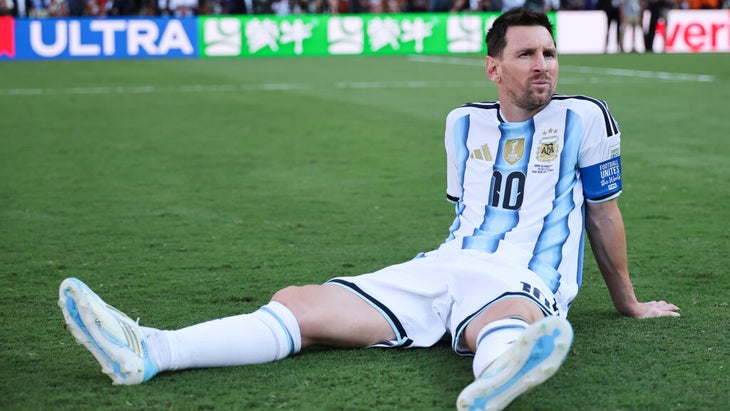
The clock chimes for everyone, even the immortals. Especially the immortals.
But if the clock takes things from legends, look what it gives to people who keep grinding out of the spotlight. The best story of this World Cup belongs to Cape Verde, an island nation of about half a million people, playing in its first World Cup with a Bad News Bears of the diaspora, a roster of players who grew up an ocean away from the islands they’d represent.
Their goalkeeper, Vozinha, is 40 years old. In the opener he made seven saves to hold Spain to nil. Yes, España, the eventual champions, a team that hadn’t lost a competitive match in two years. Then came Argentina in the knockouts: eight saves in regulation, several against Messi himself, including a free kick in the 73rd minute. Cape Verde fell 3–2 in extra time. It’s a game people will be rewatching for years. His teammate Roberto “Pico” Lopes was recruited to the national team by a LinkedIn message he ignored for months because he assumed it was spam!
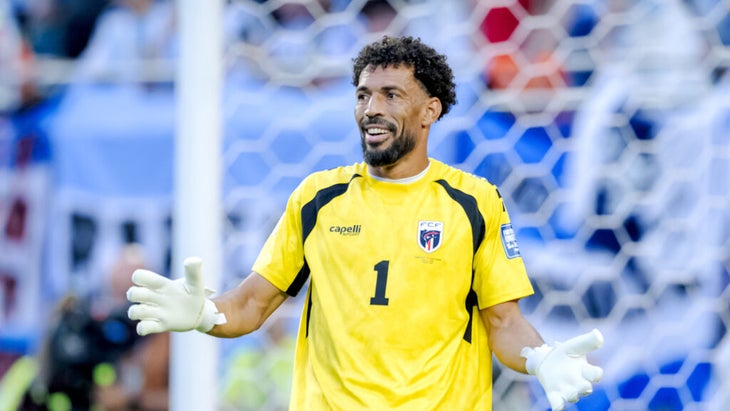
The internet, naturally, decided Vozinha came out of nowhere. His Instagram went from about 50,000 followers to more than 18 million in a month. But, as any harried coach will tell you, nobody comes from nowhere. A 40-year-old goalkeeper is four decades of workouts and drills, revealed in 14 days. If you’re a reader of this magazine, you already know this in your bones.
The Egypt–Argentina match caught me 2,000 miles from Brooklyn, in a gondola in Whistler. I shared the cabin down the mountain with an Egyptian family—a father and his two older kids, getting alerts on their phones. At the bottom we poured into the square to watch the match live on a big screen. Egypt led 2–0 with 11 minutes left. Then Argentina scored three times, the last in stoppage time. There were mostly cheers. I stood next to the father. I watched his face. I inherited something on that mountain, and it was rooting interest: for the rest of the tournament, I was for anyone but Argentina.
That’s the thing about a summer without skin in the game. Once the U.S. went out, I had no team, so I rooted for stories. For a 40-year-old keeper whose country pulled together to fly his mother across an ocean to watch him play. For a father in a gondola, refreshing his phone. Which is why the final, billed as the match of the decade, felt anti-climactic. Argentina didn’t manage a shot in the first 90 minutes. Spain probed and passed until Ferran Torres ended it in the 106th, 1–0. The most anticipated game of the tournament was its flattest. But, you know, goodbyes are always hard.
The World Cup, like the Olympics, only feels precious because it goes away for so long. Four years is enough time for a life to change shape—new cities, new jobs, kids who are suddenly old enough to remember. The next chime is close, and it’s ours: Los Angeles, summer of 2028, when the Olympics bring the whole world back to this country’s living rooms and plazas.
So here’s my only training advice for the next global sporting moment: when the clock strikes, put yourself somewhere you can inherit a stranger’s heart.
The post The World Cup Is the Ultimate Measure of Time—and Ourselves. appeared first on Outside Online.



