
Испанийн Галисия бүс нутагт ойн түймрийн эрсдэлийг бууруулах зорилгоор нутгийн үүлдрийн мал сүргийг дахин нутагшуулж, бэлчээрийн менежментийг сайжруулж байна.
Галисия бүс нутагт аж үйлдвэрийн зориулалттай нарс, эвкалипт модны тариалан нэмэгдэж, хөдөөгийн хүн ам хот руу шилжсэний улмаас их хэмжээний газар нутаг эзэнгүйрч, хуурай өвс, бут сөөг ихээр ургах болсон нь түймэр гарах гол шалтгаан болж байв. Үүнтэй холбогдуулан нутгийн иргэд олон зууны турш ашиглаж ирсэн уламжлалт арга болох “Cachena” үүлдрийн үхэр болон хонь, ямааг бэлчээх замаар түймрийн аюултай хуурай өвс, бут сөөгийг цэвэрлэх ажлыг эхлүүлжээ. Уулархаг бүсэд дасан зохицох чадвар сайтай, бүх төрлийн ургамал иддэг тул нутгийнхан энэхүү үхрийг “ямаан үхэр” хэмээн нэрлэдэг байна.
BOAGA нийгэмлэгийн мэдээлснээр, 1990-ээд оны сүүлээр 1,800 орчим байсан нутгийн үүлдрийн малын тоо 2026 оны эхэн гэхэд 30,000-аас давжээ. Үүний дотор Cachena үүлдрийн үхрийн тоо 400-аас 8,000 болж өссөн байна. Бүс нутгийн засгийн газраас малчдад дэмжлэг үзүүлж, үржлийн ажлыг идэвхжүүлснээр энэхүү үр дүнд хүрсэн бөгөөд мал сүрэгт GPS төхөөрөмж бүхий хүзүүвч зүүлгэснээр хашаа хороогүйгээр чөлөөтэй бэлчээх боломжийг бүрдүүлжээ.
Байгаль орчны мэргэжилтнүүд энэхүү аргыг ойн түймрээс урьдчилан сэргийлэх үр дүнтэй шийдэл хэмээн үзэж байгаа ч үүнийг механик аргаар ойн цэвэрлэгээ хийх болон хяналттай түймэр тавих зэрэг бусад стратегитай хослуулах нь зүйтэй гэдгийг онцолж байна. Галисия бүс нутаг нь Испанид ойн түймэрт хамгийн их өртдөг бүсүүдийн нэг бөгөөд зөвхөн өнгөрсөн онд 119,000 га талбай түймэрт өртсөн байна. Уур амьсгалын өөрчлөлтөөс үүдэлтэй агаарын температурын өсөлт нь түймрийн эрсдэлийг улам нэмэгдүүлж байгаа тул Андалусия, Каталони зэрэг бусад бүс нутагт ч мал ашиглан түймрээс сэргийлэх туршлагыг нэвтрүүлж эхлээд байна.
Дэлгэрэнгүйг эх сурвалжаас харах
↓Эх сурвалжийг нээх ↓
Communities in the northwestern Galicia region of Spain are reintroducing native livestock in an attempt to stabilise ecosystems and reduce wildfires, resulting in the comeback of a unique goat-like cow.
The Iberian peninsula’s smallest type of cow, the “Cachena”, was among the native breeds driven away by the plantation of of highly flammable pine and eucalyptus trees for industrial use. Large parts of the terrain were left neglected and overgrown as rural populations relocated to cities.
The Cachena are referred to as “goat-cows” by locals given that the breed eats almost anything and can navigate mountainous terrain unlike larger cows.
A fire in 2017 that tore through the parish of Vincios prompted community associations who collectively manage the land to opt for a centuries-old wildfire prevention technique — breeding native livestock including goats, sheep, and the nimble long-horned Cachena cows, which help clear flammable undergrowth by grazing on the land.
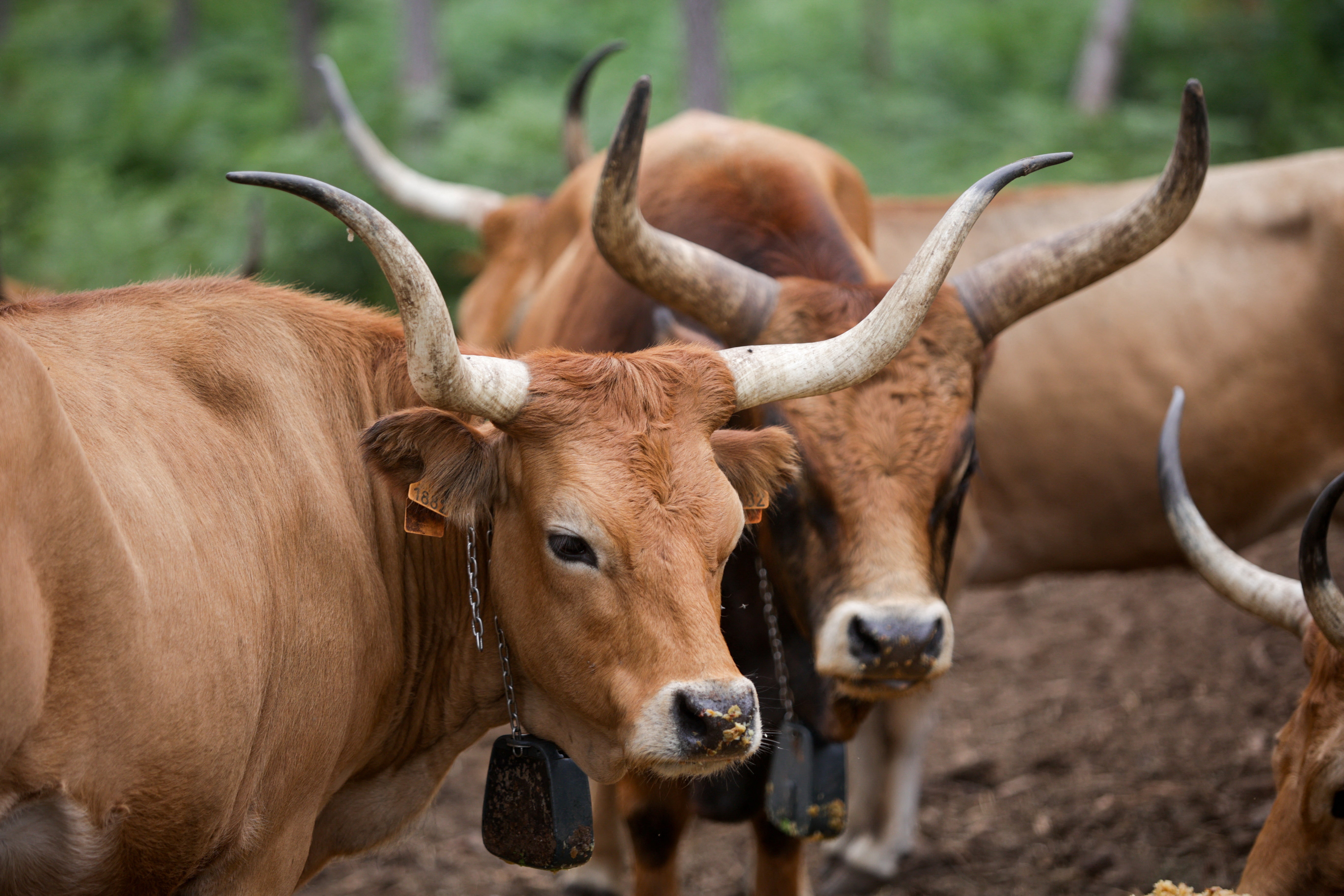
Their efforts, together with those of other associations across Galicia, have boosted the population of native livestock from just over 1,800 in the late 1990s to more than 30,000 by early 2026, according to regional association BOAGA — including roughly 8,000 Cachena cows, up from 400.
The regional government granted incentives to farmers to keep young female cows rather than selling them, and a local zoological centre provided bulls at low cost to facilitate breeding.
“The native livestock keeps scrubland at an appropriate height so it does not become dangerous,” said Jose Taboada, coordinator of the Vincios land collective.
He gestured towards a portion of land scrubbed clean of flammable shrubs like brambles, gorse and broom, which contain oils that burn intensely and can carry fires from the ground into the tree canopy.
Roaming free with GPS collars
The cows keep the vegetation under control without eradicating it altogether, Taboada explained, adding that the animals wore GPS collars, eliminating the need for fences and allowing them to roam freely.
“They are perfectly adapted to terrain like ours,” Taboada said.
Vincios is one of roughly 3,000 communities in Galicia that, as collectives, manage around 700,000 hectares, a quarter of the region’s land, in a practice dating back to medieval times and formally legalised in 1989.
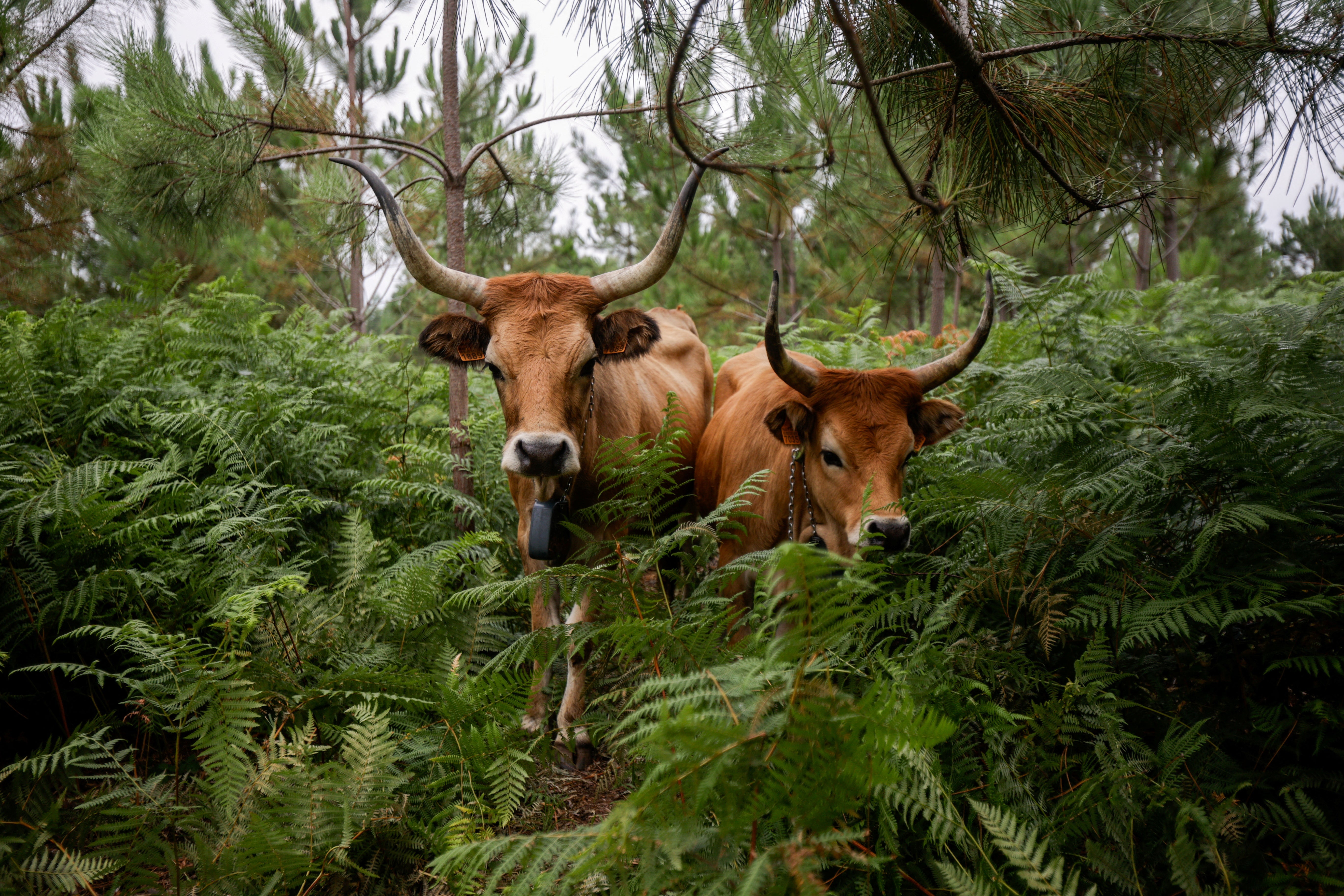
The region is one of the most affected in Spain by wildfires, with nearly 119,000 hectares (294,000 acres) of land burned last year, an area roughly double the size of Madrid.
Scientists link increasingly severe wildfire seasons across southern Europe to climate change. Spain, the third-most forested country in Europe, has registered average temperatures 5.6 degrees Celsius (41.9 degrees Fahrenheit) above 1961-1990 levels in July so far, according to the Reuters Climate Monitor.
Landowners and collectives in other Spanish regions like Andalusia, Catalonia, and Castile-La Mancha have also opted for breeding livestock to prevent fires.
The technique is backed by scientific studies, but should be used in conjunction with other strategies like mechanical thinning and pruning of biomass and controlled burning of land carried out by specialised personnel, said forestry engineer and professor Jose Vicente Oliver.
“Livestock farmers need to earn a living by producing meat, or milk. But our common-land communities care about land stewardship,” Taboada said. “This area has always burned… the livestock allow us to keep the woodland open, managed, and under control.”

