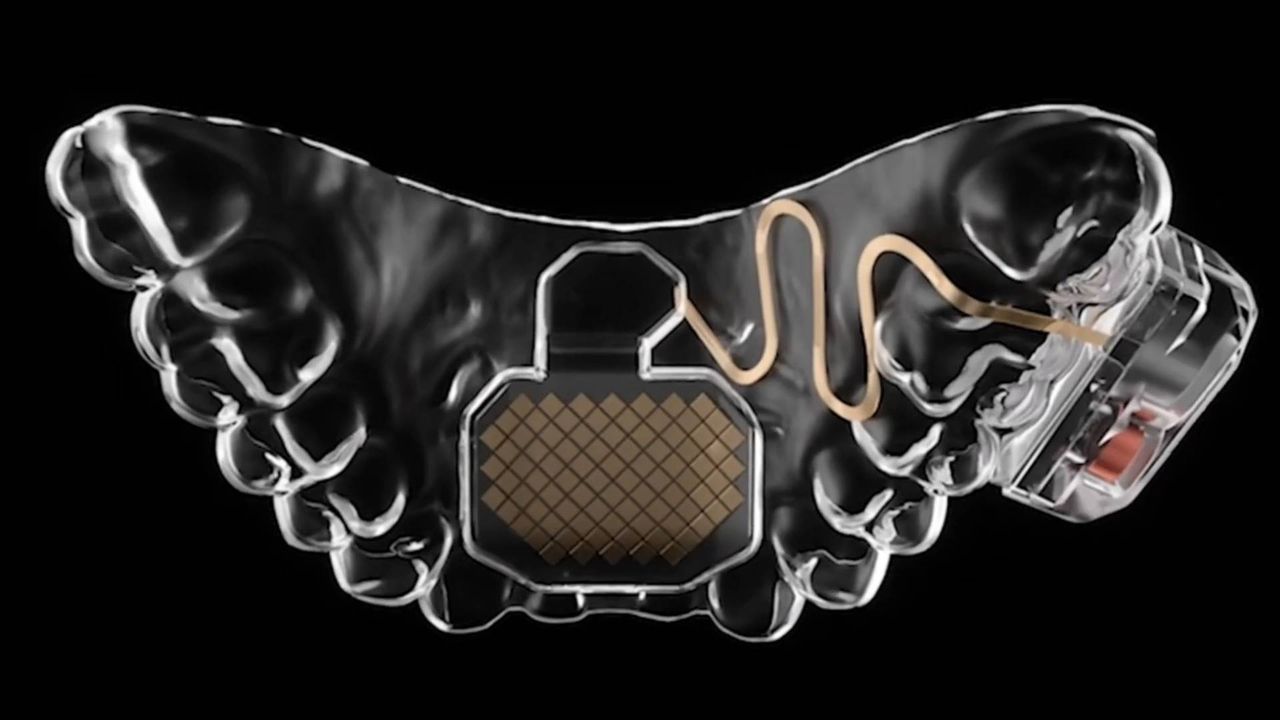
Хөгжлийн бэрхшээлтэй тоглогчдод зориулсан энэхүү шинэлэг төхөөрөмж нь хэлний хөдөлгөөнөөр компьютер болон тоглоомыг удирдах боломжийг олгож байна.
Augmental компани “Skinware” буюу хүний биеийн хөдөлгөөнтэй хоршин ажилладаг интерфэйсийн хүрээнд Mouth Pad төхөөрөмжийг АНУ-д худалдаанд гаргалаа. Шүдний гажиг засалтын аппараттай төстэй энэхүү төхөөрөмжийг 3D хэвлэгчээр гарган, дотор нь мэдрэгч бүхий уян хатан хэлхээг байрлуулжээ. Хэрэглэгчид хэлээрээ талбайг удирдах эсвэл толгойн хөдөлгөөнөөр команд өгөх замаар PC, таблет болон гар утсаа ашиглах боломжтой.
Тус компанийн гүйцэтгэх захирал Томас Вега анх 2019 онд MIT-д суралцаж байхдаа энэхүү төхөөрөмжийн анхны загварыг бүтээжээ. Тэрээр Neuralink-д дадлага хийж байхдаа тархины суулгацын хөгжүүлэлт удаан хугацаа шаарддагийг ойлгож, илүү хурдан шийдэл хэрэгтэй байгаа хүмүүст зориулан Mouth Pad төслийг хөгжүүлсэн байна. Төслийн хүрээнд RockyNoHands зэрэг алдартай стримерүүд эрт нэвтрэх хувилбарыг туршиж, загварыг сайжруулахад хувь нэмрээ оруулжээ.
Mouth Pad нь Bluetooth-ээр холбогддог бөгөөд нэг удаагийн цэнэгээр долоон цаг ажиллах хүчин чадалтай. Төхөөрөмжийн хулганы зүүн товчийг хэлний үзүүрээр тагнайг дарах, баруун товчийг сорох эсвэл балгах үйлдлээр тус тус идэвхжүүлдэг. Одоогоор төхөөрөмжийн үнэ 1,400 ам.доллар бөгөөд FDA-аас албан ёсны зөвшөөрөл аваагүй байгаа тул даатгалаар хөнгөлөлт эдлэх боломжгүй байна.
Дэлгэрэнгүйг эх сурвалжаас харах
↓Эх сурвалжийг нээх ↓
PC gaming isn’t always the most inclusive space. Besides the high price of everything from components to games, standard gaming peripherals such as a keyboard and mouse can exclude lots of folks with limited mobility. An expanding array of assistive devices is attempting to bridge that gap.
Augmental describes itself as a company specialising in ‘Skinware,’ “body-coupled interfaces that let people control computers, communicate, and interact with AI without relying on their hands.” Its latest project is the Mouth Pad, a custom-fit mouthpiece that allows users to control PCs, tablets, and phones with just their tongue. The device is now available to purchase in the US and, yes, you can absolutely game with it.
The Mouth Pad looks like the top half of a retainer, with flexible circuits encased inside custom 3D printed dental resin. Mouth-based physical interfaces are nothing new in the assistive tech space, and mouth-operated pens are already used by gamers with physical disabilities. Rather than bashing your teeth against a physical joystick, Mouth Pad users can instead either run their tongue over the trackpad covering the roof of their mouth, or engage a head tracking mode in order to register inputs.
Augmental CEO Tomás Vega was originally interested in creating a brain-machine interface, though an internship at Neuralink changed his mind. He told MIT News back in 2024, “A brain implant has the highest potential for helping people in the future, but I saw a number of limitations that pushed me from working on it right now. One is the long timeline for development. I’ve made so many friends over the past years that needed a solution yesterday.”
Vega first built a version of the Mouth Pad during his final semester at MIT in 2019—he describes that prototype as “a lollipop with a bunch of sensors.” Since then, he has founded startup Augmental alongside Corten Singer, and the pair have worked with about 100 early access users to refine the design. RockyNoHands, a streamer known for racking up Call of Duty kills with just his mouth, is one such early access user.
MouthPad is a touchpad you drive with your tongue.Now available across the US. pic.twitter.com/n8Gvq2Y37QJuly 22, 2026
The current iteration of the Mouth Pad connects over Bluetooth like a wireless mouse, and holds about seven hours of charge. As far as wireless gaming mice go, that’s not the greatest battery life, and the device takes about one and a half hours to fully charge. Clicking is registered by pressing the tongue tip into the palate, while right-clicks are registered via ‘sucking or sipping’ gestures. Click and drag motions are also possible.
The main barrier is unfortunately still the price, with the assistive device costing $1,400 (though there’s also a bundle that includes a second Mouth Pad for $1,900). The device is not yet FDA approved, so insurance reimbursements are still a ways off as a result. Considering the Mouth Pad has the potential to genuinely better lives in spheres beyond gaming, (which is more than I can say for some other tongue-based gaming devices I’ve seen), here’s hoping it becomes more affordable sooner rather than later.

