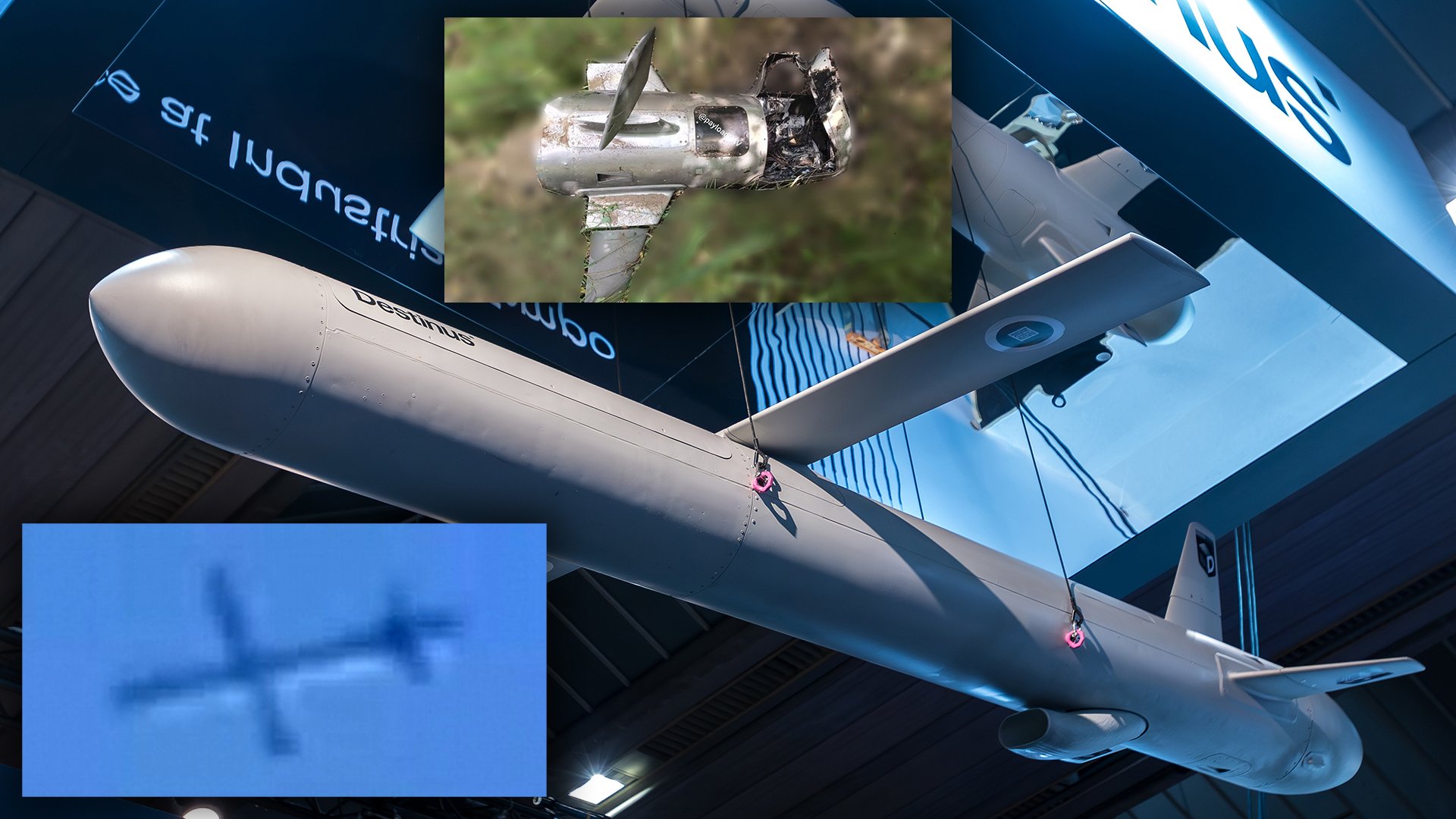
Нидерландын Destinus компанийн бүтээсэн энэхүү пуужин нь 300 гаруй километрийн тусгалтай бөгөөд 150 килограмм жинтэй байлдааны хошуу тээх хүчин чадалтай юм. Уг систем нь газраас хөөрөхдөө нэмэлт хурдасгуур ашигладаг бөгөөд нам өндөрт нисэж, сансрын болон харааны удирдлагын хосолсон системийг ашиглан байндаа тусдаг байна. Энэ нь GPS-ийн дохиог саатуулсан орчинд ч ажиллах боломжийг олгодог давуу талтай.
Өнгөрсөн сард Украины Батлан хамгаалахын сайд асан Михайло Федоров Нидерланд улс 500 сая гаруй долларын өртөг бүхий багцын хүрээнд 700 орчим ийм төрлийн пуужин нийлүүлэх санхүүжилтийг шийдвэрлэснийг мэдэгдсэн билээ. Тус компани нь өөрийн үйлдвэрлэлийн турбо тийрэлтэт хөдөлгүүрийг ашигладаг тул АНУ-ын нийлүүлэлтээс хамааралгүйгээр үйлдвэрлэлийг өргөжүүлэх боломжтой юм.
Украин улс энэхүү пуужинг өөрийн эзэмшилд байгаа бусад төрлийн нисгэгчгүй онгоц болон пуужингийн системүүдтэй хамт Оросын гүн дэх цэргийн дэд бүтэц, ложистикийн төвүүд, нисэх онгоцны буудлууд болон зэвсгийн агуулахыг устгахад ашиглаж байна. Destinus компани одоогоор 800 км хүртэл тусгалтай Block 2, 2000 км хүртэл тусгалтай Block 3 хувилбаруудыг хөгжүүлж байгаа бөгөөд эдгээр нь Европын орнуудын алсын тусгалтай цохилт өгөх чадавхыг бэхжүүлэхэд чухал үүрэг гүйцэтгэх төлөвтэй байна.
Дэлгэрэнгүйг эх сурвалжаас харах
↓Эх сурвалжийг нээх ↓
Russian military bloggers have published what appears to be the first imagery showing the remains of a Ukrainian-operated Ruta Block 1 low-cost cruise missile following an operational strike. The weapon is another addition to an increasingly diverse arsenal that can hold targets even deep inside Russia at risk.
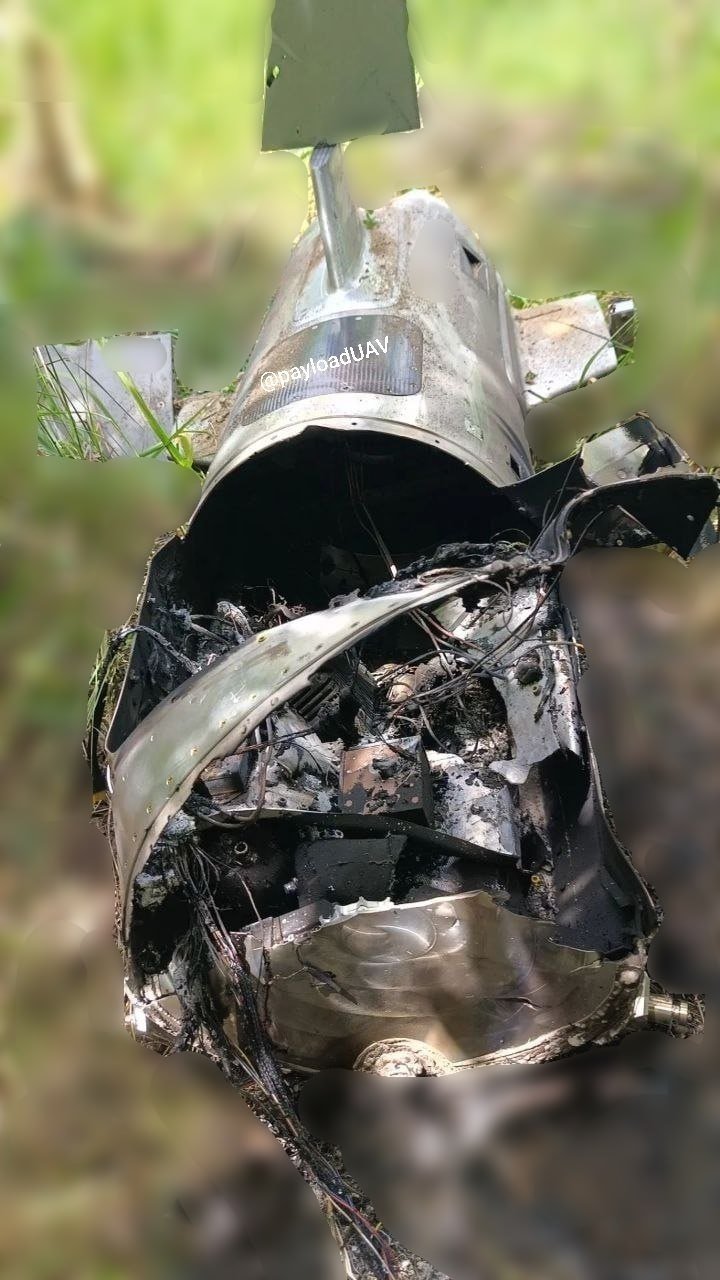
Photos that began circulating on Russian Telegram channels show wreckage consistent with the Dutch-produced Ruta Block 1. While the exact location and target of the strike remain unclear, the images represent the first publicly available evidence that the new long-range weapon has entered combat use.
The recovered debris includes fuselage sections, internal components, and part of the missile’s tailfin assembly. Although the imagery has not been independently verified, the remains appear consistent with the known design characteristics of the Ruta Block 1. The possibility cannot be ruled out entirely that the wreckage represents a previously undisclosed Ukrainian cruise missile design with broadly similar characteristics. Russian military bloggers claimed air defenses intercepted the missile, though that cannot currently be independently verified.
Footage purportedly showing a Ruta Block 1 missile flying toward its target has also appeared.
The Ruta Block 1 is a product of the Netherlands-based Destinus company, founded by the Russian exile Mikhail Kokorich. Earlier reporting indicated that the Block 1 was already being manufactured in the Netherlands and had been delivered to Ukraine since at least 2024.
Last month, then-Ukrainian Minister of Defense Mykhailo Fedorov announced that the Netherlands was paying for approximately 700 cruise missiles for Ukraine — almost certainly referring to the Ruta Block 1 — as part of a wider package worth more than $500 million.
According to the manufacturer, the Ruta Block 1 has a range of more than 300 kilometers (186 miles) and carries a payload of 150 kilograms (330 pounds).
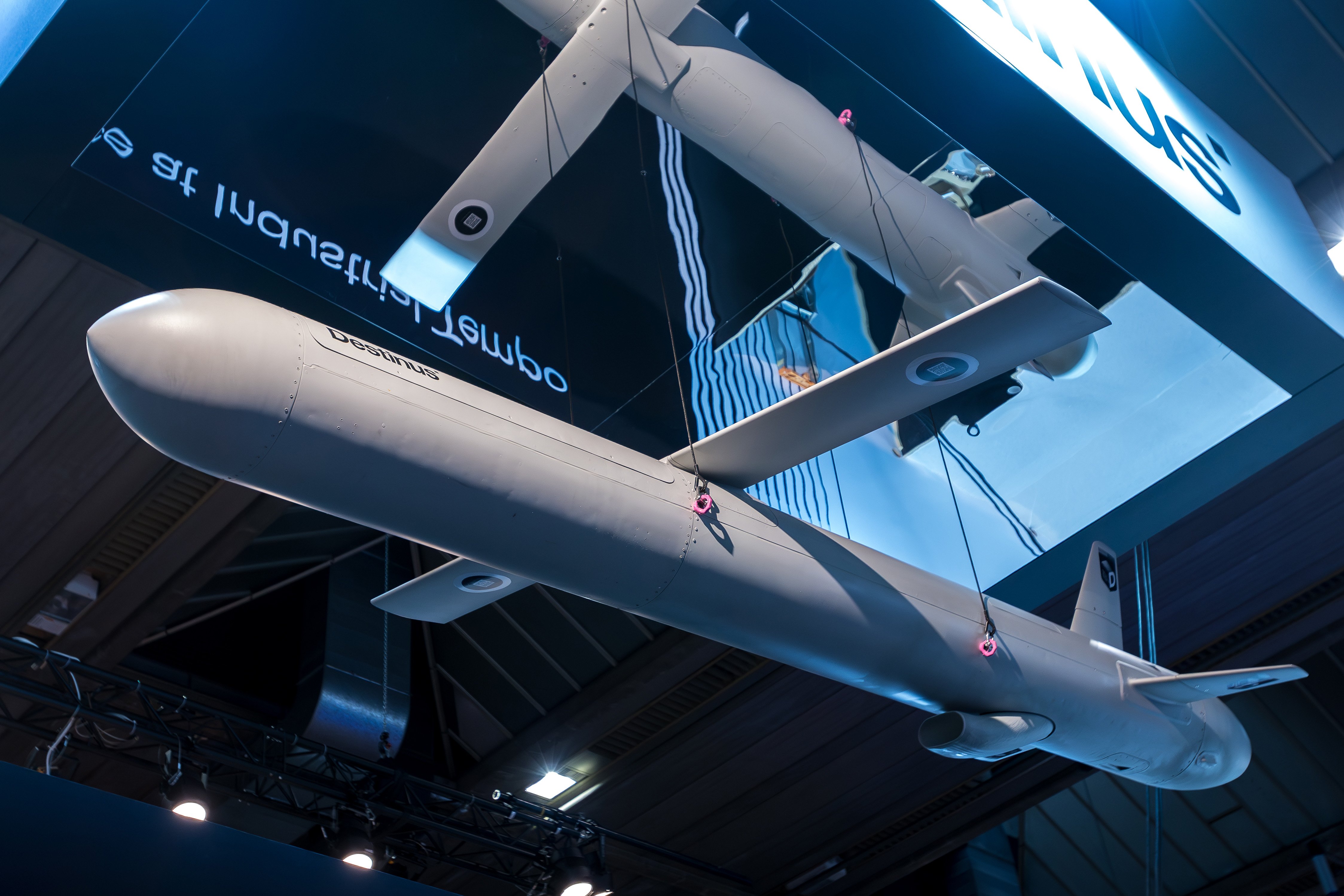
The missile is ground-launched via a booster, then flies to its target at low altitude, using a combination of inertial, satellite, and visual navigation systems, providing resilience also in GPS-contested environments. The weapon is intended to strike high-value fixed targets and features pre-programmed terminal guidance.
Unlike larger and more expensive cruise missiles, Ruta has been presented as a mass-producible weapon optimized for deep strikes against military infrastructure. The missile is designed around affordability and production scale, enabling Ukraine to conduct sustained long-range precision attacks while reducing reliance on scarce, more exquisite Western-supplied weapons. The Block 1 also comes with the major advantage that its turbojetengineis also manufactured by Destinus, so the company doesn’t rely on the United States for this part.

Engine No. 1000: Destinus reaches industrial-scale turbojet production in Europe
Ukraine has generally remained silent regarding operational use of many of its newest indigenous strike systems until well after they have entered service. Confirmation of the introduction of other long-range weapons often came first from Russian photographs of intercepted missiles or strike aftermath before official acknowledgment from Kyiv.
For Ukraine, the Ruta Block 1 forms part of a broader effort to diversify its expanding arsenal of deep-strike capabilities, alongside long-range drones, indigenous cruise missiles, as well as missile-drone hybrids. As production ramps up, these systems are playing an increasingly important role in sustained attacks against Russian energy infrastructure, as well as command centers, logistics hubs, airbases, ammunition depots, and defense-industrial facilities far behind the front lines. Ukraine is currently ramping up its long-range strikes on all fronts and doing major damage.
Destinus is also working on additional members of the Ruta family.
Earlier this year, the company presented theRuta Block 2, which increases the missile’s range to over 800 kilometers (around 500 miles) and boosts its payload capacity to 250 kilograms (550 pounds).

Ruta B2 Flight Test | European Canister-Compatible Cruise Missile | Destinus
Meanwhile, theRuta Block 3will have a range of 2,000 kilometers (around 1,200 miles) with a 550-kilogram payload. Block 3 is expected to enter flight testing in 2027 and is intended for air launch.
As well as bolstering the Ukrainian arsenal, the Ruta Block 3 has relevance for European nations looking to build up their long-range conventional strike capabilities.

Ruta B3 and the Future of European Deep Strike
Russia’s extensive use ofground-launched missiles in Ukraine, along with its deployment oflong-range weapons in Kaliningrad, has highlighted the deficiencies in Europe’s deep-strike capabilities as NATO seeks to strengthen conventional deterrence against Moscow. The Block 3 could be part of the answer to emerging requirements, including theEuropean Long-Range Strike Approach(ELSA), which involves France, Germany, Italy, Poland, Sweden, and the United Kingdom, and which seeks to bring new systems into service in the 2030s.
Destinus is also working to expand its production capacity, including through ajoint venturewith Rheinmetall that will make use of that company’s manufacturing facilities in Germany.
Overall, the Ruta series is part of a wider trend toward lower-cost, highly producable cruise missiles, something also evidenced in the United States. Examples of these include CoAspire’s Rapidly Adaptable Affordable Cruise Missile-Extended Range (RAACM-ER), which you can read more about here, and theFamily of Affordable Mass Missiles-Beyond Adversary’s Reach(FAMM-BAR) effort, which is seeking lower-cost designs with maximum ranges of 1,000 nautical miles or more.
Whether this particular missile reached its intended target or was intercepted remains unknown. What is clear, however, is that we have the strongest evidence to date that the Ruta Block 1 has transitioned from an announced development program into an operational weapon being employed against Russian targets.
Contact the author: thomas@thewarzone.com

