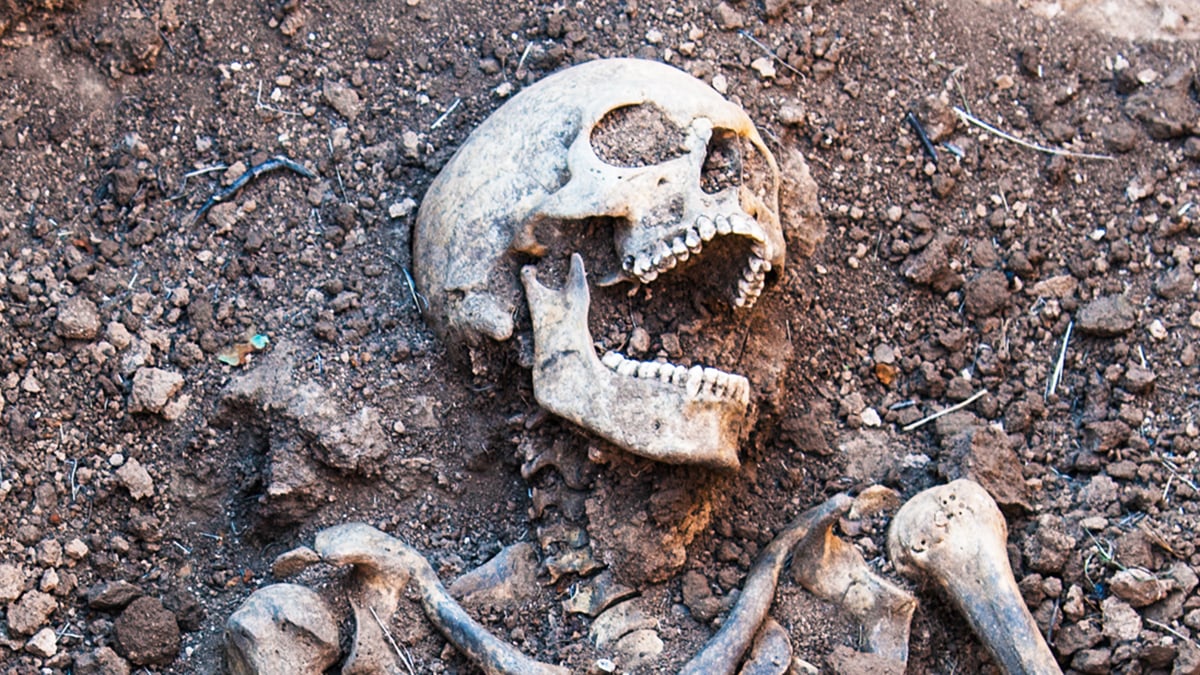
Польш болон Чехийн судлаачид математик загварчлалын тусламжтайгаар хүмүүс хоорондоо идэлцэх нь урт хугацаанд яагаад тогтворгүй, аюултай үйлдэл болохыг тогтоожээ.
Польшийн Вроцлавын их сургууль болон Чехийн Чарльзын их сургуулийн эрдэмтэд хүний мах идэх нь эрчим хүчний хувьд ашигтай ч эрүүл мэндийн эрсдэл нь хэт өндөр болохыг математик тооцооллоор баталсан байна. Судалгаагаар хүмүүс хоорондоо идэлцэх нь халдварт өвчин тархах гол эх үүсвэр болдог бөгөөд энэ нь тухайн бүлэг хүмүүсийн мөхөлд хүргэх аюултай болохыг тогтоожээ. Энэхүү эрсдэл нь хүнс тэжээлийн дутагдалд орсон үеийн богино хугацааны ашиг тусаас хавьгүй илүү жинтэй тул хүн төрөлхтний дунд каннибализмыг хориглох соёлын хэм хэмжээ бүрэлдэн тогтсон байна.
Папуа Шинэ Гвинейн “Форе” омгийн жишээнээс харахад нас барсан хүмүүсийг идэх зан үйл нь “куру” хэмээх тархины үхлийн аюултай өвчнийг дэгдээж байжээ. Прион хэмээх уургаар дамждаг энэ төрлийн өвчин нь хоол хүнсийг чанах зэрэг энгийн аргаар устдаггүй тул каннибализм нь хувьслын хувьд “урхи” болдог аж. Судлаач Петр Туречекийн тайлбарласнаар, соёлын хорио цээр нь бидний өвөг дээдсийг ийм төрлийн эрсдэлээс хамгаалсан үр дүнтэй бамбай болж иржээ.
Хэдийгээр каннибализм нь түүхийн явцад тохиолдож байсан ч, энэ нь тогтвортой амьдралын хэв маяг байж чадаагүй нь судалгаагаар тодорхой болов. Эрдэмтэд ирээдүйн судалгаагаар каннибализмыг сүрдүүлэх зорилгоор эсвэл нийгмийн статус тогтоох хэрэгсэл болгон ашиглаж байсан байж болох хүчин зүйлсийг нарийвчлан судлах шаардлагатай гэж үзэж байна. Энэхүү судалгаа нь эпидемиологийн нөхцөл байдал хүн төрөлхтний соёл, зан заншлын хувьсалд хэрхэн нөлөөлснийг харуулсан чухал ач холбогдолтой ажил болжээ.
Дэлгэрэнгүйг эх сурвалжаас харах
↓Эх сурвалжийг нээх ↓
Cannibalism is something of a paradox: It’s considered taboo and unacceptable, and yet the entire timeline of human history is dotted with records of the practice emerging.
Why does Homo sapiens keep turning to it, but never stick with it?
To try and find some answers, researchers from the University of Wrocław in Poland and Charles University in Czechia tackled the question from a math perspective, quantifying the risks versus the benefits of cannibalism.
You might reasonably think that there aren’t any benefits – but human flesh gives nutrients and energy to the body just like any other meat. In the most extreme circumstances, it might just save your life.
The results are published in PNAS, and show that the longer cannibalism is practised, the more dangerous and damaging it becomes, irrespective of any ethical concerns.
“Our model clearly demonstrates that regular cannibalism is unsustainable for human populations in the long run,” says theoretical and evolutionary biologist Petr Tureček, from Charles University.
There’s actually a very limited scenario where cannibalism actually makes some sort of sense, the study concludes: when other food is very scarce, when the cannibalized humans are dead (so there’s no energy expended in hunting), when the meat can be cooked for safety, and when you’re not consuming people who were themselves cannibals.
Beyond that, everything starts to mount up quickly in the ‘reasons against’ column.
This is primarily due to the risk of infection and disease transmission: When pathogens circulate within the same species (which isn’t the case when you’re eating other meat), infections are much more likely to take hold.
As cannibal ‘chains’ build up – so someone eats the flesh of someone else who was also a cannibal – so do the dangers of pathogens spreading. A community that relies on cannibalism gets killed off pretty quickly.
“The epidemiological costs of spreading incurable diseases quickly outweigh any caloric benefits, reliably leading to community collapse,” says Tureček.
“The cultural taboo therefore acts as an effective shield that protected our ancestors from this evolutionary trap.”
The researchers even point to a real-world example: the Fore people of Papua New Guinea were extensively hit by a fatal brain disease called kuru, which only faded when the community gave up the practice of eating their dead as part of the rituals at funerals.
Kuru is a prion disease, spread by misfolded proteins that aren’t eliminated through cooking like other pathogens can be.
This is a very pragmatic view of cannibalism that leaves out a lot of the natural revulsion and disgust that would normally go along with the practice – but it recognizes that this is something humans have resorted to, at times.

“These constraints help explain both its episodic occurrence and the widespread emergence of cannibalism taboos,” write the researchers in their published paper.
“More broadly, the findings illustrate how epidemiological dynamics can shape cultural evolution, producing stable norms that limit behaviors which are locally adaptive but globally destabilizing.”
Cannibalism is typically considered an ancient, primitive, and barbaric custom, and it very rarely happens today. The calculations made in this study show that cannibals may indeed have wiped themselves off the map by their actions.
The researchers admit there are factors outside the scope of the study that may be having some influence as well, and which could be followed up on in the future.
For example, certain cultures may have decided to practice cannibalism as a way of terrorizing neighboring communities or asserting status. It’s taboo-breaking and frightening, which may motivate the practice in some cases.
Related: Ancient Pit of Horrors May Have Been Spoils of a Victory Celebration
“Formalizing these social payoffs would require a different modelling framework, potentially incorporate signalling theory or intergroup competition, and lie beyond the scope of the present study,” write the researchers.
“Exploring how such individual-level benefits interact with the population-level costs identified here represents a promising direction for future research.”
The research has been published in PNAS.
This article was fact-checked by Clare Watson and edited by Clare Watson. While we pride ourselves on our process, we are only human. If you spot a mistake, please let us know.

