Судлаачид хүний тархи дадлага туршлагын үр дүнд ажлын ачааллыг өөр хэсэг рүү шилжүүлж, жинхэнэ утгаараа олон ажил зэрэг гүйцэтгэх чадвартай болдгийг тогтоожээ.
Ихэнх тохиолдолд бидний тархи нэгэн зэрэг хоёр зүйлийг хийхийн оронд маш хурдан хугацаанд ажлуудын хооронд “сэлгэж” ажилладаг. Гэвч Georgetown University Medical Center-ийн эрдэмтдийн “Journal of Cognitive Neuroscience” сэтгүүлд нийтлүүлсэн шинэ судалгаагаар, хүн тодорхой даалгавруудыг “автомат горимд” шилжүүлэх замаар тархины ачааллыг бууруулж, жинхэнэ олон үйлдэлт горимд шилжиж чаддаг болох нь тогтоогджээ.
Судлаачид 11 оролцогчийн тархийг fMRI болон EEG төхөөрөмжөөр хянаж, олон долоо хоногийн турш 30 мянга гаруй танин мэдэхүйн дасгал хийлгэжээ. Эхэндээ аливаа даалгаврыг гүйцэтгэхэд тархины урд хэсэг буюу “prefrontal cortex” идэвхжиж байсан бол, бэлтгэл сургуулилалтын дараа уг ажиллагаа санах ой болон танин мэдэхүйн үүрэгтэй “temporal cortex” хэсэг рүү шилжсэн байна. Энэ нь тархи өөрийн бүтцээ өөрчлөн, нэг хэсгийг чөлөөлж, өөр нэг үйлдлийг зэрэг хийх боломж бүрдүүлж буй хэрэг юм.
Энэхүү ололт нь зөвхөн суралцах үйл явцыг ойлгохоос гадна албаны болон мэргэжлийн түвшний нарийн төвөгтэй ажлуудыг хэрхэн илүү үр дүнтэй гүйцэтгэхийг тайлбарлаж байна. Тухайлбал, рентген зураг шинжилдэг эмч нар олон жилийн туршлагаараа дамжуулан оношийг автоматаар тогтоох чадвартай болдог нь тархины энэхүү дасан зохицох чадвартай холбоотой юм. Цаашид уг судалгаа нь хиймэл оюун ухааны хөгжил болон хүний зан төлөвийн эмгэгийг судлахад чухал хувь нэмэр оруулах боломжтой гэж эрдэмтэд үзэж байна.
Дэлгэрэнгүйг эх сурвалжаас харах
↓Эх сурвалжийг нээх ↓
Driving while listening to the radio; making breakfast while talking to the family; eating a sandwich while reading a book.
Our daily lives are built on multitasking, but are our brains actually doing two things at once, or just switching very quickly between them?
Well, it depends. The science shows it’s the latter, for cognitively demanding work.
But in a new study published in the Journal of Cognitive Neuroscience, researchers from Georgetown University Medical Center in the US have revealed that we can put certain tasks on autopilot in a way that enables something closer to true multitasking.
Driving is the perfect example: When you take your test, your entire mental and physical energy is concentrated on executing the right combinations of movements and thoughts.
After a decade behind the wheel, the brain is no longer consciously thinking everything through in great detail.
In the new study, the researchers found that after extensive practice, the brain can effectively reroute some tasks around the brain’s main computing center – like a bypass road around a city – to reduce mental overload and improve multitasking capability.
“We have another stepping stone in our understanding of how the brain learns,” says neuroscientist Maximilian Riesenhuber, senior author of the study.
“The encouraging part is that you really can learn to multitask. There is actually a way to remodel your brain architecture and use other parts of your brain.”
Humans can clearly multitask to some extent. We can walk and talk at the same time, without messing up our leg movements or putting words in the wrong order.
It’s when demanding tasks are involved that we have to keep switching between them, and productivity takes a hit.
These jobs are handled by the brain’s prefrontal cortex, which offers powerful executive thinking capabilities but can typically only do one thing at a time – creating what researchers sometimes call a ‘frontal bottleneck’.
Here, the researchers used functional magnetic resonance imaging (fMRI) and electroencephalogram (EEG) brain imaging on 11 participants, to measure both where and when brain activity was happening.

Across several weeks, the participants completed more than 30,000 mental challenges in which they were asked to sort pictures of cars into two categories. Brain scans were carried out both before and after the trials.
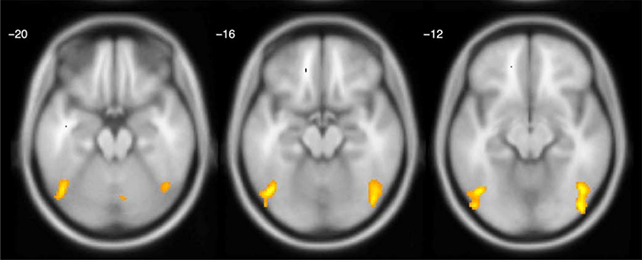
The key discovery was that the task initially activated the prefrontal cortex, but after training, a significant amount of the work of sorting cars had been shifted to the temporal cortex, where the brain manages memory encoding and object recognition.
“Previous studies have shown that parts of the temporal cortex can be activated by particular object categories in experienced observers – birds, cars, even Pokémon – but a limitation of all of those studies is that they only looked after people became experts,” says psychologist Patrick Cox, first author of the study.
“We measure before and after training, so we can see that extensive training essentially put a category-selective area in the temporal lobe that was not there before.”
The study culminated in a dual-task experiment, in which the participants were asked to identify cars and take on another challenge. The individuals whose brains had offloaded more car-sorting work to the temporal cortex did better at the second task.
“This has implications for critical real-world scenarios, like when a radiologist can accurately classify masses on an X-ray as benign or malignant fairly automatically, often without extensive deliberation, thanks to years of training,” says Cox.
While this is only a small-scale study that will need to be replicated in bigger groups, there are many potential implications for understanding learning in the brain.
More broadly, it could also help with research into compulsive behaviors and AI development.
Related: ‘Superager’ Brains Defy Cognitive Decline. We Finally Know Their Secret.
Next, the researchers want to see if there are particular kinds of tasks or mental work that are more likely to be offloaded to other parts of the brain – freeing up the prefrontal cortex to do something else.
“What we show is that the circuitry actually changes so the brain can do two things at once,” says Riesenhuber.
“This really is true multitasking.”
The research has been published in the Journal of Cognitive Neuroscience.
This article was fact-checked by Michael Irving and edited by Michael Irving. While we pride ourselves on our process, we are only human. If you spot a mistake, please let us know.

