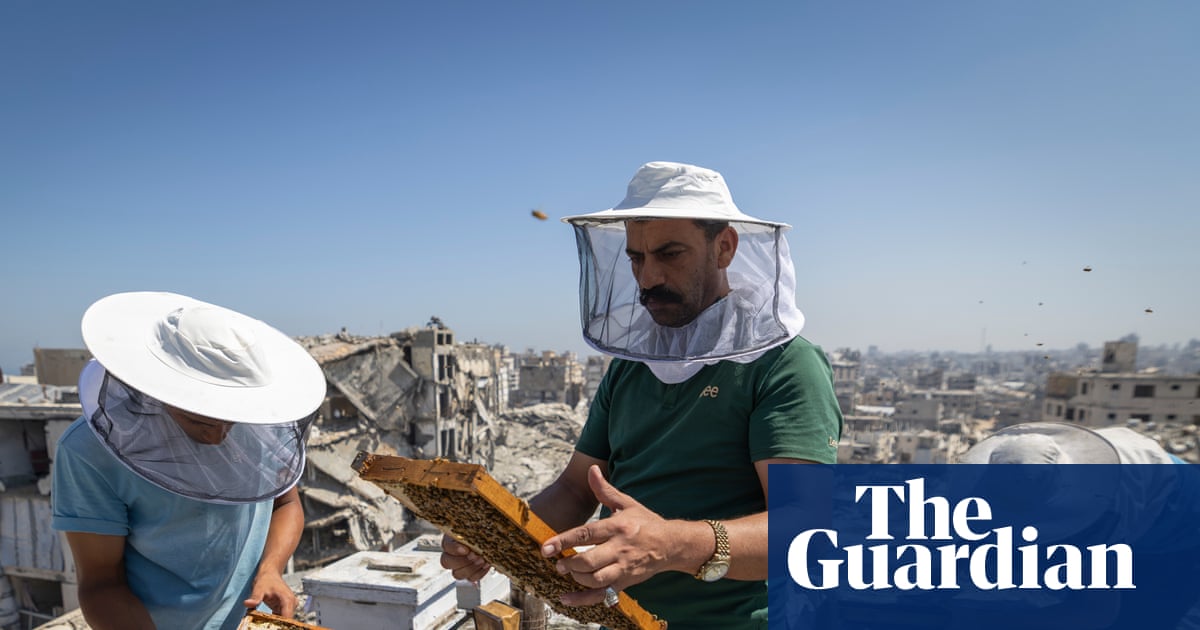
Газын зурвасын Тел аль-Хава дүүргийн оршин суугч, 49 настай Ибрагим Нажи аль-Дабба дайны хөлд бүх зүйлээ алдсаны дараа зөгий үржүүлгийн ажлаа сэргээхээр оролдож байна. Дайн эхлэхээс өмнө 400 гаруй зөгий үүр эзэмшиж, зөгийн балны бизнес эрхэлдэг байсан тэрээр одоо эвдэрхий барилгын дээвэр дээр цөөн тооны зөгий үржүүлж байгаа аж. Түүний тооцоолсноор, дайны улмаас гэр орон болон тоног төхөөрөмжөө алдсанаар 350,000 гаруй ам.долларын хохирол амсжээ.
Дайны улмаас олон удаа дүрвэхээс өөр аргагүйд хүрсэн аль-Дабба бусад ажил олдохгүй байгаа тул өөрийн мэргэшсэн салбартаа эргэн орохоор шийдсэн байна. Тэрээр 3,000 ам.доллараар гурван бүл зөгий худалдан авч, улмаар тэдгээрийг 35 бүл болгон өсгөжээ. Газын зурваст эм, тэжээл, тоног төхөөрөмж хомс, үнэ нь хэт өндөр байгаа ч тэрээр энэхүү үйл ажиллагаагаа зөвхөн орлого олох бус, алдагдсан амьдралаа хадгалан үлдэх оролдлого хэмээн тодорхойлж байна.
Зөгий үржүүлэгчдийн хоршооны тэргүүний хувьд аль-Дабба зөгий нь хөдөө аж ахуй, хүнсний үйлдвэрлэлийн тогтвортой байдалд чухал үүрэгтэйг онцлов. Тэрээр өөрийн нөхцөл байдлыг дайны хүнд хэцүү нөхцөлд ч ажилласаар байгаа зөгийтэй зүйрлэн, нэг ч үүр, нэг ч үржүүлэгч үлдсэн цагт амьдрал дахин эхлэх найдвар оршин байсаар байна хэмээн үзэж байна.
Дэлгэрэнгүйг эх сурвалжаас харах
↓Эх сурвалжийг нээх ↓
Each morning, Ibrahim Naji al-Dabba climbs to the roof of a damaged residential tower in Gaza City’s Tel al-Hawa neighbourhood, where rows of beehives sit surrounded by shattered concrete and the scars of war. The rooftop is far from an ideal place for beekeeping, but for the 49-year-old father of seven, it is the only place where he can continue the profession that has sustained his family for decades.
Before the war, al-Dabba owned more than 400 beehives spread across eastern Gaza. His apiaries, equipment, storage facilities, and four-wheel-drive vehicle allowed him to manage a thriving beekeeping business that supported his family. Today, almost everything he built over years of work has disappeared.
-
Ibrahim Naji al-Dabba, 49, (in green) working with his sons. He was displaced from the Shuja’iyya area, east of Gaza City to Tel al- to the south
“Beekeeping is not just a business,” he says. “It is my family’s only source of income. It is our life, our livelihood, and our future.”
Al-Dabba, who also serves as president of the Gaza Beekeepers’ cooperative society, says beekeeping became a passion long before it became a profession. Over the years, he specialised in producing honey, breeding queen bees, and developing bee strains adapted to Gaza’s climate. Before the war, Gaza’s beekeeping sector had continued to grow despite years of blockade, with hundreds of beekeepers producing honey and supporting local agriculture through pollination.
That changed after the war erupted.
Unable to reach his apiaries because of bombardment and displacement, al-Dabba watched his life’s work vanish. He lost his home, more than 400 beehives, honey-processing equipment, storage facilities, and nearly all the tools required for his trade. He estimates his financial losses at more than $350,000 (£263,000).
“The hardest moment was realising that everything I had spent years building was gone,” he says. “I lost not only my beehives but also my home, my equipment, and my only source of income.”
Like hundreds of thousands of Palestinians in Gaza, al-Dabba was repeatedly displaced throughout the war, moving from one area to another with his family. When conditions became relatively calmer, he searched for other work but found none.
Instead, he returned to the profession he knew best.
With savings and determination, he bought just three beehives for more than $3,000 – a significant investment under Gaza’s current conditions. Because moving between agricultural areas had become dangerous and transporting hives was nearly impossible, he placed them on the roof of a heavily damaged residential tower.
He knew the risks. The building itself had been damaged, and even the wooden hive boxes could be stolen by people desperate for firewood or building materials. Still, he believed the rooftop offered the best chance to protect what little remained.
“I wanted the bees to adapt to these harsh conditions, just as we have had to adapt,” he says.
Together with his sons, he gradually expanded those three colonies into 35 beehives. Although honey production remains limited, every successful harvest represents something far greater than income.
“I don’t feel that I’m only taking care of bees,” al-Dabba says. “I’m trying to preserve a part of the life that I lost because of the war.”
The challenges continue every day. Essential supplies such as medicines, wax foundation, supplemental feed, and beekeeping equipment have become scarce or prohibitively expensive. Rebuilding an apiary has become financially impossible for many beekeepers, while the high cost of packaging materials has made selling honey increasingly difficult.
Despite these obstacles, al-Dabba believes beekeeping remains essential not only for producing honey but also for sustaining agriculture itself.
“There is no sustainable agriculture without bees,” he says. “Supporting beekeepers means supporting food production and the livelihoods of thousands of families.”
Standing among the hives on the damaged rooftop, al-Dabba says the bees remind him of the people of Gaza.
“The bees are like the people here,” he says. “They continue working despite the hardship. They always find their way back to the hive.”
For him, every surviving colony carries a message that extends beyond honey production: “As long as there is even one beehive, and one beekeeper holding on to this profession, there is hope that life can begin again.”

