Гуравдугаар сарын 2-ноос хойш Ливанд 135 гаруй эмнэлгийн ажилтан Израйлын цэргийн ажиллагааны улмаас амиа алдсаныг тус улсын Эрүүл мэндийн яамнаас мэдээлэв. Израйлын тал түргэн тусламжийн автомашинуудыг Hezbollah зэвсэг тээвэрлэхэд ашигладаг хэмээн мэдэгддэг боловч Amnesty International зэрэг хүний эрхийн байгууллагууд энэхүү мэдэгдлийг нотлох баримт хангалтгүй гэж үзэж байна. Эмнэлгийн ажилтнууд болон түргэн тусламжийн багийнхан мөргөлдөөний явцад шууд онилогдож байгаа нь нөхцөл байдлыг улам хүндрүүлж, тусламж үзүүлэх үйл ажиллагаанд томоохон саад учруулж байна.
Набатие хотын төрийн эмнэлгийн мэс засалч Мустафа Хамзе болон яаралтай тусламжийн албаны ажилтан Мохаммед Сулейман нарын хэлснээр, эмнэлгийн багийнхан өмнөх мөргөлдөөнүүдээс ялгаатай нь энэ удаагийн дайнд шууд онилсон халдлагад өртөж байгааг онцолжээ. Тухайлбал, Сулейманы 16 настай хүү Жуд түргэн тусламжийн дүрэмт хувцастай явж байхдаа Израйлын дроны цохилтод өртөж амиа алдсан байна. Эмнэлгийн ажилтнууд өөрсдийн аюулгүй байдалд санаа зовниж, байнгын дарамт шахалт дор үүргээ гүйцэтгэж байгаа нь сэтгэл зүйн хувьд хүнд дарамт болж байгааг илэрхийлжээ.
Зургадугаар сард гал зогсоох хэлэлцээр байгуулагдсан хэдий ч Ливаны өмнөд хэсэгт бөмбөгдөлт үргэлжилсээр байна. Тухайлбал, өнгөрсөн пүрэв гарагт Набатие ал-Фавка тосгонд түргэн тусламжийн автомашин Израйлын дроны цохилтод өртсөн тохиолдол гарчээ. Эмнэлгийн ажилтнууд өөрсдийгөө хамгаалах боломжгүй, байнгын эрсдэлтэй нөхцөлд ажиллаж байгаа нь олон улсын хүмүүнлэгийн байгууллагуудын анхаарлыг татаж байна.
Дэлгэрэнгүйг эх сурвалжаас харах
↓Эх сурвалжийг нээх ↓
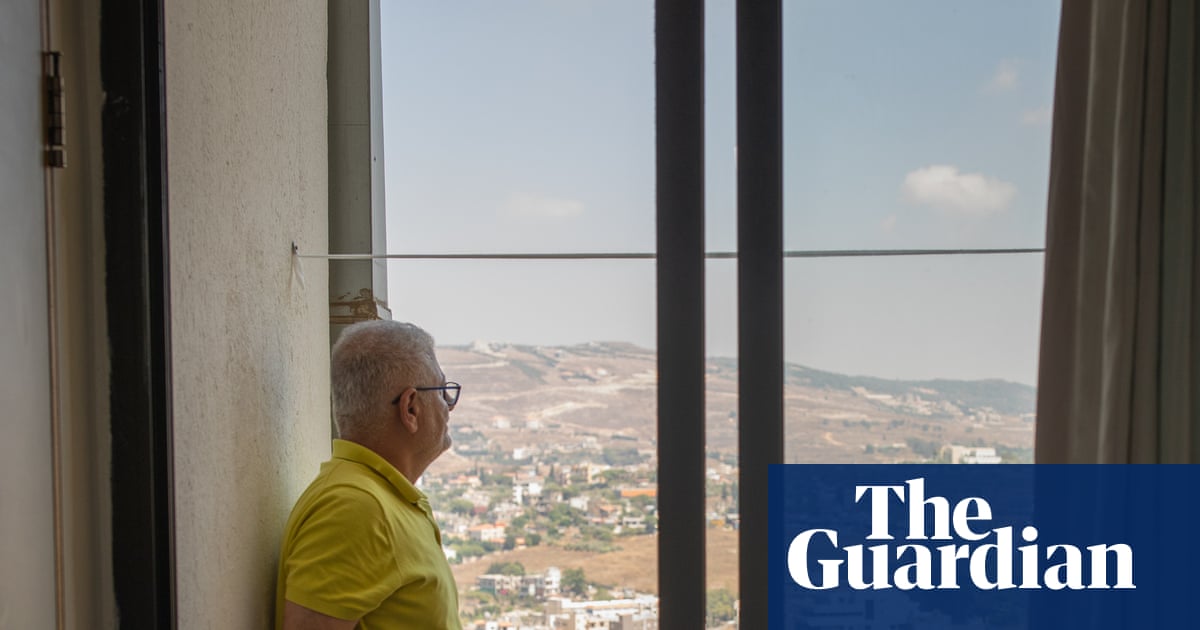
Moustapha Hamze can see his house from the hospital where he works; from a distance, he tries to make out if it has been damaged. The surgeon heads to the balcony every third explosion to make sure his home was not the one targeted.
His house, on the hillside village of Kfar Roummane, is about a five-minute drive from the hospital where he works in the southern Lebanon town of Nabatieh. But despite a ceasefire in the Israel-Lebanon war, he cannot return. The last time he tried, he was met by an Israeli drone that first dropped a stun grenade, and then launched a bomb about 10 metres away. He was lucky to escape with his life.
“I have a room here, but I no longer have any clothes. The last time I went home, I took my clothes with me. I didn’t realise that I might not be able to return to the house,” says Hamze, a 66-year-old surgeon at the Nabih Berri governmental hospital in Nabatieh.
Hamze’s life since the beginning of March has been confined to the small surgery room he has turned into a bedroom, the reception area where he paces in laps and the emergency room of the public hospital where he treats the wounded. When Hezbollah fired rockets at Israel on 2 March, triggering an Israeli invasion and a war, he shut his private clinic and volunteered at the public hospital.
He spent every day of the nearly five-month war in the hospital; since a June ceasefire, he has given himself four days of rest.
Hamze is one of thousands of Lebanese doctors and healthcare workers who have placed themselves in harm’s way to continue saving lives. Their country has become one of the world’s deadliest places for healthcare workers, with Israel targeting doctors, first responders and healthcare facilities with alarming regularity.
At least 135 healthcare workers in Lebanon have been killed by Israel since 2 March – many of them in so-called double-tap strikes – according to the Lebanese health ministry. Israel has claimed that ambulances were used to transport weapons for Hezbollah – an allegation that human rights groups such as Amnesty International say is not supported by evidence.
Hamze, who also volunteered during the 2024 Hezbollah-Israel war, says the latest conflict is the most intense he has experienced.
“The Israeli bombardment was worse. I saw greater injustice and bodies in unnatural, horrifying conditions. When they burned people alive in Nabatieh, the sight was terrifying.
“I saw bodies with the entire upper part of the head missing. Previously, you would see something like that only in films.”
For the first time, Hamze felt as if he and his colleagues had become a target. “I would see paramedics leave in an ambulance and return dead. That was psychologically very difficult; it creates mental exhaustion,” says Hamze.
He also described how a paramedic he got to know well during the war, Mahdi Abu Zeid, was killed by Israeli forces.
“He was a polite, decent young man. What upset me was that I had to come to know him,” says Hamze. “Sometimes, I wish I had not known him, because then his death might have hurt less.”
With bombings all around the hilltop hospital, the facility began to feel like both a fortress and a prison. Outside the hospital, the situation was even more grim.
Mohammed Suleiman, chief paramedic for Nabatieh emergency services, has worked through three wars. Airstrikes nearby had hit paramedics of the independent rescue organisation in previous wars, but they had never been a target themselves.
“We worked on the assumption that we might be caught in an attack, but not that we would be targeted directly. But in this war, no – they targeted us directly,” says Suleiman, 44.
Three paramedics were killed directly by Israeli airstrikes. One of them was Joud, Suleiman’s 16-year-old son. He was killed with his young colleague Ali in March while bringing food to people still in Nabatieh. A drone struck them, despite them wearing paramedic uniforms.
The responsibility of the young paramedics’ lives weighs heavily on Suleiman, who dispatches the ambulances. Despite the men continuing their work, he could see how fear was creeping in among the paramedics.
“Before the attacks, I would dispatch the teams without hesitation. But after these incidents, I would make a hundred calculations before sending out a vehicle,” says Suleiman, recalling how he would have to resist constantly radioing paramedics on missions to check on them, aware that it would only distract them.
“When you are at the centre, away from the crews, you are more stressed than the people who are actually on the ground. I have no way of knowing whether they are about to target him or not. Only when they came back to the centre could we relax.”
Other paramedics describe how stressful they found the random nature of the Israeli forces’ targeting. After trying to make sense of the reasons for his colleagues’ deaths – guessing which areas were now off-limits, or wondering if leaving time between strikes could help – Hassan Boussi gave up.
“There are many justifications offered by the Israelis, but the reality is one: they did not want ambulance and rescue teams to operate,” says Boussi, a paramedic and assistant director of the Islamic Health Society for Tyre.
Despite a ceasefire established in June, bombing has continued in Lebanon, albeit at a slower rate. Much of it is centred on Nabatieh and medical workers are still a target – an ambulance was struck by an Israeli drone in the village of Nabatieh al-Fawqa last Thursday.

