Удаан хугацаагаар амьсгал гаргах техник нь тархины урамшууллыг үнэлэх үйл ажиллагааг идэвхжүүлж, эрсдэлтэй сонголт хийх магадлалыг нэмэгдүүлж болохыг эрдэмтэд анхаарууллаа.
Charité – Universitätsmedizin Berlin-ийн судлаачдын баг амьсгалын дасгал болон хүний шийдвэр гаргах үйл явцын холбоог судалжээ. “Neuron” сэтгүүлд нийтлэгдсэн уг судалгаанд 41 оролцогчийг MRI аппаратад оруулж, бооцоот тоглоомын даалгавар гүйцэтгүүлэхдээ амьсгалын хэвийн болон уртасгасан амьсгал гаргах (хоёр секундээр амьсгалан, найман секундээр гаргах) хоёр нөхцөлийг харьцуулсан байна. Судалгааг удирдсан нейробиологич Soyoung Q. Park-ийн багийн дүгнэлтээр, уртасгасан амьсгал гаргах нь зүрхний парасимпатик мэдрэлийн системийн идэвхжлийг нэмэгдүүлж, хүмүүсийг эрсдэлтэй сонголт хийхэд илүү түлхэж байжээ.
Шинжилгээгээр уг дасгал нь тархины урамшууллыг үнэлэхэд оролцдог ventromedial prefrontal cortex болон precuneus бүсүүдийн үйл ажиллагааг идэвхжүүлж, болзошгүй ашгийг илүү чухалчлан үзэхэд нөлөөлж байгааг тогтоосон байна. Сонирхолтой нь, оролцогчид эрсдэлийн сөрөг талыг үл тоомсорлоогүй бөгөөд зөвхөн ашиг хонжоог илүүтэй анхаарч байв. Энэхүү үр дүн нь хүний биеийн дотоод төлөв байдал нь шийдвэр гаргах үйл явцад хэрхэн нөлөөлдгийг харуулсан “нейровисцерал” буюу мэдрэл-дотор эрхтний харилцан холбооны баримт болж байна.
Гэсэн хэдий ч судалгааны багийнхан үр дүнгээ хязгаарлагдмал хүрээнд хийгдсэн “зарчмын баталгаа” хэмээн тодорхойлсон юм. Оролцогчдын тоо цөөн, насны хувьд залуу (дунджаар 25 нас), мөн бодит амьдралын эрсдэлтэй бус лабораторийн орчинд хийгдсэн тул цаашид илүү өргөн хүрээтэй, олон талт судалгаа шаардлагатай гэж үзэж байна. Уг арга нь сэтгэл түгших болон сэтгэл гутралын эмчилгээнд ач холбогдолтой байж болох ч шийдвэр гаргах үйл явцад үзүүлэх нөлөөг цаашид нарийвчлан судлах хэрэгтэй юм.
Дэлгэрэнгүйг эх сурвалжаас харах
↓Эх сурвалжийг нээх ↓
Do you ever close your eyes, take a breath and then let it out sloooowly ahead of making a big decision?
You’re not alone – it’s one of the most frequently recommended strategies when you’re feeling overwhelmed. And science has previously shown that certain types of breathwork can reduce anxiety and lower blood pressure.
But new research suggests that, depending on the type of breathing you’re doing, it may not actually have the calming, grounding effect we all assume.
In fact, that slow, deliberate exhale can actually increase your risk-taking behavior, according to a small, proof-of-concept study led by researchers from Charité – Universitätsmedizin Berlin.
Instead of calming participants into caution, the breathing technique appeared to be nudging them toward the riskier option.
The new study looked at a simple breathing technique known as ‘prolonged exhalation’, which involves taking a short inhale followed by a much longer exhale.
Their research showed that this actually made people more likely to accept risky gambles, with brain scans suggesting the technique amplifies how much our brains value potential rewards.
Prolonged exhalation is already used in military and law enforcement training to keep people calm and sharp under pressure.
It’s known to shift the body into a ‘rest-and-digest’ state (or a state of cardiac parasympathetic predominance) by boosting activity in the parasympathetic nervous system, the counterpart to the fight-or-flight response.
What hadn’t been tested is whether deliberately dialing up that calm state changes the choices people actually make.
“Deliberately modifying one’s autonomic state can shape how we evaluate the world, ultimately influencing choices,” the researchers write in the journal Neuron.
“Yet, it remains unclear whether and how intentional autonomic regulation affects human decision-making.”
To figure this out, the researchers led by neuroscientist Soyoung Q. Park put 41 participants through a gambling task while lying in an MRI scanner.

Each person made a series of accept-or-reject decisions on 50/50 gambles, once while breathing normally and once while following an on-screen cue that stretched their exhale to a 2:8 second inhale-to-exhale ratio (in for two, out for eight).
At the same time, the team tracked heart activity, breathing rate, skin conductance, and pupil size.
The slow-breathing condition worked as intended: It lengthened exhalation, slowed respiration, and boosted two separate markers of cardiac parasympathetic activity, compared to normal breathing.
It didn’t budge the markers linked to the sympathetic “fight-or-flight” system, such as skin conductance and pupil size, suggesting the effect was specific to the calming branch of the nervous system, rather than a general dampening of arousal.
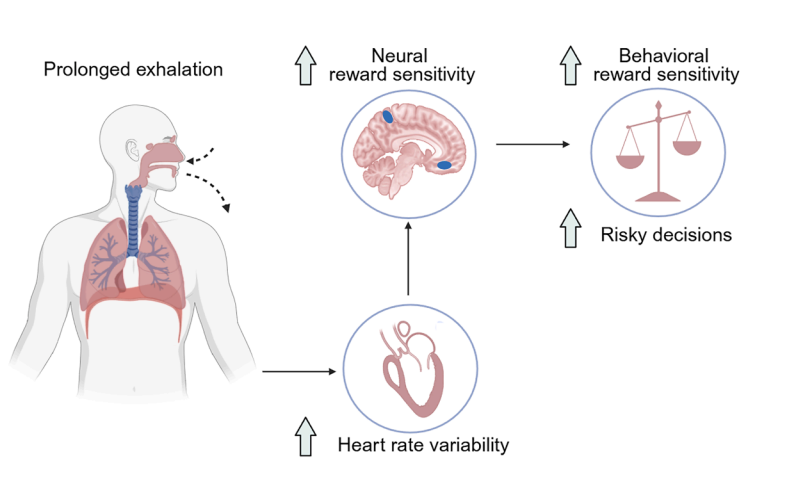
Against that backdrop, people took more risks. But it wasn’t because they were suddenly oblivious to the downside.
When the researchers broke down the decisions, the breathing technique only made people more sensitive to the size of the potential reward on offer; it left their sensitivity to potential losses statistically unchanged.
In other words, participants weren’t becoming reckless across the board; they were paying more attention to what they stood to gain.
The brain scans point to where that shift might be happening.
People who showed the biggest boost in a heart-based marker of parasympathetic activity also showed the strongest reward-related activity in two brain regions: the ventromedial prefrontal cortex, which helps assign subjective value to choices; and the precuneus, which is involved in self-referential thought and folding bodily signals into decision-making.
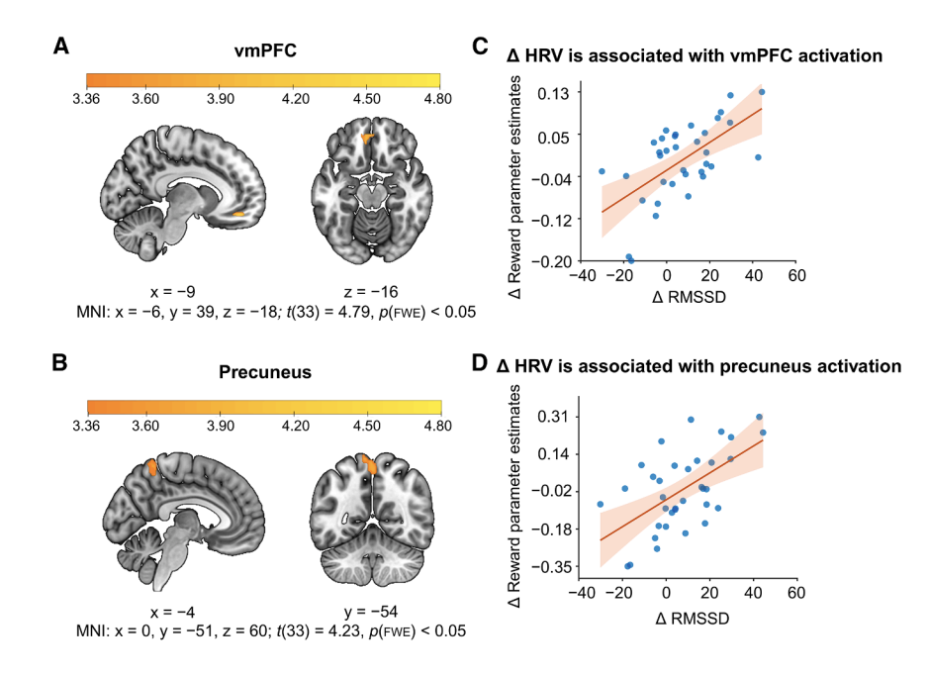
Response times didn’t differ between the control group and those doing the slow exhale, so the effect wasn’t simply down to people thinking about it less.
The researchers frame the result as evidence that the body’s internal state doesn’t just accompany a decision – it helps shape it, feeding into what they call a “neurovisceral” pathway linking breath, heart and brain.
“This pattern underscores the essential function of body state in
shaping human decisions, an empirical validation for neurovisceral integration,” the team write.
But there are some big caveats worth flagging.
The sample was small and made up of healthy young adults with an average age of 25, and the ‘risk’ on the table was a lab-based monetary gamble rather than a real-world decision made under genuine pressure.

The reward and loss amounts in the task were also deliberately unbalanced to make the effect easier to detect, so the researchers themselves describe this as a proof-of-principle result rather than the final word.
Future work with more evenly matched rewards and losses, and more diverse participants, will be needed to see how far the effect generalizes.
Related: This 5-Minute Breathing Exercise Lowers Blood Pressure as Much as Drugs or Exercise
Still, the authors suggest the mechanism could eventually be useful well beyond the lab, from therapeutic settings where reward processing has gone awry, such as depression or anxiety.
Just don’t assume that a few slow breaths before your next big financial decision will make you more sensible.
The research has been published in Neuron.
This article was fact-checked by Clare Watson and edited by Clare Watson. While we pride ourselves on our process, we are only human. If you spot a mistake, please let us know.