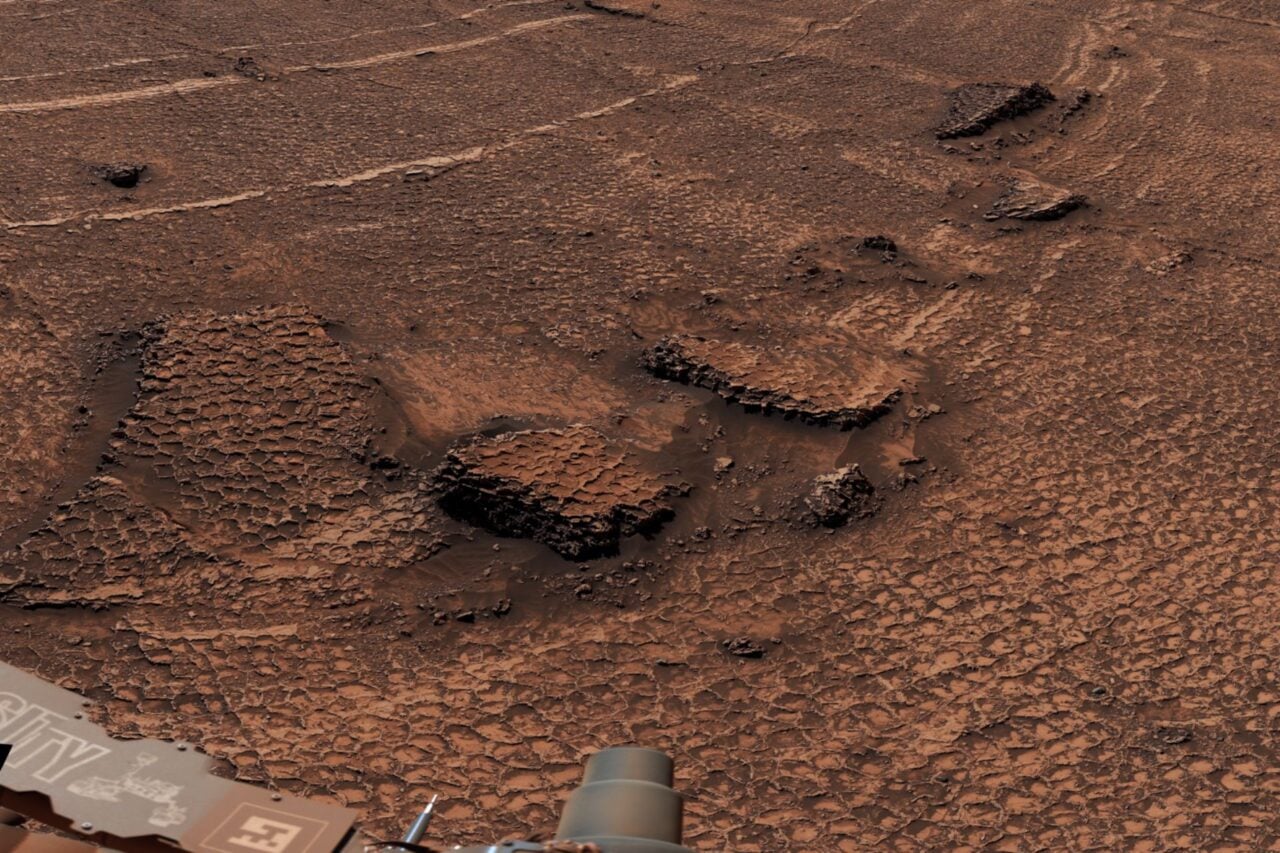
NASA-гийн Curiosity хөлөг Ангараг гарагийн эртний усны ул мөрийг гэрчлэх олон тооны полигон хэлбэрийн хагарлыг илрүүлжээ.
NASA-гийн Curiosity хөлөг Ангараг гарагийн Гэйл тогоонд орших Шарп уулын бэлд явагдаж буй судалгааныхаа явцад “Valle Grande” хөндийгөөс зөгийн үүр мэт олон өнцөгт бүтэц бүхий талбайг илрүүллээ. Хөлгийн Mast Camera-аар зургаадугаар сарын 19 болон 20-нд авсан 340 тусдаа зургаас бүрдэх 360 хэмийн панорам зурагт энэхүү ховор үзэгдлийг тод харуулжээ.
Ойролцоогоор 4–8 см-ийн өргөнтэй эдгээр полигон хагарал нь тухайн бүс нутагт өмнө нь хэзээ ч байгаагүй их хэмжээгээр тархсан байна. Төслийн эрдэмтэн Ашвин Васавадагийн мэдээлснээр, эрдэмтдийн баг эдгээр бүтцийн хэлбэр болон химийн найрлагыг нарийвчлан судалж, тэдгээрийн үүссэн шалтгааныг тодруулахаар ажиллаж байна.
Эрдэмтдийн таамаглаж буйгаар эдгээр хагарал нь эрт цагт ус тогтож байсан газрын ул мөр байж болзошгүй юм. Температурын өөрчлөлтөөс үүдэн шавар хатаж хагарах, эсвэл хөрсний давхарга дарагдаж ус шахагдан гарснаар ийм бүтэц үүсдэг гэж үздэг.
2012 оны наймдугаар сарын 5-нд Ангарагт газардсанаас хойш Curiosity хөлөг эртний усны болон амьдрал оршин байх боломжтойг батлах олон баримт цуглуулсан. Тухайлбал, энэ оны эхээр хөлөг шаварлаг элсэн чулуунаас РНХ болон ДНХ-ийн үүсгүүр байж болох 20 гаруй органик молекулыг илрүүлсэн билээ.
Дэлгэрэнгүйг эх сурвалжаас харах
Эх сурвалжийг нээх ↓
For more than a decade, NASA’s Curiosity rover has been trudging up Mount Sharp, a 3-mile-tall (5-kilometer-tall) mountain at the center of the Gale Crater on Mars. Scientists believe lakes and streams covered the foothills of this peak billions of years ago, and Curiosity just found an abundance of evidence to support that hypothesis.
The rover captured a 360-degree panorama inside a valley nicknamed “Valle Grande” on June 19 and 20, revealing a vast plain of honeycomb-like surface features stretching as far as its Mast Camera could see. The image is made up of 340 individual snapshots that Curiosity beamed back to Earth, where scientists stitched them together. While this isn’t the first time the rover has spotted these “polygonal fractures,” as NASA calls them, it has never found so many in one place before.
“We’ve seen a lot of fascinating landscapes through Curiosity’s eyes, but this sea of polygons took our breath away,” Ashwin Vasavada, the project scientist for Curiosity, said in a statement. “We measured their shapes and chemistry carefully and are hopeful there are clues in the data as to how these features formed.”
Scars of ancient water bodies
Each of these newly discovered polygonal fractures is approximately 1.5 to 3 inches (4 to 8 centimeters) wide, and they spread in all directions out from the rover’s vantage point. The pattern wraps around a butte named “Miraflores,” which stands 20 feet (6 meters) tall and is crowned with a thick layer of sand.
Curiosity has spotted smaller patches of polygons on multiple occasions. Some of them appeared to be mud cracks that could have formed through a variety of processes, according to NASA. Cycles of warm and cold temperatures may have caused mud to expand, contract, and fracture, for example. Alternatively, compaction that occurred while the surface was buried might have squeezed water out of the sediment.
Since arriving at Mars on August 5, 2012, Curiosity has uncovered numerous clues about the Red Planet’s ancient water—and possible traces of life. Earlier this year, the rover detected more than 20 organic molecules in clay-rich Martian sandstones. They had never been seen on Mars before, and scientists believe some of them may be precursors to RNA and DNA.
It’s not yet clear whether those carbon-based molecules stemmed from biological or geologic processes, but their presence supports the idea that Mars once had the right chemistry to support life, according to NASA.
Analyzing the chemistry of the newly discovered field of polygons in Valle Grande could yield more information about Mars’s long-lost water and, potentially, its former habitability. With each hill and valley Curiosity traverses, scientists get closer to unraveling the mystery of the Red Planet’s ancient past.