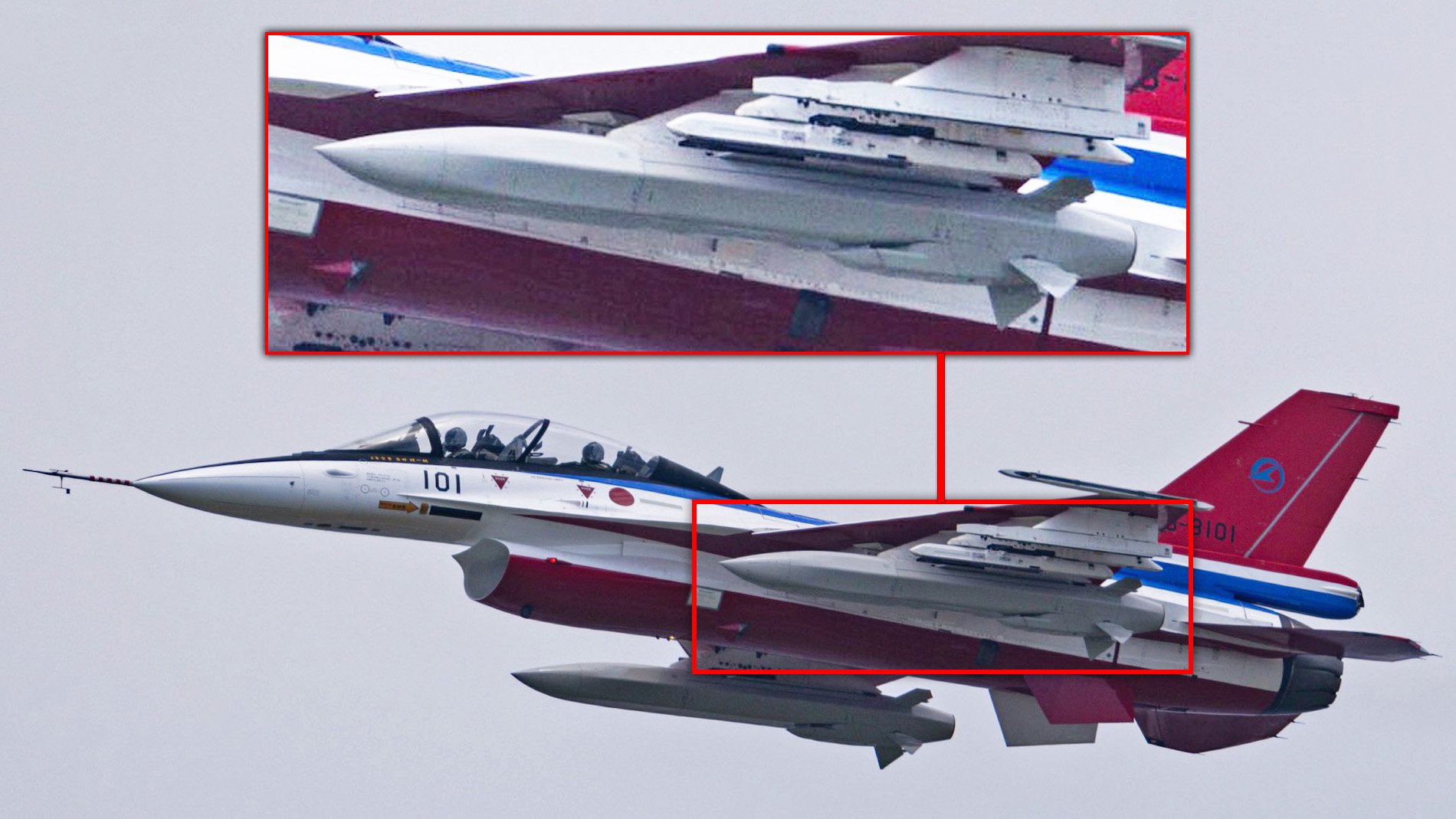
Японы Агаарын өөрийгөө хамгаалах хүчний Mitsubishi F-2 сөнөөгч онгоцны далавчин дор урьд өмнө харагдаж байгаагүй шинэ пуужингуудыг суурилуулсан нь Гифу агаарын баазад болсон туршилтын нислэгээр ил болжээ. Эдгээр зэвсэг нь хэмжээ болон бүтцийн хувьд газраас хөөргөх зориулалттай Type 25 (25SSM) пуужингийн агаараас хөөргөх хувилбар байх магадлал өндөр байна. Шинэ пуужин нь радарт өртөхгүй байх технологийн онцлогтой бөгөөд дайсны тэнгисийн болон хуурай газрын байг устгах зориулалтаар бүтээгдсэн бололтой.
Япон улс бүс нутгийн аюулгүй байдлын нөхцөл байдал, ялангуяа Хятадын зэвсэгт хүчний хурдацтай өсөлт болон Хойд Солонгосын пуужингийн хөтөлбөртэй холбоотойгоор өөрийн “эсрэг цохилт өгөх” чадавхийг сайжруулахыг зорьж байна. Энэ хүрээнд Type 25 пуужингийн системийг хуурай газар, тэнгисийн цэргийн хөлөг онгоц болон сөнөөгч онгоцнуудад байршуулахаар төлөвлөж байгаа бөгөөд 2027 оны санхүүгийн жилд багтаан ашиглалтад оруулахаар зорьж байна.
Тус улс нь мөн АНУ-ын Tomahawk далавчит пуужингаар зэвсэглэж, F-35A сөнөөгч онгоцондоо зориулан Joint Strike Missile (JSM) худалдан авч, JASSM пуужинг ашиглах зөвшөөрөл авсан зэргээр алсын зайн тусгалтай зэвсэглэлээ олон төрлийн болгон өргөжүүлж байна. Эдгээр алхмууд нь Японыг эх орноо хамгаалахаас гадна болзошгүй аюулыг илүү хол зайнаас саармагжуулах чадвартай болгож байгаа юм.
Дэлгэрэнгүйг эх сурвалжаас харах
↓Эх сурвалжийг нээх ↓
A pair of previously unseen missiles slung beneath the wings of a Japan Air Self-Defense Force (JASDF) Mitsubishi F-2 fighter underscores the progress Tokyo is making on expanding its long-range strike arsenal, to which the Tomahawk land-attack cruise missile was recently added. While the weapon has not been officially identified, its size, configuration, and timing strongly suggest it could be the air-launched version of Japan’s new Type 25 Surface-to-Ship Guided Missile (25SSM).
Photographer @bibabibabibary on X was one of many to capture the new missiles during what was apparently the first test flight from Gifu Air Base today. The aircraft carrying them was the two-seat F-2B serial 68-8101, one of the F-2 prototypes now operated by the JASDF’s Air Development and Test Wing (ADTW). The first F-2A prototype, 68-8101, served as a ‘chase plane’ for the sortie.
Carried on the inboard wing pylons, the missiles are notably large — bigger than the familiar ASM-2 or even the newer, ramjet-powered ASM-3 anti-ship missiles already associated with the F-2 fleet. The new, gray-painted weapons have a long, fairly slender fuselage, folding wings in the upper part of the body, and four cruciform tailfins. The boxier cross-section has ‘chines’ reminiscent of those on other low-observable missiles. Its stealth features should enhance its survivability and lethality against increasingly capable naval integrated air defense systems. An underslung engine intake, with a protective cap, is located below the rear part of the body. There is no obvious optical window, suggesting that the missile relies on GPS/INS navigation and a radar seeker for the terminal phase.
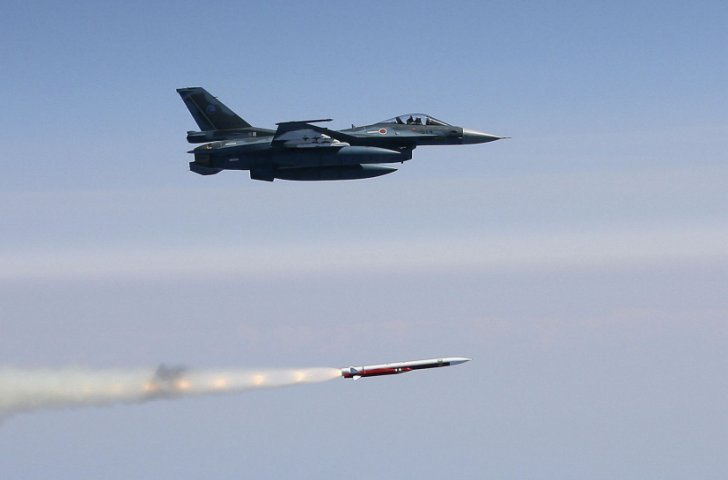
Overall, the weapon has the look of a subsonic, radar-evading cruise missile optimized for long-endurance flight rather than high-speed dash performance.
Significantly, the new missile has a lot of similarities with what we have seen of the Upgraded Type 12/Type 25 family of weapons, suggesting that this is an air-launched derivative.
The Upgraded Type 12/Type 25 is a heavily upgraded evolution of Japan’s legacy Type 12 anti-ship missile, with its range reportedly increased to around 1,000 kilometers (around 620 miles).

Once in service, it will substantially increase Japan’s maritime-strike reach. The original Type 12 used by the Japan Ground Self-Defense Force (JGSDF) has a range of 200 kilometers (124 miles), while the JASDF’s ASM-2 can strike targets at 180 kilometers (112 miles).
While the original Type 12 was conceived as a coastal defense weapon to attack enemy shipping, the new missile family is a multirole strike system capable of engaging maritime as well as land targets, including enemy missile launch sites and other fixed infrastructure, hundreds of miles from the home islands, as part of Japan’s evolving ‘counterstrike’ posture.
Japan’s pursuit of increasingly capable standoff weapons is being driven largely by the deteriorating security environment in the Indo-Pacific, particularly China’s rapid military expansion and growing arsenal of long-range precision missiles. The People’s Liberation Army fields extensive anti-access/area-denial (A2/AD) networks designed to keep U.S. and allied forces at arm’s length, while China’s navy continues its rapid expansion. At the same time, North Korea’s advancing ballistic missile and nuclear programs have reinforced Tokyo’s view that it needs the ability not only to defend its territory, but also to hold hostile missile launchers, command nodes, and naval forces at risk before they can strike.
At the end of March of this year, the JGSDF announced the deployment of the Upgraded Type 12, and, at the same time, officially redesignated it as the Type 25 Surface-to-Ship Guided Missile (25SSM) — the “25” reflects fiscal year 2025, when the coastal defense weapon was formally inducted to service.
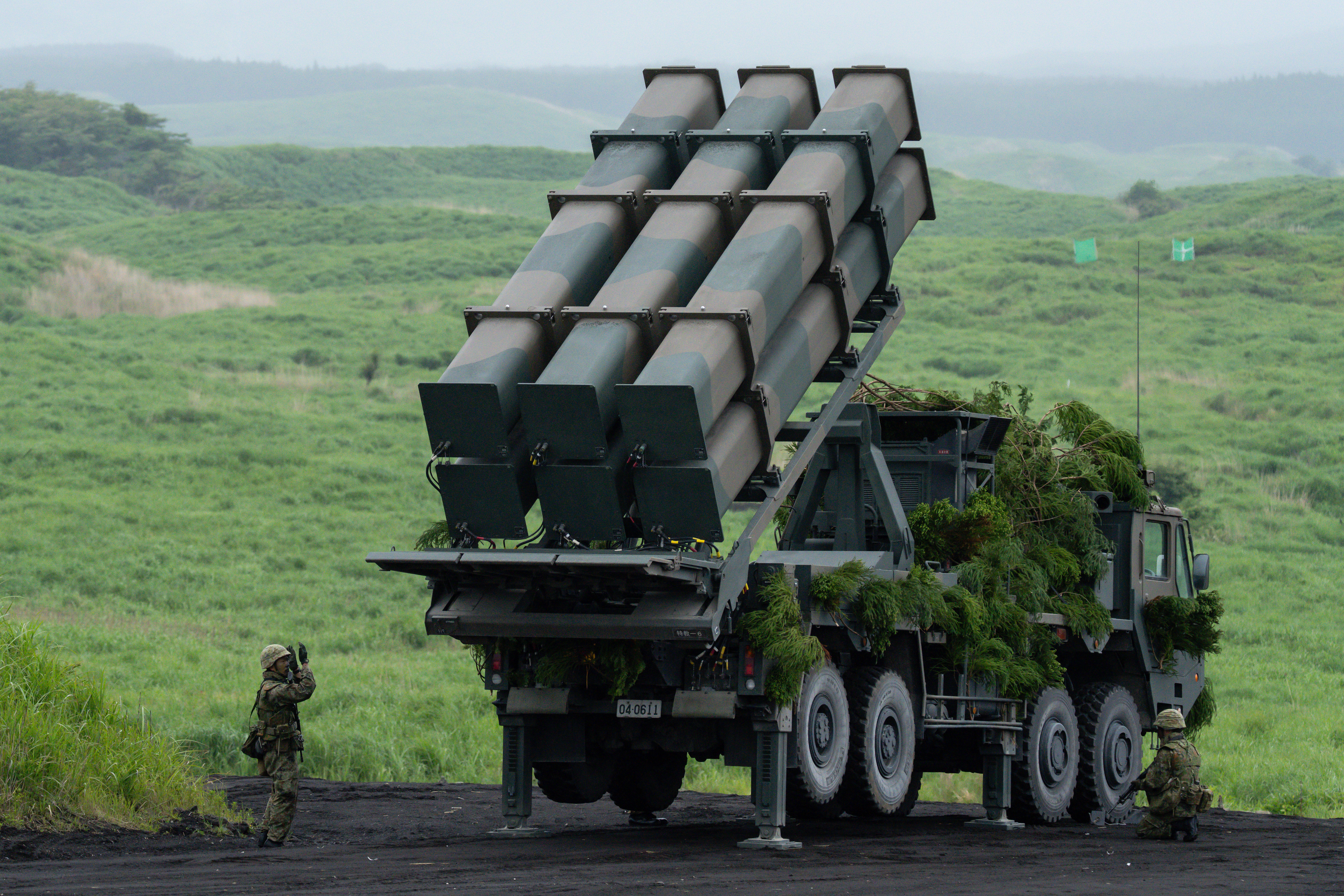
The Japan Ministry of Defense also says it plans to deploy ship- and air-launched variants of the 25SSM on Japan Maritime Self-Defense Force (JMSDF) destroyers and JASDF fighters in fiscal year 2027.
With that in mind, it would make sense that the weapons seen on the F-2 today are the air-launched variants of the 25SSM. We cannot be certain of that, however, and the official designation of such a missile is also unknown (ASM-4 has been suggested).
At this point, we don’t know the status of the new air-launched missile. However, Japan is currently testing a variety of new missiles.
The F-2 is also being used to test an improved version of the ASM-3 high-speed anti-ship missile, the ASM-3 Kai.
Japan is meanwhile working on the New Surface-to-Ship Missile. Earlier this year, an official video wasreleasedshowing a flight test of the missile in which it executed a series of manoeuvres, including barrel rolls, intended to defeat defenses in the terminal phase of the attack. The New Surface-to-Ship Missile is powered by an efficient turbofan engine and is expected to have a greater range than the Upgraded Type 12. It is similarly intended for launch from ground, maritime, and air platforms. You can read more about it here.
The demonstration of the New SSM’s barrel roll capability can be seen in the video starting at around 0:49 in the runtime.

P-31-1_島嶼防衛用新対艦誘導弾の要素技術の研究
As we reported earlier today, the JMSDF recently fired a U.S.-made Tomahawk land-attack cruise missile from one of its warships for the first time, the Aegis destroyer Chōkai, marking another significant expansion of the country’s standoff attack options.
In terms of air-launched weapons, Tokyo has procured the stealthy Joint Strike Missile (JSM) to arm its F-35As, giving them a combined standoff anti-ship and land-attack capability, and the longer-range JASSMhas also been cleared for sale to Japan.
An air-launched Type 25 would fit well into Japan’s broader shift toward long-range ‘counterstrike’ capabilities, and add another string to the bow of the F-2. Alongside ground-launched Type 25 missiles, new hypersonic weapons, and Tomahawks, Tokyo is assembling a layered standoff strike arsenal designed to hold hostile ships and land targets at risk from far greater distances than ever before.
Contact the author: thomas@thewarzone.com

