
Орегон мужийн Бенд хот аялал жуулчлалын хэт ачааллыг орон нутгийн иргэдийн амьдралын чанарыг сайжруулах хөшүүрэг болгон ашиглаж байна.
АНУ-ын Орегон мужийн Бенд хот нь Маунт Бачелор болон Каскадын нурууны бэлд байрладаг, уулын аялал жуулчлалын томоохон төв юм. Жилд сая орчим жуулчин хүлээн авдаг тус хотын эдийн засагт аялал жуулчлал 386 сая гаруй долларын орлого оруулдаг ч энэ нь явган аялал, голын усны спорт, авто замын ачааллыг эрс нэмэгдүүлжээ. Аялал жуулчлалын нөлөөгөөр орон сууцны үнэ өсөж, иргэдийн сэтгэл ханамж буурах “тав тухын урхи”-д өртсөн нь Бенд хотын хувьд томоохон сорилт болсон байна.
Энэхүү асуудлыг шийдвэрлэхийн тулд Бенд хот аялал жуулчлалын татварын орлогоосоо “Бенд тогтвортой байдлын сан”-г байгуулж, сүүлийн зургаан жилийн хугацаанд 4 сая орчим долларыг 42 төсөлд зарцуулжээ. Үүнд уулын дугуйн парк, явган аялалын маршрутын засвар, голын эрэг дагуух тохижилт, нийтийн эзэмшлийн талбайг сайжруулах ажлууд багтсан байна. Орегоны их сургуулийн Тогтвортой аялал жуулчлалын лабораторийн судалгаагаар, эдгээр хөрөнгө оруулалт нь жуулчдын оруулсан хувь нэмрийг орон нутгийн иргэдэд илүү мэдрэг болгож, иргэдийн хандлагыг нааштайгаар өөрчилж эхэлжээ.
Одоогийн байдлаар тус хот жуулчдын урсгалыг зохицуулах, дэд бүтцийн ачааллыг бууруулах зорилгоор нийтийн тээврийн хүртээмжийг нэмэгдүүлэх, дахин ашиглах боломжтой сав суулганы төв байгуулах зэрэг шинэлэг шийдлүүдийг хэрэгжүүлж байна. Хэдийгээр орон сууцны үнийн өсөлт болон замын ачаалал зэрэг тулгамдсан асуудлууд хэвээр байгаа ч Бенд хотын загвар нь аялал жуулчлалыг зөвхөн өсөлтийн хэрэгсэл бус, харин орон нутгийн тогтвортой хөгжлийн нэг хэсэг болгох боломжтойг харуулж байна.
Дэлгэрэнгүйг эх сурвалжаас харах
↓Эх сурвалжийг нээх ↓
The Deschutes River is crowded. There’s no other word for it. It’s 92 degrees when I wade into the river with a bright, orange tube to float through Bend, Oregon, and hundreds, maybe thousands, of people have converged on the cold, mountain river to do the exact same thing. It’s a summer time ritual in this popular mountain town. You might spend your morning hiking or climbing, but in the afternoon when the temperature rises, you tube the Deschutes.
I have a tinge of guilt as I set my tube on a downstream course. I’m one of millions of tourists who flock to this town throughout the year, and anyone who lives in a mountain town will tell you: more people equals more problems. But Bend is tackling them head on, I learn on my visit.
“Unless we’re talking about Disneyland, few towns had tourism in mind as it was developing,” says Todd Montgomery, a Bend local and director of the Sustainable Tourism Lab at Oregon State University.“Mountain towns are typically small, so the infrastructure to handle lots of people isn’t set in advance. Trails get crowded, parking lots fill up, just getting around town becomes difficult because of traffic. Tourism has its impacts on the quality of life of locals.”
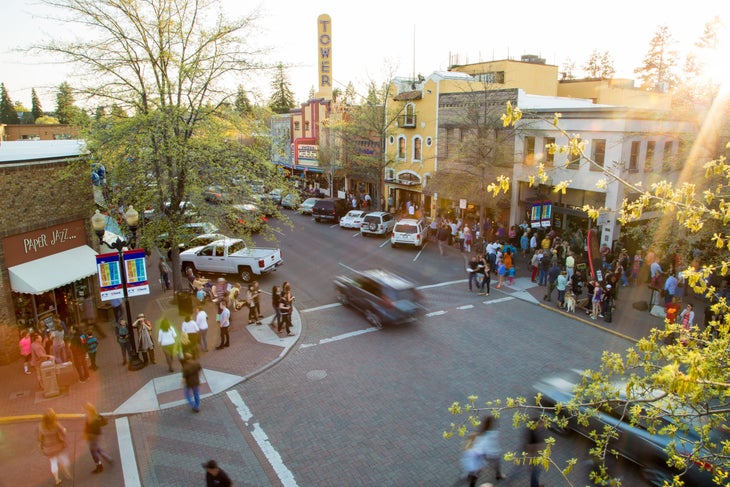
Bend (population 106,000) sits at the base of Mount Bachelor and the Cascade Range in Central Oregon. Like many popular mountain towns, it has an incredible portfolio of outdoor adventures, from an in-town whitewater park to hundreds of miles of trails just outside the town limits. Go a little further and you have skiing, climbing and big backcountry adventures, while breweries, outfitters and food trucks punctuate downtown.
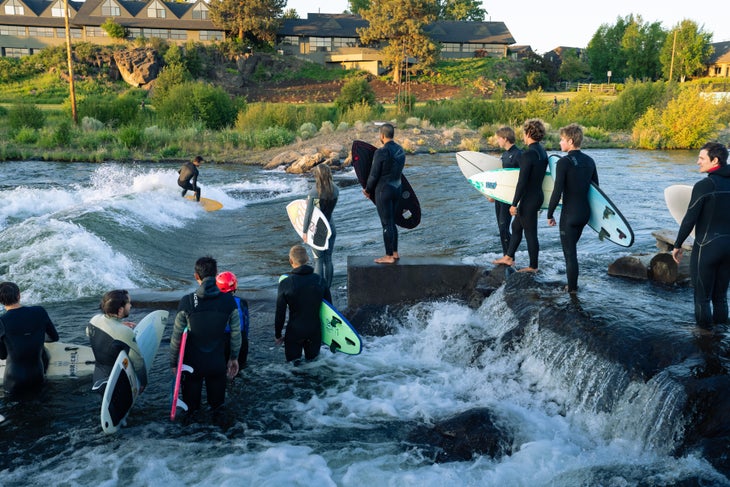
It’s a hard recipe to resist, and people flock to visit Bend. For more than 20 years, I’ve lived in a similar mountain town (Asheville, North Carolina) with a robust tourism industry, so I understand the love/hate relationship locals have with interlopers like me. We infuse the economy with money, but we also crowd its rivers and trails. Best case scenario, we take all the reservations at local restaurants. Worst case scenario, we overwhelm its emergency services and degrade the natural resources that we’re all hoping to enjoy.
It’s called the “amenity trap,” when the attributes that make a community attractive are the very things that threaten the quality of life within that community. Housing prices soar and the town’s infrastructure is strained. Resident sentiment turns against tourism and tourists.
So yeah, I feel guilty as I float the Deschutes, one more person adding to the congestion of the river and Bend in general.
According to a study prepared by Visit Bend, the town’s tourism bureau, the city saw almost a million visitors in 2024, an estimated 90 percent of whom explored the outdoors in some form or another. Tourism is an integral part of Bend’s economy—those visitors pump more than $386 million into local businesses. But with that money comes long lift lines in the winter and a sea of peopleon the river in the summer. So many businesses in my own town depend on tourist dollars, but damn it’s hard to get a campsite in the summer, or a reservation at my wife’s favorite restaurant on a weekend.
Bend has been wrestling with how to handle the volume of tourists that float through its borders for years, and tourist-resentment reached a fever pitch during and after the pandemic.
“The issue had been boiling up for years and Covid pushed it over the top,” Montgomery says. “After the pandemic, we saw ‘Defund Visit Bend’ bumper stickers on cars all over town.”
How Bend Is Tackling Overtourism
But here’s the difference between Bend and most other mountain towns: Six years ago, Bend decided to address the problem head on, first by studying resident sentiment towards tourism, and then by using tourist money to make its community more livable.
OK, a little background on how tourism bureaus, or Destination Marketing Organizations (DMOs), work.
Most municipalities that are tourist destinations collect an extra tax on hotel rooms, usually about one percent of your total bill. That lodging tax typically goes towards promoting that destination so more tourists will visit. It’s how tourism organizations are funded, and those organizations have a mandate to use that money to generate more tourism. And it’s standard operating procedure across the country, and those tourism dollars are how the Florida Keys or Crested Butte or Asheville pays for ads in magazines like this one.

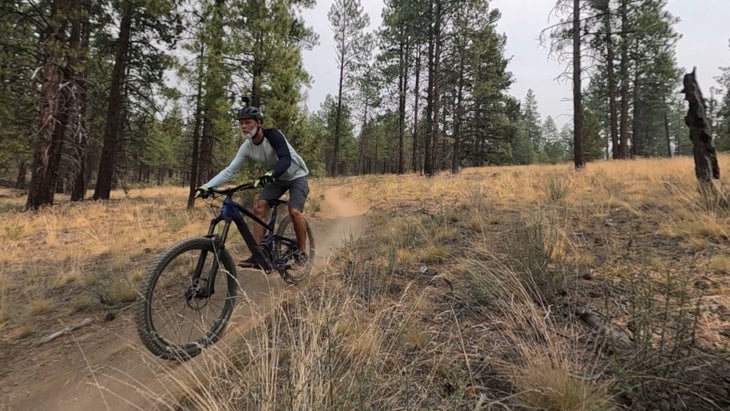
The lodging tax in Bend contributes more than $14 million a year into Bend’s general fund, some of which goes towards the town’s essential services like the police department, and some of which is used to promote the city as a destination. But another piece of that $14 million annual pie is allocated to the Bend Sustainability Fund, which pays for projects designed to increase the quality of life for locals and tourists alike. We’re talking about mountain bike trails, river access points, park expansions, and theater restorations. During the last six years, Bend’s Sustainability Fund has invested almost $4 million visitor-generated tax dollars to fund 42 different projects across town.
Funneling Tourism Dollars Back Into the Community
More than $350,000 of tourist-generated money paid to create the Big Sky Bike Park, a pump track and skills area that’s accessible to adaptive cyclists. The fund has rehabbed climbing route hardware at Smith Rock State Park, a world-class sport climbing destination, and built the Wanoga Mountain downhill bike park. It’s alsorestored the trail at the iconic Tumalo Falls and erected lights on the local pickleball court. One of the latest projects in the works is the Central Oregon Wash Hub, which will establish washing pods for reusable plates and silverware so restaurants can move beyond single-use plastic and styrofoam.
During the four days I spent in Bend, I got to see a handful of projects seeded by the Bend Sustainability Fund. I hiked restored trails at popular destinations like Tumalo Falls and Pilot Butte. I launched a tube at a new river access point at Riverbend Park on the Deschutes.
And these actions from Visit Bend seem to be working. One of Montgomery’s jobs at the Sustainable Tourism Lab is to measure resident sentiment towards tourism in Bend and at a variety of other destinations across the globe, essentially asking residents if the cost of tourism outweighs the benefits of tourism.
When Montgomery first started surveying Bend residents six years ago, the majority of locals polled felt the costs outweighed the benefits. But in the last two years, he’s watched as resident sentiment has steadily improved to where now, the majority of locals feel like the benefits of tourism outweigh the costs.
“We’ve seen resident sentiment improve a little each year for the last few years. It’s not a complete turnaround. We’re seeing maybe 51 percent of residents who think the benefits of tourism outweigh the costs, but it’s moving the needle,” Montgomery says. “When you fund 10 or 15 of these projects a year, you start to touch a lot of different groups of people. That’s when the calculation starts to shift, and people start seeing the benefits from tourism.”
Can Other Overcrowded Towns Follow Bend’s Lead?
Bend isn’t the only town that’s reallocating a piece of their lodging tax for community good, but the western town is at the forefront of the movement, so much so that Bend recently hosted Destination Think, a regenerative tourism conference with the goal of transforming travel into a vehicle for sustainable good. This was the first time a U.S. destination hosted the conference, which chose Bend specifically because of the town’s success in the realm.
That’s not to say everything is perfect now in Bend. Traffic and crowded trails are still a concern for locals. Steve Roti is the director of the Meissner Nordic Ski Club, which manages and grooms more than 30 miles of cross-country ski trails at the Meissner Snow Park that are completely free to use just 13 miles outside of Bend. He’s been living in Bend since 2003 and has seen the population in Bend double during that time, and the use of the ski trails grow exponentially.
We have to get innovative. The people aren’t going to stop coming.
“It’s definitely caused some tension within the ski community. We can’t expand the parking lot anymore, so it’s routinely filled up, and traffic on the Cascade Lakes Scenic Byway is often a bottleneck.”
The ski club is looking to develop another trail system to spread out some of the usage. To start addressing and to start addressing the traffic issues on the highway leading to the snow parks and Mount Bachelor, the ski club partnered with a mountain bike guide service last year to run a shuttle to the Meissner Snow Park on weekends. That shuttle was funded in part by Visit Bend. Roti is hoping to expand the shuttle from weekends-only to seven days a week this winter if a grant comes through.
“We have to get innovative,” Roti says. “The people aren’t going to stop coming.”
And then you have housing prices, which aren’t directly linked to tourism, but they are related as tourists who will occasionally become second home owners in their favorite mountain towns.Then they can price out locals whose job is tied to the tourism service industry. Bend housing prices continue to soar, rising almost four percent from last year alone with an average home price over $700Kaccording to Zillow. I don’t know many raft guides or bartenders who can afford that kind of home.
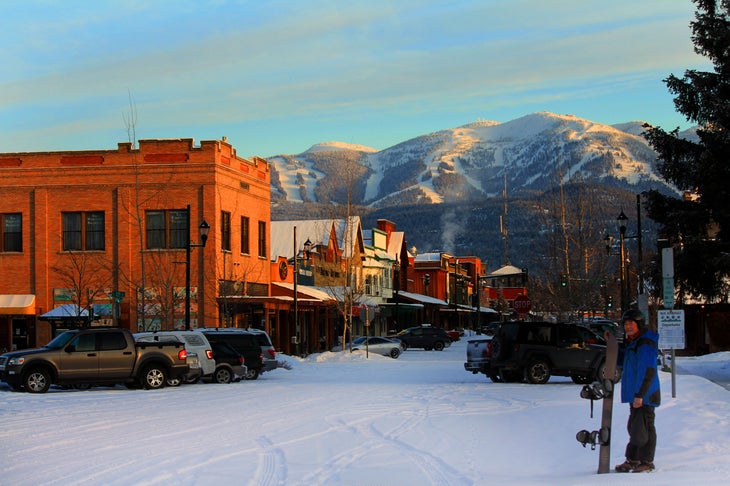
Headwater Economics is a nonprofit research group that focuses on community development and land management. The group was contracted by Visit Bend to study the amenity trap issue and suggest strategies for community vitality. One of the strategies suggested was to use a piece of that lodging tax, or an additional visitor tax, to invest in housing for the town’s tourism industry workforce, which is something that the small community of Whitefish, Montana has started.
Whether Bend adopts a similar approach in the future is yet to be seen, but the fact that the community is asking questions and actively putting solutions into place puts the town ahead of the curve. Montgomery hopes other mountain towns in similar situations start following the same practices.
“There’s been an infinite growth mindset among destination management organizations for decades, but destinations can’t simply grow. Tourism has impacts,” Montgomery says. “We all want our kids to have the same quality of life in Bend or any town in 30 years. Are we mitigating those impacts to the point where the quality of life is similar for future generations? I don’t know.”
Graham Averill is Outside magazine’s national parks columnist. He also writes a lot about mountain towns and wishes his own town would follow Bend’s lead.
The post Can Growing Mountain Towns Keep Their Soul? Bend Has a Plan. appeared first on Outside Online.


