
Хүйтэн дайны үеийн зэвсэглэлийн хөгжлийн үр дүнд бүтээгдсэн North American Rockwell OV-10 Bronco нь Вьетнамын дайны үед ашиглагдаж, улмаар цэргийн түүхэнд өөрийн байр суурийг эзэлсэн онцгой загварын нисэх онгоц юм.
Хүйтэн дайны оргил үед АНУ-ын цэргийнхэн агаарын хүчний өндөр хүчин чадалтай сөнөөгч онгоцууд нь босогчдын эсрэг тэмцэхэд үр дүнгүй байгааг олж тогтоожээ. Иймд цэргийн удирдлага байлдааны талбарт удаан хугацаагаар эргүүл хийх, дайсны байршлыг илрүүлэх, агаарын цохилтыг залж чиглүүлэх, шаардлагатай үед өөрөө гал нээх чадвартай хөнгөн зэвсэглэсэн тагнуулын онгоц (LARA) хөтөлбөрийг хэрэгжүүлсэн байна. NA-300 загварт суурилсан OV-10 Bronco нь 1968 онд Вьетнамд албан ёсоор үүрэг гүйцэтгэж эхэлжээ.
Анхны загвар нь тун энгийн, бага зардлаар ажиллагаа явуулах зориулалттай байсан ч цэргийн салбар бүрийн шаардлагаар онгоцны хэмжээ болон жин нэмэгдсэн байна. Гэсэн хэдий ч тус онгоц нь хоёр хөдөлгүүртэй, бага хурдтай үед тогтвортой, нисгэгчийн харагдах орчин сайтай зэрэг давуу талуудаа хадгалж чадсан юм. Энэ нь түүнийг Вьетнамын ширэнгэн ойн нөхцөлд хамгийн тохиромжтой байлдааны платформ болгожээ.
OV-10 Bronco нь дайсны байршлыг нарийн тодорхойлох, агаарын удирдлагын зангилаа болох чиглэлээр өндөр үр дүнтэй ажиллаж байв. Мөн пуужин, бөмбөг болон буудлагын хэрэгслээр зэвсэглэн, АНУ-ын Тэнгисийн цэргийн хүчний “Black Ponies” эскадрилийн бүрэлдэхүүнд Меконгийн дельтад явуулсан ажиллагаанд чухал үүрэг гүйцэтгэжээ.
АНУ-ын зэвсэгт хүчин 1995 онд уг онгоцыг ашиглалтаас гаргасан боловч Филиппиний агаарын хүчин 2024 он хүртэл ашигласаар ирсэн байна. Өнөөдөр OV-10 Bronco-г босогчдын эсрэг тэмцэх хамгийн амжилттай онгоцнуудын нэгд тооцдог бөгөөд түүний загварын онцлог нь орчин үеийн Beechcraft AT-6 Wolverine болон Embraer A-29 Super Tucano зэрэг онгоцнуудын бүтцэд нөлөөлсөн хэвээр байна.
Дэлгэрэнгүйг эх сурвалжаас харах
Эх сурвалжийг нээх ↓
The Cold War era gave the world a plethora of weird and wonderful aircraft. The combination of a post-World War II technological boom, intense strategic competition, and seemingly bottomless defense budgets provided the perfect environment for obscure and experimental capabilities to flourish. Very few made it past the prototype stage; even fewer proved themselves successful when thrown into the crucible of genuine war. One of those few was the North American Rockwell OV-10 Bronco.
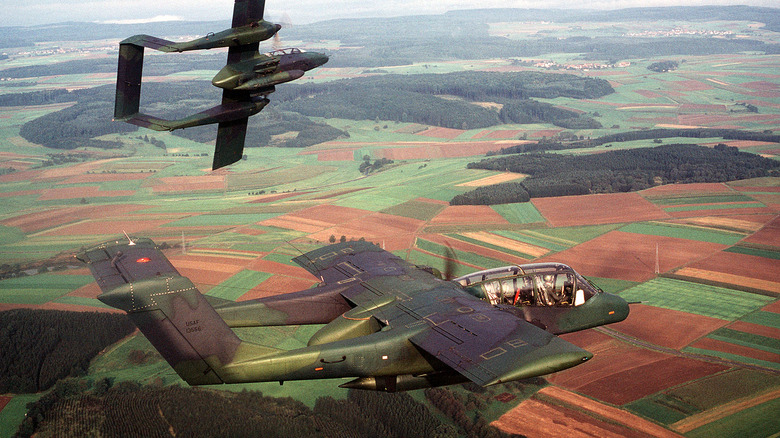
Combining a twin-boom tail with a straight, high-mounted wing profile and tandem two-seat cockpit gave the Bronco the appearance of a civilian utility aircraft more so than a combat platform. Yet beneath its unconventional appearance, it proved to be one of the most versatile counter-insurgency aircraft ever built.
Throughout the heavily asymmetric conflict of the Vietnam War, the U.S. military recognized that combating an insurgent force demanded a different type of aircraft. High-performance jet fighters and missile trucks like the McDonnell Douglas F-4 Phantom II often proved ineffective. Planners instead wanted a platform that could loiter over friendly forces, identify enemy positions, direct strike aircraft onto targets, and, if necessary, attack them itself. These requirements catalyzed the tri-service Light Armed Reconnaissance Aircraft (LARA) program.
North American Aviation’s NA-300 design ultimately won the competition, entering service in 1968in Vietnam as the OV-10 Bronco. Powered by two Garrett T76 turboprop engines, it combined excellent short take-off and landing performance with long endurance, exceptional cockpit visibility, and the ability to operate from rough forward airstrips close to the front lines. This design philosophy optimized the aircraft’s ability to conduct airborne overwatch, forward air control, light attack, armed reconnaissance, and battlefield coordination missions.
Mission creep and the death of simplicity
USAF/Getty Images
Ironically, the OV-10’s greatest strength almost never materialized. The original LARA concept envisioned an exceptionally simple battlefield aircraft capable of operating alongside ground forces with minimal logistical support. Initial demands called for a compact airframe with an extremely short wingspan, rugged undercarriage, and expressed preference for the ability to use roads or small jungle clearings as improvised runways. The original NA-300 design adhered to those requirements, presenting a near-ultralight airframe that could be easily transported close to the battlefield, shared fuel and equipment with Army units, and could deliver reconnaissance, casualty evacuation, light transport, and close air support from austere locations.
However, as is the natural state of military procurement cycles, mission creep soon began. As the Army, Air Force, Navy, and Marine Corps all added their own requirements, the program lost clarity. The aircraft’s wingspan nearly doubled as demands for increased payload, greater range, higher cruise speeds, and expanded mission sets steadily increased its size and weight. Every additional requirement further eroded the elegant simplicity that had defined the original LARA concept.
The finalized Bronco remained highly capable, but it was considerably larger, heavier and more complex than first envisioned. Even so, North American’s engineers managed to preserve the aircraft’s core strengths: a rugged semi-monocoque airframe, twin-engine redundancy, excellent low-speed handling, generous external stores capacity, and outstanding pilot visibility. Although it no longer perfectly embodied the minimalist LARA philosophy, the production OV-10 retained enough of its original DNA to excel in precisely the kind of unconventional warfare for which it had been conceived.
The Bronco was the aircraft Vietnam needed
USAF/Getty Images
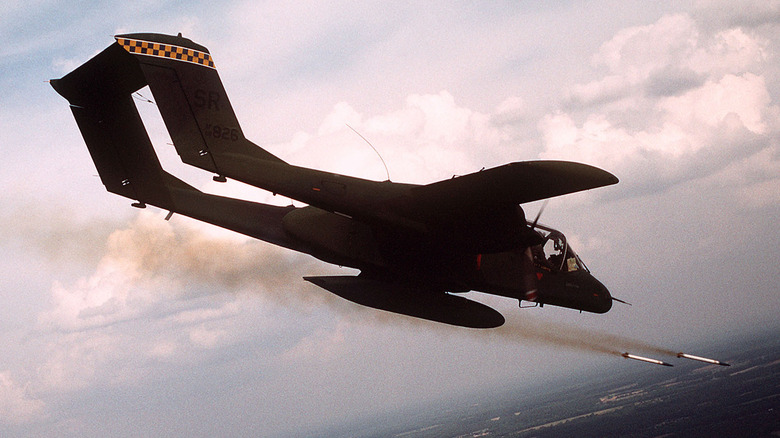
Once deployed to Vietnam, the OV-10 Bronco quickly proved that airpower success in asymmetric operations was not measured solely by airspeed and supermaneuverability. Instead, its greatest asset was persistence. With the ability to remain overhead for extended periods while flying slowly enough to identify enemy positions in detail, the Bronco became a highly effective airborne command-and-control node, foreshadowing many of the surveillance and coordination roles later assumed by high-altitude, long-endurance unmanned aircraft.
Its excellent downward visibility, stability at low airspeeds, and high damage tolerance made it particularly well suited to low-altitude operations over Vietnam’s dense jungle environment. There, faster, more expensive (and more fragile) jets often had only seconds to be vectored onto targets and could suffer critical damage from even a light burst of enemy fire.
The Bronco also etched out a reputation for itself as a capable attacker. When required, external hardpoints enabled the carriage of rockets, bombs, and gun pods, turning it into an adept close air support platform. The aircraft earned particular praise with the Navy’s VAL-4 Black Ponies squadron, whose Broncos flew interdiction and fire support missions across the Mekong Delta in support of SEAL teams, river patrol craft, and Marine units.
Although it retired from U.S. service in 1995, the OV-10 remained in foreign service until 2024 with the Philippine Air Force. Over its service life, the OV-10 consistently proved that a relatively inexpensive turboprop could deliver tactical value far beyond its size. Today, it is still widely regarded as one of the most successful counter-insurgency aircraft ever built, its DNA present in modern prop-driven attackers, including the Beechcraft AT-6 Wolverine and Embraer A-29 Super Tucano. An impressive, yet well-earned legacy for a so-called”bug smasher” that shared the skies over Vietnam with aircraft likePhantoms, Thunderchiefs, and Fishbeds.


