
Эрдэмтэд 350 сая жилийн настай газрын гүний шаварлаг чулуулаг буюу Антрим Шалегийн орчноос мөөгөнцөр, өт, тэнүүчлэг зэрэг нарийн нийлмэл организмын бүхэл бүтэн экосистемийг шинээр илрүүлсэн нь шинжлэх ухаанд томоохон нээлт боллоо.
Мичиганы их сургуулийн экологич Куинн Мүүн болон судлаачдын баг 247-556 метрийн гүн дэх худагт шахаж гаргасан уснаас дНХ ялган авч шинжлэхэд гайхалтай олон янзын амьд биет илэрчээ. Судалгаагаар тус уснаас мөөгөнцрийн 689 зүйл болох генетикийн материалыг тогтоож, лабораторийн орчинд 205 домог ургуулсан бөгөөд үүний 13 нь шинжлэх ухаанд огт танигдаагүй цоо шинэ төрөл байж болзошгүй аж. Мөн уснаас дугуй өт, цагираг өт, тэнүүчлэг зэрэг бичил биетүүдийн генетикийн ул мөр олдсон байна.
Дэлхийн гүний энэхүү хатуу ширүүн орчинд амьдарч буй мөөгөнцрүүд нь модыг ялзруулагч төрөлд багтаж, бусад организмын задалж чаддаггүй лигнин, целлюлоз зэрэг нүүрстөрөгчийн нэгдлийг задалж эрчим хүч авдаг болохыг эрдэмтэд тогтоожээ. Усны дээжид хийсэн шинжилгээгээр дуслах тутамд ойролцоогоор 250 ширхэг мөөгөнцрийн эс агуулагдаж байсан нь далай тэнгис болон Антарктидын хөрсөн дэх биет хэмжээтэй дүйхүйц үзүүлэлт юм.
Энэхүү ус нь сүүлийн 11,000 жилийн турш нарны гэрэл үзээгүй бөгөөд эртний мөстлөгийн үед газрын гадаргаас нэвчин орсон бичил биетүүд сая гаруй жилийн турш гадаад орчноос тусгаарлагдан хувьссан болохыг судалгаа харуулж байна. Гэвч хүний үйл ажиллагаа буюу байгалийн хийн олборлолтын худгууд олноор ухагдаж, биоцид бодис шахсаар байгаа нь эдгээр ховор экосистем болон шинэ зүйлийн амьдрах орчныг устах аюулд оруулж болзошгүйг судлаачид анхаарууллаа.
Дэлхийн органик нүүрстөрөгчийн 90 орчим хувь нь газрын гүнд хадгалагддаг тул нүүрстөрөгчийн эргэлт, уур амьсгалын загварчлалд эдгээр бичил биетүүдийн үүргийг заавал тусгах шаардлагатайг уг судалгааг санаачлагчид онцолжээ. Судалгааны үр дүнг The ISME Journal шинжлэх ухааны сэтгүүлд нийтэлсэн байна.
Дэлгэрэнгүйг эх сурвалжаас харах
↓Эх сурвалжийг нээх ↓
Just about every corner of Earth we look at seems to hold signs of life.
Now, scientists have discovered evidence of a whole community of complex organisms – fungi, worms, and even tardigrades – that call the Antrim Shale home.
That’s pretty surprising, given the Antrim Shale is an ancient deposit of organic-rich mud some 350 million years old that now serves as one of the United States’ largest gas fields.
But when scientists got to look for DNA in the water being pumped up from wells dug 247 to 556 meters (810 to 1,824 feet) deep into the ground, they found an astonishing diversity of life.
“Energy companies dig these wells and pump massive amounts of water out and strip the methane from the water,” ecologist Quinn Moon, lead author of the study, told ScienceAlert.
Moon, who is based at the University of Michigan, worked with a team of mycologists and earth scientists to get a picture of the organisms that might be living in this seemingly inhospitable environment.
“We filtered huge quantities of water and extracted DNA from those filters. We also put the water onto nutrient media to grow the actual fungi,” Moon explained.
“Many deep environments, including the Antrim Shale, have extensively been shown to contain bacteria and archaea.”
That had him wondering what else might be living down there.
An astonishingly complex and lively ecosystem emerged.
“Our findings challenge the common assumption that fungal regulation of organic matter decomposition is constrained to surface ecosystems,” Moon and his colleagues write in their scientific paper, which was recently published in The ISME Journal.
Within these water samples, they identified 689 likely species of fungi from snippets of their genetic material, and managed to grow 205 strains in the lab for better identification.
Thirteen of those fungal strains are thought to be entirely new to science.
One of the dominant classes of fungi was Agaricomycetes, which are probably the best-known kind of fungi because they’re the ones that produce mushrooms, though it’s unclear whether they’d actually be capable of producing the parasol-like caps so far below ground.
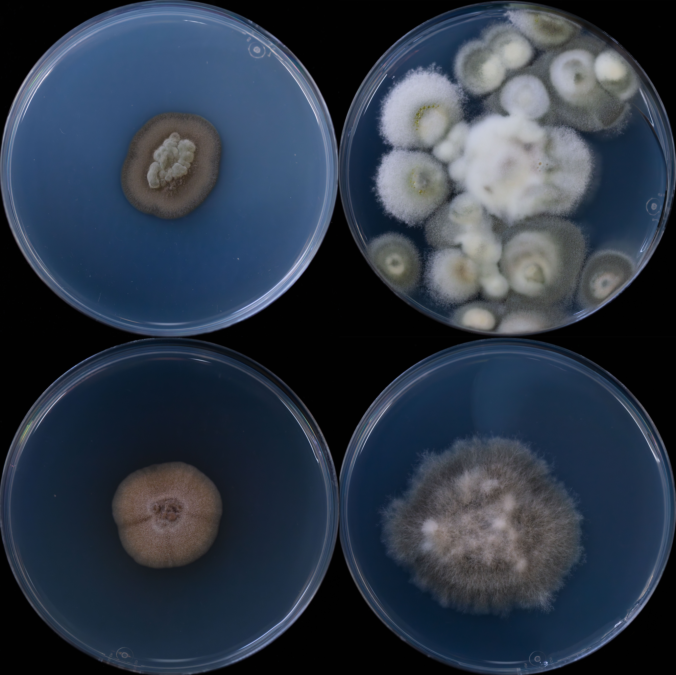
But the metabolisms of this kind of fungi – along with the other dominant class Moon and team discovered, Dothideomycetes – may explain their success in the shale.
On the surface, both of these kinds of fungi are known to break down lignin and cellulose for energy. These are substances that other organisms struggle to digest.
“These fungi make a living by eating some of the carbon forms most difficult to break down,” Moon told ScienceAlert.
“I think the explanation is, and this aligns with other data from the surface, that these wood decay mushrooms have the most extensive arsenal of enzymes that they use down there to break down lignin and cellulose in the shale (or compounds similar to lignin and cellulose).”
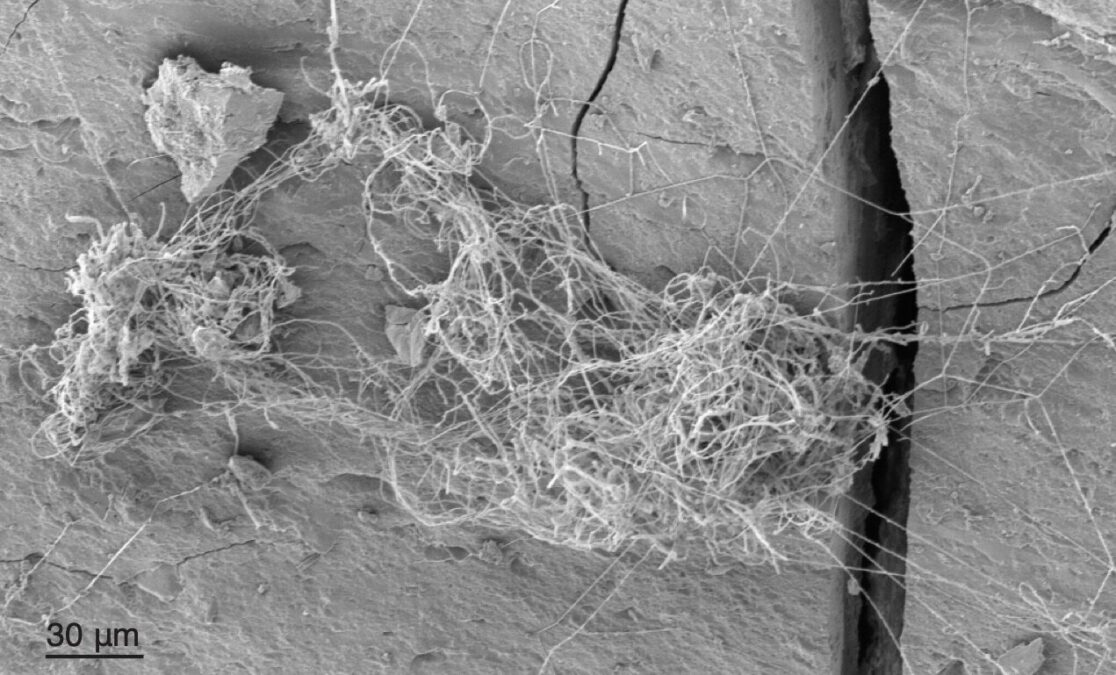
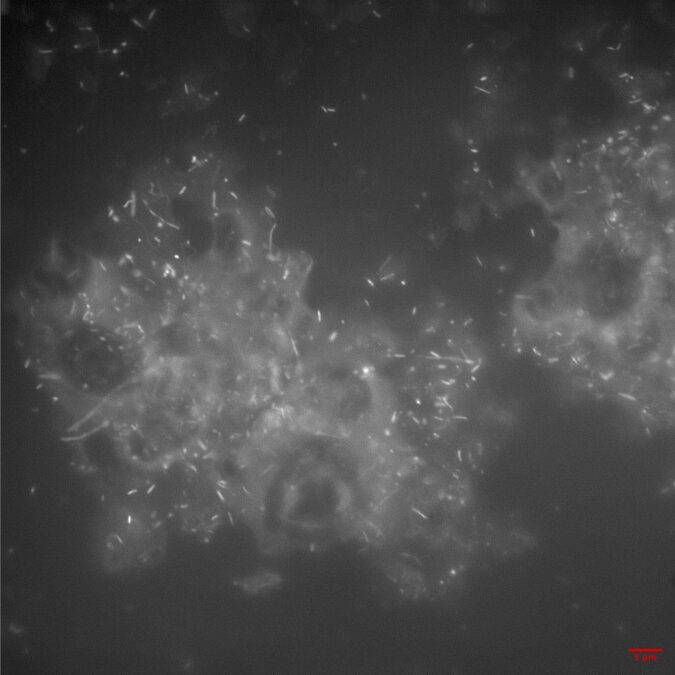
Fungi made up about one-sixth of the biomass in the water samples, with a relative abundance comparable to what is found in the open ocean and Antarctic soils: about 250 fungal cells in each drop of water.
Alongside these fungi, the scientists found genetic traces of rotifers (microscopic ‘wheel animals’ you might’ve seen in pond water), segmented worms, tardigrades, and roundworms.
They even found evidence of intracellular parasites such as Ichthyosporea, which infects animals, and Rozellomycota, which parasitize other fungi.
It wasn’t possible for the researchers to get a clear sense of the oxygen levels available to these creatures, so it’s still unclear exactly how they’re surviving down there.
As they note in their paper, the process of pumping water to the surface can introduce dissolved oxygen to samples that may not actually be available all the way down.
Previous studies have found the Antrim Shale hosts many species of archaea that produce methane, which is a sign this subterranean environment is pretty low on oxygen.
Others suggest that even without a supply of oxygen from the surface, some microbes may be capable of actually producing large amounts of oxygen without the help of light.
But based on oxygen and hydrogen isotopes in the water, and the salinity gradient across sample sites, the team believes this underground community has been enjoying relatively stable geochemical conditions ever since the Late Pleistocene.
Much of the water hauled up in this study had not seen the light of day for 11,000 years, Moon said.
The microbes’ ancestors were probably first introduced to these deep subsurface environments when Late Pleistocene ice caps melted, and the water seeped into the shale’s pores and cracks.

So not only are these fungi living their lives at unfathomable depths; they have probably been isolated there for millennia, adapting to a set of evolutionary pressures entirely different from their aboveground counterparts.
And, as humans so often do, we started disturbing them before we even realized they exist.
“These may be biodiversity hotspots, but are also hotspots for anthropogenic destruction,” Moon told ScienceAlert.
“These deposits have so many wells dug into them, many injected with biocides, without us ever considering if these habitats have new species and how we can preserve them.”
The researchers also point out that fungi – so often overlooked – really need to be incorporated into models of carbon cycling and sequestration in the subsurface.
Related: Hidden Web of Fungus Inside Earth Could Reach The Sun a Billion Times
About 90 percent of Earth’s organic carbon is stored in the deep subsurface, so it’s a pretty significant part of the equation when it comes to balancing our climate.
If these fungi, bacteria, and other organisms are actively using these deep rocks, that carbon may not be quite so ‘sequestered’ as we imagine.
“If there are many organisms that can eat it, those gases can rapidly be released to the atmosphere,” Moon said.
The research was published in The ISME Journal.
This article was fact-checked and edited by Clare Watson. While we pride ourselves on our process, we are only human. If you spot a mistake, please let us know.


