Энэхүү 736 сая австрали долларын өртөгтэй хэлэлцээр нь Австралийн Агаарын цэргийн хүчний алсын тусгалын байлдааны чадавхыг эрс өргөжүүлэх юм.
Австрали улс ойролцоогоор 736 сая австрали долларын (ойролцоогоор 480 сая ам.доллар) өртгөөр AIM-260 Joint Advanced Tactical Missile (JATM) агаар-агаар ангиллын пуужин худалдаж авахаар болсноо зарлалаа. Энэхүү худалдан авалтыг АНУ-ын Гадаад орнуудын цэргийн борлуулалтын (FMS) хөтөлбөрөөр дамжуулан хэрэгжүүлэх бөгөөд тус улсын Батлан хамгаалахын сайд Ричард Марлес Дарвин хотод болж буй олон улсын “Pitch Black” сургуулилтын үеэр албан ёсоор мэдэгджээ. Ингэснээр Австрали нь Америкийн Нэгдсэн Улсаас гадна уг дэвшилтэт пуужинг зэвсэглэлдээ нэвтрүүлж буй анхны гадаад улс болж байна.
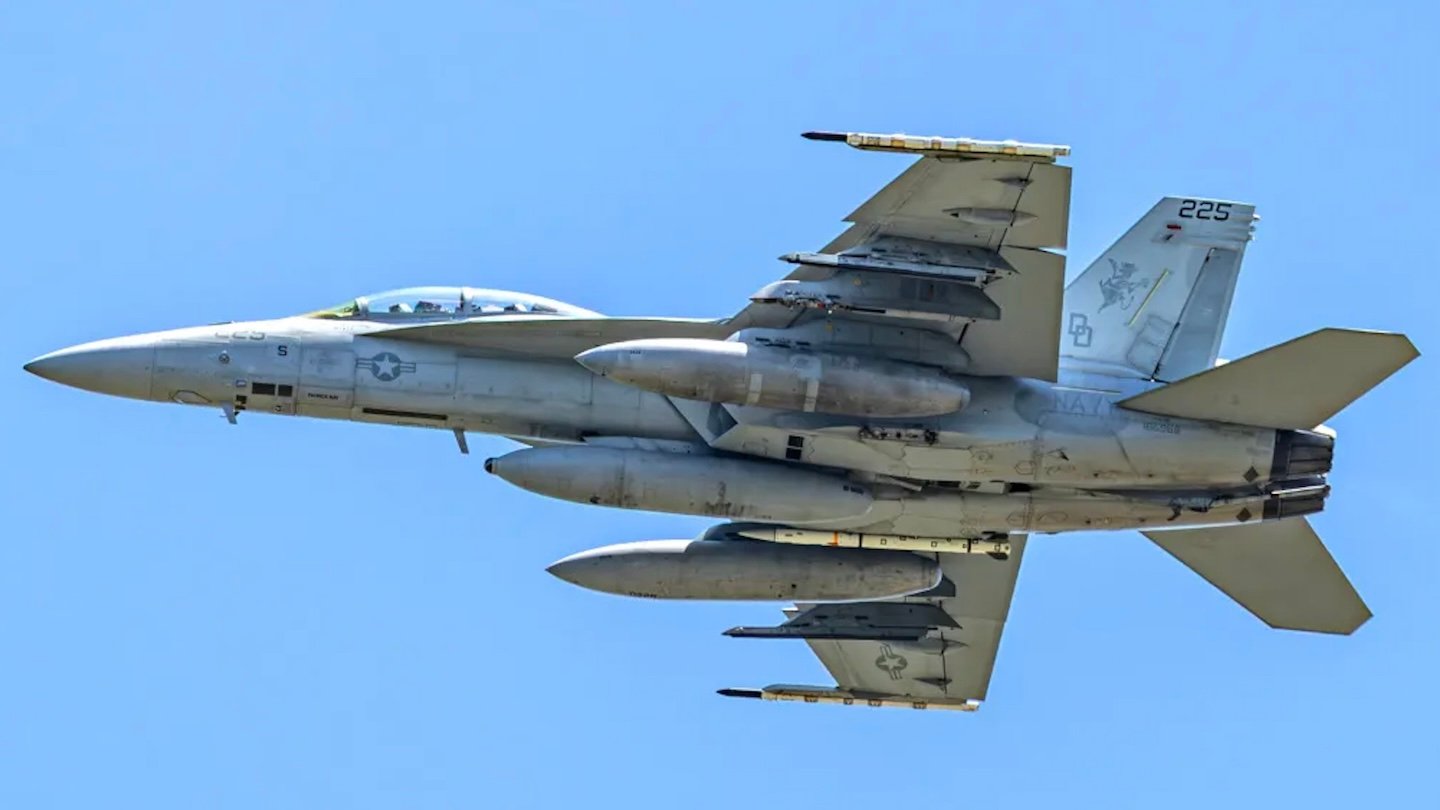
Lockheed Martin компанийн бүтээсэн AIM-260 пуужинг эхний ээлжинд RAAF-ын F/A-18F Super Hornet сөнөөгч онгоцнуудад нэгтгэх бөгөөд дараа нь F-35A болон EA-18G Growler цахим дайны онгоцнуудад суурилуулах аж. Мөн цаашид MQ-28 Ghost Bat хамтарсан байлдааны нисгэгчгүй онгоцонд уг пуужинг зэвсэглэх төлөвтэй байна. Албан ёсны техникийн үзүүлэлтүүдийг нарийн зарлаагүй байгаа ч AIM-260 нь одоогийн AMRAAM пуужинг залгамжлах бөгөөд харьцангуй авсаархан хэмжээг хадгалж, илүү хол зайд буюу хамгийн багадаа 120 бээрээс хол зайд байг устгах зориулалттай хөгжүүлэгджээ.
Энэхүү пуужинг хөгжүүлэх гол шалтгаан нь Хятадын зэвсэгт хүчний ашиглаж буй PL-15 болон бусад алсын тусгалын агаар-агаар ангиллын пуужингуудтай өрсөлдөх, алсын зайн агаарын байлдаанд холбоотнуудын давуу талыг хадгалахад чиглэсэн байна. Австралийн засгийн газар AIM-260 пуужин нь агаарын довтолгооноос хамгаалах чадавхыг бэхжүүлж, бүс нутгийн аюулгүй байдал, тогтвортой байдлыг хангахад чухал хувь нэмэр оруулна гэж үзэж байна. Пуужинг нийлүүлэх хуваарь болон тоо ширхэгийг одоогоор албан ёсоор дэлгээгүй байна.
Дэлгэрэнгүйг эх сурвалжаас харах
Эх сурвалжийг нээх ↓
Australia will become the first nation outside the United States to field the AIM-260 Joint Advanced Tactical Missile (JATM), following the announcement of a nearly A$736 million (approximately $480 million) procurement that will significantly expand the Royal Australian Air Force’s air combat capabilities. The acquisition comes as Australia, like the United States, is increasingly focused on maintaining an edge in beyond-visual-range air combat against China’s rapidly advancing airpower, including long-reaching air-to-air missiles.
The acquisition was announced by Australia’s Deputy Prime Minister and Defense Minister Richard Marles during Exercise Pitch Black in Darwin, the country’s premier multinational air combat exercise. The missiles will be acquired through the U.S. Foreign Military Sales (FMS) program.
“This announcement is the latest milestone in the delivery of long-range, high‑tech capabilities for our Defense Force,” Marles said. “The Albanese government continues to deliver critical capabilities that will allow the ADF to strike at a longer range, deter any adversary and protect our national interests.It is fitting to make this announcement at Exercise Pitch Black, which is an important demonstration of Australia’s commitment to the peace, stability and security of our region.”
According to the Australian government, the Lockheed Martin AIM-260 will first be integrated onto the RAAF’s F/A-18F Super Hornet fleet before being fielded on the F-35A and the EA-18G Growler electronic attack aircraft. Looking further ahead, the RAAF’s MQ-28 Ghost Batcollaborative combat aircraft (CCA) is a likely candidate to be armed with JATM. It has already fired an AIM-120 Advanced Medium-Range Air-to-Air Missile (AMRAAM) from an external pylon, and the forthcoming Block 3 version of the drone will offer internal weapons carriage, too.
The integration of the AIM-260 on the EA-18G appears to be a new announcement; previously, the priority U.S. platforms to receive the missile were the F/A-18E/F and the F-22. However, considering the commonality between the Super Hornet and the Growler, integration should be straight forward.
“JATM missiles are some of the most sophisticated air-to-air weapons in the world, and Australia will be the first country to operate them outside the United States, added Australian Minister for Defense Industry, Pat Conroy. “This investment will deliver the most advanced capability for our ADF to detect and counter threats, and keep Australians safe.This is made possible thanks to the Albanese government’s record investment in Defense, including up to A$36 billion [approximately US$23.4 billion] over the next decade for Guided Weapons and Explosive Ordnance.”
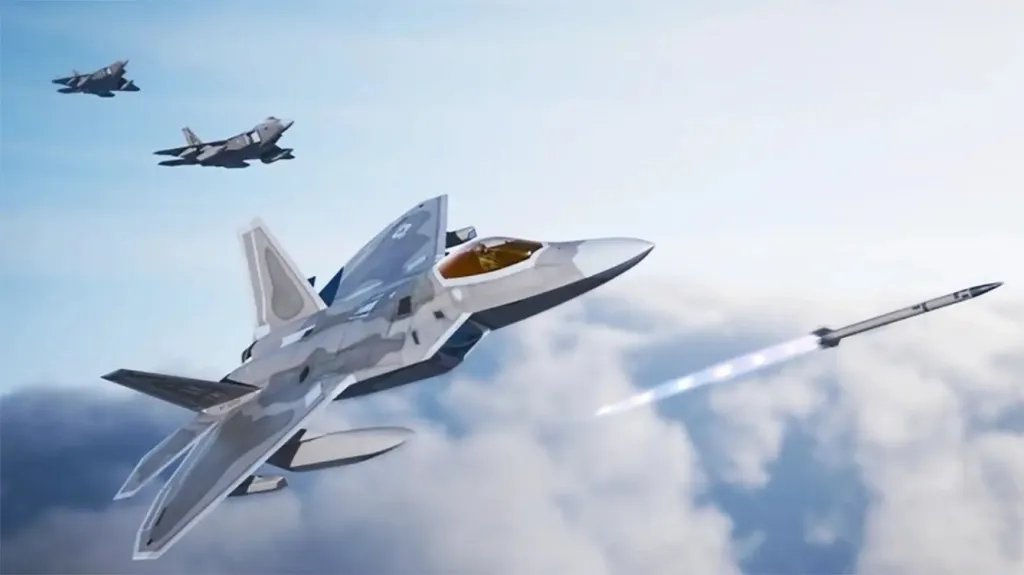
The AIM-260 has been under development for years, but its capabilities remain highly classified. It is intended to succeed the AMRAAM, offering substantially greater range and improved performance against advanced threats while remaining compatible with existing fighter aircraft launchers and weapons bays restrictions. The AMRAAM is currently the primary beyond-visual-range air combat weapon currently used by the RAAF’s F/A-18Fs and F-35As.
As you can read about here, the first picture of the AIM-260 emerged in May of this year, involving an F/A-18Ffrom Air Test and Evaluation Squadron 31 (VX-31) carrying the weapon on the fuselage station outboard of its right engine intake. Flighttesting of the JATMis knownto have started years earlier, however.
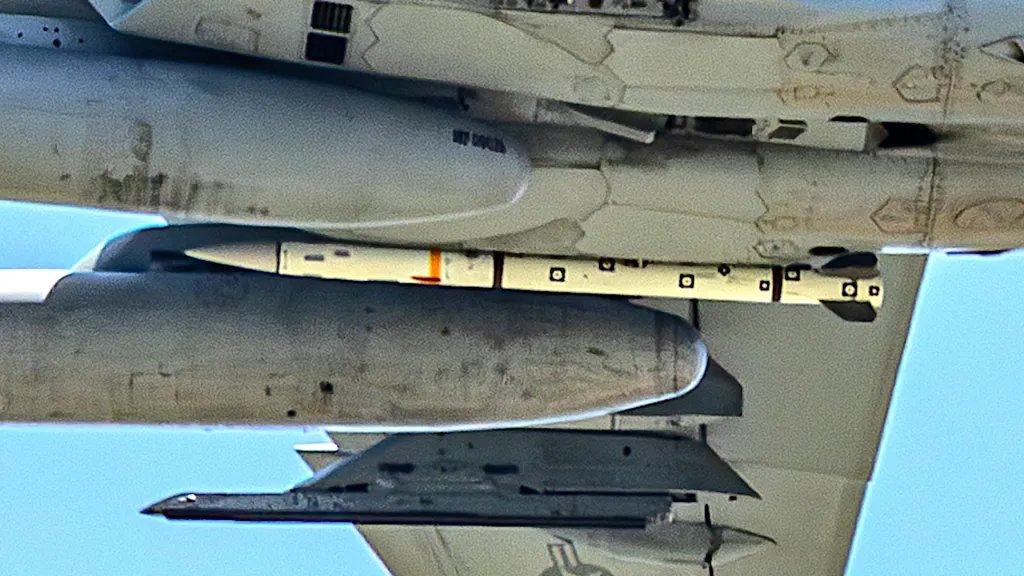
Although official specifications have never been released, the AIM-260 is reportedly designed to hit targetsout to at least 120 miles, if not substantially further. It was designed in response to China’s long-range PL-15 air-to-air missile, restoring the U.S. and allied advantage in beyond-visual-range aerial combat. Being developed by the U.S. Navy in cooperation with the Air Force, the missile is expected to combine a compact form factor similar to the AIM-120 with significantly greater engagement range, allowing aircraft to carry the same number of weapons without sacrificing performance. It is also designed for internal carriage.
“An advanced rocket motor with highly loaded propellant has long been seen as a likely route to give the AIM-260A significantly greater range, as well as speed, over the AIM-120 without making the new missile larger. A core known requirement for the JATM is that it has to have the same general form factor as the AMRAAM, in large part to ensure that it can fit inside the internal bays on stealth fighters like the F-22 andthe F-35 Joint Strike Fighter. In addition to crewed aircraft, AIM-260As areexpected to arm future stealthy droneslike the ones under development underthe Air Force’s Collaborative Combat Aircraft (CCA) program.”
…
“The AIM-260A’s rocket motor is also likely to be a dual-pulse design that retains energy across the flight envelope to further extend range and help dramatically with endgame maneuverability. Thrust vectoring capability would also be a requisite to give the missile sufficient agility in the absence of additional control surfaces.”
…
“An active electronically scanned array radar (AESA) seeker is likely. Multi-mode seeker capability, potentially with imaging infrared and passive radiofrequency (RF) guidance capabilities, could be extremely valuable in the face of anever-expandingcountermeasureecosystem, although we have no idea if this is a feature now or not. It’s also possible it could be introduced in later variants. Advanced networking capabilities would be a key feature, allowing the missile to get additional targeting information from an array of third-party sources. This is especially important for engaging targets beyond the reach of the launch platform’s own sensors, and it can allow the aircraft firing the missile, especially a stealthy one, to avoid having to switch on its radar and increase its vulnerability to detection as a result. Multiple networked JATMs might even be able to prosecute engagements cooperatively.”
U.S. Air Force officials have publicly acknowledged that the PL-15 was a key driver behind the AIM-260 program. According to the Royal United Services Institute (RUSI), the Chinese missile “out-ranges the U.S.-made AIM-120C/D AMRAAM series and has a comparable maximum range to the Meteor.”
The PL-15 is already widely fielded, while China has also developed even longer-range air-to-air missiles, including the much larger PL-17. This weapon is widely believed to be optimized for engaging high-value support aircraft, such as aerial refueling tankers and airborne early warning and control (AEW&C) platforms, at extreme distances. We have previously taken a closer look at the still largely mysterious PL-17 here.
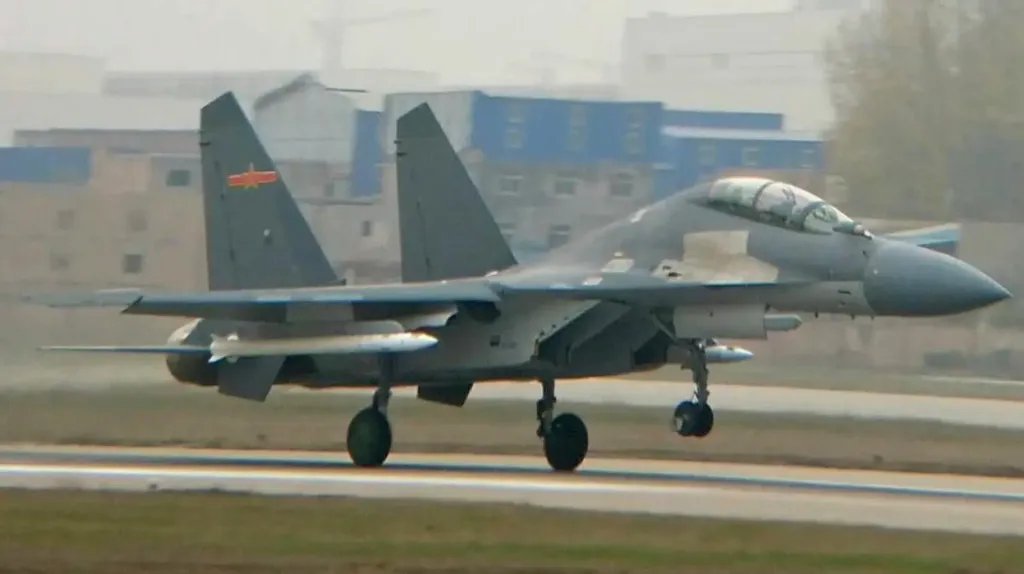
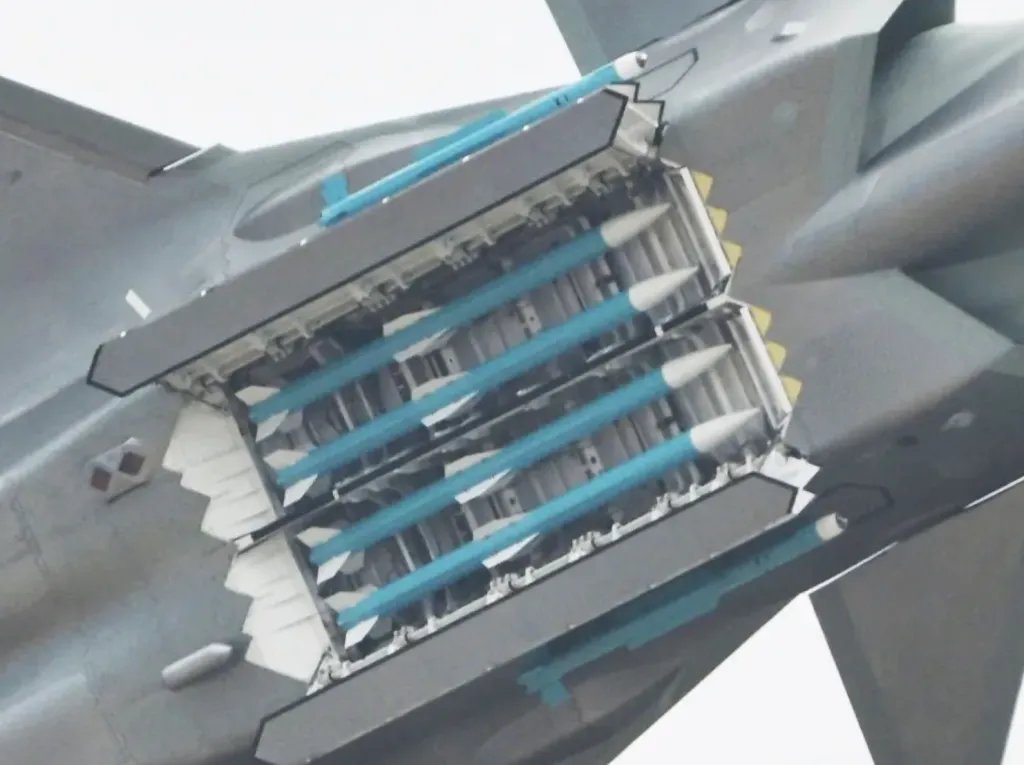
Those two Chinese missiles are also expected to be joined by a new weapon currently referred to as the PL-16. The missile appears to have been developed to allow the J-20 to carry six long-range air-to-air missiles internally, rather than the four PL-15s it currently accommodates. While expected to retain a broadly similar overall design to the PL-15, the PL-16 is believed to use a compressed-carriage configuration, reducing its size to maximize the J-20’s internal missile load. In that respect, the PL-16 appears conceptually similar to the AIM-260, in its emphasis on internal carriage capacity.
The air-to-air threat in the Indo-Pacific is only set to increase, with the potential for the carriage of larger numbers of even bigger and further-reaching air-to-air missiles in the capacious weapons bays of new-generation Chinese combat aircraft.
As TWZ has reported in the past, the U.S. Air Force envisions a future in which counter-air missiles could engage targets at ranges of up to 1,000 miles by 2050. While such capabilities remain decades away and far exceed the reach of today’s longest-range air defense missiles, the projection underscores the trajectory of long-range aerial warfare and the growing emphasis on extending engagement distances.
Another U.S. response to China’s growing long-range air-to-air missile capability is the AIM-174B, currently carried by U.S. Navy F/A-18E/Fs. Derived from the SM-6 surface-to-air missile family, it is substantially larger and heavier than the AIM-260, trading compact size for dramatically greater engagement range.
RAAF officials have previously indicated that Australia has no plans to acquire the AIM-174B, according to FlightGlobal.
Australia’s decision to procure the missile aligns with its broader effort to modernize the Australian Defence Force’s long-range strike and air defense capabilities amid an increasingly contested Indo-Pacific security environment, in which the threat posed by China’s rapidly expanding military capabilities is paramount. Canberra’s recently released 2026 National Defence Strategy emphasizes the importance of a layered air and missile defense architecture capable of countering advanced regional threats.
The government says the AIM-260 will provide the RAAF with a more credible deterrent against hostile aircraft while complementing existing air-to-air missiles and the Australian Defence Force’s expanding inventory of ground-based air defense systems. The acquisition will also improve interoperability with U.S. forces, particularly as both countries increasingly operate together in the Indo-Pacific.
While the government has not disclosed delivery schedules or the number of missiles to be acquired, Australia is now set to become the AIM-260’s first export customer, giving the RAAF access to one of the world’s most advanced beyond-visual-range air-to-air missiles once it enters operational service.
Contact the author: thomas@thewarzone.com
The post Australia To Become First Foreign Operator Of AIM-260 Air-To-Air Missile appeared first on TWZ.

