
NBA-ийн маргаан дагуулдаг довтолгооны алдааны дүрмийн нарийн ширийн болон Карл-Энтони Таунсын гэрээ сунгах асуудлыг хөндлөө.
NBA-д довтолгооны алдаа буюу “charge” авах нь хамгийн ойлгомжгүй, шүүмжлэл дагуулдаг дүрмүүдийн нэг юм. Дүрмийн дагуу хамгаалагч нь довтлогчийн замд хууль ёсны байрлалыг эрт эзэлсэн байх ёстой бөгөөд довтлогч биеэ хянах чадвартай байхыг шаарддаг. Хамгаалагч нь хажуу тийш эсвэл хойш хөдөлж байхдаа ч байрлалаа зөв эзэлсэн бол довтолгооны алдааг шүүгчид зарладаг ч, довтлогч шидэлтээ эхлүүлсний дараа хамгаалагч замд нь орж ирэх нь үзэгчид болон тоглогчдын дургүйцлийг ихээр төрүүлдэг.
Нью-Йорк Никсийн хувьд NBA-ийн аварга болсныхоо дараа шийдвэрлэх шаардлагатай чухал асуудлууд тулгарч байна. Карл-Энтони Таунс дөрвөн жилийн 272 сая долларын гэрээ сунгах эрхтэй байгаа бөгөөд энэ нь багийн цалингийн цэсэнд ихээхэн нөлөөлөх юм. Таунс плей-оффт багийн довтолгооны гол цөм болж, 15-1 гэсэн амжилт үзүүлэхэд чухал нөлөө үзүүлсэн тул түүнтэй гэрээгээ сунгах нь багийн хувьд нэн тэргүүний асуудал болоод байна.
Клипперсийн санхүүгийн асуудалтай холбоотой мөрдөн байцаалтын явцад Кавай Леонард багийн самбар үйлдвэрлэгч компанитай олон сая долларын гэрээтэй байсан нь тодорхой болжээ. Түүнчлэн Портлэнд Трэйл Блэйзэрс цэнгэлдэх хүрээлэнгээ засварлах төсөвт олон нийтийн санхүүжилт авахад ойртсон бол FIBA-гийн эмэгтэйчүүдийн дэлхийн аварга шалгаруулах тэмцээнд АНУ-ын шигшээ баг Кэйтлин Кларк, Анжел Рийс нарын бүрэлдэхүүнтэй оролцохоор болсон байна.
Дэлгэрэнгүй эх сурвалжийг харах
Эх сурвалжийг нээх ↓
The Bounce Newsletter| This is The Athletic’s daily NBA newsletter.Sign up hereto receive The Bounce directly in your inbox.
Here’s the perfect way to start your day: a 17-minute YouTube video called “50 plays from the ’80s that would break the internet today.” Enjoy!
Block or charge?
Let’s examine this confusing NBA rule
It’s the offseason, so it feels like a perfect opportunity to empty my notebook. Today, I want to examine the charge/block rule. It’s one of the most ambiguous and frustrating calls in the NBA. A charge can be a lot different than other offensive fouls.
- We’re NOT discussing when a player pushes off to gain an advantage. People get frustrated when players like Shai Gilgeous-Alexander, James Harden, Luka Dončić and Jalen Brunson utilize this move.
- We ARE discussing those plays in which a player is supposed to be squared up, “not moving” and absorbing contact from an “out of control player” on offense.
- The NBA needs to abolish the pass-and-crash rule. That’s when a player passes and then has a charge drawn against them. This should not be considered a basketball play by the defense.
- I also don’t believe taking charges should be basketball plays by defenders, but we’ve been over that before. I have this wild notion that making a play on the ball should be the goal. Of course, the league would then have to let defenders do more.
So what is the block/charge rule? Here’s the NBA’s rulebook definition from Rule 12, Personal Fouls, Section II. But in layman’s terms, it says a defender must establish legal guarding position, which means they’re in a straight-line path of the dribbler. The dribbler also has to be in control of their body at all times, or it’s an offensive foul.
Before the 2011-12 season, an NBA Rule Authority post stated:
To get into a legal position, the defender needs to establish himself in the path of the offensive player before contact is made, thus “beating him to the spot,” and before he starts his upward shooting motion.
When I’ve talked to NBA officials over the years, they stress where the contact occurs between the offensive player and the defender. If the defensive player is squared up to the offensive player, he’s established positioning.
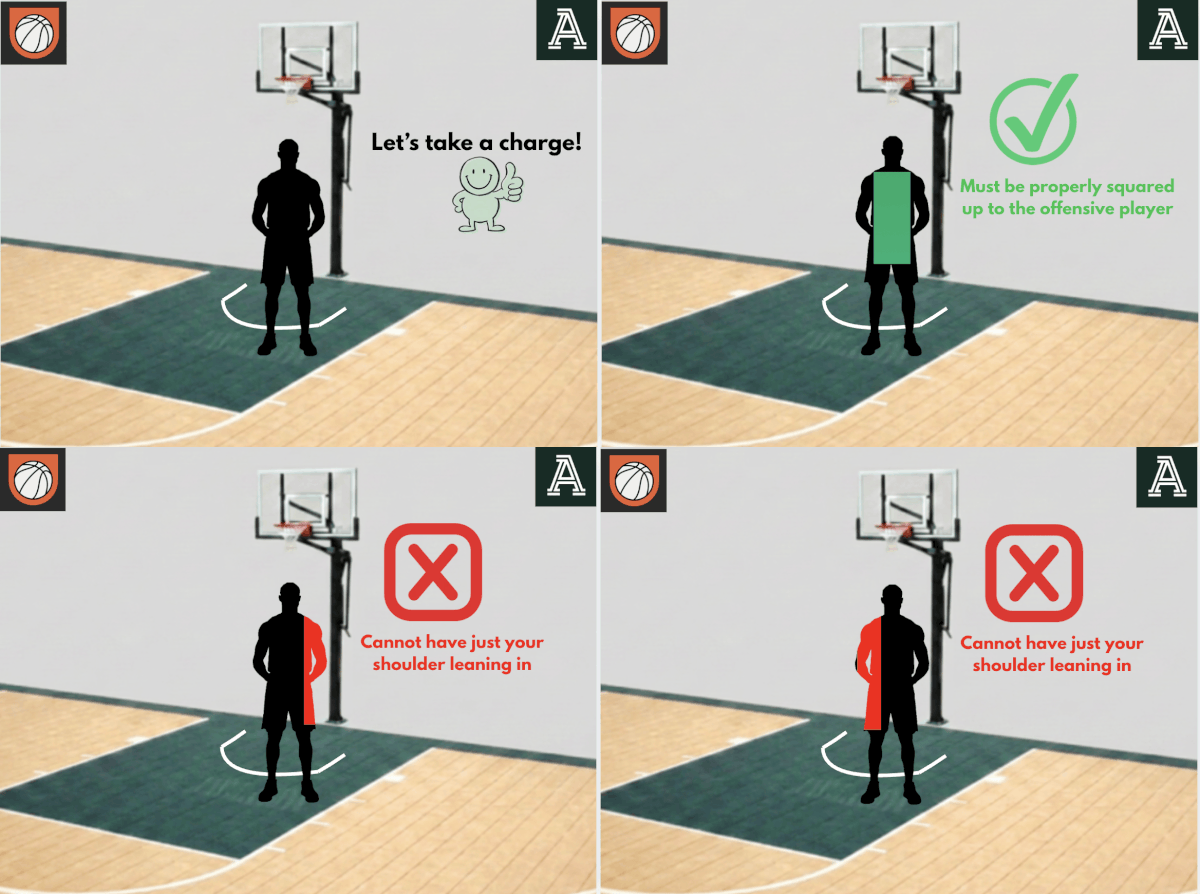
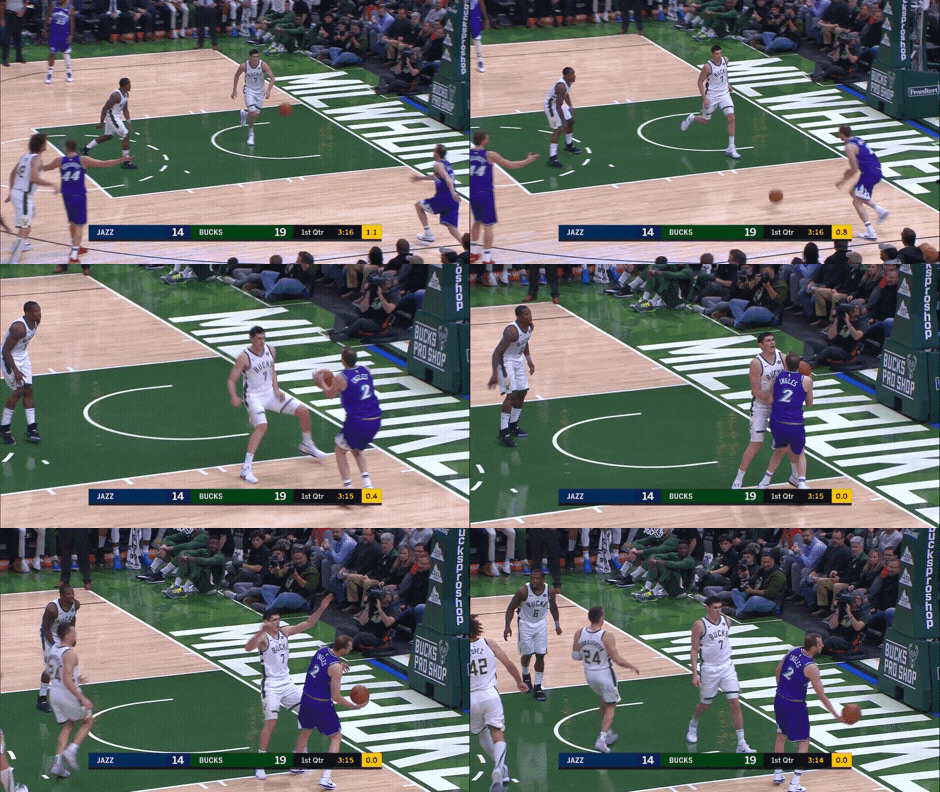
Defensive players can be moving to the side or backwards and still take a charge, as long as they’re outside the restricted area. They just can’t be moving forward. And that’s where things get kind of tricky in those bang-bang moments.
In the above example, Ersan Ilyasova (a master at taking charges) is clearly moving when Joe Ingles makes contact with him. However, he’s in legal guarding position of Ingles’ pathway.
There’s often a lot of ambiguity and judgment within these calls. The key to all of this is that even if a player is still moving (sideways or backwards), they have to be in legal position before the player goes into the upward shooting motion.
That’s where the judgment call comes into play. If an offensive player lowers their shoulder, they’re getting called for the charge/offensive foul almost every time. That’s the whole “being in control of their body” at all times aspect. Where most players, coaches and fans object is when it looks like the defender slides into the pathway after the offensive player has started their ascension. Because … you know … that’s the rule.
Does this clarify anything? I hope so! It will until the next time there’s a terrible call regarding charges and blocks. And you can always email us at thebounce@theathletic.com if you have questions.
The last 24
🏀 New wrinkle. As the Clippers/Aspiration investigation drags on, there’s another interesting revelation: Kawhi Leonard reportedly had another endorsement deal worth millions with the Clippers’ scoreboard maker.
Kawhi Leonard had a sponsorship with Clippers’ scoreboard operator
🏠 Staying put? The Blazers moved closer to getting public funding for arena renovation. Local officials approved a term sheet.
🥇 World Cup! The FIBA Women’s World Cup is set for September in Germany. Team USA has Caitlin Clark and Angel Reese.
KAT call
Knicks’ tough Towns decision
The New York Knicks are still busy celebrating their NBA title and getting ready to defend it next season. But even as they’ve made peace with letting Mitchell Robinson walk and bringing in Andre Drummond to replace him, the Knicks have an even more important big-man decision ahead. Karl-Anthony Towns is eligible for a four-year, $272 million extension. He’s on the books for $57 million this season and has a player option for $61 million in 2027-28.
The Knicks are up against the second apron, which they said they wouldn’t dip into when letting Robinson go. But would that change if it means giving KAT an extension averaging nearly $70 million per season? Or will they hope Towns takes a discounted extension to keep the band together? James Edwards III went through the pros and cons of extending Towns. Here are my biggest takeaways:
- It feels like the Knicks have to give Towns a significant contract extension. I’d be shocked if he’s the guy they let go.
- Remember, the Knicks really took off in the playoffs after they shifted their offense to run through Towns at the elbow.
- From Game 4 against the Hawks through Game 5 of the NBA Finals, he averaged 14.9 points, 10.5 rebounds, 5.3 assists, 1.3 steals and 1.1 blocks and had 54.7/44.4/88.5 shooting splits. The Knicks went 15-1 in those games.
- JE3 mentioned the effect it could have on future free agents. The Knicks have done a lot to turn their reputation around, and paying Towns could be a good sign for free agents down the road, when New York has flexibility again.
But that’s the trouble. When could the Knicks have flexibility again, and would it cost them anybody else?
- Jalen Brunson has a $43.3 million player option in ’28-’29. It’s assumed he’ll be looking for a new deal in 2028, if he doesn’t already have an extension in place.
- OG Anunoby has a $48.3 million player option in ’28-’29. Maybe he’d start taking a discounted extension to help set up flexibility for New York by then?
- Mikal Bridges has a $41.1 million player option, but not until ’29-’30.
- Josh Hart has a $22.3 million team option in ’27-28. Maybe the Knicks pick up the option to keep costs down, but then they try to figure out a new deal with him soon?
The rough projected salary cap in ’28-’29 season is $182.7 million. A lot could change before then, but that would put the second apron around $245 million.
If we go off player option numbers, a “conservative” $60 million starting salary on Towns’ next contract and around $25 million for Hart, then the Knicks are looking at $215 million already for their starting five. That leaves $30 million for the remaining nine spots on the roster. New York is in a great spot to contend now, but the second apron crunch comes for even the richest team.
Poster child
Which Malone wins this battle?
Posters! Remember putting those on the walls in the ’80s and ’90s? I sure do! Having friends come over and be impressed by the posters you had displayed was one of the proudest moments of being a basketball fan. During this summer of The Bounce, we’re putting the old-school posters against each other and having you, The Bouncers, decide the winner.
Last week, Chuck Person’s The Rifleman poster ran away with the vote against Dale Ellis’ Silent Assassin poster! The Rifleman received 68.6 percent of the vote and moved on for future consideration.
Today, we’re sticking in the ‘80s and have the two best Malones (sorry, Jeff) battle it out: the infamous Karl Malone “Special Delivery” poster and the “Moses” poster for Moses Malone.
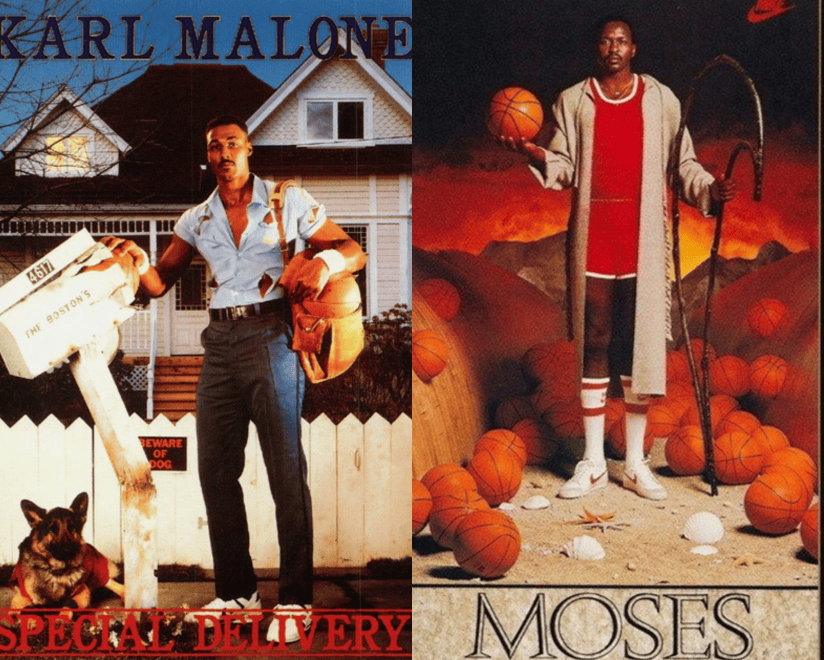
These are two of the greatest players of all time and two of the best posters of the ‘80s. We’ve got Moses versus Karl in a Battle of the Malones. Who you got?
Sound off in the comments.

