78,000 миль зам туулсан Tesla Model 3 цахилгаан автомашины батерейны хүчин чадал 92 хувийн үзүүлэлттэй хэвээр байгаа нь батерейны элэгдлийн талаарх түгээмэл ойлголтыг үгүйсгэж байна
YouTube сувгийн хөтлөгч Мэтт 2022 оны Tesla Model 3 Standard Range Plus загварын лити-ийн фосфат (LFP) батерейны элэгдлийг шалгах туршилтыг явуулжээ. Тус автомашин нь 78,000 миль замыг туулсан бөгөөд батерейны эрүүл мэндийн байдлыг тодорхойлохын тулд 15 цаг үргэлжлэх цогц туршилтыг хийсэн байна.
Туршилтын үр дүнд батерейны хүчин чадал 92 хувьтай гарсан нь өндөр гүйлттэй цахилгаан автомашины хувьд харьцангуй сайн үзүүлэлт юм. Цахилгаан автомашины батерей нь гар утасныхтай адил хурдан мууддаг гэх нийтлэг таамаглал нь энэхүү бодит туршилтаар няцаагдаж байна.
Шведийн автомашины зах зээлийн судалгааны байгууллага болох Carla-гийн өмнө нь хийсэн судалгаагаар Kia e-Niro болон Hyundai Kona загварууд 62,000 миль туулсны дараа батерейны хүчин чадлаа 97 хувиас дээш хадгалж байжээ. Мөн тус судалгаанд хамрагдсан Tesla Model 3 загварын LFP батерейны хүчин чадал 93.53 хувьтай байсан нь Мэттийн хийсэн туршилтын үр дүнтэй дүйцэж байна.
Дэлгэрэнгүйг эх сурвалжаас харах
↓Эх сурвалжийг нээх ↓
A man has given his 2022 Tesla Model 3 LFP EV battery a test to see how much degradation there is after 78,000 miles.
One of the most common myths with EVs is that the batteries degrade massively as time goes on, like a mobile phone.
It has been enough to put people off buying cars like a Tesla. But YouTuber Matt Goes Electric wanted to change that.
He decided to test the degradation on his Tesla Model 3 from 2022, which had done 78,000 miles up to this point, to see what health the battery was in.
This Tesla Model 3 had the LFP pack
The car was bought by the YouTuber’s daughter.
It had been on the road since March 2022, making it four years and three months old.
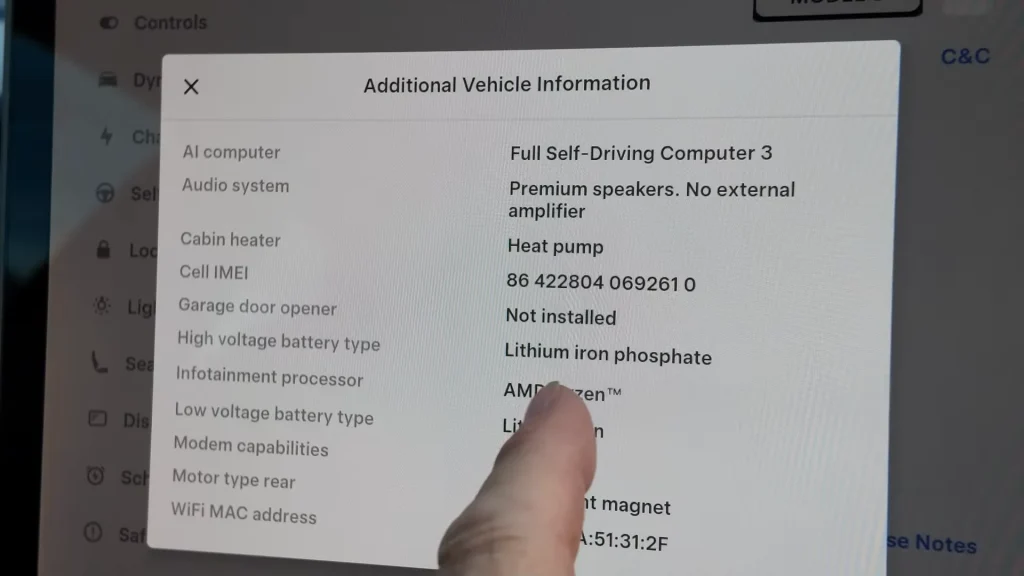
It is a standard range plus model, and it has the lithium iron phosphate battery, the LFP pack.
The history of the vehicle was unknown.
But they knew was that it had done around 76,000 miles before they bought it.
Teslas of this vintage have a battery health test built into the infotainment system.
It is however a feature that has been removed on some later models.
It initially said the battery was in good health, but Matt wanted to give it a full test to be sure.
The car had to have less than 20 percent battery capacity before the test could begin.
It needed to be connected to an AC charging station.
The test itself took around 15 hours to complete.
What did the test say about the Tesla Model 3?
With the test completed, Matt came to have a look at the results.
It came up stating the battery was 92 percent healthy, after just under 78,000 miles.
That seems like a very good number.
Higher voltage batteries can lose a bit of health quickly, but that then seems to taper off as the battery settles down.
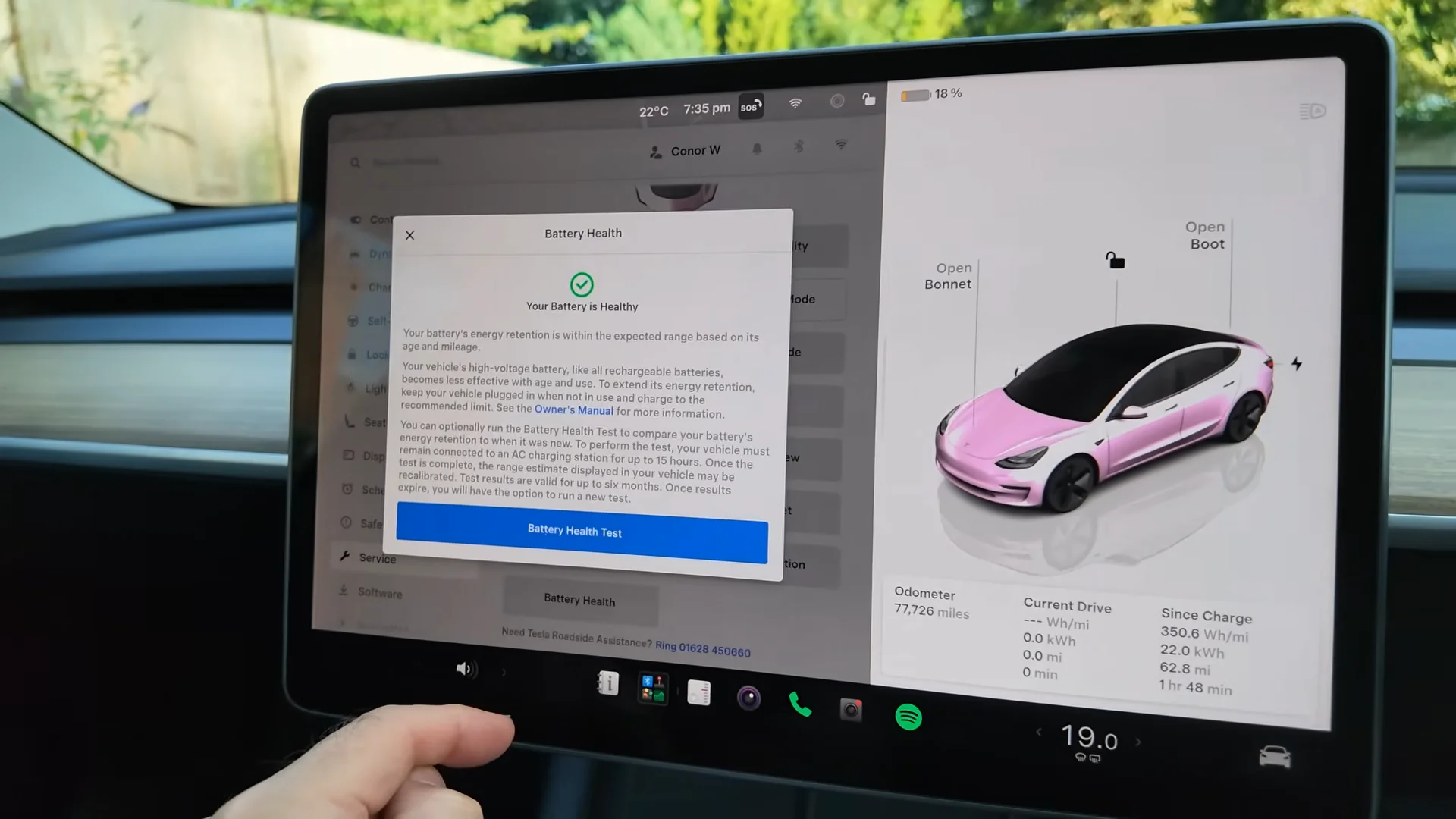
So with a good amount of mileage already on the odometer, this particular Tesla seems to be in very good health.
Many people believe EV batteries will degrade at a vast rate of knots.
Mobile phone batteries, for example, can lose a lot of their health after just two years of use.
On this 2022 Model 3, we have a battery that is nearly at full health with a lot of miles already accumulated.
Massive battery degradation is a myth in EVs
The video proves what many people are now realizing: battery degradation in EVs is largely a myth.
This was proven by a study done by Carla, a Swedish used car marketplace.
We’ve covered the study before, and in it, two cars had over 97 percent of their battery health after doing 62,000 miles.
The two cars were the Kia e-Niro and the Hyundai Kona.
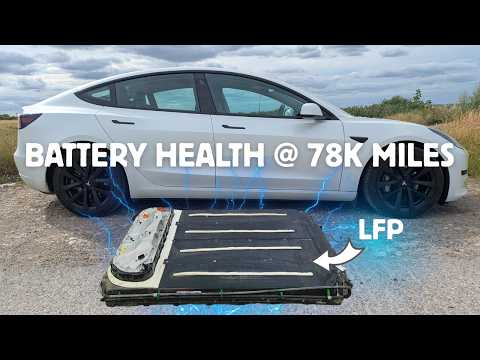
A Tesla Model 3 with an LFP battery in that study had around 93.53 percent of its battery health remaining.
So the results of the YouTuber’s test do seem to tally up.
Combined with the Swedish study, it seems that most EV owners don’t need to worry about their batteries.
Tesla timeline
July 2003: Founders Martin Eberhard and Marc Tarpenning officially incorporate the business
April 2004: Elon Musk leads a $7.5M Series A funding round and becomes board chairman
March 2008: The first production vehicle, the all-electric Roadster, officially launches
June 2010: The EV maker debuts on the NASDAQ and raises $226M in its IPO
June 2012: The groundbreaking Model S luxury sedan enters the global market
September 2015: Tesla Model X is officially released
July 2017: Mass production begins for the more affordable Model 3
March 2020: The Model Y debuts as total vehicle production hits one million
November 2023: First customer deliveries begin for the stainless-steel Cybertruck
2025: The energy division hits record growth driven by massive global battery deployments
2026: Strategic focus shifts heavily toward autonomous driving and the Cybercab platform

