
Хүнсний ногооны төрөл зүйлийн хомсдол нь дэлхий дахины эрүүл мэндийн тулгамдсан асуудлын нэг болж байгааг “Proceedings of the National Academy of Sciences” сэтгүүлд нийтлэгдсэн шинэ судалгаа харууллаа.
World Vegetable Center-ийн эрдэмтэн Маартен ван Зонневелд тэргүүтэй олон улсын багийн судалгаагаар дэлхийн хүн амын хүнсний ногооны хэрэглээ зөвлөмжөөс 40 хувиар бага байгаа нь өвчлөлийн эрсдэлийг нэмэгдүүлж буй гол хүчин зүйлсийн нэг гэж дүгнэжээ. Аж үйлдвэржсэн хөдөө аж ахуйн улмаас бидний хэрэглэж буй ногооны төрөл зүйл цөөрч, харин уламжлалт болон зэрлэг сортууд устах аюулд ороод байна. НҮБ-ын Хүнс, хөдөө аж ахуйн байгууллага (FAO)-ын тооцоолсноор, хүнсний ногооны зэрлэг төрөл зүйлийн 24 хувь нь устах эрсдэлтэй байгаа нь уур амьсгалын өөрчлөлтөд дасан зохицох чадварыг бууруулж байна.
Судалгаанд дурдсанаар, аалзан ургамал (spider plant), гулгамтгай байцаа (slippery cabbage), гашуун хулуу (bitter gourd) болон хулуу зэрэг нь шим тэжээлээр баялаг төдийгүй байгаль орчны хүнд нөхцөлд тэсвэртэй болох нь тогтоогджээ. Эдгээр ногоо нь орон нутгийн хүнсний аюулгүй байдлыг сайжруулах, ялангуяа эмэгтэйчүүд, хүүхдийн хоол тэжээлийн дутагдлыг бууруулахад чухал ач холбогдолтой юм. Гэвч эдгээр сортууд нь томоохон хэмжээний хүнсний стратегид хангалттай тусгагдаагүй, генетикийн нөөц нь дутуу ашиглагдаж байна.
Эрдэмтэд хүнсний тогтолцоог төрөлжүүлэх нь эрүүл мэнд болон дэлхийн экосистемд нэн чухал болохыг онцоллоо. Хэрэглэгчид фермерүүдийн зах болон бие даасан худалдаачдаас төрөл бүрийн ногоо худалдан авах, гэрийн нөхцөлд уламжлалт сортуудыг тариалах замаар хүнсний ногооны олон янз байдлыг хадгалахад хувь нэмэр оруулах боломжтой.
Дэлгэрэнгүйг эх сурвалжаас харах
↓Эх сурвалжийг нээх ↓
Most of us aren’t eating anywhere near enough vegetables, and we’re suffering the health consequences.
Meanwhile, we’re also growing fewer and fewer varieties of vegetables, adding to the declining diversity in our diets.
A new report published in Proceedings of the National Academy of Sciences by an international team of nutrition, agriculture, and botany experts suggests embracing vegetable biodiversity could be key to improving our own health, and that of our planet.
Agriculture scientist Maarten van Zonneveld, who led the research while working at the World Vegetable Center, says our existing approaches to agriculture are not enough to solve the world’s nutrition problems.
“The solution isn’t simply to grow more vegetables – it’s also to grow more kinds of vegetables,” he says.
“Much of the vegetable biodiversity we need is still out there – in traditional varieties and their wild relatives. The urgency is to conserve it properly so that we can use it wisely to diversify diets amid climate change.”
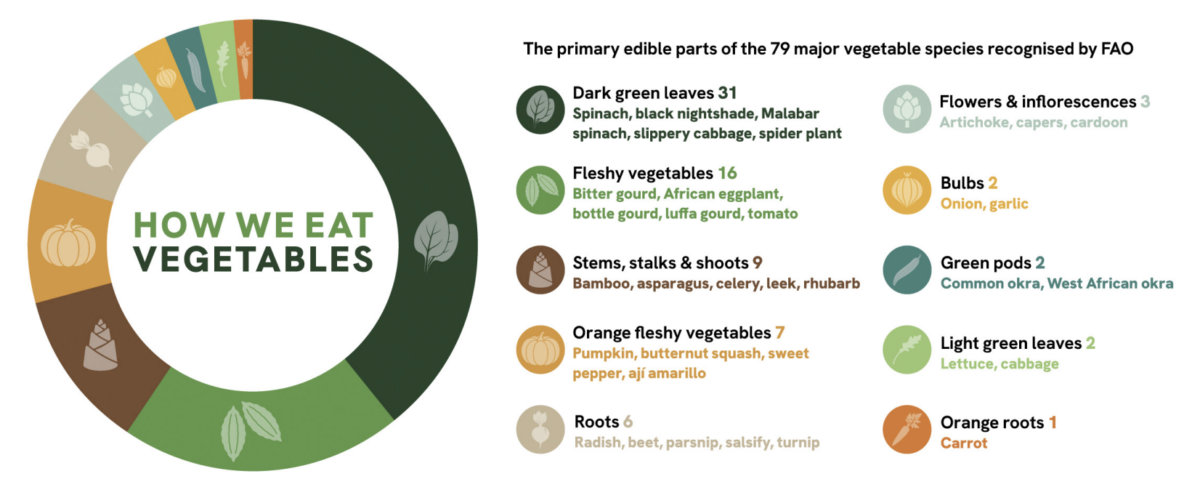
The study suggests we’re overlooking lots of vegetables rich in minerals and vitamins that might also be better suited to local growing conditions, depending on where in the world you live.
Across the world, most people consume around 40 percent fewer vegetables than recommended for a healthy diet.
That’s concerning, given low consumption of vegetables is among the top five dietary risk factors contributing to the global burden of disease.
Vegetables are often the first thing to go from the grocery list when money is tight. And farmers often see them as a bigger economic risk than other crops, because of their perishability and short shelf life.
Before agriculture became industrialized, there was a much greater diversity of plants being grown for food.
For instance, there are more than 4,000 different varieties of potatoes, but in the United States, only about five to eight varieties are widely used.
From artificial selection, to monocultures for mass production, to genetic modification, the industrialization of agriculture – and the supply chains that distribute these products – has whittled away the variety of vegetables that wind up on our tables.
A review by the United Nations’ Food and Agriculture Organization (FAO) estimates that 24 percent of the wild relatives of vegetables assessed at the species level are at risk of extinction.
And as we lose the genetic diversity of vegetables, we also lose their nutrients and the ability to adapt our crops to changing climate conditions.
“A few species, such as lettuce, onions, and tomatoes, have become global crops and are part of diets worldwide,” van Zonneveld and team write.
“Many others, such as spider plant, slippery cabbage, and bitter gourd, which are typically denser in micronutrients and better adapted to challenging and resource-limited environmental conditions, are available only regionally, and very often neglected in large-scale food policies and strategies.”

Spider plant is a dark-green leafy vegetable grown in Africa that has been identified for its resilience to climate change, while also packing a lot of essential nutrients.
“Currently, only a few local varieties are conserved in gene banks, with many gaps in collections, constraining breeding and the development of improved varieties for larger-scale production,” van Zonneveld and team note.
Slippery cabbage is one of the most popular dark-green leafy vegetables in the Pacific, where the researchers say it has potential to greatly improve women’s and children’s nutrition especially.
Bitter gourd is another climate-resilient vegetable popular in Asia and the Caribbean that has many wild relatives, which the researchers think could improve crops in these tropical regions.
And then, there’s the well-known pumpkin, which can tolerate drought and heat, while producing fruits rich in beta-carotene. Despite its commercial importance, the researchers say “its genetic resources remain underutilized and poorly conserved”.
The researchers think these four vegetables could be great starting points for diversifying food crops regionally, but there’s plenty of others.
We just need to start growing and eating them, before they disappear.
Related: Scientists Found a Remarkable Way to Help Kids Like Vegetables
“The ongoing biodiversity loss for these and the other 1,480-plus vegetable species occurs at a time when global food systems urgently need diversification,” the team concludes.
“Alignment under a global initiative would ensure that local and regional efforts translate into improvements in diets at both the local and global levels.”
Closer to home, we can add more diversity to our diets in a few ways.
If you’re a keen gardener, look for ‘landrace’ and ‘heirloom’ varieties of vegetables to grow in your garden.
Collecting seeds from your own vegetables to grow again next year is another great way to keep that biodiversity rolling – you might even end up with your own unique varieties.
Shopping for groceries at farmers’ markets and independent grocers is also a great way to find a wider range of vegetables (and fruits) to add to your diet.
Who knows, you might even find a new favorite.
The research was published in PNAS.
This article was fact-checked by Rachel Garner and edited by Peter Dockrill. While we pride ourselves on our process, we are only human. If you spot a mistake, please let us know.


