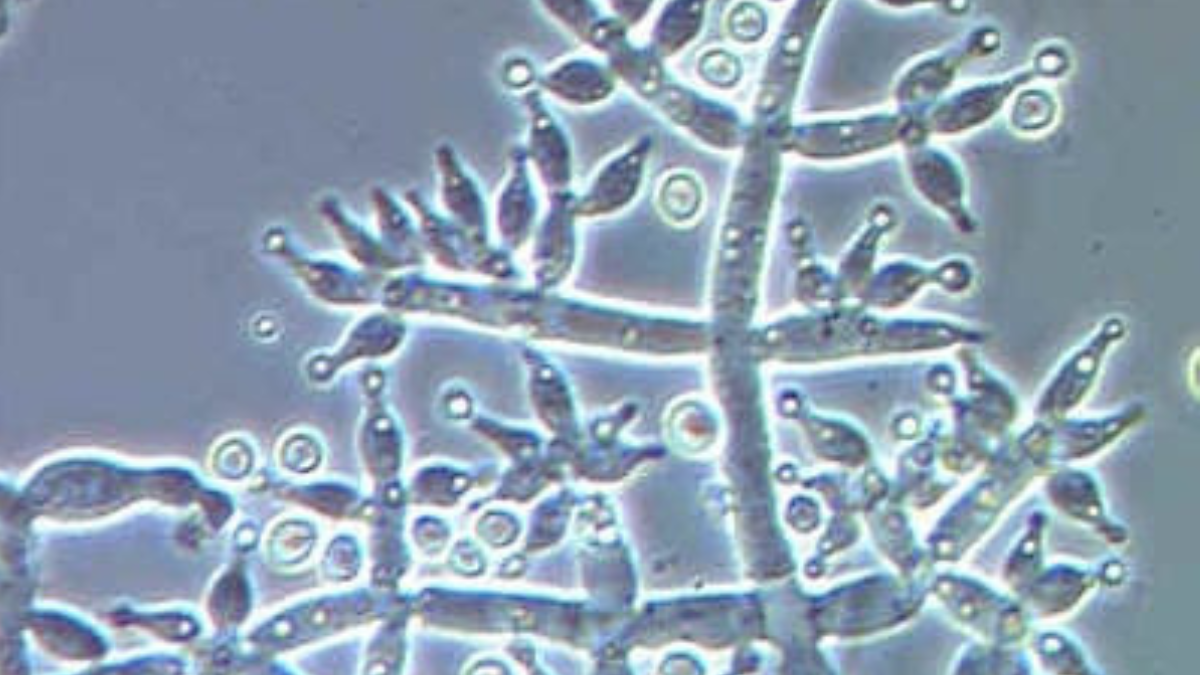
Эрдэмтэд микроскопийн түвшинд ажиглагдах Trichoderma төрлийн мөөгөнцрийн үржлийн бүтцийг илрүүлжээ.
Микроскопоор харахад цан хүүгнэсэн цонхны шил эсвэл модны мөчир мэт харагдах энэхүү дүрс нь үнэндээ Trichoderma төрлийн мөөгөнцрийн үржлийн эрхтэн болох конидиофор (conidiophores) юм. Түүний үзүүрт байрлах жижиг бөмбөлгүүд нь бэлгийн бус замаар үржих кониди буюу спор ажээ. Эдгээр спор нь салхи, ус эсвэл шавжаар дамжин тархаж, өөр орчинд шинэ колони үүсгэх чадвартай.
Дэлхийн хөрсөнд өргөн тархсан Trichoderma төрлийн мөөгөнцөр нь ургамлын өвчин үүсгэгч бусад мөөгөнцрийг устгадаг тул хөдөө аж ахуйд биологийн хяналтын агент болгон ашигладаг. Судлаачдын тогтоосноор, зарим зүйл нь цагаан чимээ (white noise) сонссоноор өсөлт нь түргэсэж, спор ялгаруулалт нь нэмэгддэг байна. Энэхүү үзэгдлийг дууны долгион мөөгөнцрийн рецепторуудыг механик байдлаар цочроож, биохимийн дохио болон хувирснаар ургалтыг дэмждэг хэмээн тайлбарлаж байна.
Бидний нүдэнд үл үзэгдэх эдгээр бичил биетүүд хөрс, бордоо болон ургамлын үндэс орчимд тогтмол оршдог. Хэдийгээр тэдний экосистемд гүйцэтгэх үүргийн ихэнх нь одоог хүртэл бүрэн судлагдаагүй байгаа ч байгаль орчны тэнцвэрт чухал нөлөөтэй болох нь тодорхой байна.
Дэлгэрэнгүйг эх сурвалжаас харах
↓Эх сурвалжийг нээх ↓
Familiar things can look very strange when viewed under a microscope.
Each week in our newsletter, our team shares a head-scratching microscopic image and asks readers to work out what exactly they’re looking at.
Well, somehow the weekend has flown by and we’re back at our desks scratching our head over another microscope mystery. Time to see if you can solve this one!
This week’s specimen looks like something growing on a windowpane in midwinter – delicate branches, needle-fine, studded with tiny glassy beads at every tip.
What do you think you’re looking at?
There will be spoilers below, you have been warned!
As a visual buffer, in case you missed it, here are the mind-blowing, most detailed images of the Sun ever taken – and released last week.
Narrow it down…
Some ideas to narrow down what the image could be of:
a. Frost crystals forming on glass
b. Branching neurons
c. A fungus producing spores
d. Root hairs of a seedling
We’ll show you the image one more time and will reveal the answer below.
Okay ready?
You sure?
Alright… here we go.
The answer
The answer is C: a fungus producing spores.
Yes, really!
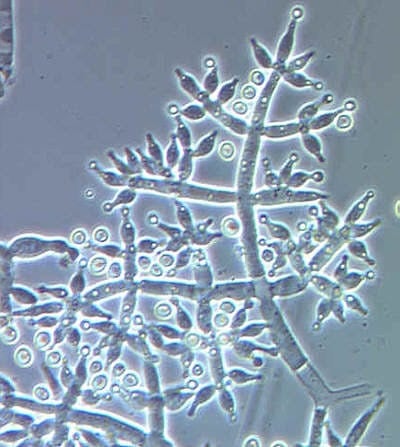
Those branching stalks are called conidiophores, and the tiny round beads budding from their tips are conidia – spores made without sex, cloned copies of the parent fungus ready to be carried off by wind, water, or a passing insect to start a new colony somewhere else.
Each conidiophore keeps branching and rebranching, sprouting fresh spore-producing tips as it grows, which is why the whole structure looks more like a tree or a frost pattern than anything you’d expect from a single-celled organism’s reproductive gear.
This branching style, with spores clustering in loose sprays rather than tight chains, is typical of Trichoderma – a genus of mould found in soils almost everywhere on Earth.
Several species in the genus are used commercially as biocontrol agents, because they can parasitize the fungi that cause plant disease.
One member of the genus, Trichoderma harzianum, made headlines a couple of years back when researchers found it grows faster and pumps out more spores when played white noise in the lab.
Nobody’s sure exactly why.
The leading idea is that sound waves mechanically jostle receptors on the fungus, and that gets converted into a biochemical signal that ramps up growth and spore production.
None of this is visible to the naked eye, of course. Individual conidia typically measure just a few micrometers across – small enough that a light microscope, rather than the electron kind, is enough to bring this tangle of branches into focus.
Fungi like this one are quietly everywhere: in soil, in compost, on the roots of the plants outside your window. Most of what they’re doing down there, we still don’t fully understand.
See you next week, we hope it’s a good one!
This article was fact-checked by Clare Watson and edited by Clare Watson. While we pride ourselves on our process, we are only human. If you spot a mistake, please let us know.


