Техас мужийн томоохон аяллын бүсэд хилийн хамгаалалтын зам барих ажил эхэлсэн нь байгалийн аялал жуулчлал болон голын спортоор хичээллэгчдийн дунд түгшүүр төрүүлээд байна.
Техас мужийн Биг Бенд үндэсний цэцэрлэгт хүрээлэнд хүнд даацын техник хэрэгсэл нэвтэрч, замын бүтээн байгуулалт хийж байгааг орон нутгийн аялал жуулчлалын компаниуд мэдээлэв. Хилийн албаны зүгээс тус бүтээн байгуулалтыг хилийн хана барих бус, харин үерийн улмаас эвдэрсэн замуудыг сэргээх болон судалгааны ажилтай холбоотой гэж тайлбарлаж байна. Гэсэн хэдий ч нутгийн аялал жуулчлалын салбарынхан энэхүү үйл ажиллагаа нь Рио Гранде голын дагуух явган аялал, кемпинг болон завиар аялах боломжийг хязгаарлаж, цөлийн эмзэг экосистемд сөргөөр нөлөөлнө хэмээн болгоомжилж байна.
Наймдугаар сарын 4-нд орон нутгийн 140 гаруй бизнес эрхлэгч хууль тогтоогчдод хандан үндэсний цэцэрлэгт хүрээлэнгийн байгалийн өв болон аялал жуулчлалын эдийн засгийг хамгаалахыг уриалжээ. Тус бүс нутаг нь 2024 онд 561 мянга орчим жуулчдыг хүлээн авч, 56.8 сая ам.долларын орлого оруулсан Техас мужийн томоохон аяллын чиглэл юм. Байгаль хамгаалагчид болон аялал жуулчлалын салбарын төлөөлөгчид холбооны засгийн газрын байгаль орчны хууль тогтоомжийг түр зогсоосон шийдвэрийг эсэргүүцэж, шүүхэд гомдол гаргаад байна.
Одоогийн байдлаар хилийн албанаас 17 миль үргэлжлэх тээврийн хэрэгслийн хаалт болон 205 миль урттай эргүүлийн зам барихаар төлөвлөж байгаа нь аялагчдын зорчих хөдөлгөөнд томоохон өөрчлөлт авчирч болзошгүй. Аялал жуулчлалын компаниуд энэхүү бүтээн байгуулалт нь тус цэцэрлэгт хүрээлэнгийн зэрлэг байгалийн өвөрмөц онцлогийг алдагдуулж, аялагчдын сонирхлыг бууруулах вий гэсэн болгоомжлолтой байгаагаа илэрхийлсээр байна.
Дэлгэрэнгүй эх сурвалжийг харах
Эх сурвалжийг нээх ↓
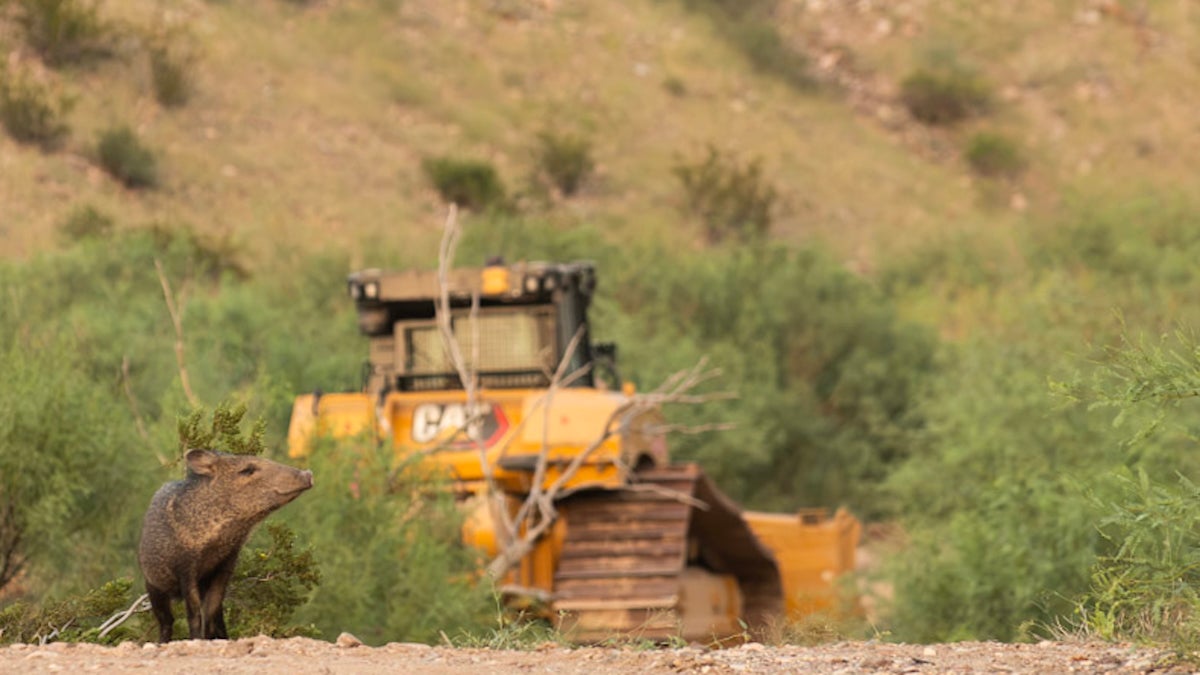
Pink survey flags run through the mesquite along the Rio Grande in Texas, marking the line where a new road will go. A javelina, the pig-like mammal that ranges across this desert, stands at the edge of the cleared ground inside Big Bend National Park. Behind it, a bulldozer pushes through the trees.
Local guiding outfitters on the ground say the heavy machinery marks the start of border wall construction within the largest piece of public land in Texas. The Department of Homeland Security (DHS), however, tells Outsidethat construction has not started.
Billy Bartko drove out to Glen Springs Road in early August to see for himself. An owner of Far Flung Outdoor Center, a Terlingua, Texas, adventure company that has been in business for 50 years, said he saw firsthand the equipment being unloaded from the trailers within the park boundaries.
The stakes are personal for Bartko—construction could threaten the tourism and river-recreation economy he and his neighbors depend on.
“What’s happening is a warfare on the people wholive in the area,” Bartko told Outside. He employs about 40 individuals, half of them river guides, and is one of more than 140 business owners who signed a letter on August 4 asking Texas lawmakers to intervene.
For those like Bartko who paddle, hike, and camp along this stretch of the Rio Grande—and the local businesses that depend on public-land access—the question is how 17 miles of vehicle barrier and roughly 205 miles of patrol roads will reshape access to a river. The Rio Grande runs the length of the park’s southern boundary, and changes to access could permanently alter the park’s fragile desert ecosystem. The outdoor tourism sector could also see massive impacts: Big Bend drew some 561,000 visitors in 2024, who spent an estimated $56.8 million in the surrounding communities.
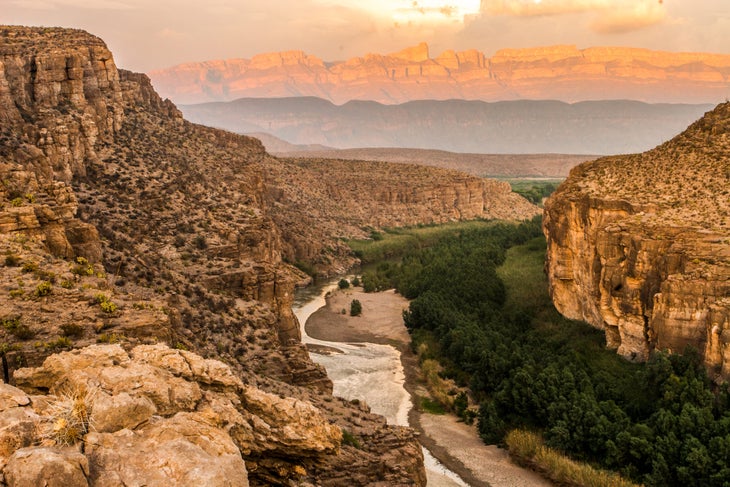
“Bulldozers are tearing through Big Bend National Park right now, and Customs and Border Protection (CBP) is calling it security,” Clara Bensen, director of communications for No Big Bend Wall, a coalition formed in response to the proposed wall, wrote in a statement to Outside. “Nobody has explained why patrol roads and road barriers through this remote jewel of Texas make anyone safer.”
A CBP spokesperson told Outside that construction on the agency’s Big Bend 4 project, which includes areas within Big Bend National Park, has not started, writing in a text message that there is “no border wall planned for Big Bend National or State Park.”
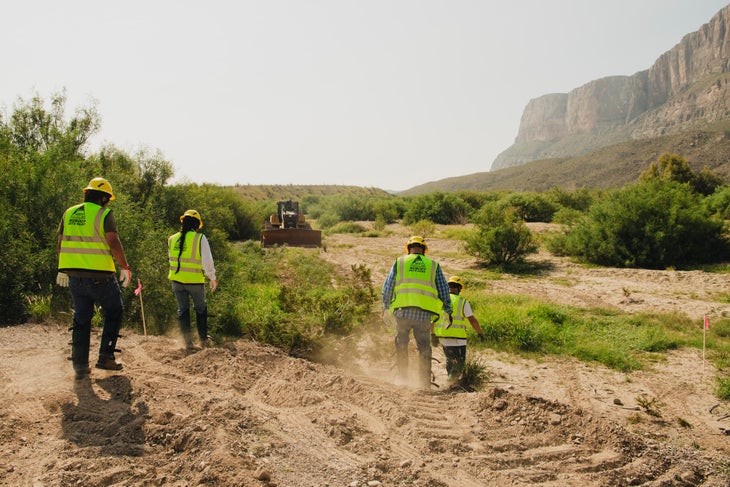
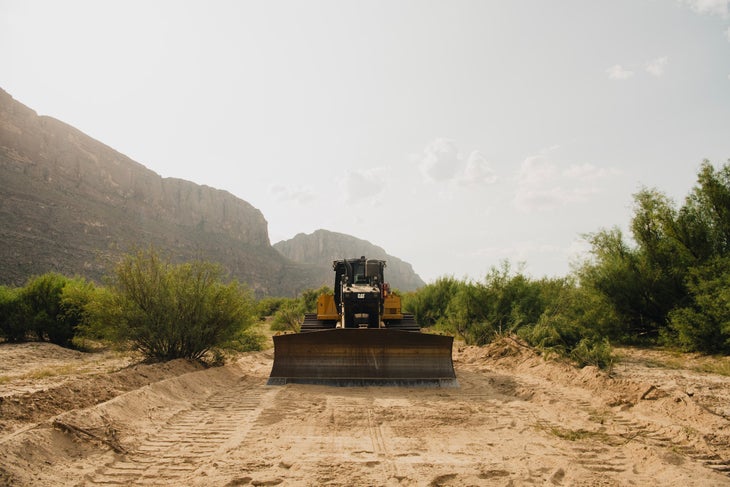
“Construction crews are on-site regrading roads damaged by recent storms, which are required for access to conduct surveys. CBP’s contractor is clearing out areas to support the design and survey phase,” CBP wrote in an email. Previously, the government toldOutsidethat it was scrapping plans for a physical barrier.
Although CBP says it has no plans to build a border wall, Bartkos fears the road construction may be paving the way for one. He visited Big Bend National Park on August 4, and said that he saw crews building a new road running parallel to Route 16, a paved section of scenic highway running through the park.
“The bulldozers were clear-cutting 25 feet of paved road,” he said. “Nothing about this is normal, or could be construed as maintenance inside the national park.”
How Federal Approvals Fast-Tracked Construction
Already, the border barrier project has sidestepped many of the laws designed to protect the park, opponents allege. In June, the DHS authorized a $1.7 billion barrier-and-road project by waiving dozens of federal laws, including the National Wild and Scenic Rivers Act and the National Park Service Organic Act. No administration had set aside that many protections to build inside a national park before, according to No Big Bend Wall.
CBP’s environmental assessment for Brewster County, which contains the park, calls for 17 miles of vehicle barrier, built in segments with steel posts carrying rails at alternating heights of roughly four and six feet. It also proposes around 205 miles of patrol roads, up to 24 feet wide, carrying detection technology. The Big Bend Sector, the CBP unit that patrols 517 miles of riverfront along the Rio Grande, accounted for 1.3 percent of border apprehensions nationwide in 2025. Inside the park, the figure was 0.045 percent, according to No Big Bend Wall.
“It makes no sense whatsoever, and it’s completely unnecessary,” Bartko said. “The extreme remoteness of our area, the very fact that someone would have to traverse hundreds of miles of some of the harshest desert terrain you can imagine. And then the desert floor is equally as harsh with no water and extreme heat.”
For the people like Bartko whose livelihood depends on the Rio Grande, the question is: When the wall goes up, will they still be able toput a boat in the water?
Threatened Wilderness and Uncertainty for River Guides
Most of what crews have done so far has been road improvements and clearing along the roads, Bartko told Outside. Reading the survey markers, he expects the screen of remaining brush to come down too.
Far Flung runs trips from Colorado Canyon down to the Rio Grande Village boat ramp, and as far as a 12-day float through the Lower Canyons. About a quarter of the company’s business happens on the water. Neither DHS nor CBP answered Outside’s questions about which river access points would be affected.
Landon Hutchens, a CBP press officer for West Texas, toldOutsidethat the paved roads “are probably going to help tourism” by making rugged areas of the park more accessible.
Bartko agrees the land is rough, and that’s the point. “What they don’t seem to understand is that’s the draw,” he said. “That is why people come here. They’re not coming here to drive on a super highway.”
A Bipartisan Front Fights to Save Big Bend
Bartko said the project is bringing in more workers than Terlingua has residents, but the small town’s residents are largely united in their disapproval of the wall.
“It shows you the bipartisanship of the protest. We all have the same to lose,” Bartko said.
Days before the machines arrived, an anti-wall coalition wrote to Senators John Cornyn and Ted Cruz and Governor Greg Abbott, asking them to press DHS to drop the physical barriers and roads and amend the contract “to include technology only.” Patagonia, the Access Fund, American Whitewater, and Outdoor Alliance signed alongside the regional outfitters.
The Center for Biological Diversity (CBD) is suing the federal government over the waiver of environmental laws.
A lawsuit from the Center for Biological Diversity (CBD) challenging the waivers is pending.
“The administration is preparing to blast hundreds of miles of destructive roads through the wildest place left in Texas and cut off public access to the Rio Grande,” Laiken Jordahl, CBD public lands advocate, wrote in a statement.
The post “Warfare on the People.” Big Bend Residents Fear the Border Wall Will Cut Off Public Lands. appeared first on Outside Online.

