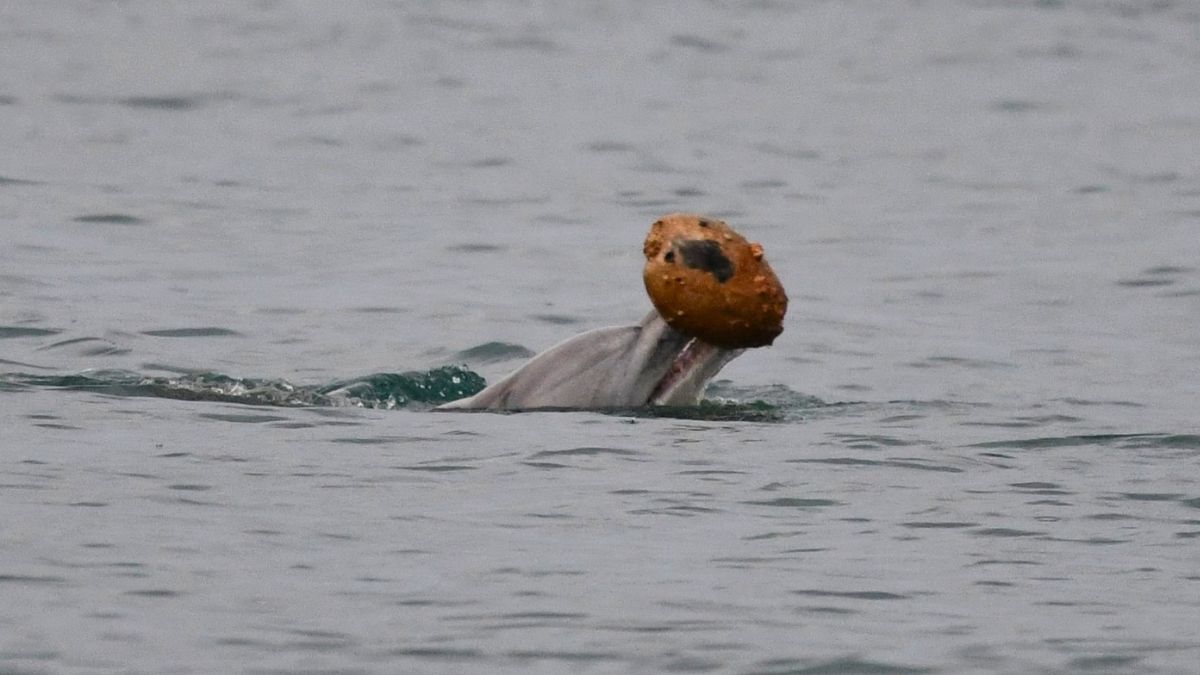
Шинэ судалгаагаар далайн гахайнууд хоосон хясааг ашиглан загас барьдаг “shelling” хэмээх өвөрмөц ангуучлалын аргыг эзэмшсэн болохыг баталлаа.
Австралийн Квинсландын эрэг орчмоос Индо-Номхон далайн хушуу хамар далайн гахайнууд (Tursiops aduncus) хоосон далайн хясааг ашиглан загас барьж буй дүрс бичлэг олджээ. Энэхүү ховор үзэгдлийн үеэр далайн гахай загасыг хясаан дотор оруулан хавханд оруулаад, улмаар хясааг уснаас гарган загасыг нь иддэг байна. Энэхүү зан үйлийг өмнө нь зөвхөн Баруун Австралийн Шарк буланд ажиглаж байсан бол одоо Австралийн зүүн эрэгт ч мөн адил үйлдэгддэг нь нотлогдлоо.
Саншайн Кост их сургуулийн зан үйлийн экологич Алексис Левенгуд болон түүний багийнхан судалгааныхаа явцад эх далайн гахай болон түүний төл хоёулаа энэхүү аргыг хэрэглэж байгааг дүрс бичлэгээр баримтжуулжээ. Энэ нь уг ангуучлалын арга зөвхөн нэг бүлэг далайн гахайн дунд тархдаггүй, харин эхээс төлдөө өвлөгддөг болохыг харуулж байна.
Далайн гахайнууд олзоо барихын тулд хясааг удирдах, түүнийг хэрхэн зөв өнцгөөр барьж загасыг гаргаж авах зэрэг нарийн ур чадвар шаарддаг ажээ. Энэхүү ололт нь далайн хөхтөн амьтдын нийгмийн сургалтын үйл явц болон тэдний оюуны чадамжийн талаарх шинжлэх ухааны ойлголтыг өргөжүүлж байна. Эрдэмтэд уг зан үйл бусад бүс нутагт ч тохиолддог эсэхийг судлахаар төлөвлөж байгаа бөгөөд судалгааны үр дүнг Marine Mammal Science сэтгүүлд нийтэлжээ.
Дэлгэрэнгүйг эх сурвалжаас харах
↓Эх сурвалжийг нээх ↓
Dolphins off the coast of Queensland, Australia, have been captured on film using a rarely-sighted technique known as ‘shelling’ to hunt their prey.
Indo-Pacific bottlenose dolphins (Tursiops aduncus), also known as ‘buthu’ in the Indigenous Butchulla language, are intelligent animals known for their tool use.
But very few people have ever seen the dolphins’ shelling in action, let alone caught it on camera.
The new videos, captured at Hervey Bay, were presented by researchers from the University of the Sunshine Coast in a study published in Marine Mammal Biology.
“We were out doing our normal dolphin surveys… looking at dolphins, looking to record behavior, where they are, what they’re doing, and also their health,” behavioral ecologist Alexis Levengood told ScienceAlert.
“We were observing a dolphin, and we saw her, all of a sudden, lift this shell out of the water.”
Levengood is one of the lucky few who have seen such foraging behaviors before – but not in this part of Australia.
“The second I saw that shell in the air, I immediately knew what was happening.” Levengood said.
“I was screaming to the students that were on the boat with me in excitement, because I was just so excited that we were actually witnessing this here on the east coast.”
Until now, shelling had only been formally documented in Shark Bay in Western Australia – nowhere else in the world.
Levengood and her team’s videos are the first visual evidence that dolphins on Australia’s east coast also practice this hunting strategy.
“They may have both invented this or innovated this independently of one another, or it’s even possible that there might be some populations up north that are doing this that we don’t even know about yet,” Levengood said.
Their study also includes photographic evidence of shelling taken in the Hervey Bay area by passengers aboard the Blue Dolphin Marine Tour in 2013 and 2019.
“I was screaming to the students that were on the boat with me in excitement, because I was just so excited that we were actually witnessing this here on the east coast.”
Marine mammal expert Alexis Levengood
But it wasn’t until Levengood shared her sighting with the tour boat operators that they realized what rare images had been sitting in their photo archives all this time.
So, what actually is shelling?
In their hunt for food, the dolphins will chase their prey – a small fish, perhaps – into a large, empty seasnail shell.
Then, the dolphin pokes their ‘bottlenose’, aka rostrum, into the opening of the shell, quickly raising the shell above the water and gulping down the contents trapped within.
“We know they don’t all do it. It takes some skill, it takes some knowledge of where to find these empty shells, how to maneuver those shells, and how to be successful in getting the fish out,” Levengood explained.
Indo-Pacific dolphins aren’t migratory, but there’s overlap in their territories.
“All it takes is one dolphin doing something clever that is easily learnable for it to spread,” Levengood said.
The first scientific description of shelling among Shark Bay dolphins was published in 2011.
Then, in 2020, scientists analyzed 42 video observations of Shark Bay dolphins to discover that they may be learning the trick from other members of their pod.
Those sightings suggested the dolphins transmit their unique foraging behavior horizontally across their social network: peer-to-peer, if you will.
The new footage from Hervey Bay, captured in 2025, provides the first evidence that mothers may actually be teaching the shelling strategy to their calves.
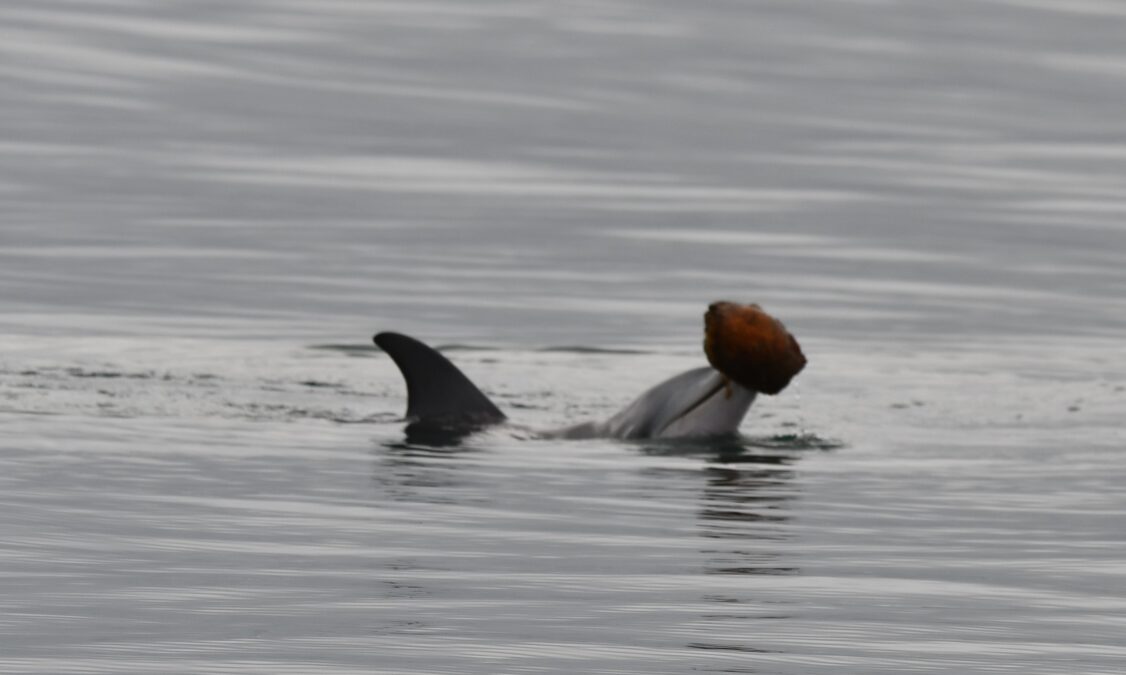
In the videos, an adult female dolphin and her calf were documented shelling in tandem.
“We saw a mom shell first, pick up the shell and drain the fish… and you can actually see in our drone footage, the fish escapes the shell, and the mom chases the fish down,” Levengood said.
“Within minutes of dropping her shell, her calf picked up the shell and was doing the same thing.”
Levengood isn’t sure if the calf or its mother succeeded in eating the trapped fish, but the calf’s involvement indicates the youngster might have been in the process of learning from mom.

If shelling can be passed from mother to calf, as well as pod-mate to pod-mate like in Shark Bay, “it suggests to us there might be an element we’ve overlooked,” Levengood said.
“There might be more than one avenue in which they learn this.”
The researchers are keen to conduct further research in both Hervey Bay and Shark Bay dolphin populations to better understand the nuances of shelling, and how the practice is transmitted between dolphins.
Related: Sponge Foraging in Dolphins Does Something Unique to Their Genes
“Hopefully with time, and more eyes on the water, and more awareness of this behavior, people might start seeing it if it is occurring in other places,” Levengood said.
The research was published in Marine Mammal Science.
This article was fact-checked by Clare Watson and edited by Clare Watson. While we pride ourselves on our process, we are only human. If you spot a mistake, please let us know.

