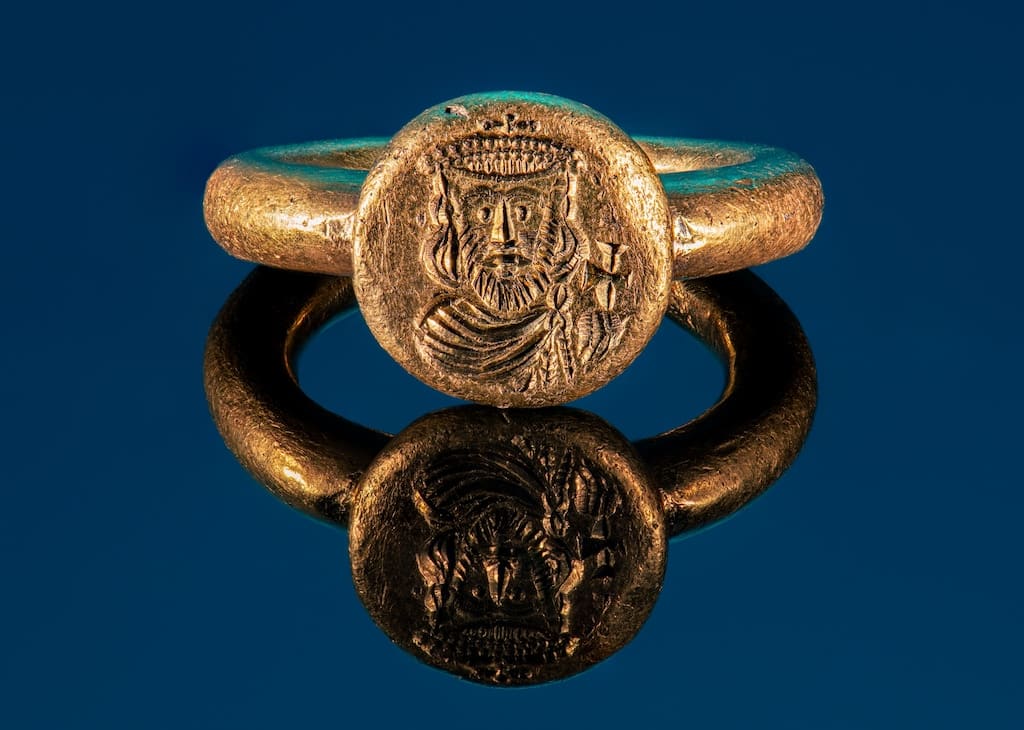
Хорватын Млэт арлын ойролцоогоос олдсон 1000 гаруй жилийн настай хөлөг онгоцны сэгнээс Газар дундын тэнгисийн түүхэн дэх хамгийн их хэмжээний алтан олдвор илэрчээ.
Хорватын Байгаль хамгаалах хүрээлэнгийн (Croatian Conservation Institute) судлаачид 2015 оноос хойш Млэт арлын орчимд малтлага явуулсны дүнд VII-VIII зууны үед хамаарах энэхүү хөлөг онгоцыг илрүүлсэн байна. Уг хөлгөөс 600 граммаас илүү жинтэй алтан эдлэл, түүний дотор бадмаараг, маргад, сувдаар чимэглэсэн бүсний иж бүрдэл болон эзэн хаан Ираклийн дүрс бүхий алтан тамгатай бөгж олдсон нь нэн сонирхолтой олдворт тооцогдож байна. Судлаачдын үзэж буйгаар, уг бөгж нь эзэн хааны нэрийн өмнөөс бичиг баримт баталгаажуулах эрх бүхий өндөр албан тушаалтны эзэмшлийн эд зүйл байх магадлалтай аж.
Европын түүхэнд “Харанхуй үе” гэгддэг цаг хугацааны талаарх мэдээлэл хомс байдаг тул энэхүү олдвор нь тухайн үеийн улс төр, худалдаа болон нийгмийн харилцааг тодруулахад чухал ач холбогдолтой юм. Хөлөг онгоцноос олдсон амфора, шаазан эдлэл болон тоглоомын хэсгүүд нь уг хөлгийг зөвхөн худалдааны зориулалттай гэж үзэхэд учир дутагдалтай байгааг харуулж байна. Зарим алтан эдлэлүүд нь хөлөг живэх үед аль хэдийн хуучирсан байсан нь тэдгээрийг хайлуулж дахин загварчлах гэж байсан эсвэл гадаадын удирдагчдад өргөх дипломат бэлэг байсан байж болзошгүй гэсэн таамаглалыг төрүүлж байна.
Адриатын тэнгисийг тухайн үедээ тусгаарлагдсан, буурай бүс нутаг байсан гэх хуучин ойлголтыг энэхүү олдвор үгүйсгэж байна. Судлаачид тус бүс нутагт үргэлжлүүлэн малтлага хийж, хөлөг онгоцны аялалын зорилго болон эзэмшлийн талаарх илүү тодорхой нотолгоог хайх юм.
Дэлгэрэнгүйг эх сурвалжаас харах
↓Эх сурвалжийг нээх ↓
A Byzantine shipwreck discovered off the Croatian island of Mljet has revealed the largest collection of gold objects ever found on a shipwreck in the Mediterranean. The seventh- or eighth-century vessel carried precious belts, coins and a gold signet ring possibly linked to Emperor Heraclius.
Hidden beneath the waters of the Adriatic Sea, the wreck offers a rare look at a period of Byzantine history that remains difficult to understand. The site is among more than two dozen shipwrecks found around Mljet, an area where vessels from nearly 2,500 years of maritime history have been preserved.
Researchers from the Croatian Conservation Institute began studying the wreck in 2015 and quickly realized they were dealing with an unusual discovery. The ship’s cargo points to a world of wealth, trade and political connections at a time when few written records survive.
A Treasure Linked To The Byzantine Elite
The most remarkable finds from the wreck are a group of gold belt sets decorated with rubies, emeralds and pearls, along with coins from four emperors of the Heraclian dynasty. The recovered gold objects weigh more than 21 ounces in total. As Igor Miholjek, head of research at the Croatian Conservation Institute, told Reuters:
“This is an impressive amount of gold, the largest ever found on a shipwreck in the entire Mediterranean. It weighs over 600 grams when weighed after cleaning and restoration.”
Among the discoveries, one object has attracted particular attention: a gold signet ring that may show the image of Heraclius, the Byzantine emperor who ruled from 610 to 641 C.E. The ring suggests a connection with the highest levels of Byzantine society.
The Croatian Conservation Institute explained that such an object could only have belonged to a senior official authorized to seal documents in the emperor’s name. Researchers still do not know who owned it or why it was on the ship.
A Rare Look At A Poorly Understood Period
The ship sank during the seventh or eighth century, a period once commonly called the Dark Ages. The name came from the idea that Europe experienced a major cultural decline during this time, although more recent research has challenged that view. Even so, historians still know relatively little about many parts of the early medieval period because written sources are limited. The Mljet discovery offers physical evidence that can help fill some of those gaps.
“It’s a blank,” said Francesco Borri, a medieval historian at Ca’ Foscari University of Venice, as quoted by National Geographic. “That’s why the discovery of this ship is so exciting,” he added.

The wreck also challenges the idea that the Adriatic had become a poor and isolated region during this period. Some historians believed the area had very little maritime activity, but the ship’s cargo tells a different story. The objects found aboard show that valuable goods were still moving across the region, connecting people and places during a period that is often difficult to reconstruct.
A Mysterious Gold-filled Voyage
The biggest mystery surrounding the wreck is the purpose of the journey. The ship was carrying luxury objects, but also more ordinary items, including amphorae, ceramic pottery and game-board pieces.
Researchers are still trying to understand why such different types of cargo were traveling together. Some of the gold belt sets were already several decades old when the ship sank, raising the possibility that they were meant to be melted down and redesigned. Another idea is that the objects were diplomatic gifts intended for a foreign ruler. Yet the presence of everyday goods alongside the gold makes the ship’s mission harder to identify.
“Whatever was going on here, this was no normal trading venture,” Miholjek said.

The treasure connected to the Byzantine emperor suggests that an important official may have been aboard, possibly leading a diplomatic mission. Another possibility is that a wealthy individual simply traveled on a regular cargo ship. For now, archaeologists do not have a definitive answer. Researchers will continue studying the artifacts and returning to the site in search of more clues about the people, cargo and final voyage of this remarkable Byzantine vessel.
Enjoyed this article? Subscribe to our free newsletter for engaging stories, exclusive content, and the latest news.

