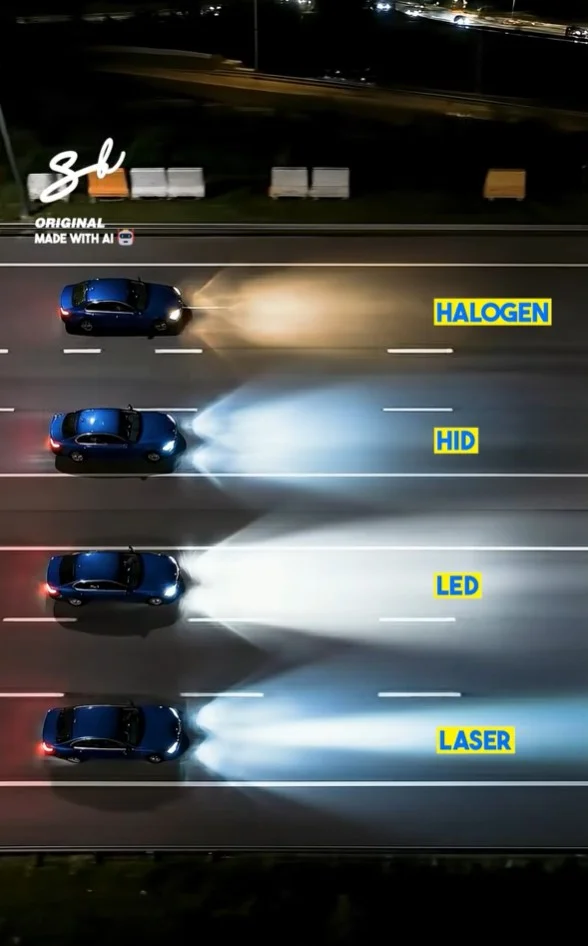
Автомашины гэрэлтүүлгийн технологийн дэвшил нь зам дээрх харагдах орчныг сайжруулсан ч хэт тод тусгал нь бусад жолооч нарын аюулгүй байдалд сөргөөр нөлөөлж байна.
Галоген гэрэл нь 120 метр, HID буюу ксенон гэрэл нь 200 метр, LED гэрэл нь 300 метр хүртэлх замыг гэрэлтүүлдэг бол лазер гэрэл нь 600 метр хүртэлх зайд тусдаг байна. Технологийн энэхүү дэвшил нь шөнийн цагаар үзэгдэх орчныг эрс сайжруулж байгаа хэдий ч лазер гэрлийн хэт тод тусгал нь эсрэг урсгалын жолооч нарыг түр зуур сохлох эсвэл толгой эргүүлэх зэрэг аюултай нөхцөл байдлыг үүсгэж байна.
Их Британид хийсэн судалгаагаар жолооч нарын дөрөвний нэг нь шөнийн цагаар автомашин жолоодохоос татгалзаж, 75 хувь нь гэрлийн хэт тод байдлаас шалтгаалан шөнө явах нь багасжээ. Ийнхүү жолооч нарын тав тух алдагдах болсонтой холбогдуулан Британийн засгийн газар автомашины гэрлийн тод байдлыг зохицуулах асуудлыг хянаж эхлээд байна.
Автомашины гэрэлтүүлгийн түүх 1880-аад оны ацетилен ба тосон дэнлүүгээр эхэлж, 1898 онд цахилгаан гэрэлд шилжсэн байна. Улмаар 1939 онд битүүмжилсэн гэрлийн блок, 1962 онд галоген, 1991 онд HID ксенон, 2000-аад оны дунд үеэс LED технологиуд тус тус нэвтэрч, өнөөдрийн лазер гэрлийн түвшинд хүрчээ.
Дэлгэрэнгүйг эх сурвалжаас харах
↓Эх сурвалжийг нээх ↓
This is the difference between halogen, xenon, LED, and laser headlights, and it shows why the latter are so hated.
Modern car headlights are a huge talking point, as they seem to get brighter and brighter as time goes on.
We’re a world away from the dimmer lights of the 1980s and 1990s, and many people really don’t like modern lighting.
We created a video showing just how bright modern headlights can be.
Just how bright are modern headlights?
Our video simulated halogen, HID, LED, and laser lights on four cars, with a top-down view showing the differences.
It is easy to see just how far they have come over the years.
The halogen lights in particular are quite dim and weak, and they emit a faint yellow glow from the front of the car.
Next to that, we have HID (xenon) headlights, and there is a clear improvement over the original halogen lights.
They now emit a whiter light, and it reaches much farther than the halogen ones that came before.
LED headlights are a great middle ground
Following the HID headlights came LEDs, and most of us will have been used to them over the years.
These, as you can see in our video, go further than HID lights, are much brighter, and emit even more of a white glow.
The beauty of them is that they are not blindingly bright.
The FE Motorworks graphic shows the differences in how far they reach.
Halogen lights can reach up to 120 metres in front, with HIDs reaching 200 metres.
LED headlights can go 300 metres in front.
It is when we get to laser headlights that things really ramp up.
Laser headlights are incredibly bright
The biggest advantage of laser headlights is the distance that they can reach.
According to FE Motorworks, they can shine ahead up to 600 metres, a huge leap over LED lights.
As the graphic and our video show, though, this can cause serious problems.
The brightness can cause dizziness for those who are driving the other way.
It can also completely blind them for a few seconds and potentially lead to an accident.
In fact, in the UK, it has become a huge issue.
Bright lights have caused havoc in the UK
One in four drivers in the country are now avoiding driving at night at all.
Added to that is the fact that 75 percent of UK drivers are just driving less at night in general for the same reason.
Drivers have stated it has become uncomfortable for them to get around at night, thanks to the glare from laser headlights.
It has led to the British government reviewing whether it should regulate the brightness of car lights.
This could bring the problem under control and ease driver discomfort.
So while modern technology can be great, it doesn’t appear to be in this instance.
Headlight technology timeline
Late 1880s: Acetylene and Oil Lamps — The earliest forms of night illumination for vehicles relied on burning gas or oil, with acetylene being favored because its flame effectively resisted wind and rain
1898: First Electric Lamps — The Columbia Electric automobile became the first to feature electric front lighting, paving the way for systems that would become standard across the industry a decade later
1912: Integrated Electrical Systems — Cadillac launched a modern-style automotive electrical network, seamlessly combining the ignition and forward illumination into one cohesive battery-powered setup
1939: Sealed Beam Units — Engineers introduced a unified design that fused a tungsten filament, curved reflector, and glass lens together to project a significantly more focused ray of light
1962: The Halogen Era — A European consortium developed vehicle-mounted halogen bulbs, which reacted with tungsten to produce highly durable and intense visibility for nighttime driving
1991: High-Intensity Discharge (xenon) — Automakers began equipping luxury models with HID units that created an electrical arc through xenon gas, resulting in a brilliant white glow that easily outlasted previous technologies
Mid-2000s: The Rise of LEDs — Light-emitting diodes revolutionized automotive design by offering highly efficient, compact, and intensely bright forward vision without relying on fragile internal filaments


