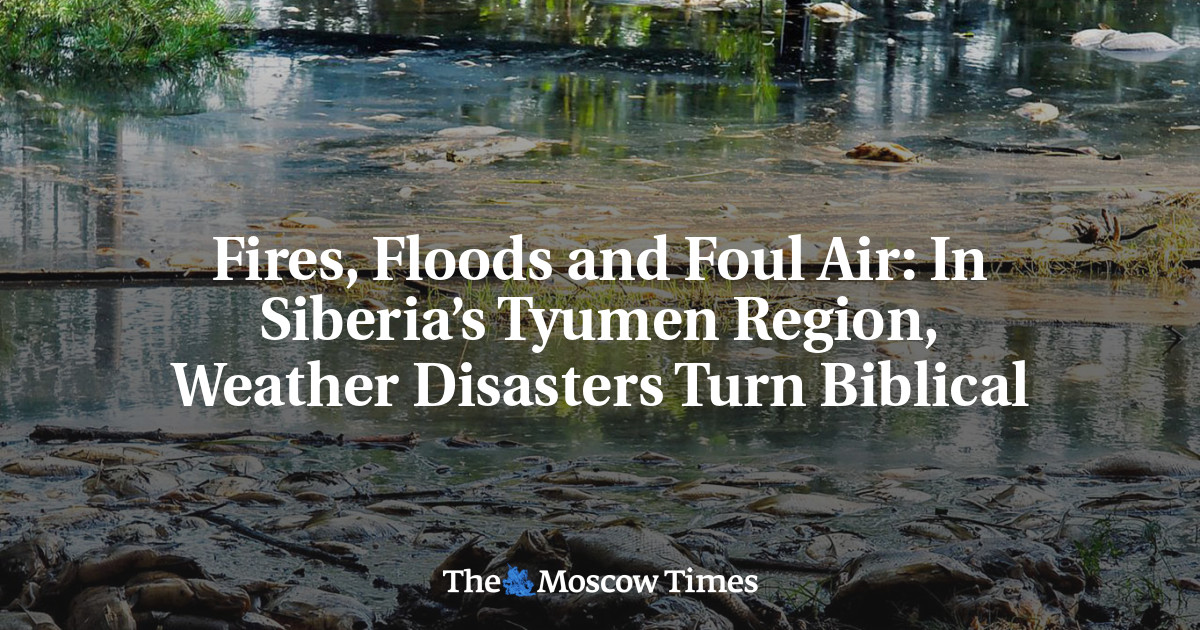
Уур амьсгалын өөрчлөлтөөс үүдэлтэй үер болон ойн түймэр ОХУ-ын Тюмень мужийн дэд бүтэц, оршин суугчдын амьдралд ноцтой хүндрэл учруулж байна.
Тюмень хотод зургаа, долдугаар сард үргэлжлэн орсон аадар борооны улмаас Тура голын усны түвшин 1979 оноос хойш үзэгдээгүй өндөр буюу 8.96 метрт хүрчээ. Үерийн улмаас голын ус бохирдож, загас олноор үхсэний зэрэгцээ иргэдийн ахуйн хэрэглээний уснаас эвгүй үнэр гарах болсон тул долдугаар сарын 28-нд тус бүс нутагт онцгой байдал зарласан байна. Хэдийгээр хяналтын байгууллагууд усны чанар аюулгүй гэж мэдэгдсэн ч иргэдэд усаа буцалгаж хэрэглэхийг зөвлөжээ.
Үүний зэрэгцээ Тюмень мужийн хойд хэсэг болох Ямал-Ненецийн автономит тойрогт агаарын температур огцом нэмэгдэж, ойн түймэр газар авснаар 37 мянга гаруй тагын ойн талбай шатжээ. Бүс нутгийн удирдлагууд долдугаар сарын 30-нд онцгой байдал тогтоож, гал түймэртэй тэмцэх ажилд 600 гаруй хүнийг дайчлан ажиллаж байна.
Байгаль орчны шинжээчдийн үзэж буйгаар Тюмень мужид нэгэн зэрэг ажиглагдаж буй үер болон түймэр нь уур амьсгалын тогтолцооны тэнцвэр алдагдсаны илрэл юм. Азийн бүс нутгаас ирсэн халуун агаарын урсгал Арктикийн бүс рүү нэвтэрсэн нь цаг уурын хэвийн бус үзэгдэл болж, хотын дэд бүтэц ийм төрлийн эрс тэс нөхцөлд бэлтгэлгүй байгааг харуулж байна.
Мэргэжилтнүүд Тюмень хотын ус хангамжийн асуудлыг шийдвэрлэхийн тулд гадаргын усны оронд Баруун Сибирийн гүний усны эх үүсвэрийг ашиглах шаардлагатайг анхаарууллаа. ОХУ-д энэ жил ойн түймэрт 4 сая гаруй га талбай өртөж, олон бүс нутагт үер, шуурга зэрэг байгалийн гамшиг давтагдаж байгаа нь улсын хэмжээний дэд бүтцийн даацад сорилт болж байна.
Дэлгэрэнгүйг эх сурвалжаас харах
↓Эх сурвалжийг нээх ↓
Tyumen, one of Siberia’s largest cities, made national headlines in July when flooding along the local Tura River began to resemble scenes of a biblical plague.
Unusually heavy rain fell nearly every day in June and July, pushing the river to 8.96 meters (29.4 feet) by early August, just below the 9.15-meter record set in 1979. As the water rose, local residents complained of an unbearable stench coming from the river and reported seeing scores of dead fish washed ashore.
“I suffocate every night and have to shut the windows,” Tyumen resident Svetlana told the Radio Free Europe/Radio Liberty news agency.
“[Once] I ran out to the street at 1 a.m. looking for a place to breathe. I live across the river and the smell here is worse than anywhere else [in the city],” she told the outlet in July, when daytime temperatures in Tyumen soared to a record-breaking 30 degrees Celsius. “I found some air downtown, away from the river, where I sat on a bench and walked to catch my breath.”
A worker involved in cleanup efforts along the banks of the Tura River in the city of Tyumen.
Maxim Afanasyev / VKontakte
At the same time, record heat and wildfires have gripped the Tyumen region’s Arctic north, illustrating what one environmental expert described as increasingly severe and sharply contrasting weather extremes driven by climate change.
Tap water in the city of more than 800,000 people, much of which is sourced from the Tura, also began to smell of sewage and rotten eggs. Some residents reported developing rashes and symptoms of food poisoning after using it for cooking and basic hygiene.
Regional authorities declared a state of emergency in Tyumen and the surrounding district on July 28, nearly two weeks after the complaints about water quality first appeared in local media.
Though state consumer protection watchdog Rospotrebnadzor said that the smell and taste of Tyumen’s tap water complied with all safety requirements, it nevertheless advised residents to boil the water before drinking it or switch to bottled water.
Last week, authorities saidthat utility services collected nearly 1 metric ton of dead fish in just two days of an ongoing cleanup along the Tura’s banks.
“The main reason for this disaster was the low concentration of oxygen in the water,” a Russian environmental analyst told The Moscow Times, speaking on condition of anonymity for safety reasons.
Though spring floods are common in the Tyumen region, prolonged summer flooding of vast vegetated areas has “never happened in the historical record of meteorological observations,” the expert said.
“This vegetation … was underwater for a long time, for almost two months. As a result, oxidation processes began and the oxygen in the water disappeared due to the rotting of this organic matter. … The fish had nothing to breathe,” they said, adding that waste from local factories may have further degraded the floodwater.
Tyumen lies on the West Siberian Plain in a region that has one of the most complex administrative divisions in Russia, with two vast, resource-rich indigenous federal subjects, the Yamalo-Nenets and Khanty-Mansi autonomous districts, incorporated into the wider Tyumen region.
Together, the three areas have a population of nearly 4 million spread across a territory roughly the size of Mongolia.
While residents of the Tyumen region capital and surrounding areas in the south battled the summer floods that displaced dozens of people, more than 600 people joined efforts to contain record-breaking wildfires in the northern Yamalo-Nenets district.
Governor Dmitry Artyukhov imposed a district-wide state of emergency on July 30, when the area destroyed by fires already exceeded 12,000 hectares.
Fueled by record temperatures and dry thunderstorms, the fires had engulfed more than 37,000 hectares of virgin taiga forest in the southern part of the district as of Wednesday, according to Russia’s Aerial Forest Protection Service.
“We’re set to break recent records for the number of fires and the size of the area affected,” Artyukhov said earlier this month. “Fortunately, so far they’re all far from populated areas and economic facilities. However, we’re still receiving smoke complaints from a number of our cities and towns.”
The two contrasting weather extremes that struck the same Russian region this summer were both consequences of climate change, the environmental expert said.
While a weather system brought moist air and unusually heavy rainfall to the region’s south, warm air from Central Asia pushed deep into the Arctic, affecting the northern Yamalo-Nenets autonomous district.
“The penetration of such air masses into the Arctic is an anomaly and also an indicator of the imbalance of our climate system and a restructuring of the entire climatic order to which we are accustomed,” the expert said.
Russia experienced its hottest July since records began in 1891, a result that meteorologists attributed to very high temperatures in the eastern Volga region, the Urals and Siberia as western regions remained“ generally cool.”
Dozens of other regions across Russia have also experienced extreme weather events this year.
t.me/av_moor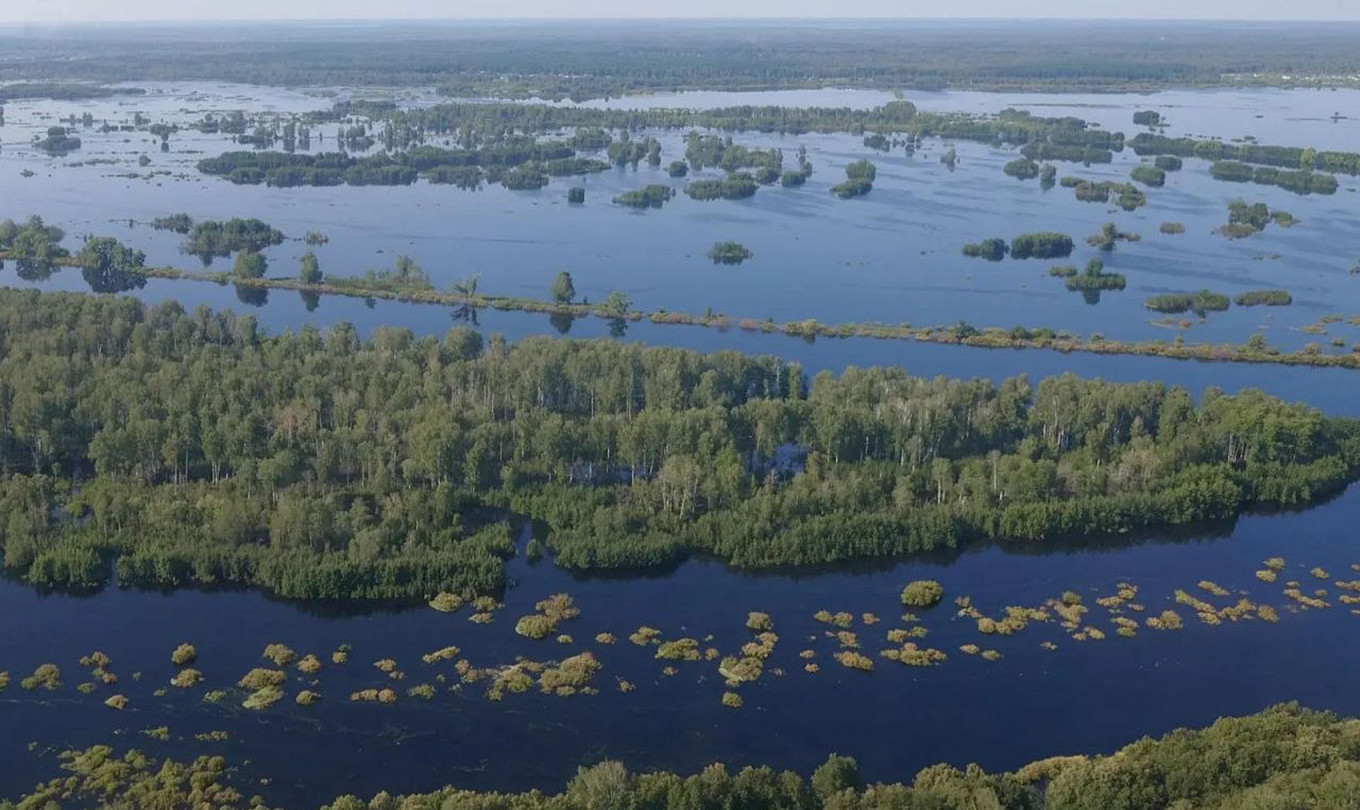
The Sverdlovsk and Chelyabinsk regions are battling prolonged extreme floods, while powerful storms and rare tornadoes swept across dozens of cities and villages in western Russia and the Urals.
Wildfires have destroyed more than 4 million hectares of forest so far this year, with the republic of Sakha and Krasnoyarsk region sustaining the worst destruction by area, according to the Aerial Forest Protection Service.
But as extreme weather events are becoming more prolonged and severe, affecting growing numbers of populated areas, Russia’s urban centers are increasingly being tested by conditions their infrastructure was not designed to withstand.
The anonymous environmental expert said Tyumen could avert similar water crises by drawing its tap water from the West Siberian Artesian Basin, one of the world’s largest, instead of the Tura River.
“Of course, it is necessary to switch the city to underground water supply sources or create resources to allow combining water supply through surface and underground water intake,” the expert said. “We are already living in a different reality, and current urban infrastructures are not designed to cope with such extreme natural and climatic phenomena.”
A Message from The Moscow Times:
Dear readers,
We are facing unprecedented challenges. Russia’s Prosecutor General’s Office has designated The Moscow Times as an “undesirable” organization, criminalizing our work and putting our staff at risk of prosecution. This follows our earlier unjust labeling as a “foreign agent.”
These actions are direct attempts to silence independent journalism in Russia. The authorities claim our work “discredits the decisions of the Russian leadership.” We see things differently: we strive to provide accurate, unbiased reporting on Russia.
We, the journalists of The Moscow Times, refuse to be silenced. But to continue our work, we need your help.
Your support, no matter how small, makes a world of difference. If you can, please support us monthly starting from just $2. It’s quick to set up, and every contribution makes a significant impact.
By supporting The Moscow Times, you’re defending open, independent journalism in the face of repression. Thank you for standing with us.
Continue

Not ready to support today?
Remind me later.
×
Remind me next month
Thank you! Your reminder is set.
We will send you one reminder email a month from now. For details on the personal data we collect and how it is used, please see our Privacy Policy.

