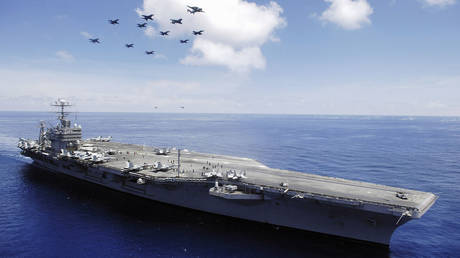
АНУ-ын тэнгисийн цэргийн хүчний “USS Abraham Lincoln” хөлөг онгоцны багийнхан удаан хугацааны үүрэг гүйцэтгэсний улмаас сэтгэл зүйн ядаргаанд орж, хүнс болон өдөр тутмын хэрэгцээт зүйлсийн ноцтой дутагдалд орсон талаар мэдээлэл гарч байна.
“Nimitz” ангиллын цөмийн хөдөлгүүртэй тус хөлөг онгоц 260 гаруй хоногийн турш үүрэг гүйцэтгэж байгаа бөгөөд үүний 200 гаруй хоногийг далайд тасралтгүй өнгөрүүлжээ. Багийн гишүүдийн ар гэрийнхэн болон АНУ-ын хууль тогтоогчдын зүгээс хөлөг онгоцон дээрх нөхцөл байдал, тухайлбал, ундны усны хомсдол, эвдэрхий сантехник, хоол хүнсний чанар муудсан зэрэг асуудлаар хариулт нэхэж эхэлсэн байна. АНУ-ын Батлан хамгаалах яамны сайд Пит Хегсет нөхцөл байдлыг буруугаар тайлбарлаж байна хэмээн няцаасан боловч Сенатын зүгээс хөлөг онгоцны үйл ажиллагааг шалгахыг уриалжээ.
Ираны зүгээс тус хөлөг онгоцыг олон удаа онилон цохилт өгсөн гэж мэдэгдэж байгаа боловч АНУ-ын Төв командлал (CENTCOM) үүнийг үгүйсгэж, хөлөг онгоц байлдааны үүргээ бүрэн гүйцэтгэх чадвартай хэвээр байгаа гэж мэдэгдлээ. Гэсэн хэдий ч наймдугаар сарын 3-нд нэгэн цэрэг хөлөг онгоцноос далай руу үсэрсэн хэрэг гарсан нь багийнхны сэтгэл зүйн дарамт ихэссэнийг харуулж байна хэмээн шинжээчид үзэж байна.
Одоогийн байдлаар АНУ-ын тэнгисийн цэргийн хүчин “USS Abraham Lincoln”-ыг солихоор “USS George Washington” хөлөг онгоцыг Ойрхи Дорнод руу илгээж байна. Энэхүү шилжилт нь БНХАУ-тай үүсээд буй геополитикийн хурцадмал байдлын дунд Номхон далай дахь АНУ-ын цэргийн оролцоог сулруулж болзошгүй гэсэн болгоомжлолыг дагуулж байна.
Дэлгэрэнгүйг эх сурвалжаас харах
↓Эх сурвалжийг нээх ↓
The crew of USS Abraham Lincoln is reportedly suffering from extreme mental exhaustion, supply failures, and combat pressure after months of deployment
The USS Abraham Lincoln has been grappling with dismal conditions for months during the US-Israeli war on Iran, amid mounting reports of severe exhaustion, supply shortages, and mental-health problems among crew members. The problems have sparked an uproar among crew members’ families and prompted demands for answers from US lawmakers.
The vessel, a 5,000-person nuclear-powered Nimitz-class aircraft carrier capable of carrying up to 90 aircraft and conducting more than 100 combat sorties a day at peak capacity, left San Diego in late November. It has now been deployed for more than 260 days, including more than 200 consecutive days at sea – an extraordinary stretch by Navy standards.
On top of that, the flattop has spent much of that time in a combat environment, with Iran claiming to have targeted it on numerous occasions. Even as US officials insist the carrier remains operational, the hardships of a prolonged campaign appear to be taking their toll.
Here is what we know about the issues facing the aircraft carrier and its crew.
What are conditions like aboard the Abraham Lincoln?
The complaints from crew members and their families go well beyond the usual discomforts of a long deployment.
They include shortages of toothpaste, deodorant, and soap, problems with hot and potable water, broken toilets, unreliable laundry facilities, disruptions to food supplies, and mail delays so severe that some care packages reportedly disappeared into the system for months. Other reports describe mold, failing plumbing, and holes worn through parts of the flight deck from extensive use without adequate repairs.
Democratic Congressman Mike Levin claimed that the food situation is so bad that crew members’ meals “came down to half a cup of rice and two tortillas.” The meager meals were first reported by USA Today as early as mid-April, although the Pentagon denied that there were food shortages at the time.
The USS Abraham Lincoln has been at sea for more than 250 days, pushing its crew to the limit. Sailors report exhaustion, deteriorating living conditions, shortages of basic supplies and serious food problems: small portions, poor-quality meals and periods of depleted stocks. The… https://t.co/iWYaeKchzUpic.twitter.com/C4cheR4N2M
— Tom Antonov (@Tom_Antonov) August 13, 2026
According to Maritime Executive, the supply problems are partly due to logistics, as the main base of the 5th Fleet is located in Bahrain, deep inside the Persian Gulf, meaning many shipments must pass through the Strait of Hormuz and risk Iranian strikes.
Is the crew burning out?
There are strong indications that it is. One of the most striking episodes confirmed by CENTCOM occurred on August 3, when a sailor went overboard from the Abraham Lincoln and was recovered roughly an hour later.
🚨🇮🇷🇺🇸 Text messages from a sailor aboard the USS Abraham Lincoln reveal no milk in three months and ROTTEN food arriving at sea…
He reportedly wrote that almost nothing fresh makes it out except meat, because only frozen goods survive the supply run, and called it the worst… pic.twitter.com/ylCgsHap26
— Mario Nawfal (@MarioNawfal) August 13, 2026
Citing US officials, CNN reported that the Navy treated the incident as a mental-health episode, adding that the sailor was medically evaluated and later removed from the ship for further care.
Annabelle Loma, the serviceman’s wife, told Navy Times that her husband had become emotionally exhausted and confirmed that he had attempted to take his own life by jumping overboard. She added that he seemed “scared” and was afraid he would receive “a dishonorable discharge, and just because he was burnt out.”
At a meeting with Navy leaders, another spouse said her husband had sent a message saying he hoped he “doesn’t wake up tomorrow,” according to Stars and Stripes.

Other families have also sounded the alarm over the physical and mental exhaustion after months of long shifts, warning that such levels of fatigue could lead to deadly mistakes.
“The morale is not good,” one family member said, as cited by MS Now. “Apparently, the ship’s doctor or therapist said they need to hit port soon, or people are going to start, you know, losing their minds.”
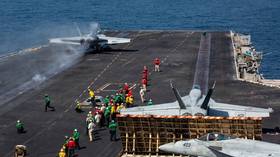
The Navy, however, has pushed back against such concerns, telling CNN that “we have not observed an increase in suicidal ideations or attempts aboard the ship.”
Could stress on the flattop lead to violence?
Citing an unnamed “informed military source,” Iranian news agency Tasnim reported earlier this month that seven US Navy personnel had been killed and several others wounded in a violent confrontation aboard the USS Abraham Lincoln.
According to the report, an adviser to CENTCOM, commander Adm. Brad Cooper, boarded the carrier to address complaints about the prolonged deployment but was booed and pelted with water bottles before the confrontation escalated into a knife fight.
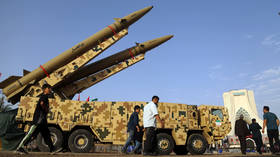
CENTCOM denied the allegation, saying that no crew members aboard the carrier had died during the Iran war.
How much pressure has Iran put on the Abraham Lincoln?
Multiple analyses have suggested that Iran, which is militarily inferior to the US, has been relying on attritional warfare to hold its ground and gain concessions from Washington. Kamal Kharrazi, head of Iran’s Strategic Council on Foreign Relations, said Iran was prepared for a “long war” and argued that the longer the conflict continued, the greater the economic pressure on other countries would become.
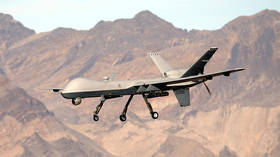
Maj. Gen. Mohammad Jafar Asadi, a former senior commander, described the conflict in July as an “attritional and never-ending war.”
As the conflict has dragged on, Tehran has claimed to have mounted numerous attacks on the Abraham Lincoln. On March 1, Iran announced it had fired four ballistic missiles at the carrier, with CENTCOM saying the missiles “didn’t even come close.” Later that month, Tehran claimed that missiles and drones had struck the vessel, rendering it inoperable and forcing it to withdraw – an allegation also rejected by Washington.
In early April, Iran said it had launched multiple waves of attack drones toward the AbrahamLincoln group in the northern Indian Ocean, forcing it to withdraw.

In July, it claimed to have struck logistics support centers serving US aircraft carriers in Oman, later adding that other targets included “one aircraft carrier refueling platform,” alongside fuel depots, naval stores, aircraft facilities, and other US military infrastructure. On Tuesday, the Iranian military claimed that the US had no warships left in the Persian Gulf region.
While it is unclear whether the Abraham Lincoln sustained any damage during the attacks, it was hardly operating in a benign environment, with CENTCOM reporting roughly 10,000 aircraft flights and the expenditure of about 1.5 million pounds of ordnance during the mission.
What beef do US lawmakers have with the Pentagon?
On Wednesday, a member of the US Senate’s Armed Services Committee, Democratic Senator Richard Blumenthal, published an open letter to Secretary of War Pete Hegseth, raising “serious concerns” about the situation aboard the ship and questioning whether it could sustain continued operations.
“The Lincoln is not an isolated case. Recent carrier deployments have repeatedly stretched beyond their originally anticipated durations, suggesting that extended deployments may be becoming a feature rather than an exception of the Navy’s force-generation model,” he added.
Fellow Senator Ruben Gallego has called for a bipartisan congressional oversight visit to the Abraham Lincoln, casting doubt on Pentagon assurances.
Senate Democratic leader Chuck Schumer has gone further, blaming Hegseth personally and saying sailors are “paying the price” for Pentagon failures. “When Pete Hegseth was nominated, everyone knew he was completely incompetent… Pete Hegseth must be fired immediately,” he insisted.
What does the Pentagon say in response to the accusations?
Hegseth dismissed reports of poor living conditions and food shortages aboard the AbrahamLincoln as “completely misrepresented,” while acknowledging that some deployments could last longer and be tougher than others.
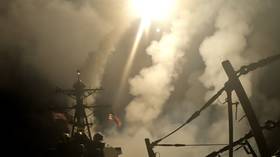
“We make sure that every ship, every crew, every captain, has everything that we can provide them at every single moment,” he added.
Meanwhile, the AP reported that the USS George Washington is now moving toward the Middle East from Vietnam to replace the AbrahamLincoln. The redeployment is expected to weaken the US footprint in the Pacific amid tensions with China, however.
Bottom Line
While the Pentagon insists that the Abraham Lincoln “remains fully capable of meeting all mission tasking,” and there is no credible evidence that Iran managed to cripple the ship, its crew appears to have come dangerously close to the breaking point.
After more than eight months of deployment, the vessel appears to be struggling with logistics and supplies of basic amenities, amid growing concerns over its crew members’ mental health. While the Abraham Lincoln is expected to be relieved soon, its performance raises questions about Washington’s overall ability to sustain effective long-term operations against even a militarily inferior adversary.


