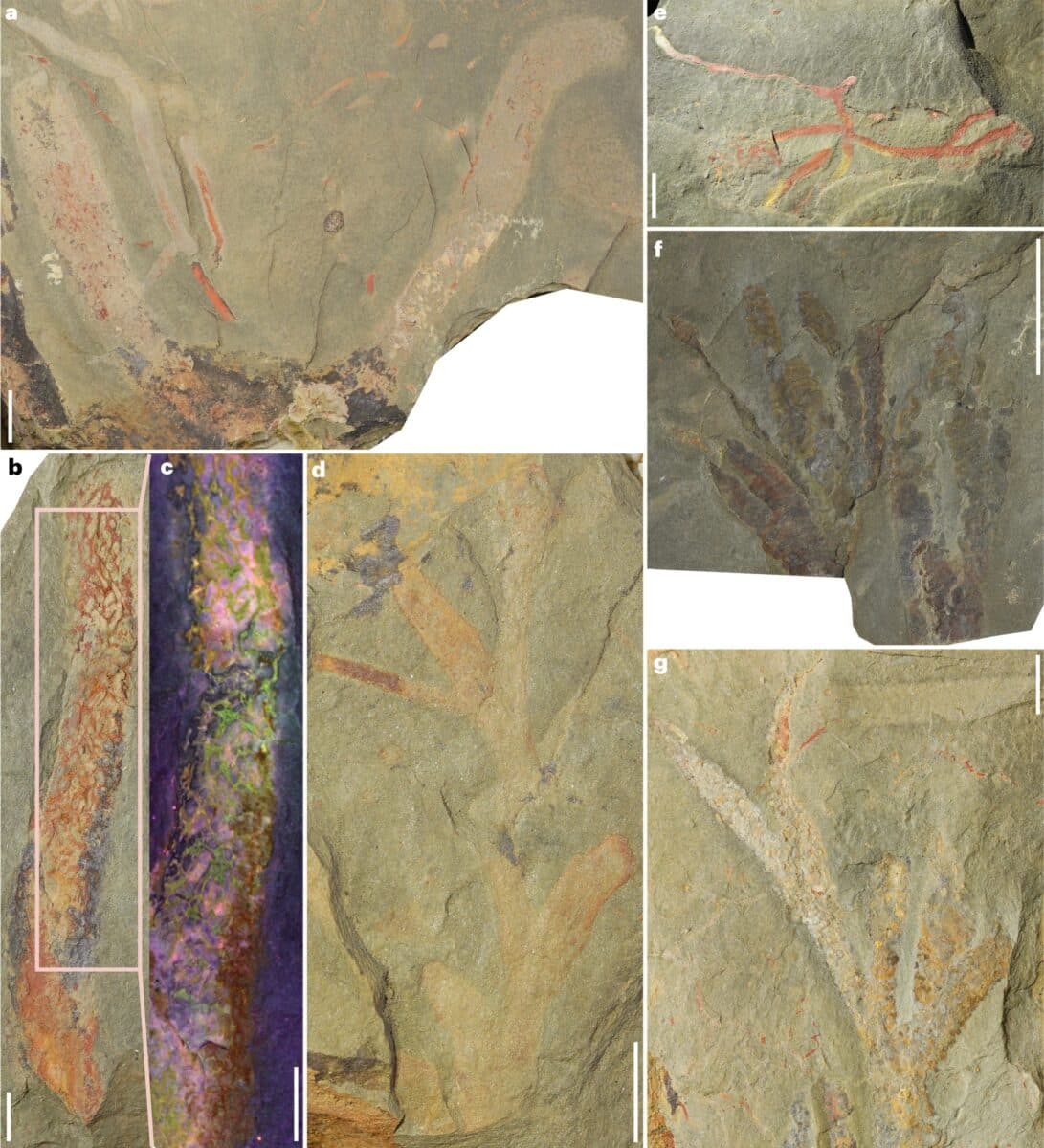
Палеонтологийн сонирхогчид Францын Монтань Нуар бүсээс 470 сая жилийн өмнөх үед хамаарах, далайн экосистемийн олон төрлийн амьтдын чулуужсан олдворуудыг олсон байна.
Францын Эро департаментаас сонирхогч судлаачид болох Эрик Монсере, Сильви Монсере-Гужон нар 400 орчим чулуужсан олдвор илрүүлжээ. Эдгээр олдвор нь Ордовикийн эриний эхэн үед хамаарах бөгөөд зөвхөн бүрхүүл төдийгүй хоол боловсруулах систем, арьсан бүрхүүл зэрэг зөөлөн эдүүд нь гайхалтай хадгалагдан үлдсэнээрээ онцлог юм. Лозанны их сургууль болон олон улсын эрдэмтдийн баг хамтран хийсэн судалгаагаар эдгээр олдворт үе хөлтөн, хорхой хэлбэртэн, хөвөн биетэн болон замаг зэрэг олон төрлийн организм багтаж байгааг тогтоожээ.
Судалгааны үр дүнгээс үзэхэд тухайн үед Францын өмнөд хэсэг нь Өмнөд туйлын бүсэд байрлаж байсан аж. Эрдэмтэд тус бүс нутгийг экваторын халуун бүсээс зугтсан амьтдын хувьд цаг уурын тааламжтай нөхцөлийг бүрдүүлсэн хоргодох байр байсан хэмээн таамаглаж байна. Энэхүү нээлт нь тухайн үеийн далайн экосистемийн бүтэц, дэлхийн уур амьсгалын өөрчлөлт амьтдын тархалтад хэрхэн нөлөөлж байсныг ойлгоход чухал ач холбогдолтой юм.
Одоогоор судлаачид уг олдворуудын анатомийн бүтэц, амьдралын хэв маягийг илүү нарийвчлан судлахаар төлөвлөж байна. Цаашид хийх томоохон хэмжээний малтлага болон шинжилгээ нь эдгээр эртний организмын харилцан хамаарлыг тодруулахад чиглэх аж. Энэхүү олдвор нь Ордовикийн үеийн хамгийн баялаг, олон янзын төрөл зүйл бүхий олдворын цэгүүдийн нэгд тооцогдож байна.
Дэлгэрэнгүйг эх сурвалжаас харах
↓Эх сурвалжийг нээх ↓
Nearly 400 fossils dating back 470 million years have been uncovered in southern France, with some preserving remarkably delicate soft tissues. The Cabrières Biota captures a diverse ecosystem that once existed near the South Pole, including trilobites, sponges and other ancient marine organisms.
The fossils were found in the Montagne Noire, in France’s Hérault department, by amateur paleontologists Eric Monceret and Sylvie Monceret-Goujon. The pair had been hunting fossils for decades, but this particular site was different. Alongside shells and other hard remains, they uncovered specimens preserving digestive systems and cuticles.
The discovery was then studied by scientists at the University of Lausanne (UNIL), together with the CNRS and international teams. Their findings, published in Nature Ecology & Evolution, identify Cabrières as one of the richest and most diverse fossil sites known from the Lower Ordovician, a period dating back roughly 470 million years.
Fossils That Kept Their Soft Parts For 470 Million Years
Ancient shells are common in the fossil record, but soft tissues are a much rarer find. Their preservation at Cabrières is one of the features that makes the site unusual. Researchers identified arthropods, a group that includes modern shrimps and millipedes, as well as cnidarians, the group containing jellyfish and corals. The deposit also holds large numbers of algae and sponges, creating a varied picture of the organisms sharing this ancient environment.
As mentioned in the latest study, the researchers also identified a wide variety of organisms, including arthropods, cnidarians, brachiopods, gastropods, algae and sponges. Among the fossils described are a trilobite belonging to the genus Ampyx, gastropods associated with a tube-like structure probably belonging to Sphenothallus, and a hyolith with possible internal organs. Articulated brachiopods were also found attached to what researchers identified as a possible leptomitid sponge.
The assemblage shares some of its fauna with another well-known Ordovician deposit, the Fezouata Formation.
“Alongside archaic arthropods such as trilobites, brachiopods, cnidarians and gastropod mollusks, all of which are also found in the Fezouata geological formation, the Cabrières Biota stands out for its abundance of large sponges and branching algae,” said Christophe Dupichaud, a doctoral researcher at LGL-TPE who took part in the site’s latest field study in October 2023, in a statement.
These Creatures Once Lived Close to the South Pole
The location comes with a geological surprise. What is now southern France was positioned very differently when these organisms were alive. Around 470 million years ago, the Cabrières ecosystem lay very close to the South Pole. Its rich collection of organisms therefore provides a look at some of the southernmost ecosystems known from the Ordovician.
The researchers link the site’s high biodiversity to the climate conditions of the period. They propose that these high-latitude waters served as a refuge for species escaping extreme temperatures closer to the equator.
“At this time of intense global warming, animals were indeed living in high latitude refugia, escaping extreme equatorial temperatures,” explained Farid Saleh, a researcher at the University of Lausanne and first author of the study.

Study co-author Jonathan Antcliffe went a little further when discussing what such an ancient ecosystem can tell us. “The distant past gives us a glimpse of our possible near future,” he said.
Two amateur fossil hunters made the discovery
Behind the scientific study are two people who had already spent much of their lives looking for fossils. Eric Monceret and Sylvie Monceret-Goujon began prospecting when they were young and kept at it for decades.
“We’ve been prospecting and searching for fossils since the age of twenty,” Monceret said. Finding Cabrières was clearly not just another day in the field. “When we came across this amazing biota, we understood the importance of the discovery and went from amazement to excitement,” Monceret-Goujon recalled.

The discovery is far from fully explored. Large-scale excavations and more detailed analyses are planned, with researchers hoping to get a closer look at the organisms’ internal and external anatomy, their relationships and their way of life.
Enjoyed this article? Subscribe to our free newsletter for engaging stories, exclusive content, and the latest news.


