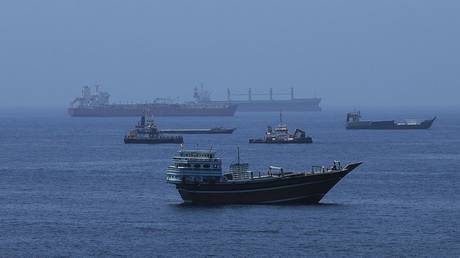
АНУ болон Ираны хоорондох мөргөлдөөний улмаас стратегийн ач холбогдолтой Хормузын хоолойгоор дамжин өнгөрөх тээвэрлэлт хүндэрсэн ч Персийн булангийн орнууд газрын тосны нийлүүлэлтээ нууцаар үргэлжлүүлсээр байна.
Блүүмберг агентлагийн мэдээлснээр, Арабын Нэгдсэн Эмират, Ирак, Катар, Кувейт зэрэг улс газрын тос тээвэрлэхдээ танкеруудынхаа байршил тогтоогч буюу транспондерыг унтраах замаар “далд” тээвэрлэлт хийж байна. Энэхүү аргаар тээвэрлэж буй газрын тосны хэмжээ өдөрт 4 сая баррель давж байгаа бөгөөд далайн тээврийн энэ чиглэлээр дамжин өнгөрөх газрын тосыг Оманы буланд бусад хөлөг онгоц руу шилжүүлэн ачиж байна. Энэ нь газрын тосны үнийн огцом өсөлтийг сааруулахад нөлөөлж, дэлхийн зах зээл дэх үнийг баррель нь 80-90 ам.долларын түвшинд барихад тус дөхөм болж байгаа аж.
Хормузын хоолой дахь нөхцөл байдал хүндэрснээс хойш Абу Дабигийн үндэсний газрын тосны компани (ADNOC)-ийн 23 хөлөг онгоц халдлагад өртөж, нэг далайчин амиа алдан, 20 хүн гэмтжээ. Өнгөрсөн долоо хоногт тус компанийн хоёр хөлөг онгоц халдлагад өртсөний дараа Арабын Нэгдсэн Эмират улс уг халдлагад Ираныг буруутгаж, хоолойг нээлттэй байлгахыг уриалсан байна.
Саудын Араб улс ч мөн тус чиглэлээр тээвэрлэлт хийхээр бэлтгэж байгаа бөгөөд Оманы эрэг орчимд 16 супертанкер байрлуулжээ. Ойрын өдрүүдэд нэмж гурван хөлөг онгоц ирэх төлөвтэй байгаа нь нийт 38 сая баррель газрын тос тээвэрлэх хүчин чадалтай юм. Хэдийгээр аюултай нөхцөл байдал үргэлжилж байгаа ч даатгалын компаниуд Персийн булангийн олборлогчдоос даатгалын хүсэлт тогтмол ирж байгааг тэмдэглэжээ.
Дэлгэрэнгүйг эх сурвалжаас харах
↓Эх сурвалжийг нээх ↓
Tankers sailing with transponders off are reportedly helping prevent a sharper oil-price surge by moving crude through the disrupted strait
Gulf states are covertly shipping oil through the Strait of Hormuz on tankers with their transponders switched off despite severe disruptions to normal traffic and intermittent attacks, Bloomberg reported on Sunday, citing people familiar with the shipments.
The de facto closure to normal traffic through the strait due to the US-Iran conflict has affected a strategic waterway that has historically been the route for around a quarter of the world’s seaborne oil trade. The conflict initially sent global oil prices soaring to nearly $120 a barrel. Some energy experts have warned that oil prices could reach $150 over the coming months.
The volumes shipped through the heavily disrupted passage exceed market estimates of 4 million barrels per day, people familiar with the matter told Bloomberg on condition of anonymity, without specifying by how much. The UAE, Iraq, Qatar, and Kuwait have reportedly been moving barrels through Hormuz using “dark” tanker transits, with crude later transferred to other vessels in the Gulf of Oman.
The combination of covert shipments, pipeline workarounds, stockpile releases, and reductions in demand across the world has helped keep oil prices in the $80-$90-a-barrel range, according to traders and analysts cited by Bloomberg.
The risks remain significant, with ADNOC telling Bloomberg that 23 of its vessels have come under attack since the US-Iran conflict began, leaving one crew member dead and 20 others injured. Last week, ADNOC reported that two of its vessels came under attack in Hormuz, with all crew members reported safe. UAE authorities blamed Iran for the attacks, calling on Tehran to reopen the strait.
Saudi Arabia also appears to be preparing to use the route, with 16 supertankers positioned off Oman’s coast and three more expected in the coming days, the news agency noted, adding that the vessels can carry up to 38 million barrels of oil.
Insurers say they are seeing a steady stream of requests for coverage from Gulf producers despite the dangers. “It’s a dark trade,” Pankaj Khanna, CEO of Heidmar Maritime Holdings, told Bloomberg, describing it as the only option even as many shipowners remain unwilling to take the risk.
You can share this story on social media:



