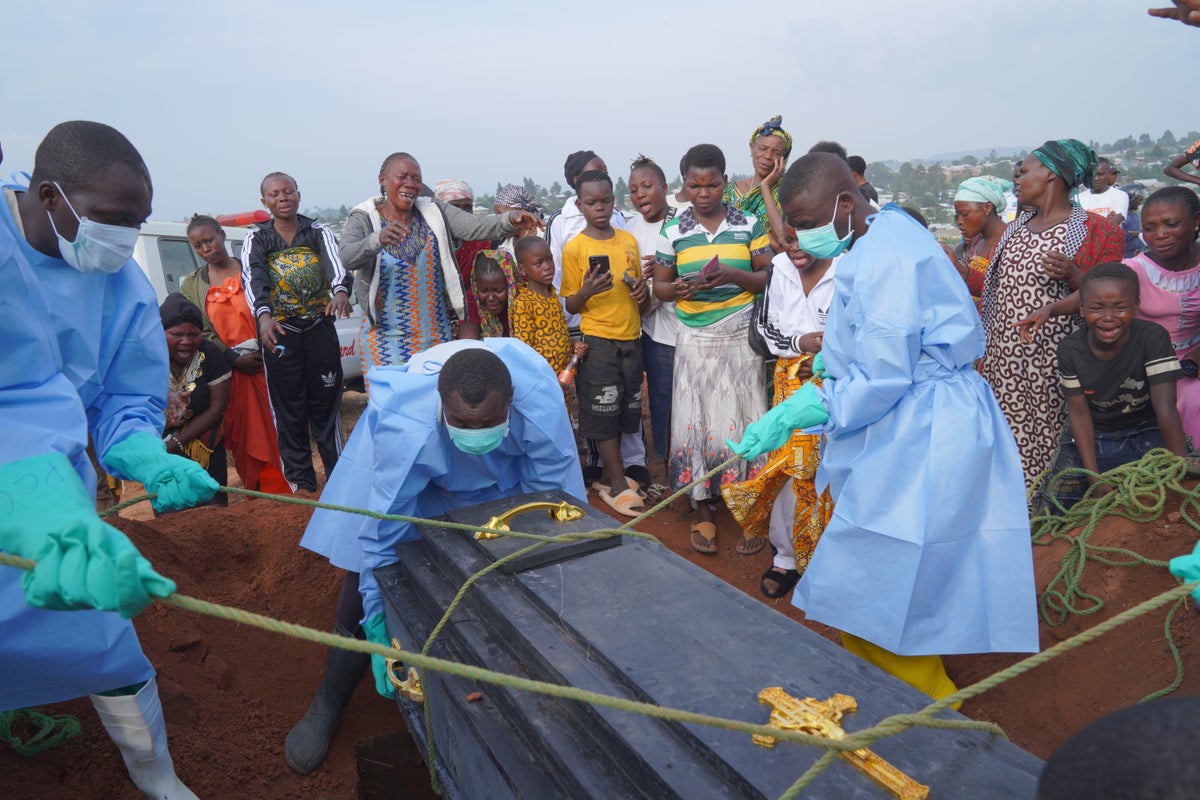
Халдвар тархалтын хурдац эрчимжиж, сүүлийн гурван долоо хоногт нас баралтын тоо хоёр дахин нэмэгдлээ.
Бүгд Найрамдах Ардчилсан Конго Улсад (БНАКУ) бүртгэгдсэн Эбола вирусийн дэгдэлт тус улсын түүхэн дэх хамгийн өндөр эрсдэлтэй халдварт тооцогдож байна. НҮБ-ын мэдээлснээр, 13 долоо хоногийн хугацаанд 4,945 хүн халдвар авч, 2,325 хүн нас баржээ. Одоогоор халдвар авсан иргэдийн нас баралтын түвшин 46 хувьд хүрээд байгаа нь өвчин улам бүр аюултай болж байгааг харуулж байна.
НҮБ-ын Хүмүүнлэгийн асуудал эрхэлсэн тэргүүн Том Флетчер тус улсад вирусийн тархалтыг зогсоохын тулд олон улсын хамтын ажиллагаа, яаралтай арга хэмжээ авах шаардлагатайг онцолсон байна. Одоогийн байдлаар халдвар авсан тохиолдлууд Өмнөд Суданы хилээс ердөө 35 км-ийн зайд орших худалдааны төвд бүртгэгдсэн нь хил дамнасан тархалтын эрсдэлийг нэмэгдүүлж байна.
Дэлхийн эрүүл мэндийн байгууллагын ерөнхий захирал Тедрос Адханом Гебрейесус уг дэгдэлт нь 2014-2016 онд Баруун Африкт гарсан томоохон хямралыг давах магадлалтайг анхааруулав. Энэхүү дэгдэлт нь Хойд болон Өмнөд Киву зэрэг мөргөлдөөнтэй бүс нутгуудад илүү хүнд тусч байгаа бөгөөд эрүүл мэндийн дэд бүтэц сул, олон улсын тусламжийн санхүүжилт тасалдсан нь нөхцөл байдлыг улам хүндрүүлж байна.
БНАКУ-д Эбола вирусээс гадна улаанбурхан, холер, хумхаа зэрэг бусад халдварт өвчин нэмж бүртгэгдсэн нь тус улсын эрүүл мэндийн тогтолцоонд асар их ачаалал үүсгээд байна. Одоогоор Бундибугио хэмээх ховор омгийн вирусээр үүсгэгдсэн энэ дэгдэлтэд зориулсан батлагдсан эмчилгээ, вакцин байхгүй байгаа бөгөөд зөвхөн туршилтын шинж чанартай эмчилгээнүүдийг хийж байна.
Дэлгэрэнгүйг эх сурвалжаас харах
↓Эх сурвалжийг нээх ↓
The Ebola outbreak in the Democratic Republic of the Congo (DRC) has become the deadliest in the country’s history, surpassing the death toll from a previous two-year outbreak in just 13 weeks.
It is killing a victim every 30 minutes, the United Nations has said, with at least 2,325 people dead and 4,945 confirmed infections.
The outbreak was already the fastest growing on record anywhere, but the death toll has doubled in around three weeks. It has surpassed the DRC’s worst on record, which killed almost 2,300 people between 2018 and 2020.
It is also spreading significantly quicker than the worst Ebola crises ever, the West African Ebola outbreak of 2014 to 2016, which killed more than 11,000 people. That outbreak took a year to reach 2,000 deaths.
“Ebola is winning in the Democratic Republic of the Congo. We cannot let the virus outrun our response,” UN humanitarian chief Tom Fletcher said on Friday. “We need speed, scale, and solidarity before this virus gets even further ahead of us.”
Last week, World Health Organisation Director-General Tedros Adhanom Ghebreyesus warned that at the current pace, the current DRC outbreak is on track to surpass the West Africa crises.
Aid agencies have voiced concern about the risk of cross-border spread, with cases now confirmed in a busy trading hub just 35 kilometres from the border with South Sudan, according to Mercy Corps.
South Sudan is already dealing with conflict, displacement, food insecurity, other disease outbreaks and the lasting effects of repeated flooding, stretching health services and humanitarian resources.

Previous projections by Africa Centres from Disease Control also warned of a likely cross-border spread to the country. A handful of cases were reported in Uganda in May and early June, but it has now declared itself Ebola free.
Caused by the rare Bundibugyo strain, there is no vaccine or treatment. The virus also appears to be becoming more deadly, killing almost one in every two recorded cases, according to government data – the case fatality ratio has risen from about 20 per cent in early June to 46 per cent.
Typically, fatality ratios are expected to fall as contract tracing improves, but cases are being detected late and often only after death, aid agencies say. A small number of experimental vaccines and therapies are being tested.
This is the 17 Ebola outbreak in the DRC and was declared on May 15, although the WHO have said they believe it may have begun in February. It has hit conflict-impacted regions such as North and South Kivu, where the presence of the state is weak and health infrastructure is lacking.
Response efforts have been hampered by conflict, displacement, weak health infrastructure and abrupt cuts to global aid, such as the decimation of the United States Agency for International Development (USAID) last year.
In tandem, the DRC is dealing with other disease outbreaks, including more than 100,000 suspected measles cases, killing 1,394 between January and mid-July 2026, according to Médecins Sans Frontières. Half were in North and South Kivu.
It also has 35,000 suspected cholera cases and malaria remains a key cause of mortality.
This article has been produced as part of The Independent’s Rethinking Global Aid project

