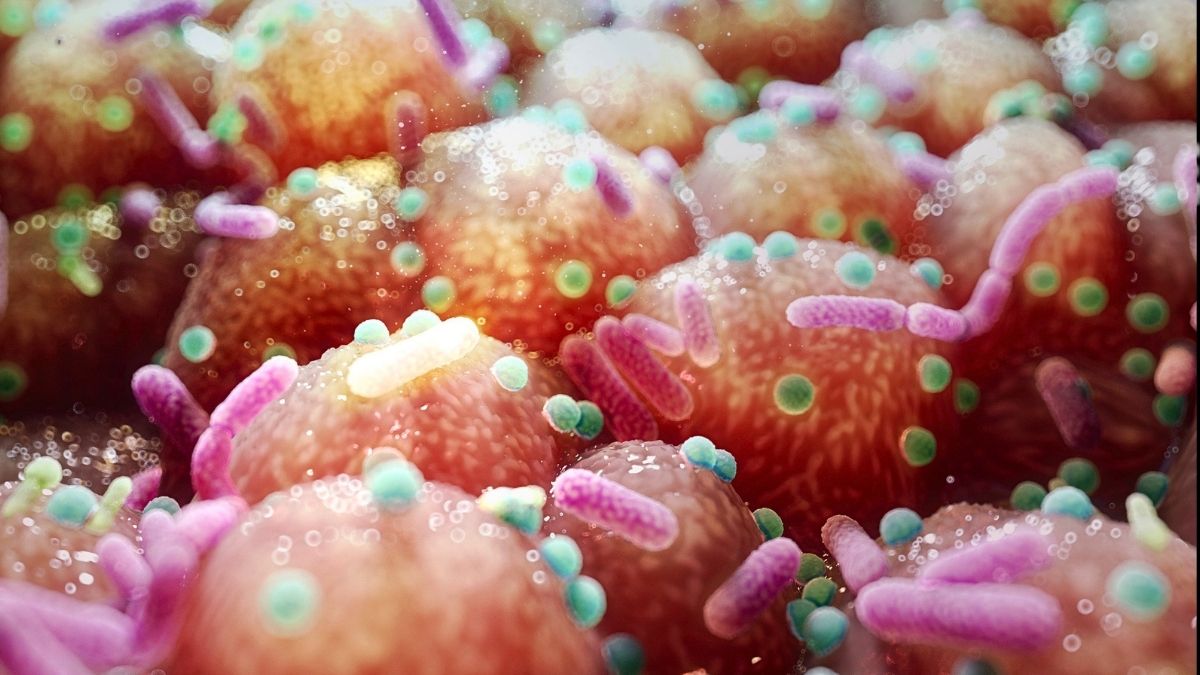
Гэдэсний бактерийн тэнцвэр алдагдах нь Паркинсоны өвчний явцтай холбоотой бөгөөд В аминдэмийн нэмэлт болон өтгөн шилжүүлэн суулгах эмчилгээ нь ирээдүйд эмчилгээний шинэ арга болох боломжтой байна.
Паркинсоны өвчин оношлогдохоос хорь хүртэлх жилийн өмнө өвчтөнд өтгөн хатах, нойрны хямрал зэрэг шинж тэмдэг илэрдэг байна. Нагояагийн их сургуулийн судлаач Хироши Нишивакигийн удирдсан баг 2024 онд Паркинсоны өвчтэй 94 хүн болон эрүүл 73 хүний ялгадсын дээжийг харьцуулан судалжээ. Судалгаагаар өвчтэй хүмүүсийн гэдсэн дэх В2 (рибофлавин) болон В7 (биотин) аминдэмийг нийлэгжүүлдэг бактерийн үйл ажиллагаа алдагдсан болохыг тогтоосон байна. Эдгээр аминдэмийн дутагдал нь гэдэсний салст бүрхүүлийг нимгэрүүлж, гэдэсний нэвчимхий чанарыг нэмэгдүүлснээр хорт бодисууд нөлөөлөх таатай орчин бүрдүүлдэг аж. Энэ нь тархинд альфа-синуклеин уураг хуримтлагдаж, үрэвсэл үүсэхэд нөлөөлдөг байж болзошгүй юм.
Үүнтэй холбогдуулан Бельги болон Хятадад хийсэн өтгөн шилжүүлэн суулгах (FMT) эмчилгээний эмнэлзүйн туршилтууд эерэг үр дүн үзүүлжээ. Бельгийн GUT-PARFECT туршилтаар эрүүл донорын өтгөнийг шилжүүлэн суулгаснаар 12 сарын дараа өвчтөнүүдийн хөдөлгөөний чадвар мэдэгдэхүйц сайжирсан байна. Хятадын Жэнжоугийн их сургуулийн судалгаагаар ч мөн адил үр дүн гарч, эмчилгээ хийлгэсэн бүлэгт гэдэсний салст бүрхүүл бэхжиж, альфа-синуклеин уургийн түвшин буурсан нь ажиглагджээ.
Гэсэн хэдий ч эдгээр нь хараахан батлагдсан эмчилгээний арга биш бөгөөд судалгааны цар хүрээ бага байгааг эрдэмтэд онцолж байна. Цаашид рибофлавин болон биотины нэмэлт эмчилгээний үр нөлөөг нарийвчлан тогтоох шаардлагатай байгаа юм. Уг судалгааны үр дүнгүүд нь Паркинсоны өвчнийг эмчлэхдээ гэдэсний бичил биетнийг зохицуулах нь ирээдүйтэй арга болохыг харуулж байна.
Дэлгэрэнгүйг эх сурвалжаас харах
↓Эх сурвалжийг нээх ↓
Years before a Parkinson’s diagnosis – sometimes as many as two decades before – the disease is already making itself known in the body.
Not through tremors or anything outwardly visible, but through something less dramatic: constipation and trouble sleeping.
It’s a strange, quiet early warning system, and for a long time scientists weren’t sure why gut problems would show up so early for a neurodegenerative disease.
But scientists have increasingly come to suspect that the answer lies not only in the gut itself, but in what’s living there.
In 2024, a team led by medical researcher Hiroshi Nishiwaki at Nagoya University in Japan added some of the most compelling evidence yet for the link between gut bacteria and Parkinson’s.
After comparing fecal samples of 94 people with Parkinson’s disease to those of 73 people without it, they checked the results against data from China, Taiwan, Germany, and the US.
Different countries have different mixes of gut bacteria. But the same pathways appeared to be disrupted in Parkinson’s: the ones responsible for making B vitamins, specifically riboflavin (B2) and biotin (B7).
This led the researchers to suggest that supplementing B vitamins could potentially be a future treatment investigation for Parkinson’s.
“Supplementation therapy targeting riboflavin and biotin holds promise as a potential therapeutic avenue for alleviating Parkinson’s symptoms and slowing disease progression,”said Nishiwaki when the study was published in May 2024.
In a similar vein, a small 2003 study found that high doses of riboflavin could help restore some motor functions in Parkinson’s patients who also eliminated red meat from their diets, though its design could not establish whether riboflavin itself caused the improvements.
Nishiwaki and team showed the lack of B vitamins was linked to a decrease inshort-chain fatty acids(SCFAs) andpolyamines: molecules that help create a healthymucus layer in the intestines.
“Deficiencies in polyamines and SCFAs could lead to thinning of the intestinal mucus layer, increasing intestinal permeability, both of which have been observed in [Parkinson’s disease],” Nishiwaki explained.
The researchers proposed that lower levels of these metabolites could weaken the intestinal mucus barrier and increase gut permeability. This could mean more exposure to everyday toxins – cleaning chemicals, pesticides, herbicides.
“This higher permeability exposes nerves to toxins, contributing to abnormal aggregation of alpha-synuclein, activating the immune cells in the brain, and leading to long-term inflammation,” Nishiwaki said.
Alpha-synuclein is a protein that clumps together in the dopamine-producing brain cells of people with Parkinson’s, and its build-up is thought to contribute to the disease’s slow progression toward tremors, muscle rigidity, and dementia.
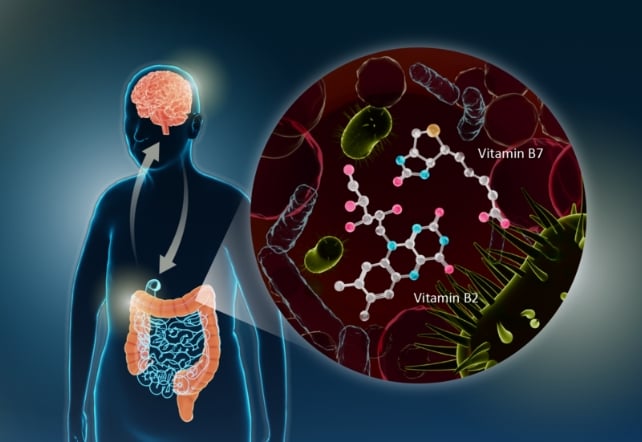
Over the past two years, two separate teams have conducted trials on fecal microbiota transplants (or poop transplants) in people with Parkinson’s.
That means exactly what it sounds like: transplanting processed stool from a carefully screened donor into a patient’s gut, delivered using several methods, including via a tube during colonoscopy.
It sounds like an unlikely medical treatment but the therapy has already shown potential to alleviate depression, type 2 diabetes, and has demonstrated promising early signs against food allergies.
And in two randomized, placebo-controlled trials run in Belgium and China, there’s evidence it may also help Parkinson’s.
The first, a Belgian trial called GUT-PARFECT, gave 46 people with mild-to-moderate Parkinson’s either a donor transplant or their own stool as a placebo.
After a year, the donor group’s motor symptom score had improved by 5.8 points, compared to 2.7 points in the placebo group – with the biggest gains showing up between six and twelve months.
“After 12 months, participants who received the healthy donor stool transplant showed a significant improvement in their motor score,” said gastroenterologist Arnout Bruggeman, part of the University Hospital Ghent team behind the trial, in 2024 when the results were published.
“Our study provides promising hints that [fecal microbiota transplants] can be a valuable new treatment for Parkinson’s disease,” said team member Roosmarijn Vandenbroucke.
“More research is needed, but it offers a potentially safe, effective, and cost-effective way to improve symptoms and quality of life for millions of people with Parkinson’s disease worldwide.”
Then, in March this year, a much larger trial out of Zhengzhou University in China pushed the evidence further.
Researchers gave 72 newly diagnosed, treatment-naive Parkinson’s patients either repeated donor transplants or their own stool, across three rounds over several months.
After 35 weeks, motor scores improved by an average of 3.8 points in the donor group, while they changed little in the control group, worsening by 0.1 points on average. Constipation scores improved sharply too.

Nearly half the donor group saw a clinically meaningful improvement in motor function, compared to about a fifth of the control group.
In the donor group, potentially harmful bacteria like E. coli and Shigella became less abundant, the gut lining grew more robust, stool dopamine levels rose, and – notably – alpha-synuclein levels in the gut went down.
That’s the same molecule Nishiwaki’s team flagged two years earlier as the link between a leaky gut and a damaged brain.
“These findings demonstrate that repeated donor FMT is safe, well tolerated, and yields clinically meaningful motor and gastrointestinal improvements,” the researchers behind the Chinese study wrote in Signal Transduction and Targeted Therapy – adding that the results “reinforce the growing body of evidence supporting gut microbiota modulation as a viable disease-modifying avenue” in Parkinson’s disease.
Related: Parkinson’s Disease Might Not Start in The Brain, Study Finds
Both trials are still small, and both come with the usual caveat attached to any phase 2 results: further verification of their results is needed.
Fecal transplants aren’t necessarily the end result of the studies, either. But they provide another proof of concept that changes to gut bacteria can impact Parkinson’s symptoms.
“Using these findings, we could identify individuals with specific deficiencies and administer oral riboflavin and biotin supplements to those with decreased levels, potentially creating an effective treatment,” said Nishiwaki back in 2024.
The research has been published in npj Parkinson’s Disease, eClinical Medicine, and Signal Transduction and Targeted Therapy.
This article was fact-checked by Rebecca Dyer and edited by Rebecca Dyer. While we pride ourselves on our process, we are only human. If you spot a mistake, please let us know.

