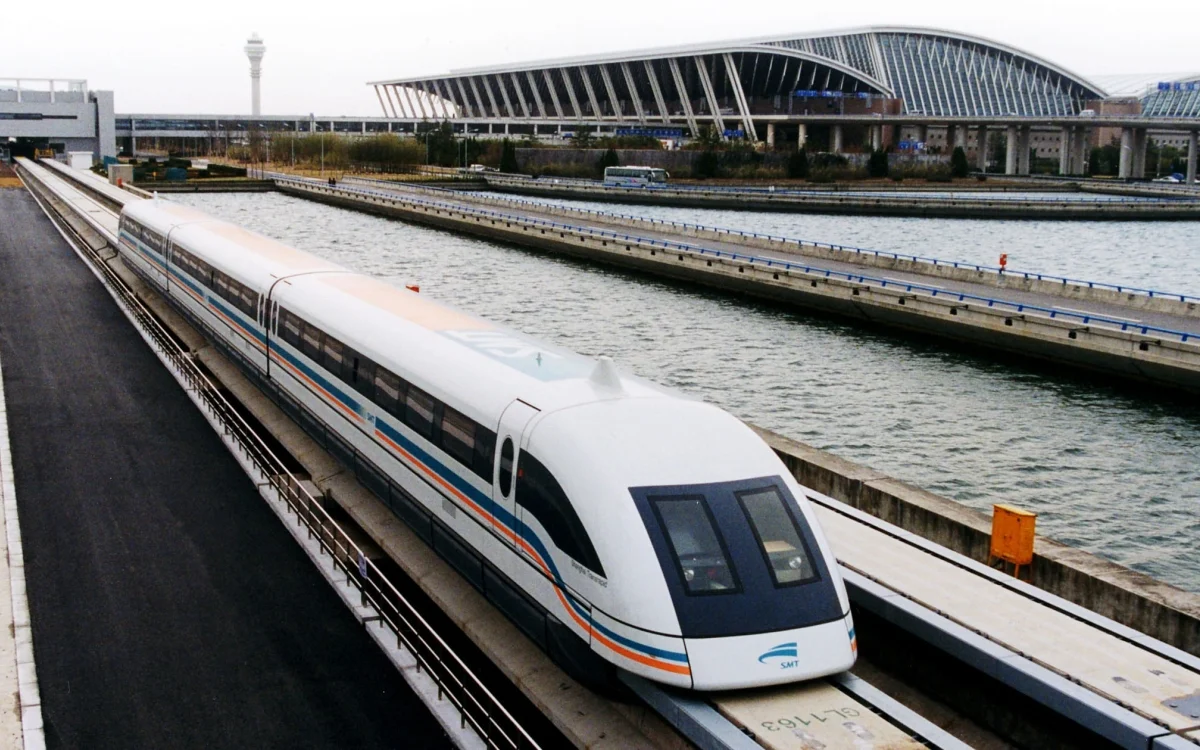
Тус туршилтын галт тэрэг 5.3 секундийн дотор зогсоолоос 497.1 миль/цаг буюу 800.00 км/цаг хурд хүртэл эрчимтэй хурдалж, өөрийн өмнөх амжилтыг дахин эвдлээ.
Хятадын Хубэй мужийн Дунху лабораторид явуулсан туршилтын үеэр уг соронзон орны хүчээр явагч галт тэрэг (maglev) нэг километрийн урттай зам дээр амжилттай хурдалсан байна. Энэхүү технологи нь соронзон орны тусламжтайгаар галт тэргийг төмөр замаас бага зэрэг хөндийрүүлэн хөдөлгөдөг тул үрэлтийн хүчийг бүрэн арилгадаг. Галт тэрэгний хөдөлгөөнийг замын дагуу байрлуулсан ороомог бүхий соронзон долгионоор удирдаж байна.
Тус галт тэрэг 5.3 секундийн дотор 497.1 миль/цаг хурд хүрсний дараа ердөө 200 метрийн зайд бүрэн зогсож, тоормосны системийн найдвартай ажиллагааг нотолсон юм. Энэ нь сүүлийн зургаан сарын хугацаанд дэлхийн дээд амжилтыг гурав дахь удаагаа шинэчилсэн тохиолдол боллоо. 2025 оны зургадугаар сард анх олон нийтэд танилцуулагдсанаасаа хойш уг тээврийн хэрэгсэл 650 км/ц, дараа нь 434 миль/цаг, 495 миль/цаг гэх мэтээр хурдны үзүүлэлтээ тогтмол ахиулсаар ирсэн.
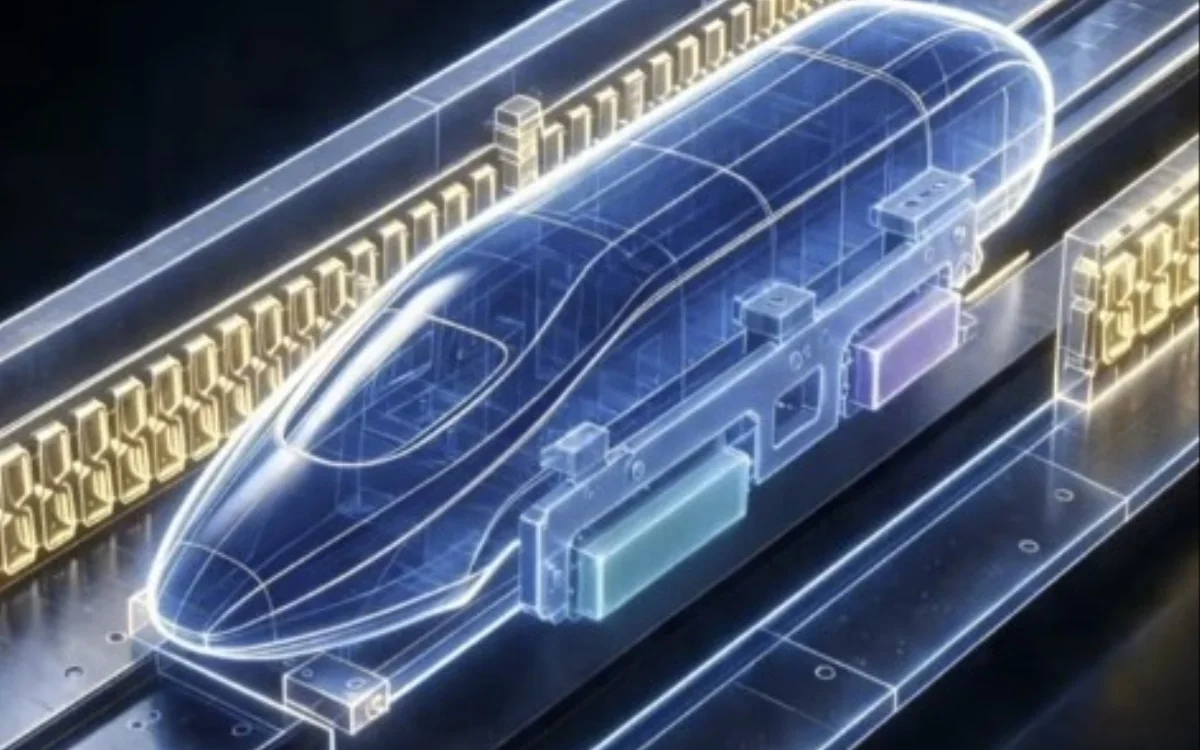
Одоогоор Хятад болон Японд соронзон орны хүчээр явагч галт тэрэгнүүдийг ашиглаж байгаа бөгөөд хамгийн хурдан нь 220 миль/цаг хүрдэг Fuxing загвар юм. Гэсэн хэдий ч ийм өндөр хурдны сүлжээг нэвтрүүлэхэд дэд бүтцийн зардал, зорчигчдын аюулгүй байдлын шаардлага зэрэг олон сорилт тулгарч байна. Харьцуулбал, ердийн төмөр зам дээр явагч галт тэрэгний дэлхийн дээд амжилтыг 2007 онд 357.2 миль/цаг хурдалсан Францын SNCF TGV V150 загвар эзэмшдэг.
Дэлгэрэнгүйг эх сурвалжаас харах
↓Эх сурвалжийг нээх ↓
Footage has emerged showing that a Chinese maglev train has just broken the acceleration world record by going from zero to 497.1mph in just over five seconds.
The experimental transportation in China has just broken its own acceleration record; such is the development rate of the technology.
Maglev trains are something that China has been developing for some years, and this is the latest step in their evolution.
Incredibly, this is the third time in six months that it has broken the world record.
How the train was able to break the world record
The maglev itself was running on a one-kilometre test track at the Donghu laboratory in Hubei province.
Maglevs use magnetic force that lifts the whole train slightly above the tracks.
This removes the friction normally associated with railroad vehicles.
A magnetic wave generated by coils around the tracks then allows it to move forward.
It accelerated from zero to 497.1mph in just 5.3 seconds, breaking its own world record.
It then came to a stop over just 200 metres, proving that the brakes were more than adequate for the maglev.
Remarkably, this was actually the third time in six months that it had broken this world record.
China has tested the maglev train for a while
China has been testing maglevs for a while, with this particular one first appearing in June 2025.
Back then, it reached 650km/h, around 403mph, in just seven seconds, setting a new world record.
It then broke its own record in later tests, reaching 434mph and then smashing through that record to 495mph.
The tests ensured that it was tested to the limits as much as possible.
Maglevs are already in use in China and Japan, with the fastest being the Fuxing, which can reach 220mph.
There are, however, several challenges that these high-speed trains face.
Infrastructure costs and passenger safety needs would all have to be factored in should a network this fast be implemented.
The absolute world record for a conventional train is currently held by the modified SNCF TGV V150 from France.
This reached a top speed of 357.2mph in 2007.
World’s fastest trains
1830: George Stephenson’s Rocket engine reached 30 mph to set the earliest notable speed benchmark during the dawn of mass transit
1893: The Empire State Express No 999 claimed the title of the first human-built machine to hit the 100 mph mark
1903: A Siemens experimental electric railcar achieved 130 mph on a test track in Germany to prove the potential of electrified lines
1934: Britain’s Flying Scotsman became the first officially authenticated steam runner to clock exactly 100 mph
1938: The streamlined A4 Mallard descended Stoke Bank at 126 mph for a steam-powered world record that remains unbroken today
1955: French electric railcrafts CC 7107 and BB 9004 shattered expectations by hitting 206 mph during high-speed tests
1964: Japan revolutionized passenger travel with the Shinkansen 0 Series by launching commercial bullet services at 130 mph
2007: A highly modified French TGV V150 reached 357 mph to establish the absolute speed limit ever achieved on conventional steel rails
2015: Japan’s L0 Series maglev vehicle hovered above its track to hit a staggering 375 mph as the fastest recorded speed for any railway system

