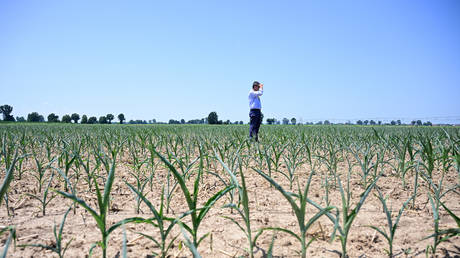
Европ даяар үргэлжилж буй хэт халалтын улмаас хөдөө аж ахуйн ургац эрс багасч, хүнсний үнийн өсөлтөд хүргэж болзошгүй байгааг эдийн засагчид анхаарууллаа.
Европын Холбооны Уур амьсгалын өөрчлөлтийн албаны мэдээлснээр, зургаа болон долдугаар сар нь баруун Европын түүхэн дэх хамгийн халуун сарууд болжээ. Уг халалт найм болон есдүгээр сарыг дамнан үргэлжлэх эрсдэлтэй байгаа нь хөдөө аж ахуйн салбарт хүнд цохилт болж байна. Францад гүний усны нөөц эрс багассан бол Италийн хойд хэсэгт цагаан будааны тариалангууд хатаж, үхмэл байдалд оржээ.
Францын хүнсний ногоо үйлдвэрлэгчдийн “Prince de Bretagne” хоршоо энэ зуны ургацын алдагдлыг түүхэн хэмжээний хямрал гэж тодорхойлсон байна. Тус улсын лаазалсан болон хөлдөөсөн ногоо үйлдвэрлэгчдийн холбооноос мэдээлснээр, ногоон вандуй 40%, броколли 60%, харин артишок 50-100 хувийн ургацын алдагдал хүлээх төлөвтэй байна. Түүнчлэн мал аж ахуйн салбарт өвс тэжээлийн хомсдол үүсэж, шувууны аж ахуйд өндөгний гарц нэг саяар буурч, мал, амьтны хорогдол ихэсчээ.
Германы Фермерүүдийн холбооноос мэдээлснээр, тус улсын үр тарианы үйлдвэрлэл өнгөрсөн оныхоос 3.3 сая тонноор буюу 7 хувиар буурах төлөвтэй байна. Польш улсын хувьд удаан үргэлжилсэн ган гачгийн улмаас хүнсний импортын хамаарал нэмэгдэх төлөвтэй байгааг шинжээчид онцолжээ.
Zurich Insurance Group болон Европын хэд хэдэн банкны тооцооллоор, энэ удаагийн хэт халалтын улмаас Европын Холбооны эдийн засагт 50-180 тэрбум еврогийн хохирол учирч болзошгүй байна. Энэхүү нөхцөл байдал нь хэрэглэгчдийн худалдан авч буй хүнсний бүтээгдэхүүний үнийг ойрын саруудад өсгөх гол шалтгаан болохыг эдийн засагчид анхааруулж байна.
Дэлгэрэнгүйг эх сурвалжаас харах
↓Эх сурвалжийг нээх ↓
A huge slump in yields will lead to higher grocery bills for consumers, economists have warned
Agricultural producers across the EU have warned of sharp drops in yields after Europe has been hit by successive heatwaves this summer. Economists have said the losses are likely to push food prices higher in the coming months.
June and July were the hottest on record in western Europe, according to the EU’s Copernicus Climate Change Service, which has warned of a “continued risk of heatwaves affecting much of Europe” through August and into September.
In France, one of the EU’s largest grain producers, groundwater reserves were severely depleted across much of the country by early August, according to the national geological survey.
Prince de Bretagne, a major growers’ cooperative in Brittany, warned last week of a “historic” vegetable crisis. It projected yield declines of 40% for peas, 60% for broccoli, and between 50% and 100% for artichokes this summer.
Eric Legras, president of Unilet, France’s leading association of canned and frozen vegetable producers, said severe heat had also hit northern and southwestern France, describing the crisis as “exceptional.”
Livestock farmers have meanwhile warned of a growing “forage production deficit” ahead of winter. France’s National Committee for the Promotion of Eggs has estimated that heatwaves have cut daily output by around one million eggs, while poultry farms have reported high mortality rates.
In northern Italy, home to one of Europe’s main rice-growing regions, water shortages have left some paddies “completely dead, burnt, with the rice dried out,” according to Coldiretti, the country’s largest farmers’ association.
Farmers in Spain have likewise reported considerable shortfalls in cereal yields, as well as cattle fodder deficits.
The German Farmers’ Association on Tuesday warned that grain production would be 7%, or 3.3 million tons, lower than last year. The worst-hit regions in the south of the country could potentially suffer total crop failures.
In neighboring Poland, business outlet Puls Biznesu predicted last month that persistent drought could force the country to become more reliant on food imports.
Analysts at Zurich Insurance Group and several European banks have estimated that the heatwaves could cost the EU between €50 billion and €180 billion.
You can share this story on social media:



