Шинэ геномын шинжилгээгээр Zoraptera шавьж нь жигүүрт шавьжны нэг томоохон салбар болох Polyneoptera-аас хамгийн түрүүнд салбарлан үүссэн болохыг тогтоожээ.
Эртний “Zoraptera-гийн асуудал” хэмээн нэрлэгдсэн энэхүү маргаан нь 1913 оноос хойш шавьж судлалын салбарт үргэлжилж ирсэн юм. Модны холтос эсвэл ялзарсан модны дор амьдардаг, нэн ховор энэ шавьжийг бусад шавьжтай хэрхэн холбогдох талаар анатоми болон генетикийн судалгаанууд өөр өөр үр дүн үзүүлсээр ирсэн билээ. Судлаачид өмнөх судалгаануудад гарч байсан зөрчилдөөнийг арилгах зорилгоор 89 зүйлийн Polyneoptera шавьжийг хамарсан өргөн хүрээтэй геномын шинжилгээ хийжээ.
Чэньян Цай болон Ехао Ван нарын удирдсан баг 1,367 нэг хувь генд дүн шинжилгээ хийхдээ хувьслын өөр өөр загваруудыг ашигласан байна. Судалгааны явцад шавьжны молекулын өгөгдөлд гардаг статистик гажуудал буюу “урт мөчир татах” үзэгдэл нь өмнөх эрдэмтдийг төөрөгдүүлж, Zoraptera-г чихэр өвсний шавьжтай андууран ангилахад хүргэж байсныг илрүүлжээ.
Нарийн төвөгтэй загварчлалуудыг ашигласны үр дүнд Zoraptera нь Polyneoptera бүлгээс хамгийн эрт салбарласан бие даасан угсаа болох нь батлагдсан байна. Мөн чихэр өвсний шавьж болон чулууны ялаанууд хоорондоо илүү ойр холбоотой болохыг тогтоосон нь шавьжны хувьслын модны бүтцийг шинэчлэн тодорхойллоо.
Цаашид судлаачид энэхүү молекулын хувьслын загварыг хув дотор хадгалагдсан эртний шавьжны олдворуудтай харьцуулж, шавьжны томоохон бүлгүүд хэзээ үүссэн хугацааг нарийвчлан тогтоохоор төлөвлөж байна. Энэхүү нээлт нь олон арван жилийн турш маргаан дагуулсан шавьжны ангилал зүйн асуудлыг нэг мөр шийдвэрлэхэд чухал алхам боллоо.
Дэлгэрэнгүйг эх сурвалжаас харах
↓Эх сурвалжийг нээх ↓
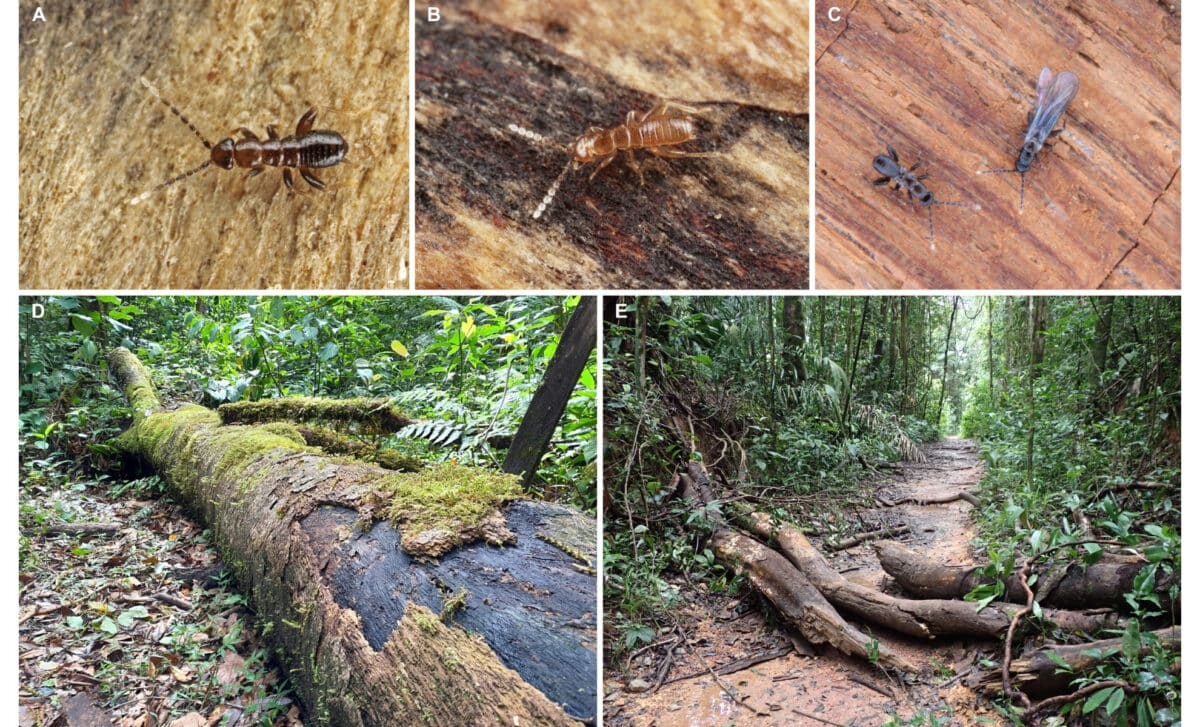
They are tiny, termite-like insects that spend much of their lives hidden beneath bark or inside decaying wood. Yet angel insects have long stood out in evolutionary biology for one reason: scientists could not agree on where they belonged.
Since Zoraptera was first described in 1913, studies of anatomy and genetic material have repeatedly produced conflicting family trees. The dispute became known as the century-old “Zoraptera problem.”
A new genomic analysis now provides strong support for one position. Published in Proceedings of the Royal Society B, the research places Zoraptera as the earliest lineage to split from the other living members of Polyneoptera, a major branch of winged insects that includes grasshoppers, cockroaches, mantises, stick insects, earwigs and stoneflies.
That result emerged only after the researchers tested how different evolutionary models handled unusual patterns in the insects’ molecular data.
Why Zoraptera Kept Moving Around the Insect Family Tree
Zoraptera is one of the smallest and least familiar insect orders, with only a few dozen living species known to science. Its members look remarkably similar to one another and have relatively few obvious anatomical features that can securely connect them with other insect groups.
That made insect evolution difficult to reconstruct from physical characteristics alone. Later molecular studies did not settle the argument either.
Two competing arrangements became central to the dispute. The Haplocercata-first hypothesis grouped Zoraptera with Dermaptera, the earwigs, and placed the pair at the deepest branch of Polyneoptera. The alternative Zoraptera-first model treated angel insects as an independent lineage that separated before the remaining polyneopteran orders diversified.
Previous studies had found support for both, depending on the data and analytical methods used.
That inconsistency became the starting point for the new investigation. Chenyang Cai and Yehao Wang told Phys.org that “the core inspiration for our paper came from persistent contradictions across decades of research,” pointing to disagreements among morphological, transcriptomic and earlier phylogenomic studies.
The team suspected that some of the apparent evolutionary signal linking Zoraptera with earwigs could instead be the result of statistical biases in the molecular data.
More Than 1,300 Genes Put the Competing Theories to a Larger Test
The researchers expanded the available evidence by sequencing and assembling two new Zoraptera genomes, then combining them with three existing transcriptomes. Their dataset contained 89 polyneopteran species and 23 outgroups, giving them a broad set of organisms for testing the deepest branches of the group.
The Zoraptera sampling covered both recognized families and most of the order’s subfamilies.
From those organisms, the team extracted 1,367 single-copy genes — genetic sequences that can be matched across different species because corresponding copies share a common evolutionary origin. They created six amino-acid datasets using different filtering strategies and analyzed them with several evolutionary models rather than relying on one mathematical treatment.

This kind of large-scale comparison is the basis of phylogenomics, which reconstructs relationships using information from hundreds or thousands of genes.
The models did not all produce the same tree.
Simpler site-homogeneous models, similar to approaches used in earlier research, could recover the traditional Zoraptera-plus-earwig grouping. More complex site-heterogeneous models account for the fact that different positions in protein sequences can evolve under different compositional patterns. Those models favored another arrangement.
Once that variation was accounted for, the Haplocercata-first grouping collapsed and Zoraptera appeared as the earliest-diverging polyneopteran lineage.
A Statistical Trap Helped Create the Conflicting Signal
A major part of the problem involved long-branch attraction, a known source of error in evolutionary reconstruction. Lineages that change unusually quickly can accumulate many molecular differences, and inadequate models may mistakenly group them together because of those patterns rather than genuine shared ancestry.
Zoraptera showed the combination of rapid evolutionary rates and uneven amino-acid composition capable of producing that misleading signal.
The researchers put the tree through several additional tests. They compared rival topologies statistically, removed genes at random through gene jackknifing, filtered genes according to evolutionary rate and used the ASTRAL multispecies coalescent method to account for cases in which the history of individual genes differs from the history of the species themselves.

Slower-evolving genes consistently eliminated the false Haplocercata grouping, while the independent analyses continued to support Zoraptera-first.
Under the best-fitting models, the result stayed consistent. Wang and Cai summarized it directly: “Zoraptera forms the very first split from all other Polyneoptera.”
The conclusion rested on more than one reconstructed evolutionary tree. Model comparison, coalescent analysis, topology testing and repeated gene-removal experiments all supported the same placement.
Earwigs Ended up Beside Stoneflies Instead
Removing Zoraptera from its traditional partnership with earwigs also changed the next branch of the tree.
Dermaptera and Plecoptera, the earwigs and stoneflies, grouped together in a clade called Dermoplectopterida. The study recovered that clade as the sister lineage to the remaining Polyneoptera after Zoraptera split away. Both multispecies coalescent and gene-jackknifing analyses supported the arrangement.
The next stage of the work will add time to that molecular family tree. Cai and Wang said they plan to combine the reconstructed relationships with Zoraptera fossils preserved in amber and other polyneopteran fossils to estimate when the major insect orders diverged.
Enjoyed this article? Subscribe to our free newsletter for engaging stories, exclusive content, and the latest news.

