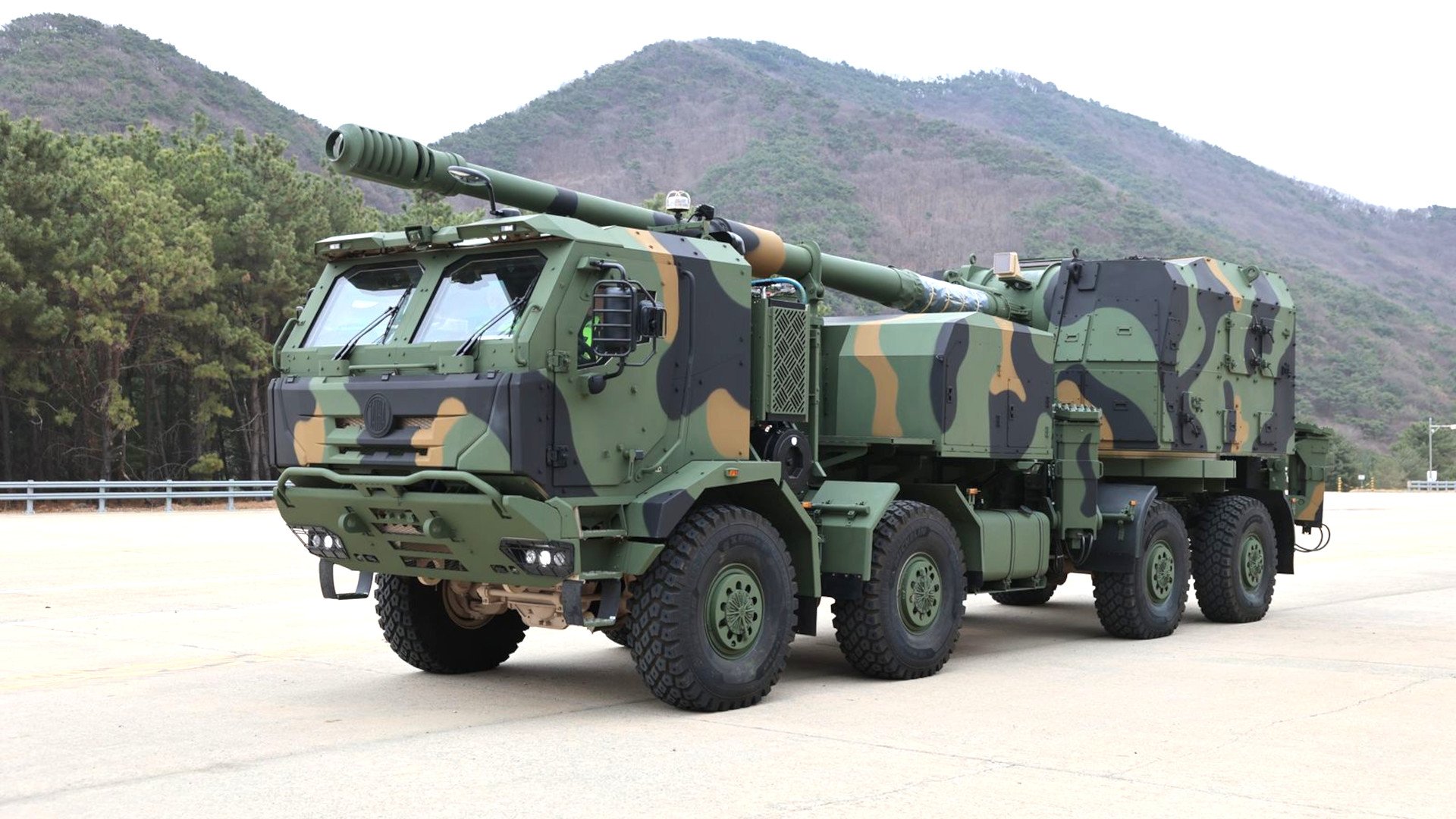
АНУ-ын Зэвсэгт хүчин K9 их бууны дугуйт хувилбарыг туршилтын явцад оруулснаар одоо ашиглаж буй M777 чирэгч их бууг орлох боломжийг эрэлхийлж байна.
АНУ-ын арми “Mobile Tactical Cannon” (MTC) хөтөлбөрийн хүрээнд Өмнөд Солонгосын “Hanwha Defense USA” компанитай хамтран ажиллах гэрээ байгууллаа. Энэхүү гэрээний дагуу тус компани 155 мм-ийн K9 дугуйт өөрөө явагч их бууны 18 хүртэлх прототипийг нийлүүлж, ойрын дөрвөн жилийн хугацаанд цэргийн туршилт, судалгаанд ашиглах юм.
Энэхүү хөтөлбөр нь АНУ-ын армийн алсын зайн галын чадавхыг шинэчлэх, цэргийн анги нэгтгэлүүдийн хөдөлгөөнт байдлыг сайжруулах зорилготой. K9 их буу нь одоогийн M777 чирэгч их буутай харьцуулахад илүү хол зайд галлах чадвартай бөгөөд “буудаад байрлалаа солих” тактикийг 30 секундээс бага хугацаанд хэрэгжүүлэх боломж олгодог байна.
Туршилтын үр дүнд үндэслэн АНУ-ын арми M777 системийг орлох эсэхээ шийдвэрлэх бөгөөд одоогоор гол анхаарлаа “Stryker” хуягт тээвэрлэгчээр тоноглогдсон бригадуудад чиглүүлж байна. Энэхүү алхам нь Өмнөд Солонгосын батлан хамгаалах салбарын хувьд АНУ-ын зах зээлд нэвтрэх томоохон боломж болж байгаа юм.
Дэлгэрэнгүйг эх сурвалжаас харах
Эх сурвалжийг нээх ↓
The U.S. Army has chosen Hanwha Defense USA to advance to the next phase of its Mobile Tactical Cannon (MTC) program. The company will now provide prototypes of its wheeled 155mm K9 Mobile Howitzer for further testing. This, in turn, could lead to its adoption as a replacement for the Army’s existing towed 155mm M777 howitzers.
“The U.S. Army announced today an agreement with Hanwha Defense USA, Arlington, Virginia, for the development of prototypes for the Mobile Tactical Cannon program, a critical priority in the Army’s ongoing continuous transformation and long-range fires modernization efforts,” according to a press release the service put out this evening. “Awarded competitively under an Other Transaction Authority (10 U.S.C. Section 4022), the firm-fixed-price agreement will provide the Army with up to 18 wheeled Self-Propelled Howitzer Systems for rapid prototyping, testing, and Soldier experimentation over an estimated four-year period of performance. The amount of this action is $100,302,961 with a total cumulative face value of $262,903,274.”
OTAs are a contracting mechanism that U.S. government agencies regularly use to help accelerate advanced research and development and prototype efforts.
The Army’s release does not explicitly mention the K9 Mobile Howitzer (K9MH), also known as the K9A2. However, Hanwha Defense USA has confirmed that this is the design it will be supplying in its own press release. The company had also announced this would be its entry for the MTC competition back in March. American Rheinmetall, BAE Systems, General Dynamics Land Systems, and Elbit Systems USA had also been in the running.
“The agreement provides for the accelerated delivery of six prototype MTC systems, with an option for an additional 12. Soldiers will use these platforms in a series of operational experiments to assess performance, reliability, and supportability in realistic combat conditions,” the release adds. “This Soldier-centric, experiment-driven approach reflects the Army’s continuous transformation initiative to rapidly deliver lethal capabilities, incorporate immediate Soldier feedback, and adapt the force to pace emerging threats in multi-domain operations.”
The K9MH was developed from Hanwha’s earlier tracked K9 design, variants and derivatives of which are already in service in South Korea, as well as Australia, Egypt, Estonia, Finland, India, Norway, Poland, and Turkey. Both the tracked and wheeled designs share the same 52-caliber 155mm cannon. Caliber here is a measurement of length in relation to the diameter of the barrel. A 52-caliber 155mm barrel is just under 26 and a half feet long. The M777’s barrel is 39 calibers long, or just around 16.7 feet.
In general, longer barrels on howitzers translate to greater range. Hanwha says the maximum range of the K9MH is just over 37 miles (60 kilometers), though it is unclear if this is only when using rocket-assisted or other specialized ammunition. The stated maximum range of the M777, even when using specialized rounds, is just under 20 miles.
As a self-propelled howitzer, the 8×8 K9MH also offers the benefit of integrated mobility over the towed M777, which requires a separate vehicle to move it from point A to point B. “Its emplacement/displacement times of under 30 seconds enables ‘shoot and scoot’ tactics,” according to Hanwha’s website.
The K9MH can also carry 40 rounds of ammunition onboard, as well as be rapidly reloaded in the field via a companion K10 resupply vehicle.
“We’re focused on creating a U.S.-anchored K9 Mobile Howitzer manufacturing network – with Opelika, Alabama, as the current phase I launch point – that can deliver advanced Mobile Tactical Cannons at the speed and scale the U.S. Army needs,” Jason Pak, Hanwha Defense USA Head of Land Systems-Artillery, also said in a statement.
“Hanwha’s global supply chain and local production experience in Australia, Egypt, Poland and Romania demonstrate a proven commitment to local execution we’re excited to bring to the U.S.,” Michael Coulter, Hanwha Defense USA CEO, said in his own statement. “Localization is central to Hanwha’s global business model, leveraging our global leading industrial technology and process in Korea to create sovereign industrial strength in the U.S., whether it be in shipbuilding, munitions or combat vehicles.”
The Army has been actively exploring the idea of replacing the M777 with a new wheeled self-propelled howitzer since at least 2019, and has even conducted shoot-offs of various designs in the past. The service has also made clear that its selection of Hanwha Defense USA to advance in the MTC effort does not guarantee that it will field the K9MH.
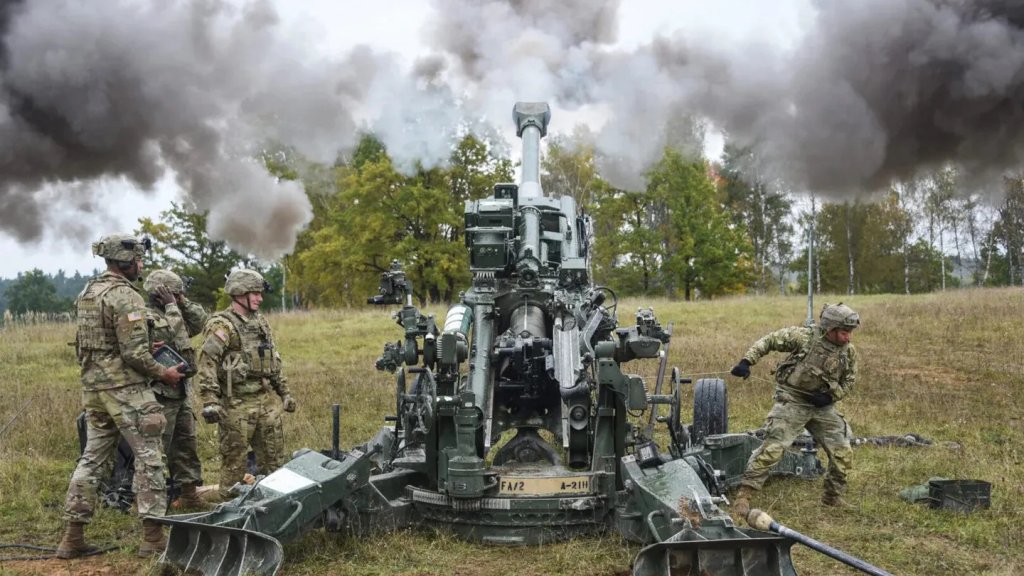
“Data and insights gained from these experiments will directly inform senior leaders’ decisions on future fielding. If approved for fielding, MTC will replace M777 towed artillery systems in select formations, significantly increasing their lethality, mobility, reliability, and survivability on the modern, highly transparent battlefield,” per the Army’s release today. “By rapidly prototyping these systems, the Army is advancing a more mobile and adaptable fires formation aligned with the rigorous demands of large-scale combat operations.”
The release does not elaborate on what “select formations” might be in line to eventually receive K9MHs. However, a past MTC contracting notice says the initial focus is on replacing M777s within Brigade Combat Teams equipped with Stryker wheeled light armored vehicles. Airborne, airmobile, and ‘leg’ infantry brigades also have M777s that could be supplanted by new wheeled self-propelled howitzers.
The possibility of the Army replacing at least a portion of its existing M109-series tracked self-propelled 155mm howitzers has also been raised in the past. However, the service’s press release today makes clear that the focus of the MTC program right now is still on replacing towed M777s. There is a long-standing debate about the relative pros and cons of wheeled versus tracked self-propelled howitzers, with the U.S. Army long having favored the latter. Tracked designs typically offer greater off-road mobility and are often more heavily armored. They are also generally heavier overall, which can negatively impact mobility and transportability more broadly, and can be more costly to acquire and operate.
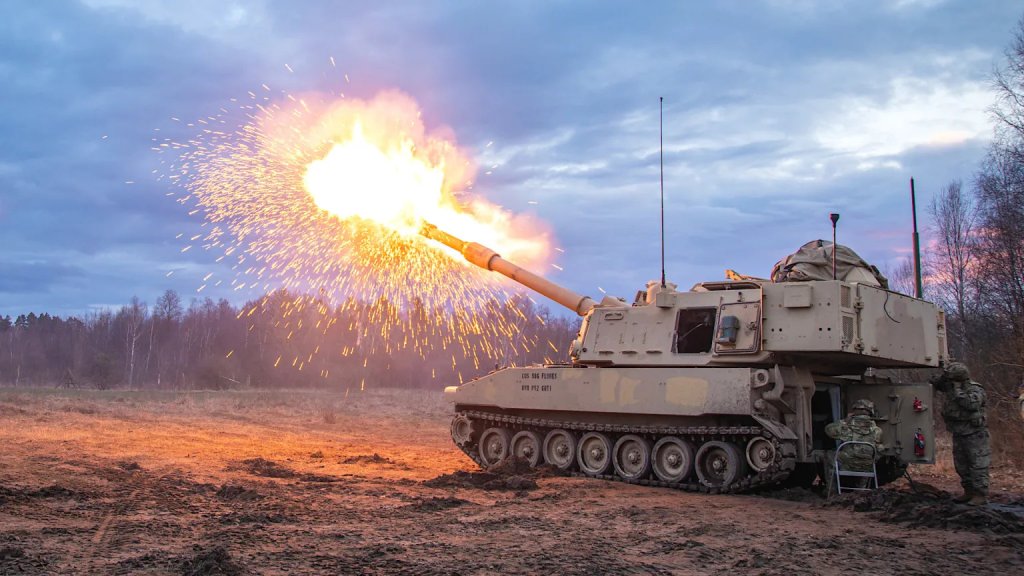
“If you look at the [fight] in Ukraine on either side, it’s really hard to move out and get fires ready to go. … The Paladin [the name applied to the latest A6 and A7 variants of the M109] is just incapable of it at speed,” Secretary of the Army Dan Driscoll told members of the House Appropriations Committee at a hearing earlier this year. “And so while we think the Paladin will be in our lives for a while, because we want to be good custodians of the assets the American taxpayer has given us, we think that new purchases to balance that platform out should be something different.”
At that time, Driscoll was defending his service’s omission of funding for any more M109A7s in its Fiscal Year 2027 budget proposal.
It is worth noting here that both sides in the ongoing conflict in Ukraine have and continue to employ tracked and wheeled self-propelled howitzers, as well as towed types. The war has underscored the continued importance of artillery, in general. At the same time, mobility, and greater speed while on the move, are ever more important considerations in an era of drone warfare and expanded kill chains that put anything that stays in one place too long at higher risk
MTC is part of a larger Self-Propelled Howitzer-Modernization (SPH-M) effort that could also include the separate acquisition of a new tracked self-propelled howitzer. There have been several abortive Army attempts to replace the venerable M109 family since the 1990s. This includes the advanced XM2001 Crusader,which was canceled in 2002ostensibly due to growing costs. The service axed the more recent XM1299, developed under its Extended Range Cannon Artillery (ECRA) program in 2024. The XM1299 featured a 58-caliber cannon and had a demonstrated range of40 miles(just over 60 kilometers). The Army has previously said that the length of the barrel presented technical challenges that contributed to the program’s cancellation.

Since the XM1299’s cancellation, the Army has also been investing heavily in new long-range artillery shells, including ramjet-powered types.
Today’s announcement is also another important win for South Korea’s defense industry, which has made major export gains globally in recent years. Poland, in particular, has become a huge customer for South Korean arms exports, including versions of the K9. Further progress in the U.S. Army’s MTC program could offer a major inroad into the American market for Hanwha.
With today’s announcement, the Army has taken an important new step toward adding a new wheeled 155mm self-propelled howitzer to its arsenal.
Contact the author: joe@twz.com
The post South Korea’s Highly Mobile 155mm Artillery System Wins U.S. Army Howitzer Contract appeared first on TWZ.


