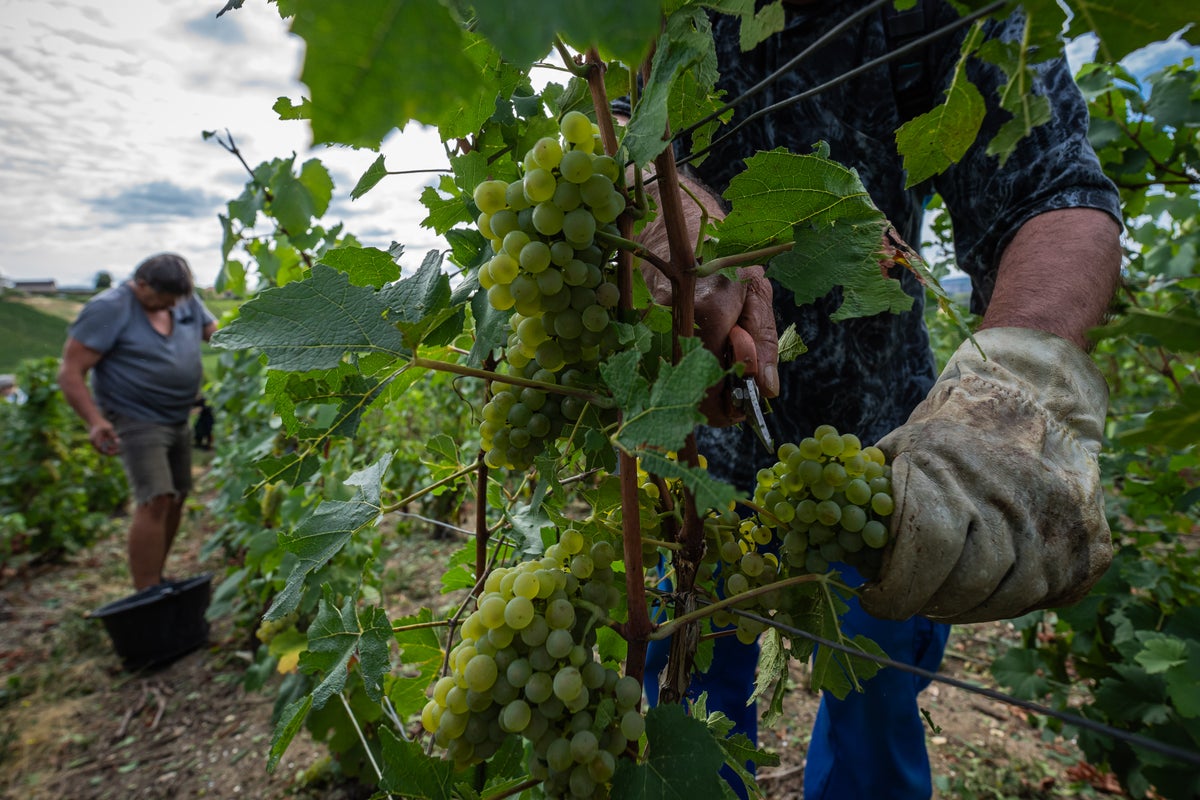
Хэт халалт болон ган гачиг нь Францын алдарт шампан дарсны бүс нутагт усан үзмийн болцыг хурдасгаж, түүхэн дэх хамгийн эртний ургац хураалтын үеийг эхлүүлэхэд хүргэв.
Шампан дарсны үйлдвэрлэгчид бүтээгдэхүүний чанарыг хадгалахын тулд ургац хураалтын ажлыг яаравчлан эхлүүлээд байна. Тус бүс нутагт ургац хураалт наймдугаар сарын 12-17-ны хооронд эхэлсэн нь уламжлалт хугацаанаас бараг нэг сараар түрүүлсэн үзүүлэлт юм. Үйлдвэрлэгчдийн мэдээлснээр, хаврын хүйтрэлт ургацын хэмжээг бууруулсан бол үргэлжилсэн хэт халалт нөхцөл байдлыг улам хүндрүүлжээ.
Салбарын мэргэжилтнүүдийн дүгнэж буйгаар, уур амьсгалын өөрчлөлт нь сүүлийн 25 жилийн турш тус салбарын гол сорилт болсоор байна. Үүнтэй холбогдуулан өвчин эсэргүүцэх чадвар сайтай, орой болцтой усан үзмийн сортуудыг гаргаж авах, судалгаа шинжилгээнд хөрөнгө оруулах замаар шинэ нөхцөл байдалд дасан зохицох арга хэмжээг авч хэрэгжүүлж байна.
Ургац хураалт эрт эхэлснээр гар аргаар хураах уламжлалт арга барил нь логистикийн болон ажиллах хүчний хүндрэлүүдийг үүсгэж байна. Шампан дарс үйлдвэрлэгчдийн холбооны тайланд дурдсанаар, тус салбар нь 30 мянга орчим байнгын ажлын байр болон ургац хураалтын үеэр 100 мянга орчим улирлын чанартай ажиллах хүчийг шаарддаг байна. Хэдийгээр цаг агаарын хүндрэлүүд байгаа ч энэ жилийн усан үзмийн чанар хангалттай түвшинд байна гэж үйлдвэрлэгчид үзэж байна.
Дэлгэрэнгүйг эх сурвалжаас харах
↓Эх сурвалжийг нээх ↓
Champagne producers are in a race against time as the famed wine region’s earliest harvest on record begins.
Extreme heat and drought have accelerated ripening, leaving growers a narrow window to preserve the quality of the famous drop.
Across the hillsides of Hautvillers, whose vineyards were recognised as a Unesco World Heritage site in 2015, picking crews start work at 6.30am.
For Alexandre Gobillard, production director at Gobillard & Fils, beginning the harvest in mid-August was once nearly unthinkable.
“It’s historic in Champagne,” he said.
“I’ve been working at the estate for 30 years, and when I started, my father used to tell me: ‘On 15 August, go on vacation.’ Today, it’s 18 Augustand we’re in full harvest. We’ve never seen anything like it.”
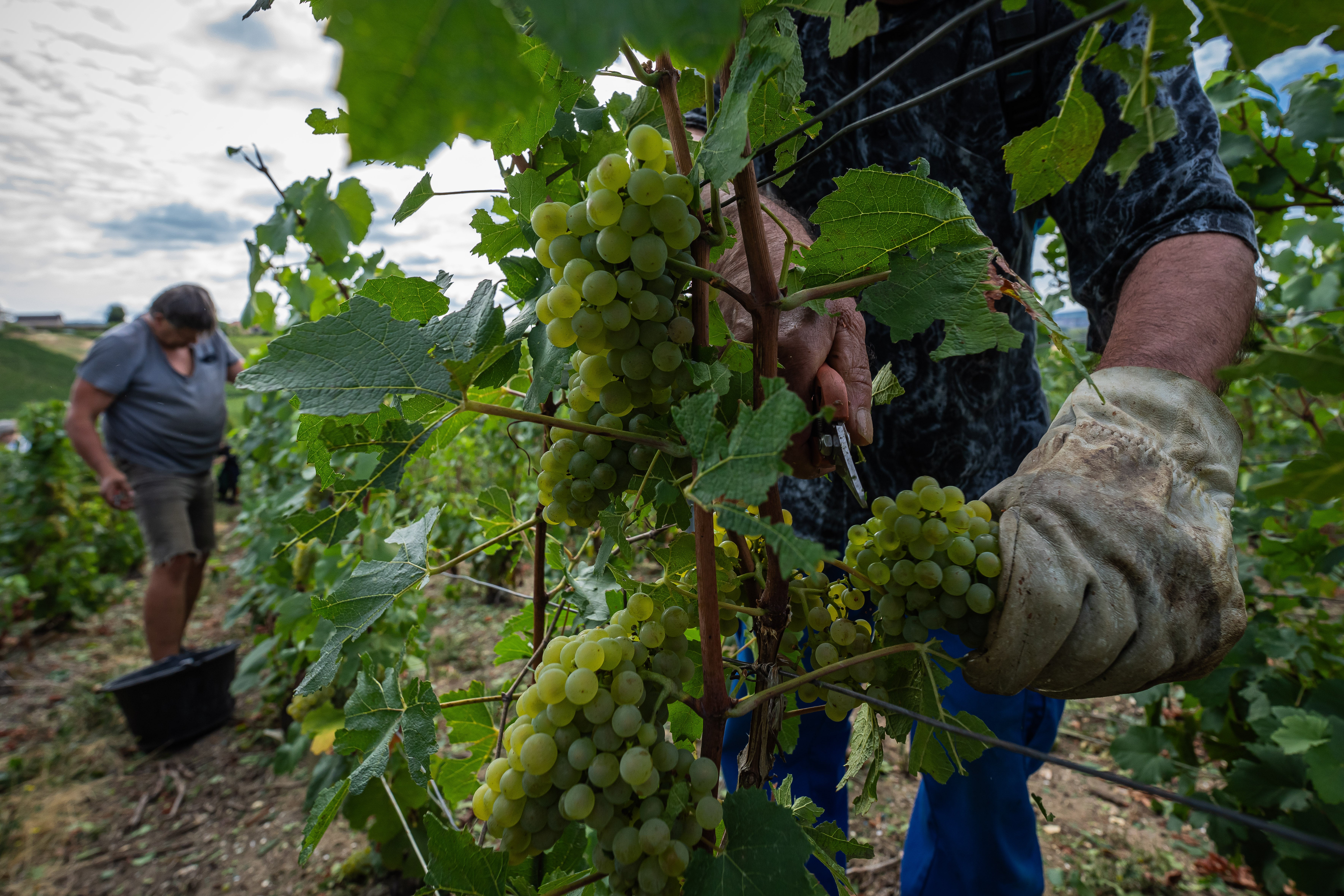
Aged 50, Mr Gobillard is the fourth generation of his family to work the vineyards.
Gobillard & Fils manages 40 hectares (around 100 acres) of vines, producing about 1.5 million bottles a year.
Drought brings harvest a month early
Champagne’s official harvest opened between 12-17 August this year, depending on the area and grape variety. That is roughly a month earlier than what was once common in the region.
A late-March frost hit vines after mild temperatures triggered early budburst, reducing the potential crop. It was followed by four heat waves, which never happened before, Mr Gobillard said.
Sun-scorched grapes turned partially brown, something Mr Gobillard said he had rarely seen. He explained that losing roughly 10 per cent of the grapes would mean a loss in volume rather than affect the quality of the wine.
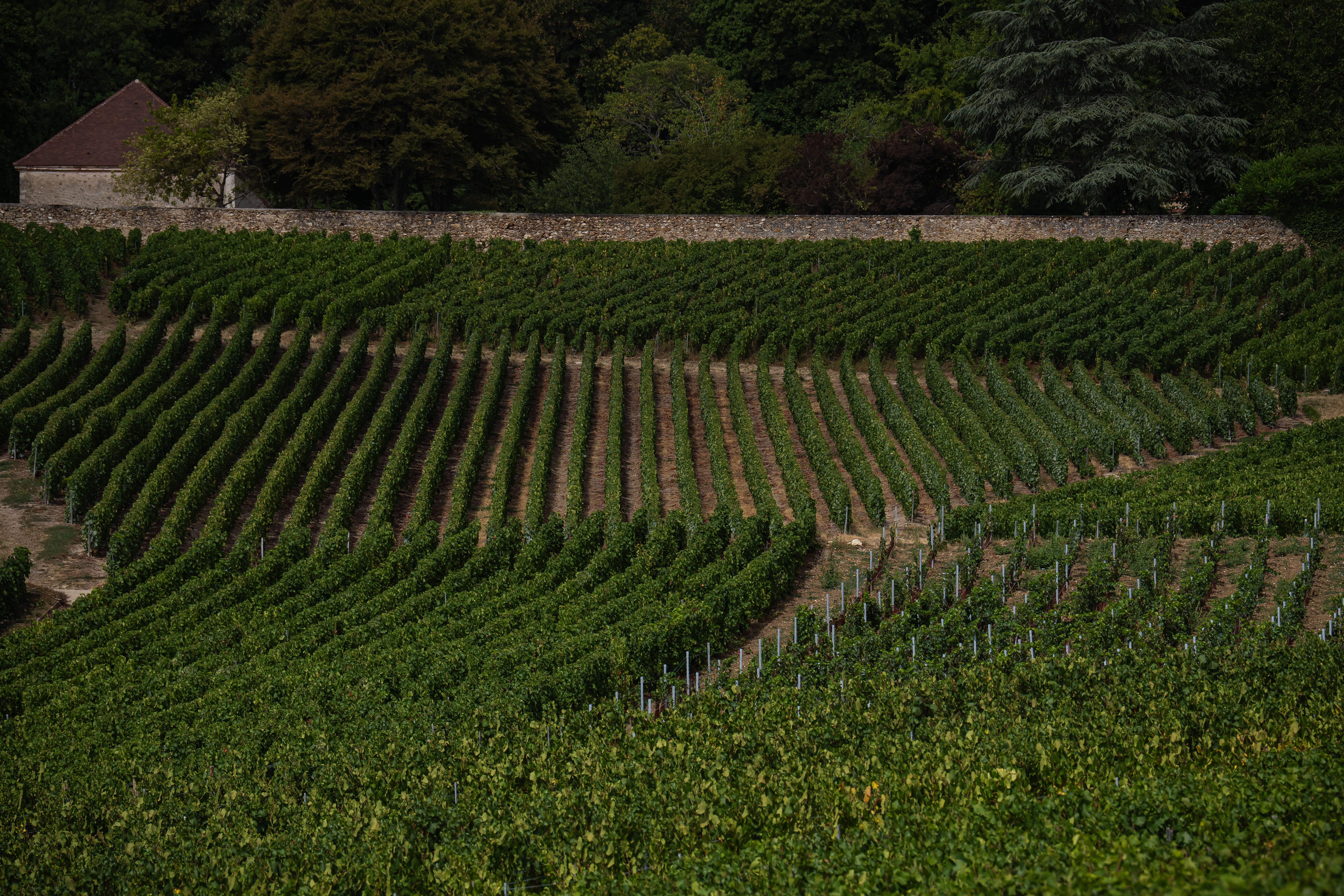
Earlier harvests have become increasingly common in Champagne and other French wine regions as temperatures rise. In neighboring Italy, extreme heat has also prompted sparkling-wine producers to harvest sooner and pick grapes at night.
David Chatillon, president of the Union of Champagne Houses, acknowledged weather conditions this year will lead to a clear decrease in yields.
“But it’s not just because of the drought,” he said. “We lost 43 per cent of the potential production to the spring frosts, and the drought has clearly made the problem of lower yields even worse.”
Mr Chatillon said climate change has been a focus of the industry for the past 25 years, prompting investment in research and innovation to adapt to evolving conditions, including developing grape varieties that are more disease-resistant and ripen later.
Heat speeds up grape ripening
Mr Gobillard has seen the shift unfold across generations of his family.
“My grandfather’s generation harvested 100 days after flowering, my father’s 90 days, and today we’re down to 80,” he said. “We’re going to have to change our habits.”
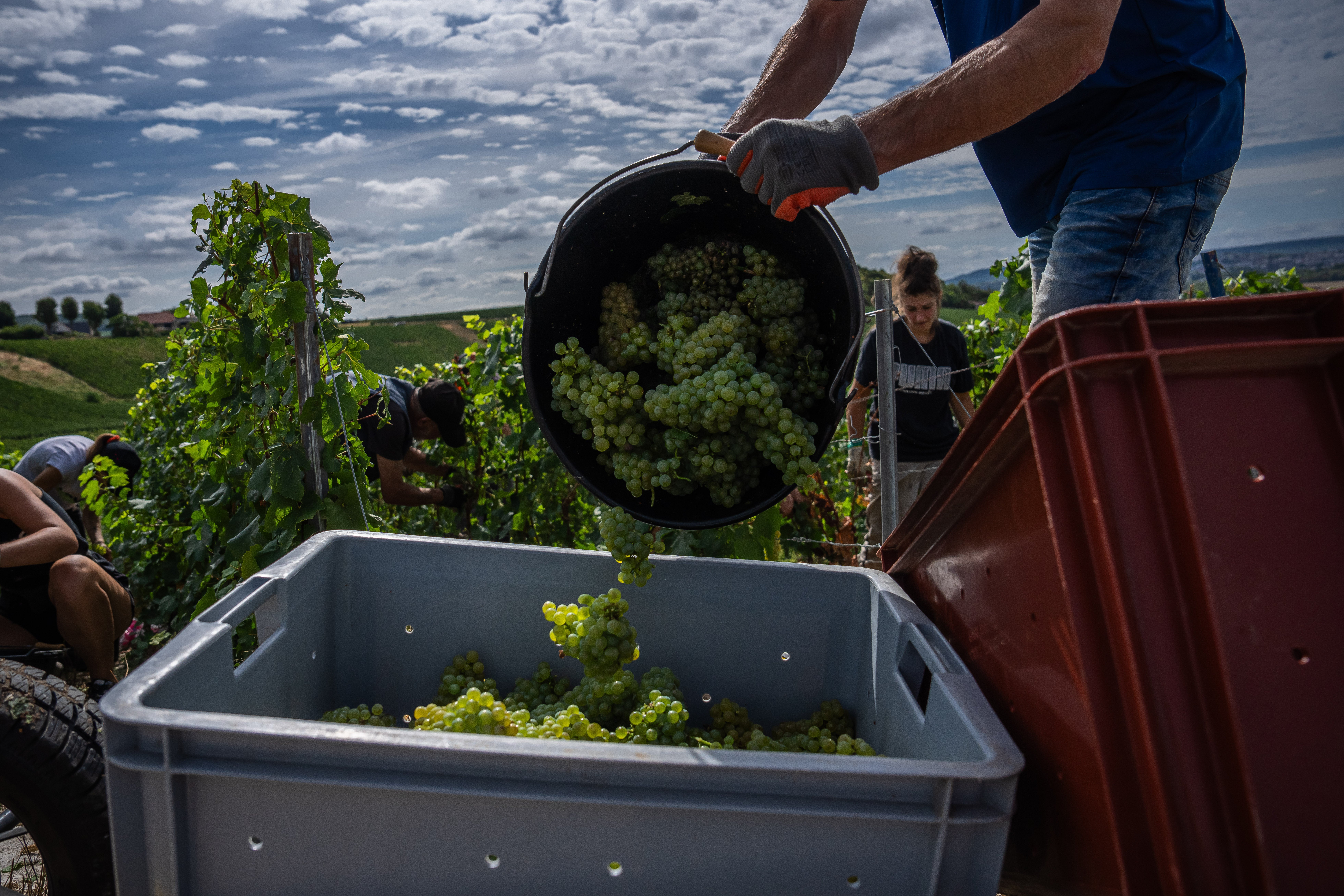
This summer’s record temperatures compressed the ripening period even further. In June, temperatures reached 40 degrees Celsius in parts of Champagne.
“The vine needs water to live,” Mr Gobillard said. “The water was drawn out of the grapes to keep the vine alive, and as a result we had a much higher concentration of sugar. That’s why it happened so much faster.”
As his daughter operated the wine press, Mr Gobillard watched the year’s first juice flow with a mix of excitement and anxiety.
He quickly took a sample to measure its sugar level – a key indicator of potential alcohol content and of whether the grapes have been picked at the right moment. “Champagne shouldn’t be too alcoholic … We’re looking for delicacy,” he said.
Early harvest tests Champagne’s traditions
The early harvest also poses logistical challenges in a region where grapes are traditionally picked by hand, with some workers still on summer vacation and others facing transportation delays.
Mr Gobillard hopes to complete the harvest at the estate in about nine days, a job requiring around 120 workers recruited mostly from across France and Poland.
“It really changes how we look at Champagne’s traditional methods,” said Geoffrey Bonnet-Gobillard, the commercial director of the family Champagne house. “Hand harvesting comes with a lot of constraints – housing people, feeding them, recruiting them. It’s very difficult, especially with early harvests in August.”
Those pressures could eventually force producers to reconsider some long-established practices as agricultural machinery becomes more sophisticated, he said.
The house sells most of its Champagne in European markets, including Britain, Belgium, Italy and Spain, as well as in West Africa, with smaller volumes going to the United States and Asia, Mr Bonnet-Gobillard said.
Champagne is a high-value industry
According to Comité Champagne’s 2026 industry report, 266.1 million bottles of Champagne were shipped in France and abroad last year, generating €5.7 billion (£4.9 billion) in sales. Exports accounted for 56.5 per cent of shipments.
Champagne represented about 8 per cent of global sparkling wine consumption by volume but 31 per cent by value.
The sector supports around 30,000 direct jobs and requires roughly 100,000 seasonal workers for the harvest, according to Comité Champagne.
Despite this year’s difficult conditions, Mr Gobillard said that the grapes he inspected were encouraging.
“I’m very happy with what I’m seeing,” he said.
“We were worried that the drought would leave us with very light bunches, but in these plots we’re really pleased. The quantity should be sufficient and the quality will be there.”
But there is little time to spare. “It’s time to cut them. We’re going to have to move quickly,” he said.

