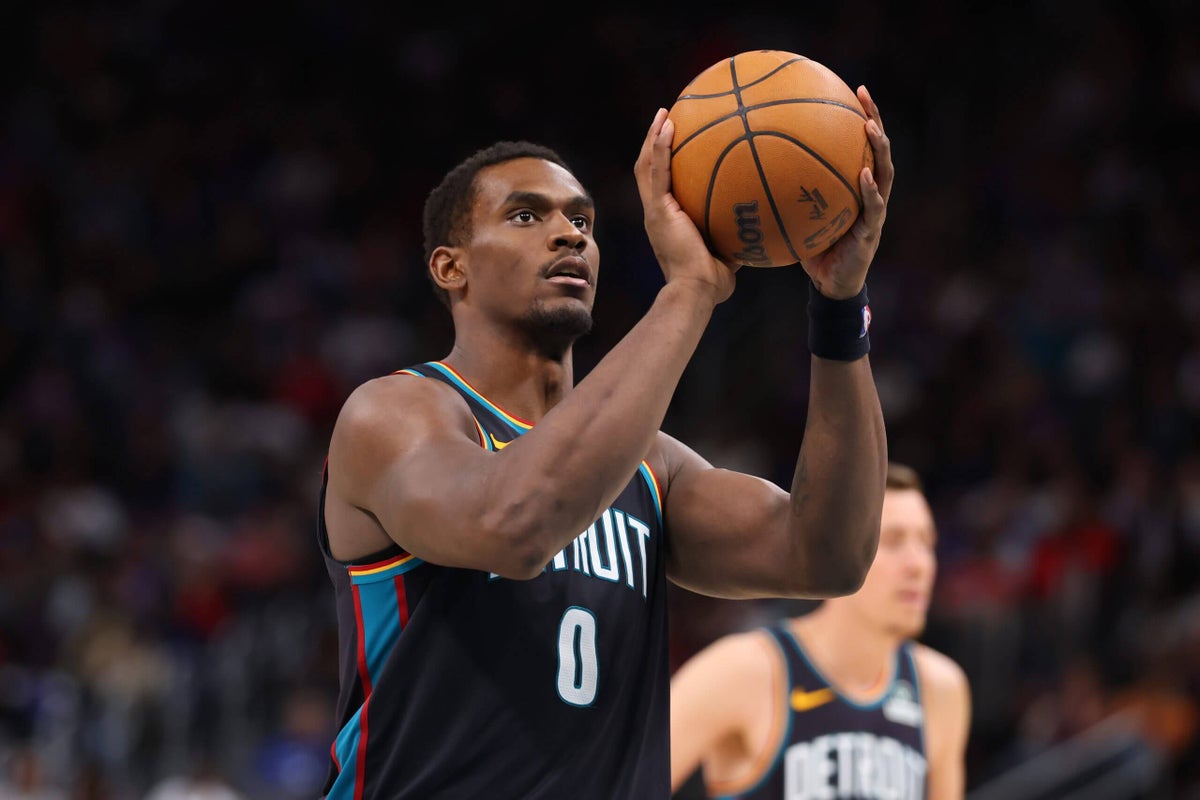
Өнгөрсөн улиралд NBA-ийн бүх оддын багт нэрлэгдсэн Жэйлен Дюрен одоогоор гэрээ байгуулаагүй үлдсэн цорын ганц тоглогч хэвээр байна.
Детройт Пистонс болон 22 настай тоглогчийн хоорондох гэрээний хэлэлцээ удааширч байгаа нь хоёр тал тоглогчийн үнэлэмжийн тал дээр санал зөрөлдөөнтэй байгаатай холбоотой юм. Өнгөрсөн улиралд Жэйлен Дюрен тогтмол сайн тоглолт үзүүлсэн ч плэй-оффын шатанд хангалтгүй тоглолт үзүүлсэн нь хэлэлцээнд нөлөөлж байна. Одоогоор түүнд өөр багтай гэрээ байгуулах боломж хязгаарлагдмал байгаа тул Детройт Пистонстой олон жилийн гэрээ байгуулах нь хамгийн боломжит хувилбар гэж NBA-ийн шинжээч Жон Холлингер үзэж байна.
Шинэ гэрээний нөхцөлд урамшууллын заалт оруулах боломжгүй болсон нь хэлэлцээг улам хүндрүүлж байна. NBA-ийн шинэ дүрмээр урамшууллын мөнгө нь татварын хязгаарлалтад шууд нөлөөлдөг тул багууд ийм заалт оруулахаас татгалзаж байгаа юм. Детройт Пистонс одоогоор татварын хязгаараас 46 сая ам.доллароор доогуур байгаа тул гэрээг эрт төлөгдөх нөхцөлөөр байгуулах боломжтой байна.
Энэхүү хэлэлцээний үр дүн нь Аусаар Томпсоны гэрээний сунгалтад мөн нөлөөлөх юм. Багийн удирдлага 2028 болон 2029 онд Жэйлен Дюренд хэдэн ам.доллар төлөхөө тодорхойлсны дараа Аусаар Томпсоны гэрээг төлөвлөх боломжтой болно. Одоогоор Жэйлен Дюрен улирлын нээлтийн тоглолтод Детройт Пистонсын бүрэлдэхүүнд багтах өндөр магадлалтай байна.
Дэлгэрэнгүй эх сурвалжийг харах
Эх сурвалжийг нээх ↓
With the bulk of the NBA offseason in the rearview, Jalen Duren remains the only All-NBA selection from last season not currently under contract.
Discussions between Duren and the Detroit Pistons have yet to result in a new deal for the 22-year-old, long-term or otherwise. Last offseason, the big man and Detroit were unable to agree on a rookie-scale extension. One year, a career-best regular season and an underwhelming playoff run later, Duren and the Pistons are still at odds on his worth.
Who better to help dissect the impasse than someone who was actively involved in NBA front-office negotiations for a living? Here’s a discussion with our John Hollinger to better understand Duren’s talks with the Pistons, why the two sides seem to be apart, how his contract negotiations could affect Ausar Thompson’s rookie-scale extension and more.
Hollinger spent nearly a decade in the Memphis Grizzlies’ front office as the vice president of basketball operations from 2012 to 2019. Here’s our conversation:
Given your experience in negotiations and how long Duren’s have gone on, how do you ultimately see his restricted free agency concluding?
Hollinger: We’ve all seen this restricted free-agency movie so many times, and it almost always ends the same way: After a drawn-out stalemate for most of the summer, cooler heads prevail, and the two sides eventually work out a multi-year deal to stay put. I think it’s going to end the same way with Duren and the Pistons; both sides have strong incentive to get a deal done, and the only question is the price tag.
There is no plausible outcome that results in Duren signing an offer sheet with another team because there is no cap space left, and any sign-and-trade scenario Detroit would agree to seems highly unlikely.
From Duren’s side, he has a chance to sign a nine-figure deal for life-changing money, and his only other realistic alternative is to re-up for the qualifying offer of just $9.6 million and try again next year. Realistically, this is by far Duren’s best option, even if the final number isn’t the supermax he might have hoped for in the spring.
Why Jalen Duren is still a free agent
Hunter Patterson and Jeshua Kidd
What are some intricacies of these negotiations fans might not be aware of, and how could they extend discussions?
Hollinger: One thing that has really changed is that incentives can’t be used to bridge the gap between the two sides anymore.
Teams have been extremely reluctant to put incentives in new contracts because they now count against the tax aprons, regardless of whether the player achieves them. Since incentives can count for up to 15 percent of the contract value, it used to be team and player could paper over a relatively small difference by including a win-win scenario where the player achieved an incentive that helped the team win.
We had this exact scenario in restricted free agency when I worked for the Memphis Grizzlies and JaMychal Green was a restricted free agent. After a staring contest for most of the summer, we signed him shortly before camp to a deal that included over a million dollars in unlikely incentives — significant money on a $16 million deal.
One thing the Pistons can offer Duren, however, is a front-loaded deal where he gets his money sooner. Detroit is in a great position to do that because it’s still $46 million below the tax line and has completed all of its other summer maneuvers, and it might actually prefer to do so anyway since Ausar Thompson’s extension is likely the next piece of business. Speaking of which …
If Duren’s negotiations drag on as long as they can, how would that affect Thompson’s potential rookie-scale extension?
Hollinger: I see two dominoes here. First, the Pistons need to know what Duren’s number will be on their books in 2028 and 2029 before they can finalize their cap planning and determine their best path for Thompson’s next deal. Second, there is an important question of which player they value more, one that will play out rather publicly if Thompson inks an extension shortly after Duren’s deal is completed.
Of course, it’s possible that, as with Duren, Detroit doesn’t agree with Thompson on an extension and he becomes a restricted free agent next summer.
How involved are star players like Cade Cunningham in nudging the organization to acquiesce to Duren’s desired salary?
Hollinger: I would be surprised if he was much of a factor at this point.
If training camp came around and Duren was still unsigned, that might be a different story, and Cunningham (and head coach J.B. Bickerstaff, for that matter) might push a bit harder to get this to the finish line. Even so, historically star players’ greatest impact has been on the player-acquisition front, not on retaining players who aren’t immediate flight risks.
Duren still seems highly likely to be a Piston on opening day.
With Detroit’s core of Cunningham, Thompson and Duren all being 24, 23 and 22 years old respectively, how long do you see the Pistons being able to keep them together based on the aprons? Cunningham is currently the only of the three signed to a long-term contract.
Hollinger: I don’t see it as a big obstacle. Duren is probably signing for less than the max, and I would expect the same to happen with Thompson. More importantly, Trajan Langdon has kept the remainder of Detroit’s books remarkably clean, to the point the Pistons are nearly $100 million below next season’s first-apron line.
Even if they give Duren $35 million and Thompson $30 million, they won’t be anywhere near the tax, let alone either of the aprons. Bigger picture, despite its success last season, Detroit’s biggest long-term issue remains finding one or two more players worth paying, not figuring out how to pay the players they already have.
If Duren pushed for a shorter-term deal to hit free agency sooner, how would you envision that deal in terms of years and salary?
Hollinger: I just don’t know why the Pistons would agree to a structure like that unless it was forced on them via an offer sheet, and no other team has cap room left to do something like that.
For instance, if Duren tried to do three years, $75 million with a player option after two seasons, would Detroit have any incentive to play ball on something like that? I don’t think it would. Again, the leverage situation in restricted free agency really favors the team unless the player is able to produce a competing offer sheet.
Without that, as we’re seeing, the situation can drag on, and the players’ only real move is to threaten to play for the qualifying offer or otherwise front that he’ll be a bad actor if he doesn’t get the right deal.
Duren could hit free agency if he were to sign the qualifying offer, but he’d be taking a huge risk. He would also certainly short himself $20 million or so for the 2026-27 campaign, and might never make it back. That’s why his best tactic is to bluff that he’ll take the qualifying offer, but not actually take it.
Would you be concerned there could be any lingering, negative feelings on Duren’s end if he feels forced into taking a deal that undervalues him?
Hollinger: I would only be worried if it turned into a holdout situation where he didn’t show up for training camp because he still didn’t have a deal he liked, especially if it dragged into the regular season.
Again, we ended up in a similar situation with JaMychal. We didn’t get his deal done until late September … and then, he showed up and was a total pro, and everything was fine.

