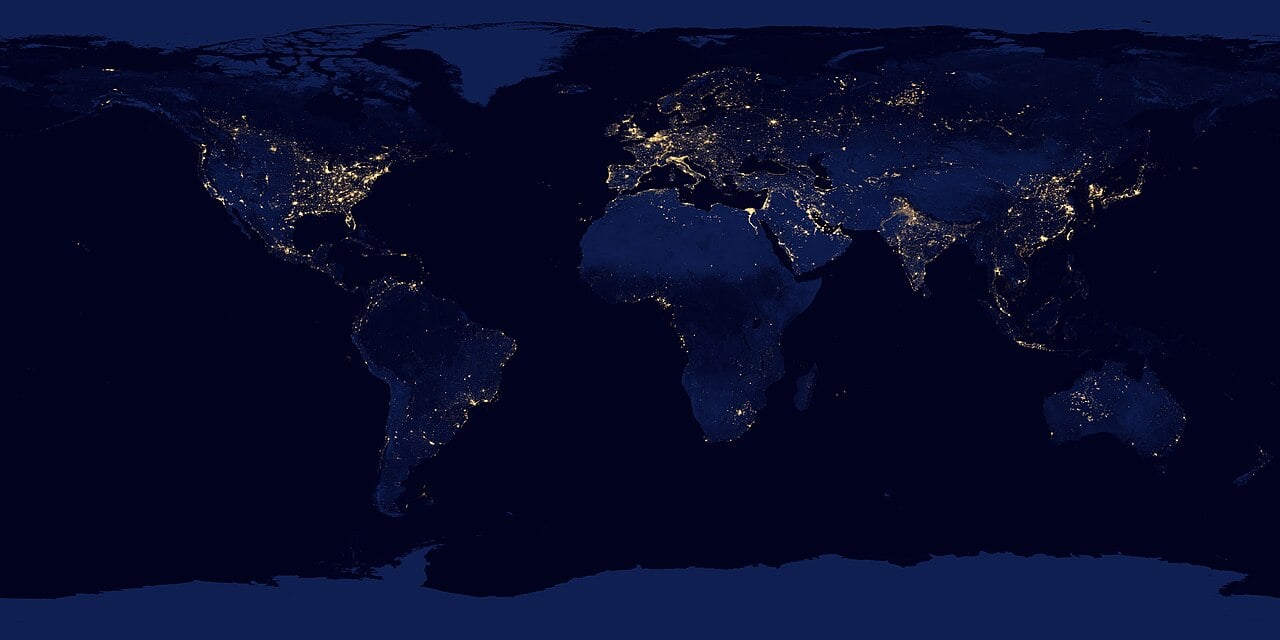
Хиймэл дагуулын ажиглалт болон атмосферийн найрлага дахь химийн ул мөр нь сансрын гүн дэх ухаант амьдралыг илрүүлэх түлхүүр болж байна.
Экзопланетийг ажиглах HWO (Habitable Worlds Observatory) төхөөрөмж нь тухайн гаригийн атмосферийн найрлага, далай болон эх газрын байршил, тэр ч байтугай фотосинтезийн үйл явцыг таньж мэдэх чадвартай. Эрдэмтэд амьдралын шинж тэмдгээс гадна аж үйлдвэржсэн иргэншлийн үйл ажиллагааг илтгэх “техносигнал”-ыг илрүүлэх судалгааг хийж байна. Эдгээр нь байгалийн жамаар үүсэх боломжгүй, зөвхөн технологийн дэвшлийн үр дүнд бий болдог молекулууд юм.
Хлорфторт нүүрстөрөгч (CFC) зэрэг бодисууд нь геологийн үйл явцаар үүсдэггүй тул тэдгээрийг атмосферийн спектрээс илрүүлэх нь тухайн гариг дээр химийн үйлдвэрлэл явагдаж буйн шууд нотолгоо болно. Үүнээс гадна хүчдэлийн тоног төхөөрөмж болон хагас дамжуулагч үйлдвэрлэлд ашигладаг хүхрийн гексафторид, азотын трифторид зэрэг бодисууд нь хэт улаан туяаны спектрт тод ялгардаг тул урт хугацаанд илрүүлэх боломжтой “гэрлэн дохио” мэт үүрэг гүйцэтгэдэг.
Дэлхийн эдийн засгийн үйл ажиллагааг ажигласнаар сансрын уудмаас техносигнал илрүүлэх боломжтойг 2020 оны цар тахлын үеийн азотын давхар ислийн хэмжилтийн өөрчлөлт баталсан. Радио долгионоос ялгаатай нь ийм төрлийн бохирдлын ул мөр нь иргэншлийн аж үйлдвэржилтийн түвшинг тодорхойлох илүү баттай эх сурвалж болдог. Гэсэн хэдий ч иргэншил хөгжихийн хэрээр байгаль орчныг хамгаалах технологи нэвтрүүлж, бохирдлоо бууруулдаг тул ийм ул мөр нь зөвхөн тодорхой хугацаанд л илэрдэг байж болзошгүй юм.
Дэлгэрэнгүйг эх сурвалжаас харах
Эх сурвалжийг нээх ↓
(This is Part 4 of a series on what we can actually find on an exoplanet. Read Part 1, Part 2, and Part 3 first.)
All of that from a single dot. One HWO observation of an exoplanet can reveal what’s in its atmosphere, sketch a rough map of its surface, show where its oceans and continents lie, and even pick up signs of photosynthesis and how life responds to the changing seasons.
And we can go bigger. That same dot can tell you whether there’s not just life, but intelligent life.
If a planet has life, it might also have a civilization. And civilization runs on industry, and industry leaves atmospheric signatures of its own: not just biology, but technology. These are called technosignatures, and here’s the slightly embarrassing part. Some technosignatures are actually easier to detect than biosignatures. In other words, aliens might notice our factories before they notice our forests.
Life can be ambiguous. Oxygen and methane have those dull non-living ways of sneaking into an atmosphere, which is why we have to be so strict about biosignatures. Technology, on the other hand, makes molecules that geology simply cannot fake. Chlorofluorocarbons, the CFCs that punched a hole in Earth’s ozone layer, have no natural source whatsoever. They exist because we invented them in the 1930s and pumped them into the sky for fifty years. Spot a CFC in an exoplanet’s spectrum and there’s essentially no innocent explanation. It’s not “maybe life.” It’s “somebody over there is running a chemical plant.”
The same logic covers sulfur hexafluoride, used in high-voltage electrical gear; nitrogen trifluoride, used in making semiconductors; and the perfluorocarbons like CF4 and C2F6, inert gases released as industrial byproducts. None of them occur naturally in any meaningful amount. All of them are extraordinarily stable, lingering in an atmosphere for thousands of years once released. And all of them absorb infrared light in narrow, distinctive bands. They’re basically neon signs, if neon signs were invisible except at very specific wavelengths and stayed lit for ten thousand years.
The pandemic handed us an unexpected proof of concept. During the 2020 lockdowns, satellites watched atmospheric nitrogen dioxide, the sharp brown haze over city skylines that comes from combustion, crash over major cities as cars stopped driving and factories went quiet. From orbit, you could literally watch the economy shut down. That’s how tightly nitrogen dioxide tracks industry. An alien astronomer with the right instrument could plot our GDP.
In fact, these pollution signatures beat radio. The old SETI romantics assumed our television and radio broadcasts would bathe the galaxy, but in reality they fade into the noise within a few tens of light-years. Planetary radar, the focused high-power beams we bounce off asteroids, can reach hundreds of light-years, but only if it happens to be aimed right at the listening aliens. So aliens mostly can’t hear us. But they sure can smell us. For a while.
In 1987 the world signed the Montreal Protocol to phase out CFCs, because they were destroying the ozone layer. It worked. CFC concentrations peaked in the 1990s and have been falling ever since. Give it another century or two and they’ll be all but gone. Which means the window during which Earth’s most distinctive technosignature burned brightest runs from roughly 1960 to 2050. A single century, out of four and a half billion years of planetary history. An alien astronomer watching Earth across that whole span would catch a one-frame flash of CFCs and nothing before or after.
The same story is coming for combustion and its nitrogen dioxide. If our civilization moves off fossil fuels this century, that signature will crash too. Peak visibility, from an alien’s point of view, is right now. The uncomfortable implication is that if civilizations tend to outlast their pollution phase, because they clean themselves up, then the window when they’re detectable by their pollution is short. We might be far more likely to catch a planet that’s briefly dirty than one that’s settled into a long, clean maturity.
But even if we never catch a grubby civilization on an ordinary Tuesday afternoon, we can still read a world’s continents, its oceans, its photosynthesis, and its atmosphere.
All from a single pale blue dot.

