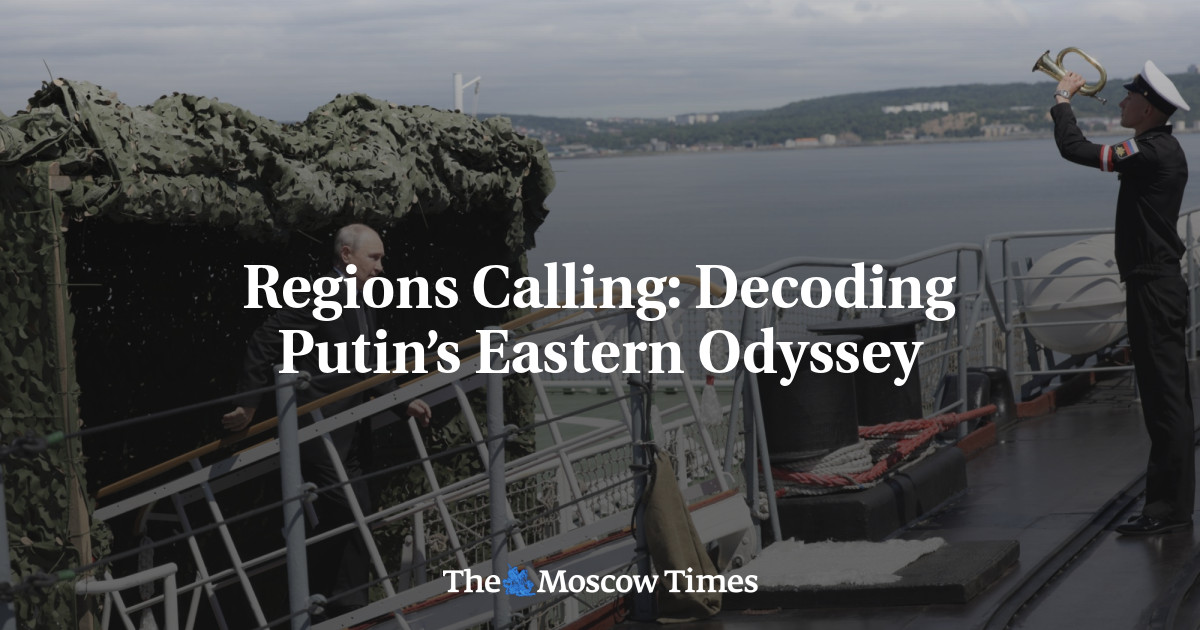
Владимир Путин өнгөрсөн долоо хоногт Сибирь болон Алс Дорнодын бүс нутгуудад хийсэн айлчлалаа өндөрлөв. Энэхүү аялалын хүрээнд тэрээр маргаантай газар нутаг болох Курилын арлуудад анх удаа очсон нь Япон улстай дипломат маргаан дэгдээхэд хүргэлээ.
Ажиглагчдын үзэж байгаагаар, Ерөнхийлөгчийн энэхүү айлчлал нь ирэх сард болох улс даяарх сонгуулийн өмнө нэр хүндээ өсгөх, ОХУ-ын бүс нутгууд дахь улс төрийн хяналтыг чангатгах зорилготой байв. Украйны дайны улмаас хүн хүч, эдийн засгийн хүндрэлтэй тулгарсан Сибирийн бүс нутгуудад Путин биечлэн очсон нь орон нутгийн элитүүдийн үнэнч байдлыг шалгах, иргэдийн дунд үүсэж болзошгүй бухимдлыг сааруулах гэсэн алхам гэж шинжээчид дүгнэж байна.
Айлчлалын үеэр Башкортостан улс дизель түлш, бензин үйлдвэрлэлийн “Башнефт” компанийн үлдсэн хувьцаагаа төрийн өмчит “Роснефт” компанид худалдахаар болсон нь тус бүс нутгийн төсвийн алдагдалтай холбоотой гэж мэдэгдсэн байна. Үүний зэрэгцээ Новосибирск, Омск зэрэг бүс нутагт хурц ган гачиг болсны улмаас онц байдал зарлаад байгаа юм.
Түүнчлэн ОХУ-ын шүүхээс дайныг эсэргүүцэгч улс төрч Лев Шлосбергийг цэргийн талаар ташаа мэдээлэл тараасан хэргээр 11 жил нэг сарын хугацаатай хорих ял оноолоо. Энэхүү үйл явдал нь тус улсын дотоод дахь эсэргүүцлийн хөдөлгөөн болон сөрөг хүчний эсрэг авч буй чанга бодлогын нэг хэсэг болж байна.
Дэлгэрэнгүйг эх сурвалжаас харах
↓Эх сурвалжийг нээх ↓
Hello and welcome to Regions Calling, your guide to developments from beyond the Russian capital by The Moscow Times.
President Vladimir Putin last week wrapped up a tour of major cities across Siberia and the Far East, including his first-ever visit to the disputed Kuril Islands. The latter move triggered a diplomatic flare-up between Moscow and Tokyo, which claims the Soviet Union illegally seized the four islands during World War II.
Beyond its impact on Russia’s foreign relations, the tour marked the first time this year that Putin visited a city other than his native St. Petersburg or Tatarstan’s capital Kazan. (Putin’s previous lack of travel has been linked to his alleged fear of assassination, according to a European intelligence report cited by CNN and the Financial Times.)
For this week’s edition, we spoke with experts in Russia’s regional politics to unpack hidden messages and meanings behind the itinerary and topics discussed during Putin’s latest trip.
But first, a look at the latest news from the regions:
The Headlines
- The republic of Bashkortostan, Russia’s leading producer of diesel fuel and gasoline, will sell its remaining stake in the homegrown oil producer Bashneft to state oil giant Rosneft, regional head Radiy Khabirov said last week. Khabirov named the region’s growing budget deficit as the chief reason for the sale.
Rosneft acquired a controlling stake in Bashneft in 2016 amid Bashkortostan’s gradual loss of sovereign powers and related takeover of the region’s economic assets by Moscow. Before the recent buyoff, which began in June, Bashkortostan had owned 25% plus one share in Bashneft, while Rosneft held 57.7% - In the Novosibirsk region, a supporter of the exiled occult healer and opposition figure Svetlana Lada-Rus was detained on charges linked to this spring’s protests against the mass culling of livestock in Siberia. Activist Larisa Mikhailova faces seven years in prison for “inciting terrorism online.”
And in the republic of Tatarstan, security forces conducted searches in the homes of four supporters of Lada-Rus who campaigned against the use of biometrics in the region’s schools for student identification, according to media reports. It is unclear whether the activists were detained.
- The republic of Sakha’s highest court last week ruled to keep the anti-Kremlin shaman Alexander Gabyshev under forced psychiatric treatment.Gabyshev, 57, became famous after embarking on an 8,000-kilometer (4,970-mile) trek from his home republic to Moscow in 2019 to “exorcize” and “cast out” President Vladimir Putin from power. He was later arrested and has spent most of the past seven years under forcible treatment in different psychiatric institutions.
- Residents of the Siberian republic of Altai noticed large-scale logging of forests near the flagship Manzherok resort owned by Russia’s biggest lender Sberbank, according to videos circulating online.
Regional authorities claim the work is necessary to modernize a federal highway stretching from Novosibirsk through Altai and to the border with Mongolia, though some locals fear that cleared territories will be used by Sberbank for new tourism facilities.Grievances over the arrival of big Kremlin-backed businesses like Sberbank were among the reasons for large-scale protests that swept Altai last year.
- Authorities in the Novosibirsk region, one of Siberia’s top agricultural producers, declared a regional-level emergency on Tuesday after prolonged drought and high temperatures caused widespread losses of grain and legume crops.
A state of emergency over drought was earlier declared in the neighboring Omsk region, another major grain producer.
The Spotlight
President Vladimir Putin’s rare tour of Russia’s regions ended with a bang last week by sparking a diplomatic row with Japan, whose Prime Minister Sanae Takaichi slammed the Russian president’s visit to the disputed Kuril Islands as “offensive” and “unacceptable.”
Putin visited the town of Kurilsk on the island of Iturup (or “Etorofu” in Japanese) last Thursday after overseeing naval exercises of the Russian Pacific Fleet off the coast of Sakhalin.
The western Pacific islands marked the final leg of Putin’s three-week tour that began in the Siberian city of Irkutsk on July 24 and included subsequent visits to Omsk, Krasnoyarsk, therepublic of Buryatia’s capital Ulan-Ude and Novosibirsk.
Before this tour, Putin had not been seen outside of Moscow since the Russia-ASEAN summit in Tatarstan in June.
While the Kremlin likely intended to use the president’s appearance on the Kuril Islands as a provocative show of power, the choice of Siberian cities was dictated by both security concerns over long-range Ukrainian attacks and next month’s nationwide elections, experts in regional politics told The Moscow Times.
“This was a legitimation-focused tour,” said András Tóth-Czifra, an expert on Russia’s domestic politics and political economy. “I think we need to separate Iturup from the rest of the trip. To me, the Iturup visit seemed like muscle-flexing with relatively low associated costs.”
Tóth-Czifra said the presidential administration focused Putin’s visit on the protest-prone regions of Siberia and the Far East — which also suffered disproportionate economic and human losses in the Ukraine war — to diffuse potential discontent ahead of the State Duma elections.
Doubts “about the limits of loyalty of local elites” could also play a role, Tóth-Czifra said.
Putin’s Tour of Siberia and the Far East
Irina Busygina, an expert in comparative federalism, said Putin “must have had reasons” to travel to the regions after mostly avoiding that duty ever since the Covid-marred spring of 2020.
“I think the idea originated in the presidential administration, and they then convinced Putin of its usefulness,” said Busygina, a researcher at Harvard University’s Davis Center for Russian and Eurasian Studies.
“United Russia rolled out its ‘main weapon’ at [this year’s] party congress, declaring itself the ‘party of the president.’ Putin’s visit to the regions is intended to strengthen United Russia,” she added.
Busygina believes cities for the tour were chosen based on the number of potential voters and relative importance for the upcoming elections, while Buryatia played the mandatory role of an “ethnic” addition to the tour.
Buryatia, a Mongolia-bordering republic with a population of less than 1 million, has more than 5,200 verified war casualties and has ranked in the top 10 regions by war deaths per capita since 2022.
The resource-rich republic has long faced some of the highest levels of poverty and unemployment in the country.
Putin overseeing naval exercises of the Russian Pacific Fleet off the coast of Sakhalin. Kremlin.ru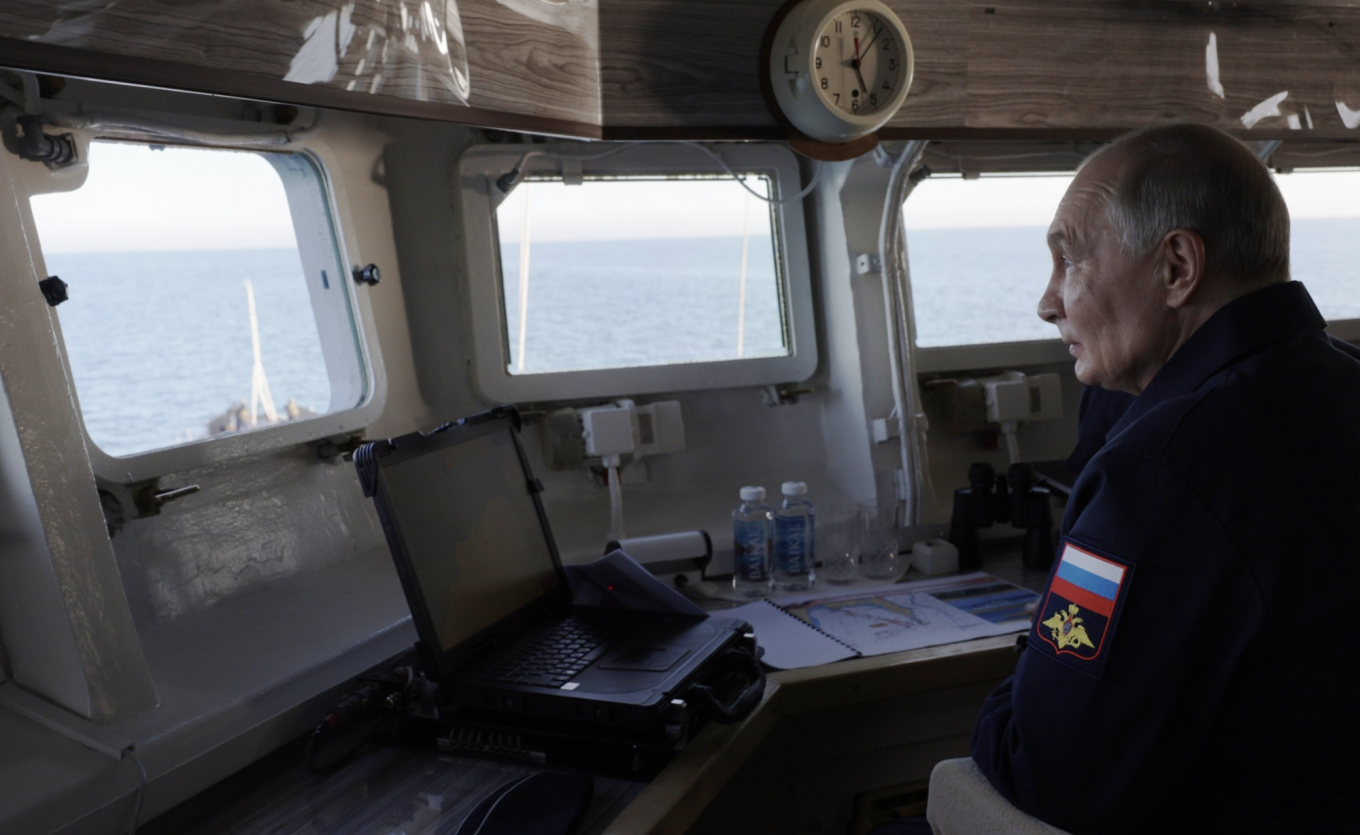
A lack of job opportunities pushed some Buryatians to join the Russian military in search of income, though many were sent to the front lines in Ukraine by force during the nationwide mobilization campaign.
This disproportionate call-up helped fuel an unprecedented rise of Indigenous-led anti-war and pro-democracy movements in the region, though most of them were pushed into exile and outlawed as “terrorist” or “extremist” by the Kremlin.
Instead of war-related discussions, Putin’s visit to Buryatia’s capital Ulan-Ude largely focused on urban planning and public transport accessibility — something that may ring with irony for residents of a city known for its poor environmental record and infrastructural problems.
“Local officials’ reports about a ‘comfortable urban environment’ couldn’t be farther from the truth” as the city consistently suffers from a lack of urban green spaces, poor water drainage systems and dilapidated roads, said Anna Zueva, a now-exiled veteran journalist from Ulan-Ude.
“While a meeting with Putin was underway, a minibus from Ulan-Ude was unable to reach the village of Bagdarin some 70 kilometers (43 miles) away because rain had washed out the stretch of road with no settlements or mobile service within a 150-kilometer (93-mile) radius,” said Zueva. “Five people were unable to leave the scene and were forced to spend the night in the stuck minibus.”
Putin on board the missile cruiser Varyag. Kremlin.ru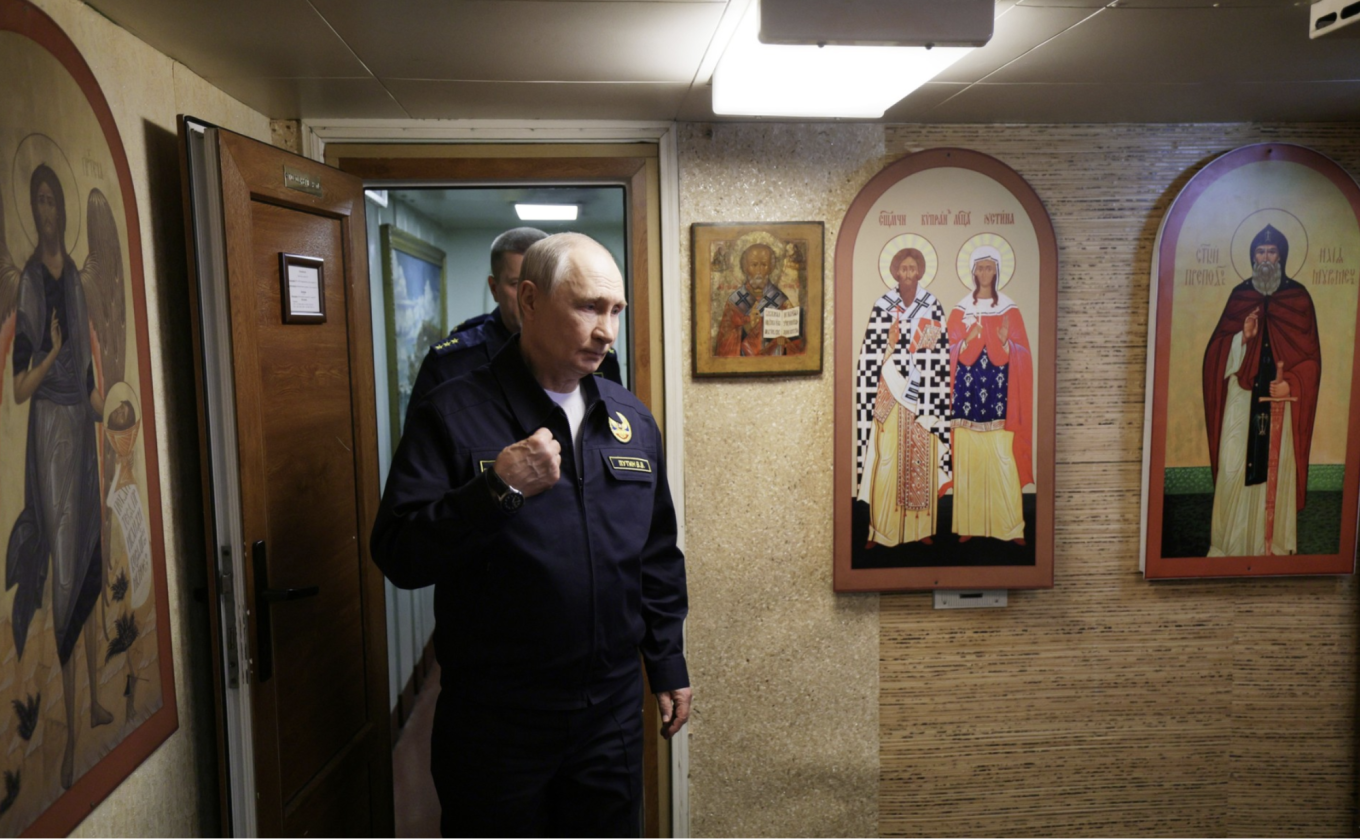
For Zueva, the most notable part of Putin’s visit was the opening of the beryllium mining and processing plant some 160 kilometers (99 miles) south of Ulan-Ude, which the president attended via videoconference.
“Beryllium is an important strategic metal used in the defense, aviation, space and nuclear industries,” Zueva explained. “It saddens me that Buryatia’s unique natural resources will continue to be barbarically extracted from the earth solely to serve the Russian dictatorship, fuel the war and line the pockets of the elite.”
Zueva said that Putin’s latest visit to her home region “gave a persistent feeling of déjà vu,” reminding her of the president’s April 2013 tour that she covered as part of a local press pool.
“I was young, just 26, didn’t yet fully understand how the system worked, and was thrilled to be sent to such an event. I thought I’d get to see the president with my own eyes,” Zueva recalled. “Ultimately, we journalists were locked in a separate building, simply watching Putin on a live TV screen for hours. No questions were allowed, and no one ever saw Putin himself.”
To maintain his image of a strongman of the people, Putin’s trip was laden with carefully orchestrated meetings with war veterans, schoolchildren, factory workers and young scientists.
To expert Busygina, the “meaningless format” of Putin’s tour is “very reminiscent of Soviet practices of the Brezhnev era,” when the country’s leader also “loved to take pictures while sitting surrounded by pioneers.”
Putin’ has already spent more time in office than Brezhnev, but whether he has been equally successful at pacifying the masses and orchestrating elections is up for debate.
“The purpose of such tours is usually to narrow the gap between the popularity of the ruling party and the president,” analyst Tóth-Czifra said. “But judging from popular reactions to the visits…it is questionable whether these will have any major organic positive impact on United Russia’s result in September.”
Photo of the Week
endoflaw / Telegram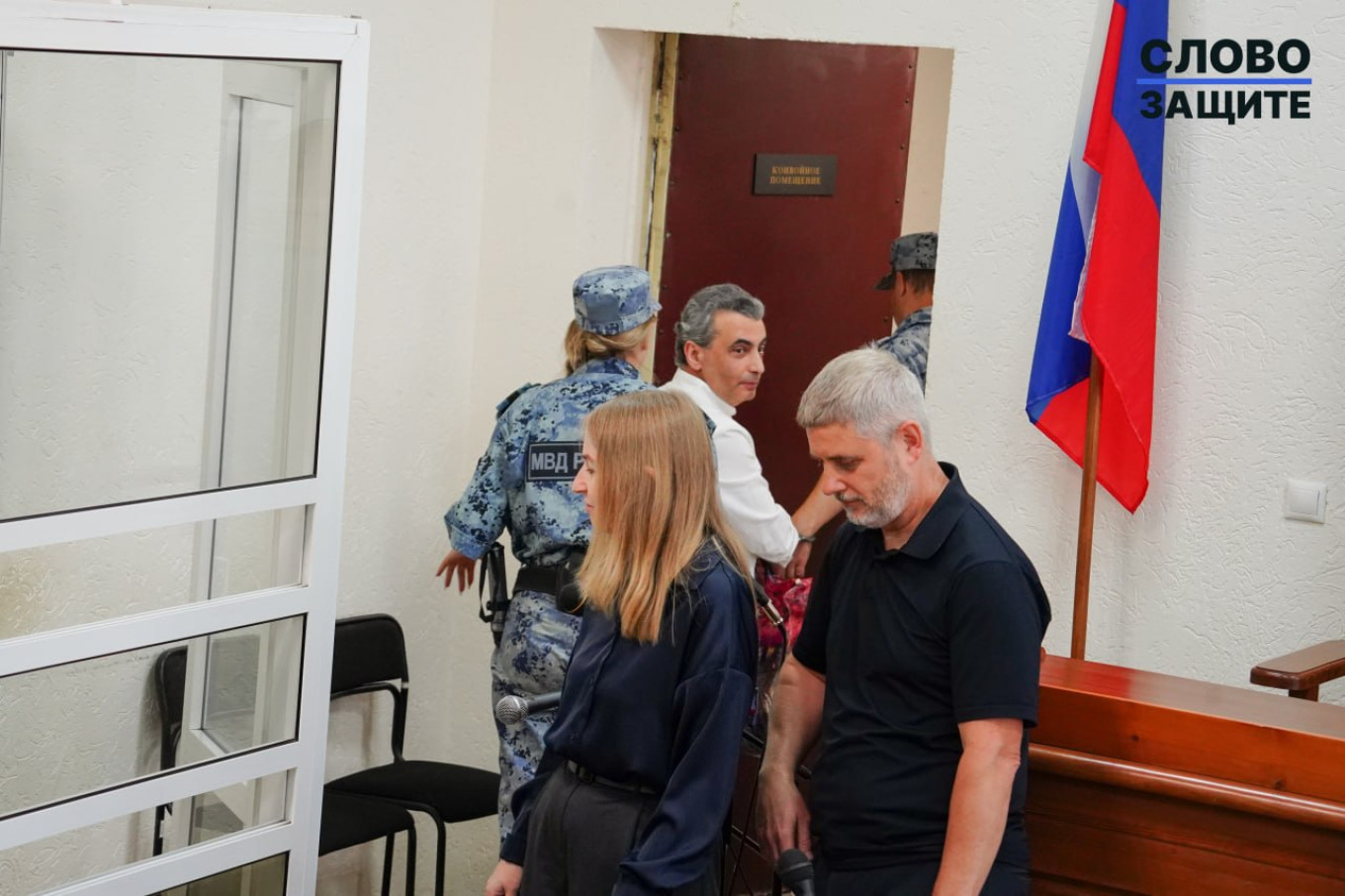
Veteran opposition politician Lev Shlosberg pictured during his sentencing hearing in the city of Pskov in western Russia on Monday.
Shlosberg, 63, was sentenced to 11 years and one month in prison for “discrediting” and spreading “fake news” about the Russian military.
“I am an innocent man, against whom criminal charges have been unlawfully brought, who was unlawfully deprived of liberty pending a court verdict, and who is being unlawfully deprived of liberty following a court verdict,” Shlosberg said in his final statement in court.
Thank you for reading Regions Calling. Our newsletter will be going on a short break and will return to your inbox on Sept. 10.
A Message from The Moscow Times:
Dear readers,
We are facing unprecedented challenges. Russia’s Prosecutor General’s Office has designated The Moscow Times as an “undesirable” organization, criminalizing our work and putting our staff at risk of prosecution. This follows our earlier unjust labeling as a “foreign agent.”
These actions are direct attempts to silence independent journalism in Russia. The authorities claim our work “discredits the decisions of the Russian leadership.” We see things differently: we strive to provide accurate, unbiased reporting on Russia.
We, the journalists of The Moscow Times, refuse to be silenced. But to continue our work, we need your help.
Your support, no matter how small, makes a world of difference. If you can, please support us monthly starting from just $2. It’s quick to set up, and every contribution makes a significant impact.
By supporting The Moscow Times, you’re defending open, independent journalism in the face of repression. Thank you for standing with us.
Continue

Not ready to support today?
Remind me later.
×
Remind me next month
Thank you! Your reminder is set.
We will send you one reminder email a month from now. For details on the personal data we collect and how it is used, please see our Privacy Policy.

