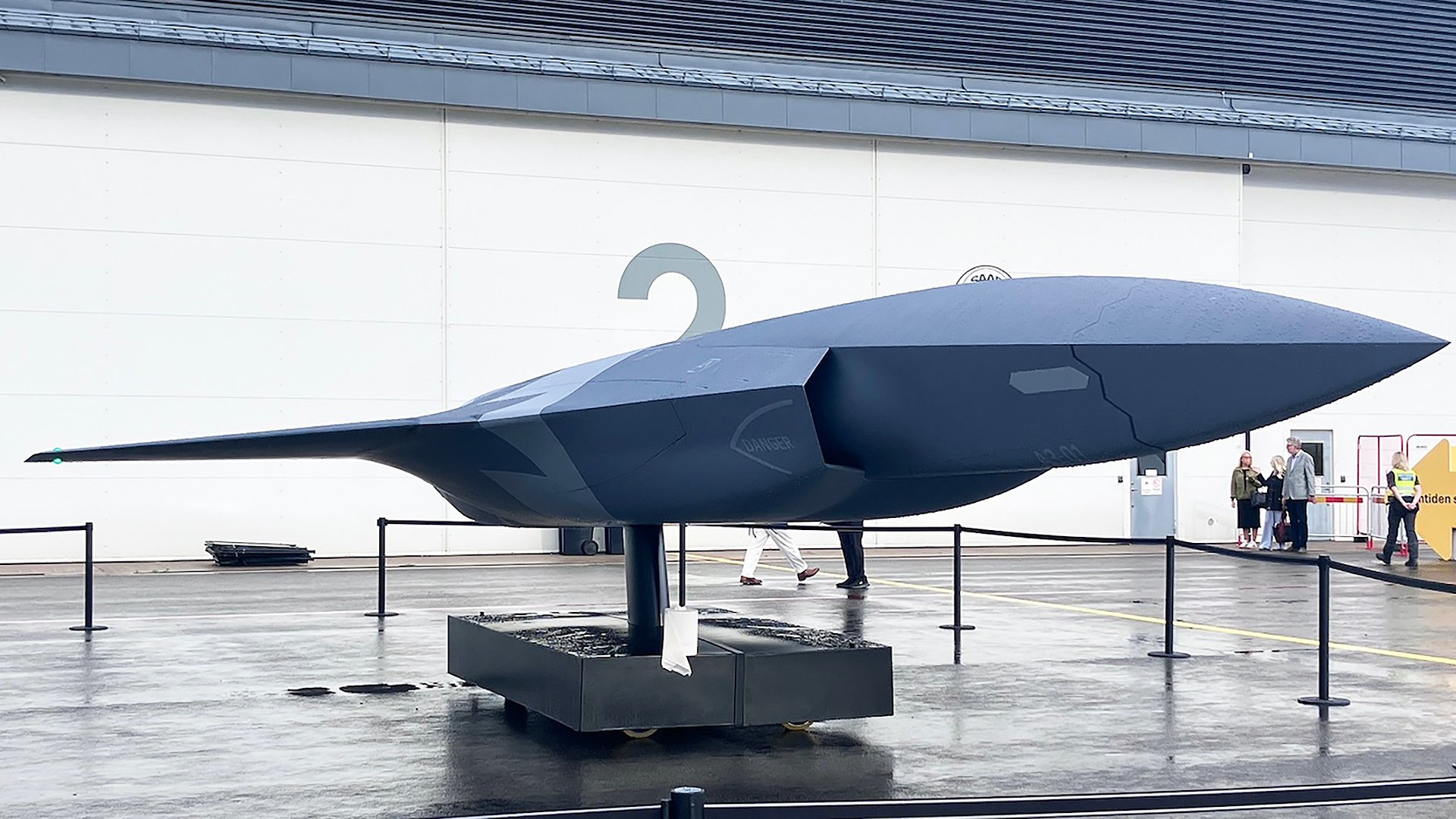
Шведийн батлан хамгаалахын салбарын Saab компани 2030-аад онд ашиглалтад оруулахаар төлөвлөж буй “Autonomous Collaborative Platform” (ACP) хөтөлбөрийнхөө хүрээнд боловсруулсан шинэ үеийн дроны загварыг олон нийтэд үзүүлэв.
Saab компани Мальмен агаарын баазад болсон Шведийн Агаарын цэргийн хүчний 100 жилийн ойн арга хэмжээний үеэр А3 нэртэй уг дроны бүрэн хэмжээний макетыг танилцууллаа. Энэхүү дрон нь дуунаас хурдан нисэх чадвартай, радарт үл үзэгдэх технологиор тоноглогдсон бөгөөд АНУ-ын “Collaborative Combat Aircraft” (CCA) хөтөлбөрийн хүрээнд бүтээгдэж буй ижил төстэй хэрэгслүүдээс илүү дэвшилтэт, овор хэмжээ ихтэй байхаар төлөвлөгджээ.
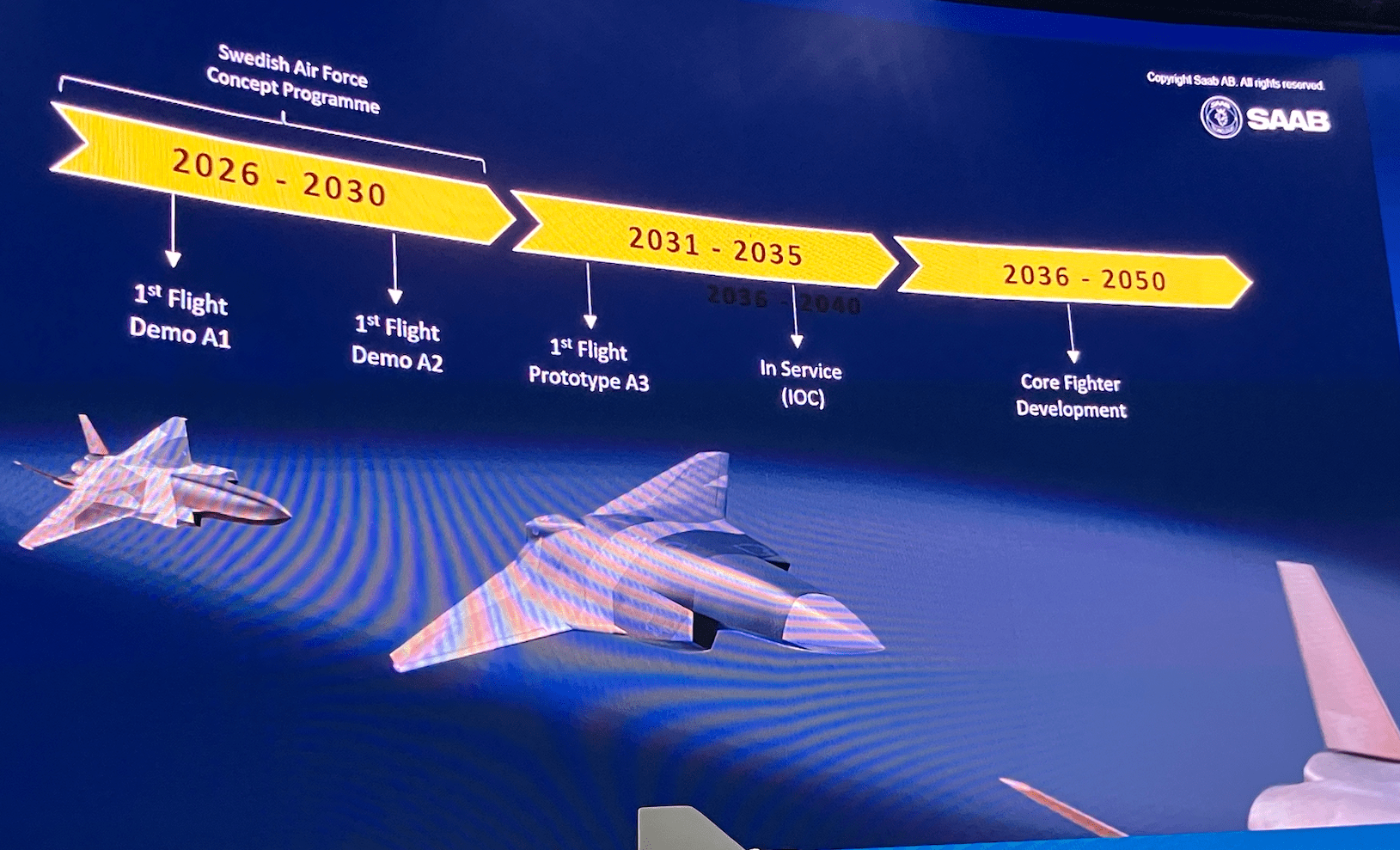
Тус компани одоогоор Шведийн Батлан хамгаалах яамны санхүүжилтээр А1 болон А2 хэмээх хоёр туршилтын дроныг хөгжүүлж байна. А1 загвар нь Gripen E/F сөнөөгч онгоцонд ашиглагддаг GE Aerospace F414 хөдөлгүүрээр тоноглогдсон бөгөөд ирэх 15 сарын дотор анхны нислэгээ үйлдэхээр төлөвлөж байгаа бол А2 нь зэвсэг тээвэрлэх болон дэвшилтэт мэдрэгчүүдийг туршихад чиглэх юм.
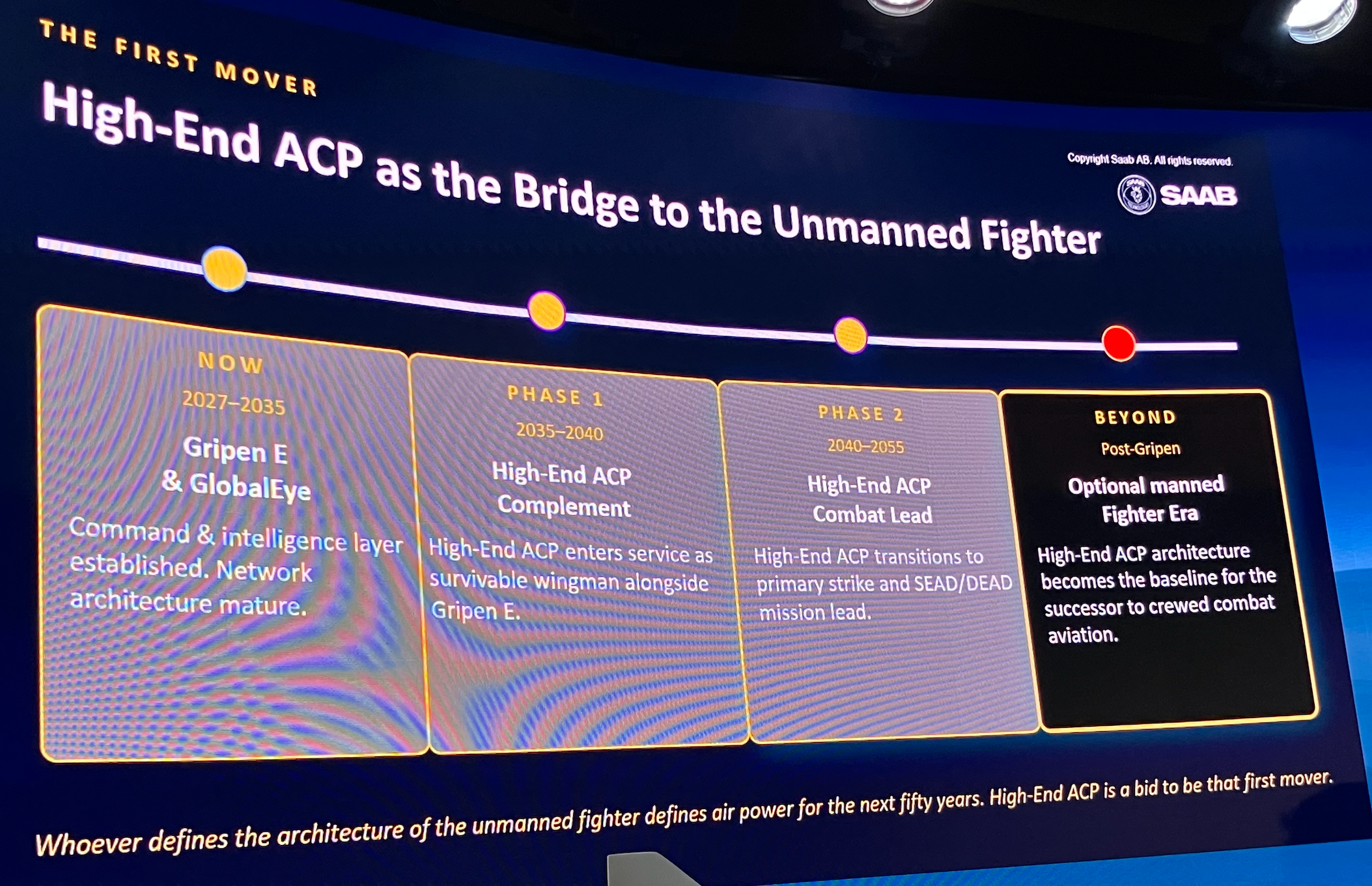
Saab-ын төлөвлөгөөгөөр уг дрон нь Gripen E сөнөөгч онгоц болон GlobalEye агаарын тагнуулын онгоцтой хослон ажиллаж, дайсны агаарын хамгаалалтыг дарах, электрон дайн болон алсын зайн цохилт өгөх зэрэг өндөр эрсдэлтэй даалгавруудыг гүйцэтгэх чадвартай байх аж. Хэдийгээр одоогоор үйлдвэрлэлийн гэрээ байгуулагдаагүй байгаа ч Saab компани уг технологио ирээдүйн сөнөөгч онгоцны суурь болох боломжтой гэж үзэж байна.
Батлан хамгаалахын салбарын шинжээчдийн дүгнэж буйгаар, уг дрон нь Gripen сөнөөгч онгоцны зардлын гуравны нэгтэй тэнцэхүйц ашиглалтын зардалтай байх төлөвтэй байна. Шведийн тал ирээдүйн агаарын байлдааны хэрэгцээгээ тодорхойлох шийдвэрээ 2028-2030 оны хооронд гаргах төлөвтэй байгаа бөгөөд үүнд тус улс өөрийн сөнөөгч онгоцыг үргэлжлүүлэн хөгжүүлэх эсэх эсвэл олон улсын төсөлд нэгдэх эсэх асуудал багтаж байна.
Дэлгэрэнгүйг эх сурвалжаас харах
Эх сурвалжийг нээх ↓
Saab has unveiled its roadmap for its Autonomous Collaborative Platform (ACP) program, a stealthy, supersonic ‘fighter drone,’ which could enter service in the 2030s with the Swedish Air Force and potentially other customers. The aerospace and defense company is already working on two uncrewed technology demonstrators and today presented a full-scale mock-up of an operational drone that those two aircraft could inform. This drone, compared to the U.S. Air Force Collaborative Combat Aircraft (CCA), for example, is a higher-end proposition, more advanced, larger, and with superior performance than those being test flown in the United States.
TWZ was among other members of the media who were briefed on the ACP program by Peter Nilsson, the head of Saab’s Advanced Programs business unit. He was talking at Malmen Air Base in Sweden, during an event to celebrate the Swedish Air Force’s 100th anniversary.
As for the name, Nilsson confirmed that, before settling on ACP, Saab had used the Collaborative Combat Aircraft (CCA) and Unmanned Aerial System (UAS) nomenclature. Meanwhile, the ACP falls under Sweden’s overarching KFS project, which stands for Koncept för Framtida Stridsflygplan, or Concept for Future Combat Aircraft.
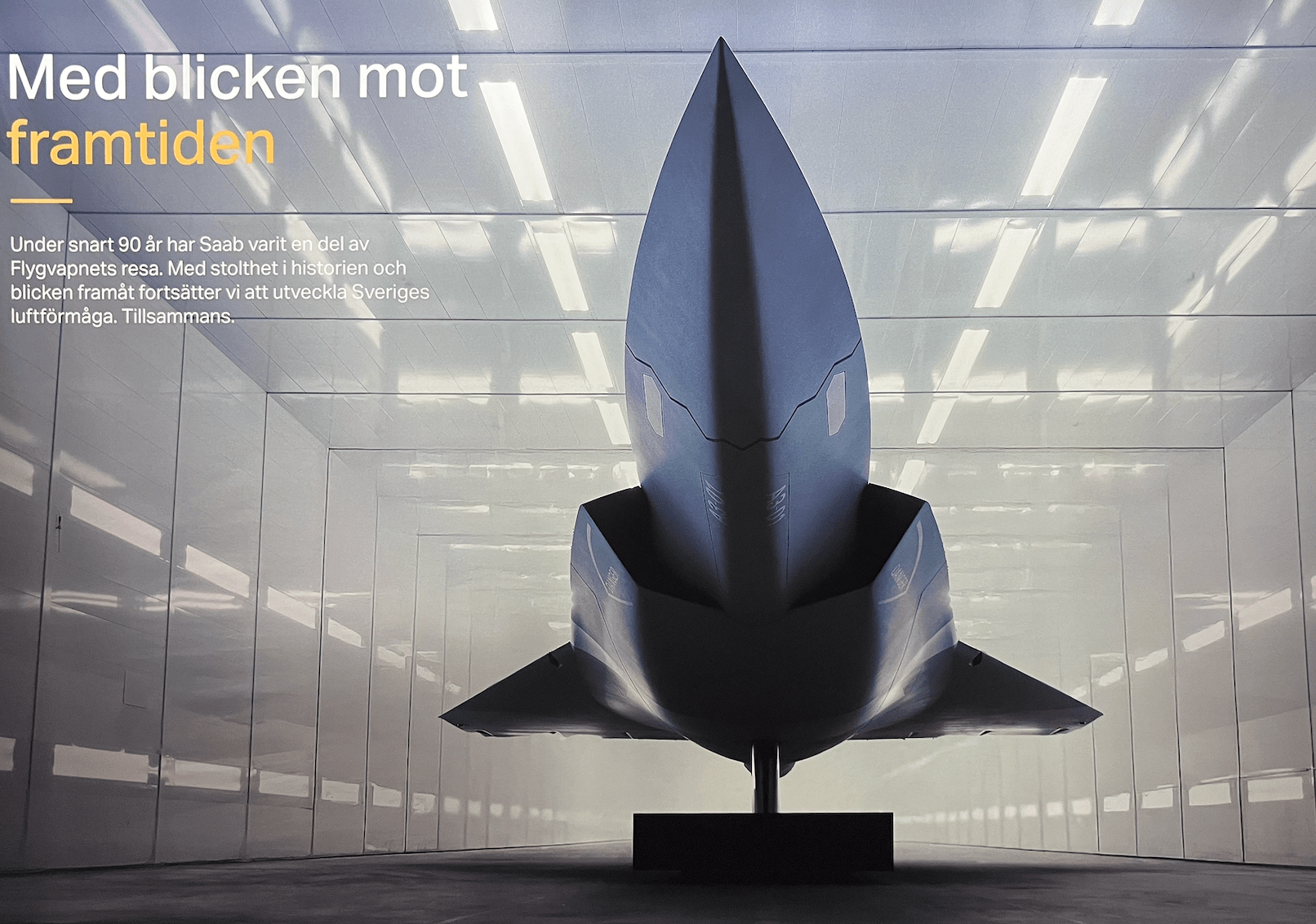
The most significant element of the announcement was the full-scale mock-up of what Saab is calling aircraft A3. The idea of this is to show how a potential high-end ACP could look, and the kinds of capabilities it might bring, provided the company is awarded a development contract.
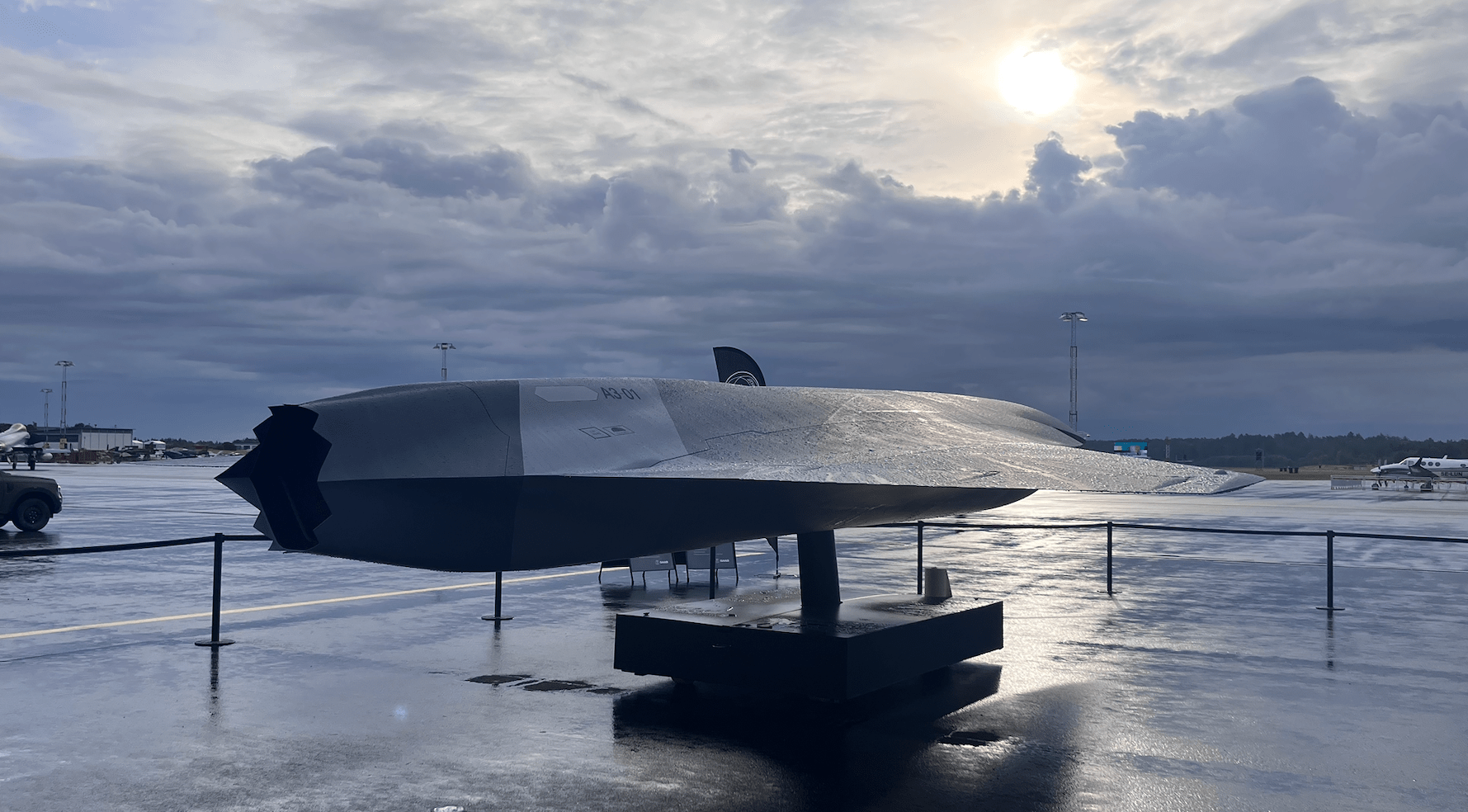
Broadly speaking, aircraft A3 has a lot in common with a previous concept that the company released back in 2024.
The concept retains the same tailless, stealthy configuration, with significant internal capacity for fuel and internal stores. The stealthy, chisel-type DSI air intakes remain on either side of the fuselage, but the prominent bulge roughly above where the engine nozzle would be is removed. The overall geometry remains similar: a sleek, blended wing/body configuration with cropped wings and a prominent chine running around the arrow-like forward edges, giving it something of a resemblance to the Cold War-era Saab Draken fighter, with its distinctive double-delta wing.
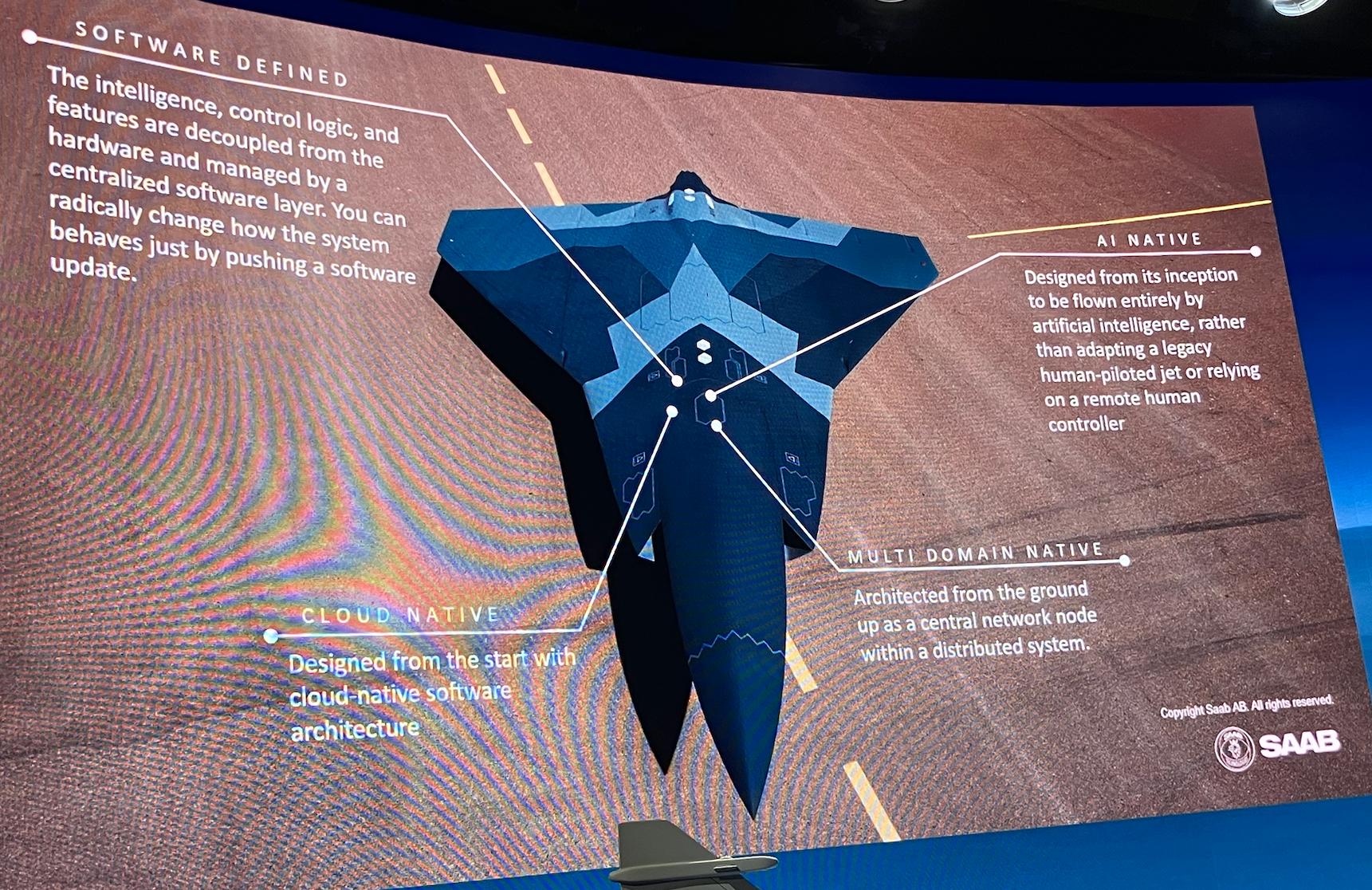
In the meantime, Saab is working on aircraft A1 and A2, uncrewed technology demonstrators that are being funded by the Swedish Ministry of Defense.
The first of these, A1, is expected to fly within the next 15 months,” according to Nilsson. The defense ministry called upon Saab to “go from concept to first flight within 36 months,” providing what Nilsson described as a “quite challenging” timeline.
Aircraft A1 uses the same GE Aerospace F414 engine that powers the Saab Gripen E/F crewed fighter. The turbofan produces around 22,000 pounds of thrust and will ensure A1 has supersonic performance. However, for Saab, the main goal of A1 is to demonstrate that the company can build and fly a low-observable drone.
Saab provided imagery of wind-tunnel models of the A1. Overall, it appears loosely similar to the A3 mockup, with the exception of the twin, outward-canted tailfins. Aircraft A1 will have capacity for an internal weapons bay, although it will not be used for stores release tests. The next test article, aircraft A2 will have an internal weapons bay, and will presumably be used to test ordnance. Otherwise, A2 will be used for tests of other advanced technologies, including new materials and sensors.
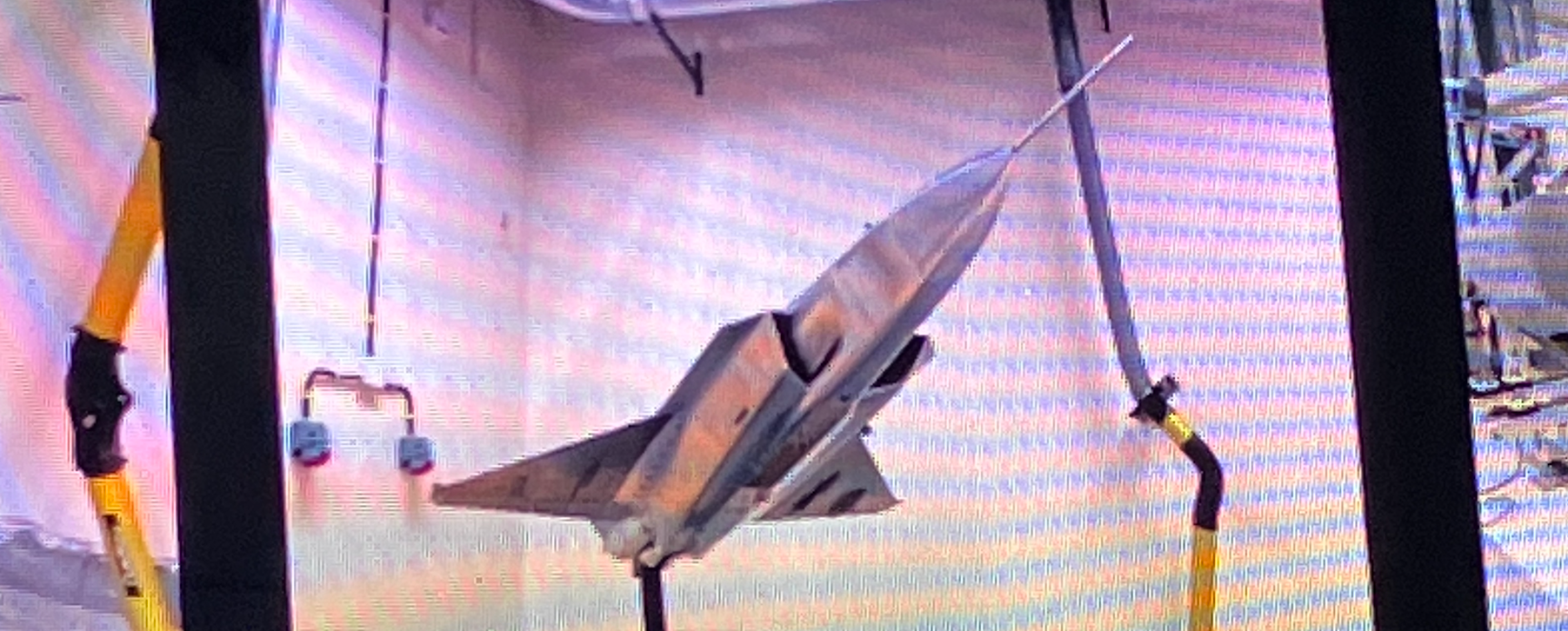
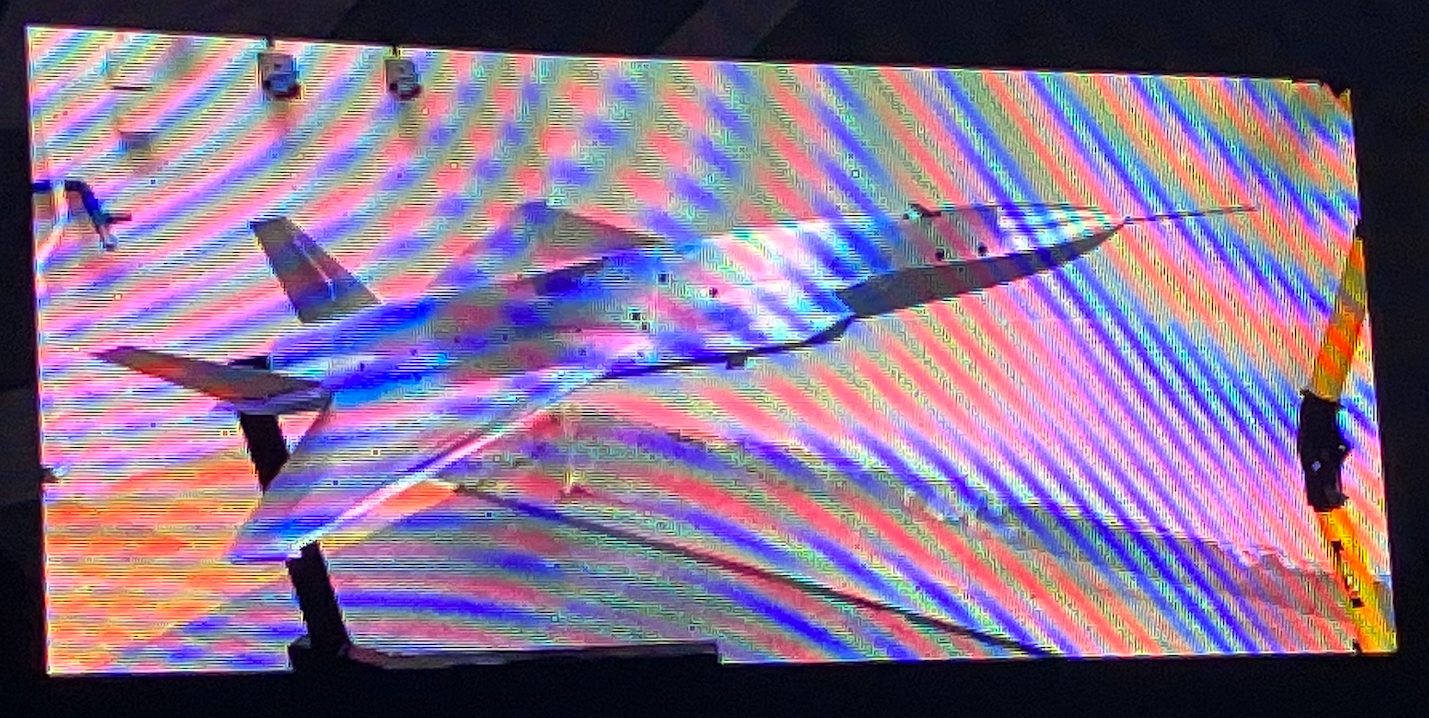
No artwork of aircraft A2 was provided, but Nilsson said it will be “not quite” identical to A1, in terms of appearance. It will also be powered by the F414.
The F414 was selected due to its availability and the fact that the company has plenty of experience with the engine due to the Gripen E/F program. Saab is looking at other potential powerplants for the A3, but acknowledged that, should Sweden buy a productionized ACP, the engine commonality would be a big advantage, including, for example, when an engine needs to be changed at a remote airbase. This kind of maintenance is central to the Gripen concept of operation and would be retained for the ACP.
Saab is contracted until 2030 to develop the A1 and A2 demonstrators. What happens next will depend on the Swedish Ministry of Defense, and there is currently no agreement for a follow-on ACP contract, which would see the design advanced to a production-oriented prototype like the A3.
“We have floated the view that this would be a great asset to the Gripen E, but right now there is no commitment,” Nilsson remarked. Saab envisages the Gripen E serving as a tactical mission commander for one or more ACPs, working in conjunction with the company’s GlobalEye airborne early warning and control (AEW&C) aircraft, a type also ordered by Sweden. Outside of Sweden, the drone could work with a wide variety of other crewed platforms, too.
Pending investment from the Swedish government, Saab may decide to use its own funds for early development of the A3. However, Nilsson noted that “if a customer does not come along I don’t know when my CEO will stop me spending — you need a customer to buy into this.”
Saab’s broader ACP vision is based on an advanced platform that offers both low-observable features and supersonic performance.
The resulting drone should be capable of undertaking “high-risk missions in heavily defended airspace.” As well as air-to-air combat, missions would include electronic warfare, suppression of enemy air defenses, and deep precision strike.
If Sweden buys into the idea, a development contract could be expected around 2030. Thereafter Saab thinks it could have the A3 aircraft in the air sometime in the early 2030s, leading to initial operational capability from the mid-2030s.
With the ACP program, Saab hopes to stake its claim as the “first-mover in the segment” for high-end ‘loyal wingman’-type aircraft.
But even if the Swedish Air Force isn’t swayed by Saab’s ACP offer, the company is seeing the related spiral development as fundamental to its future as a builder of crewed combat aircraft, too.
The same basic architecture now being developed for the ACP could provide a technological and conceptual base for a future (crewed) Gripen successor. This would be required by the Swedish Air Force sometime after 2055. If there is demand, Saab says it could start development of such an aircraft in the mid-2030s.
A rendering of a potential future crewed combat aircraft that appeared in Saab’s presentation reveals a slightly more detailed version of a concept shown in the past. Namely, a design apparently tailored for high speed, as well as low observability. Some of the same features found in the A3 concept — notably the overall blended wing/body and cropped wings — appear in the crewed combat aircraft, although this adds outward-canted tail surfaces, mounted on booms that project relatively far beyond the engine nozzle. The nose and forward fuselage bear a resemblance to the F-35, and, overall, the aircraft seems to be around the same size as the U.S. design, perhaps a little larger.
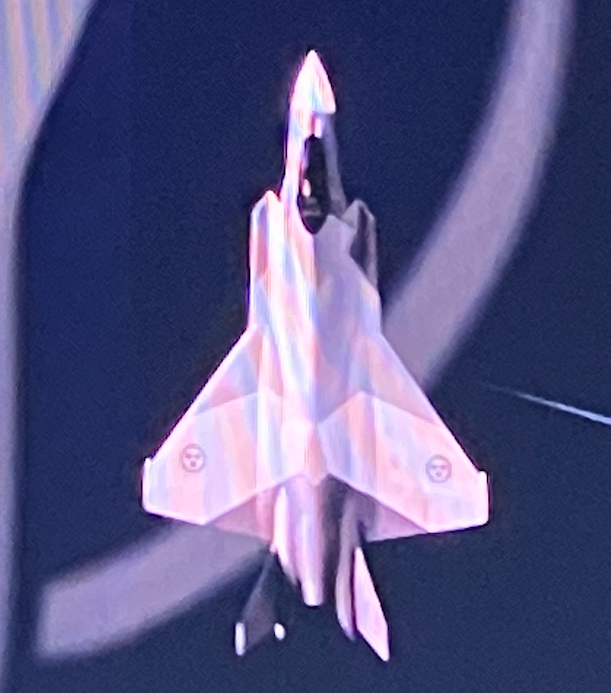
For its part, the Swedish Air Force is still weighing up whether it wants to pursue a crewed successor to the Gripen, if it will abandon crewed fighters altogether, or if it will seek to join a foreign sixth-generation fighter program. A decision on this is likely sometime between 2028 and 2030.
Speaking to journalists at Malmen today, Brigadier Niclas Magnusson, the deputy commander of the Swedish Air Force, called for closer collaboration between the service and industry as Sweden seeks to define its future air combat requirements.
“We have to research and find the limits of what we are able to do,” Magnusson said, adding that he expected the future Swedish Air Force to field both crewed and uncrewed platforms.
That decision is still to come but will also be informed by the relative costs of the Gripen (more of which may still be acquired), higher-end drones, and potential future crewed platforms.
When it comes to the ACP, Nilsson suggested that the life-cycle cost will be around a third that of the Gripen, although acquisition cost won’t be as low as that.
“The problem is that this bloody aircraft is too low cost,” Nilsson added, pointing to the Gripen E.
Ultimately, the cost of the ACP will depend on the degree of capability that the customer demands.
Potentially, a single ACP could cost half as much as a Gripen. Open-source reports suggest that the Gripen E typically comes with a flyaway cost of roughly $70-80 million.
If the ACP is to offer “high-end survival,” Nilsson explained, then a customer would likely be able to field two to three ACPs for each Gripen. The ratio “is not one to 10.”
While Saab also wants to offer the ACP to other Gripen E/F operators as a priority, the fate of the program remains heavily dependent on larger questions about the future of the Swedish Air Force.
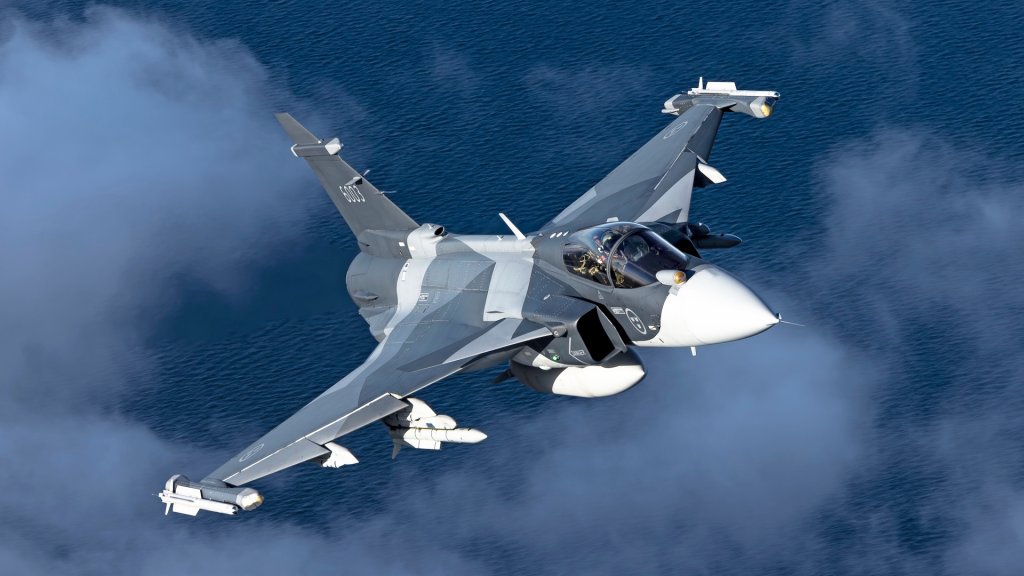
The program gives Saab a solid, and potentially unique, entrant into the CCA space. As we’ve said for years, fourth-generation fighters can remain highly relevant when paired with CCAs — and with a drone as advanced as this, potentially even more so.
The ACP will still come with a significant cost, but that could be offset by reducing or eliminating the need for a fifth- or sixth-generation crewed fighter for certain air forces.
For now, Saab’s high-end loyal wingman remains a proposal rather than a committed production program, but the company is clearly positioning it as more than another experimental drone. The A1 and A2 demonstrators are intended to prove the technologies needed for a survivable, supersonic, low-observable uncrewed aircraft, while the A3 concept unveiled today illustrates where Saab believes those technologies could ultimately lead.
Whether Stockholm opts for a new Saab-developed crewed fighter, joins an international sixth-generation program, or moves toward a force built around a greater mix of crewed and uncrewed aircraft, the ACP work gives the country a way to explore those possibilities without committing to one of them yet.
Contact the author: thomas@thewarzone.com
The post Saab Unveils Stealthy Supersonic ‘Fighter Drone’ Concept appeared first on TWZ.


